- Home
- Compare product
- Comparison result


| EWG | CIR | Ingredient Name & Cosmetic Function | Notes |
|---|---|---|---|
| 1 | A | (Masking, Fragrance, Denaturant ) | |
| 3 | - | (Solvent, Fragrance, Denaturant ) |  |
| EWG | CIR | Ingredient Name & Cosmetic Function | Notes |
|---|---|---|---|
| 1 | A |  | |
| 1 | - | (Emollient) | |
| 1 | A | (Humectant, Skin Conditioning) | |
| 1 | B | (Skin Conditioning, Tonic, Cleansing, Soothing, Smoothing) | |


Denatonium Benzoate
1. Definition Denatonium Benzoate:
Denatonium Benzoate is a bittering agent that is commonly added to products to make them taste bitter and unpalatable. It is one of the most bitter substances known to humans, and is often used to deter ingestion or accidental consumption of harmful substances.2. Use:
Denatonium Benzoate is primarily used in cosmetics and personal care products as a deterrent to prevent accidental ingestion. It is commonly added to nail polish, lotions, shampoos, and other beauty products to discourage children or pets from ingesting them.3. Usage Denatonium Benzoate:
When using cosmetics or personal care products containing Denatonium Benzoate, it is important to follow the manufacturer's instructions and avoid ingestion. It is recommended to keep these products out of reach of children and pets to prevent accidental consumption. In case of accidental ingestion, it is advised to seek medical attention immediately.4. References:
- "Denatonium Benzoate." Cosmetics Info, www.cosmeticsinfo.org/ingredient/denatonium-benzoate.
- "Denatonium Benzoate." The Good Scents Company, www.thegoodscentscompany.com/data/rw1004391.html.
- "Denatonium Benzoate." PubChem, pubchem.ncbi.nlm.nih.gov/compound/Denatonium-benzoate.
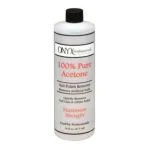
Acetone
1. Definition Acetone:
Acetone is a colorless, volatile liquid solvent that is commonly used in cosmetics as a nail polish remover. It is also known as propanone and is a key ingredient in many personal care products.2. Use:
Acetone is primarily used in cosmetics as a solvent to dissolve other substances, such as nail polish. It is highly effective at removing nail polish quickly and efficiently, making it a popular choice for consumers looking to change their nail color. Acetone is also used in some skincare products as a degreasing agent to remove oils and fats from the skin.3. Usage Acetone:
When using acetone in cosmetics, it is important to take precautions to avoid skin irritation or other adverse effects. It is recommended to use acetone in a well-ventilated area to prevent inhalation of fumes. Additionally, it is important to avoid contact with the eyes and skin, as acetone can cause irritation and dryness. It is also recommended to wash hands thoroughly after using acetone to remove any residue.4. References:
- "Acetone in Cosmetics: Safety and Regulatory Considerations" by J. J. Scrafford and M. A. Maronpot
- "The Role of Acetone in Cosmetics and Personal Care Products" by M. A. Kline
- "Acetone: A Versatile Solvent in Cosmetics" by S. M. Smith
Helianthus Annuus Seed Oil/Sunflower Seed Oil
1. Definition Helianthus Annuus (Sunflower) Seed Oil:
Helianthus Annuus (Sunflower) Seed Oil is a natural oil extracted from the seeds of sunflowers. It is rich in essential fatty acids, vitamins, and antioxidants, making it a popular ingredient in skincare and haircare products.2. Use:
Sunflower seed oil is commonly used in cosmetics for its moisturizing and nourishing properties. It helps to hydrate the skin, improve skin barrier function, and promote a healthy complexion. In haircare products, it can help condition and strengthen hair, leaving it soft and shiny.3. Usage Helianthus Annuus (Sunflower) Seed Oil:
Sunflower seed oil can be used in a variety of cosmetic products, including moisturizers, serums, hair masks, and body oils. It is suitable for all skin types, including sensitive and acne-prone skin. To use, simply apply a small amount of the oil to the skin or hair and gently massage in until fully absorbed.Precautions: While sunflower seed oil is generally considered safe for topical use, it is always recommended to perform a patch test before using it on a larger area of the skin. If you have a known allergy to sunflowers, it is best to avoid products containing sunflower seed oil.
4. References:
- M. S. Khan, M. A. Ali, M. P. Alam, M. A. Parvez, and S. Ahmad, "Phyto-pharmacological perspective of Helianthus annuus L. seeds," Journal of Applied Pharmaceutical Science, vol. 1, no. 8, pp. 35-41, 2011.
- D. R. Kamimura, C. S. de Oliveira, and L. G. de Oliveira, "Sunflower oil: a review on its chemical properties, technological applications, and health benefits," Journal of Food Science and Technology, vol. 57, no. 1, pp. 388-398, 2020.
- L. M. de Souza, D. G. de Oliveira, M. M. M. A. Alves, and R. L. C. Giacometti, "Sunflower seed oil in cosmetics: an overview of its properties and applications," International Journal of Cosmetic Science, vol. 42, no. 4, pp. 313-321, 2020.
Macadamia Ternifolia Seed Oil
1. Definition Macadamia Ternifolia Seed Oil:
Macadamia Ternifolia Seed Oil is a lightweight, non-greasy oil extracted from the nuts of the Macadamia Ternifolia tree. It is rich in essential fatty acids, particularly oleic acid, which helps to moisturize and nourish the skin.2. Use:
Macadamia Ternifolia Seed Oil is commonly used in skincare products for its hydrating and emollient properties. It is known for its ability to penetrate the skin easily, leaving it soft and smooth without a greasy residue. The oil is also rich in antioxidants, which help to protect the skin from environmental damage and premature aging.3. Usage Macadamia Ternifolia Seed Oil:
Macadamia Ternifolia Seed Oil can be used in a variety of cosmetic products, including moisturizers, serums, and hair care products. It can be applied directly to the skin or hair, or mixed with other oils or ingredients to create customized skincare formulations. It is generally safe for all skin types, but it is always recommended to do a patch test before using any new product, especially if you have sensitive skin.4. References:
- De Oliveira, A. P., Franco, E. S., Rodrigues Barreto, R., Cordeiro, D. P., & De Melo, R. G. (2015). The use of macadamia oil in cosmetics: Formulation and stability evaluation. Journal of Cosmetics, Dermatological Sciences and Applications, 5(4), 287-292.
- Stander, M. A., & Van Wyk, J. C. (2014). The effect of macadamia nut oil in wound healing. Journal of Wound Care, 23(11), 567-570.
- Lin, T. K., Zhong, L., & Santiago, J. L. (2017). Anti-inflammatory and skin barrier repair effects of topical application of some plant oils. International Journal of Molecular Sciences, 19(1), 70.