


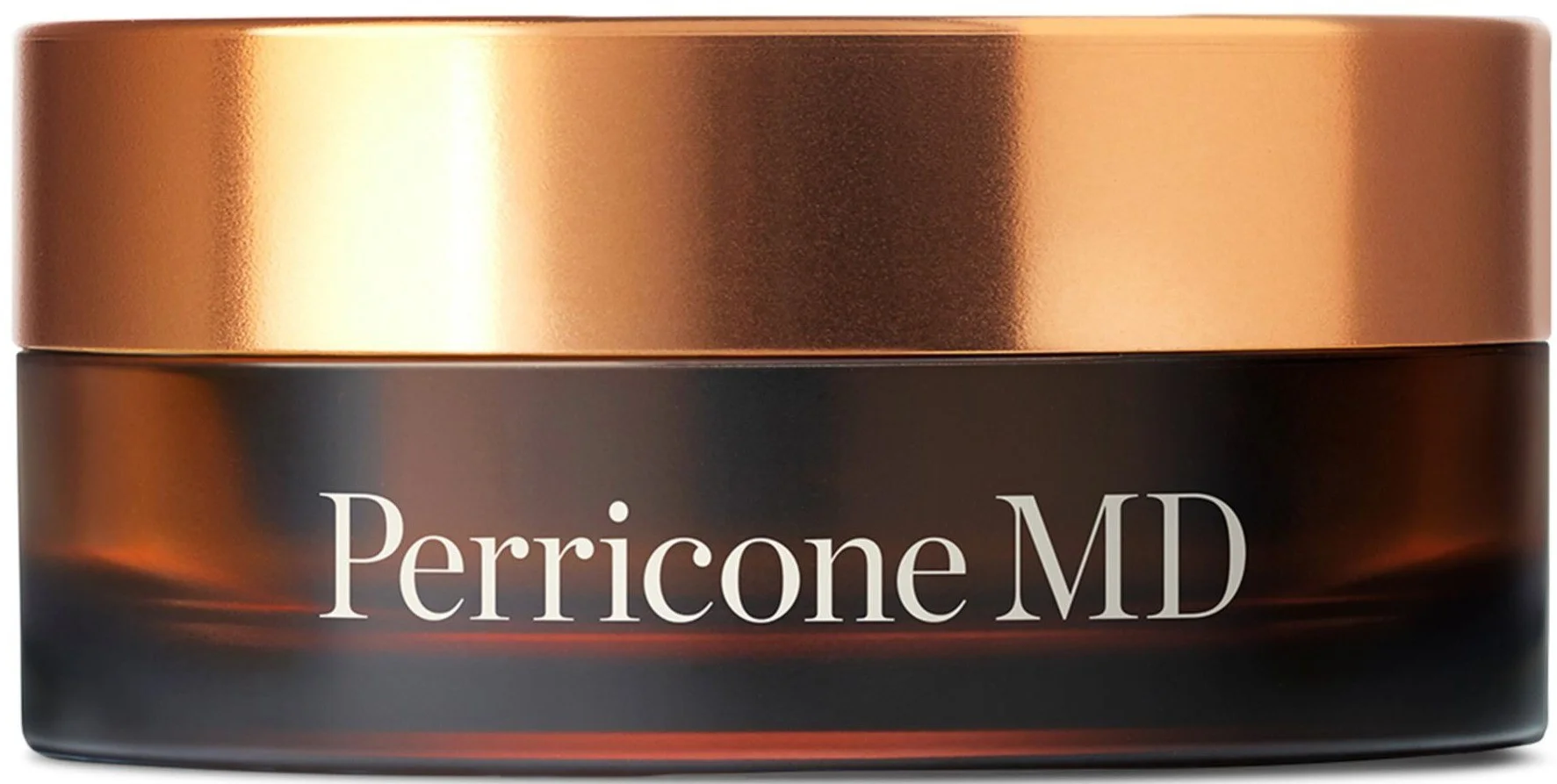
Analysis locked
How well does your skin match with Perricone MD Cleansing Balm?
Login to see detailsOr continue via
Quick 1-minute survey • Completely free
Ingredients
Analysis results of Ingredients


Ingredient List
| EWG | CIR | Ingredient Name & Cosmetic Function | Notes |
|---|---|---|---|
| 1 2 | A | (Skin-Conditioning Agent - Occlusive) |  |
| 1 | - | (Skin Conditioning, Viscosity Controlling, Binding) | |
| - | - | Esters | |
| 1 | A | (Skin Conditioning, Fragrance, Skin-Conditioning Agent -Occlusive) |  |



Perricone MD Cleansing Balm - Ingredient Explanation
Rice Bran Oil
1. Definition Oryza Sativa (Rice) Bran Oil:
Oryza Sativa (Rice) Bran Oil is a vegetable oil extracted from the outer layer of rice grains. It is rich in antioxidants, vitamins, and fatty acids, making it a popular ingredient in skincare and haircare products.2. Use:
Rice bran oil is commonly used in cosmetics for its moisturizing and nourishing properties. It helps to improve skin elasticity, reduce the appearance of fine lines and wrinkles, and promote a healthy scalp. Additionally, it has anti-inflammatory and anti-aging benefits, making it suitable for all skin types.3. Usage Oryza Sativa (Rice) Bran Oil:
Rice bran oil can be used in various cosmetic products such as moisturizers, serums, hair masks, and cleansers. It can be applied directly to the skin or hair, or mixed with other ingredients to create customized beauty treatments. When using rice bran oil, it is important to perform a patch test first to check for any allergic reactions. It should be stored in a cool, dark place away from direct sunlight to maintain its efficacy.4. References:
- Lin, T. K., Zhong, L., & Santiago, J. L. (2017). Anti-inflammatory and skin barrier repair effects of topical application of some plant oils. International Journal of Molecular Sciences, 19(1), 70.
- Mukherjee, S., Date, A., Patravale, V., Korting, H. C., Roeder, A., & Weindl, G. (2006). Retinoids in the treatment of skin aging: an overview of clinical efficacy and safety. Clinical Interventions in Aging, 1(4), 327-348.
- Rizwan, M., Rodriguez-Blanco, I., Harbottle, A., Birch-Machin, M. A., & Watson, R. E. B. (2013). Skin photodamage: how the skin can protect itself. Journal of Cosmetic Dermatology, 12(4), 247-253.
Hydrogenated Rice Bran Oil
1. Definition Hydrogenated Rice Bran Oil:
Hydrogenated Rice Bran Oil is a natural oil derived from the outer layer of rice bran. It is processed through hydrogenation, a chemical process that involves the addition of hydrogen to the oil to increase its stability and shelf life. This results in a semi-solid consistency at room temperature, making it a popular ingredient in cosmetic formulations.2. Use:
Hydrogenated Rice Bran Oil is commonly used in cosmetics for its moisturizing and emollient properties. It helps to nourish and hydrate the skin, leaving it feeling soft and smooth. It is also known for its antioxidant properties, which can help protect the skin from environmental stressors and premature aging. Additionally, it has a lightweight texture that allows it to be easily absorbed into the skin without leaving a greasy residue.3. Usage Hydrogenated Rice Bran Oil:
Hydrogenated Rice Bran Oil can be found in a variety of cosmetic products, including moisturizers, lotions, creams, and serums. It is often used as a key ingredient in formulations designed for dry or sensitive skin, as it can help to soothe and replenish the skin's moisture barrier. When using products containing Hydrogenated Rice Bran Oil, it is important to patch test first to ensure that you do not have any allergic reactions. It is generally considered safe for most skin types, but individuals with sensitivities to rice or other grains should exercise caution.4. References:
- Kaur, I., Saraf, S., & Saraf, S. (2012). Role of novel delivery systems in developing topical antioxidants as therapeutics to combat photoaging. Journal of Pharmacy & Bioallied Sciences, 4(4), 266-275.
- Lin, T. K., Zhong, L., & Santiago, J. L. (2017). Anti-inflammatory and skin barrier repair effects of topical application of some plant oils. International Journal of Molecular Sciences, 19(1), 70.
- Wang, L., Yang, B., Du, X., Huang, Y., & Xu, Z. (2019). Rice bran oil: A potential resource for biodiesel production in China. Renewable and Sustainable Energy Reviews, 107, 270-279.
Esters
Ingredient data is being updated. Please check back later.
Linum Usitatissimum (Linseed) Seed Oil
1. Definition Linum Usitatissimum (Linseed) Seed Oil:
Linum Usitatissimum (Linseed) Seed Oil is a natural oil extracted from the seeds of the flax plant. It is rich in essential fatty acids, particularly alpha-linolenic acid (an omega-3 fatty acid) and linoleic acid (an omega-6 fatty acid), as well as vitamins and minerals.2. Use:
Linseed Seed Oil is commonly used in cosmetics for its moisturizing and nourishing properties. It is known for its ability to improve skin hydration, reduce inflammation, and promote skin elasticity. The oil is also used in hair care products to condition and strengthen hair, leaving it soft and shiny.3. Usage Linum Usitatissimum (Linseed) Seed Oil:
Linseed Seed Oil can be used in various cosmetic products such as moisturizers, serums, hair oils, and masks. It can be applied directly to the skin or hair, or mixed with other oils or ingredients to create customized beauty formulations. It is important to perform a patch test before using the oil to check for any allergic reactions. Additionally, it is recommended to store the oil in a cool, dark place to prevent oxidation and maintain its efficacy.4. References:
- Alaluf, S., Muir, A., Hu, Z., & Jenkins, G. (2011). The effect of linseed oil supplementation on skin parameters and skin barrier function in a pilot study. Journal of Dermatological Science, 62(1), 42-44.
- Goyal, A., Sharma, V., Upadhyay, N., & Gill, S. (2014). Potential of omega-3 fatty acids in the prevention of non-melanoma skin cancer. International Journal of Dermatology, 53(6), 664-675.
- Kwon, H. H., Yoon, J. Y., Park, S. Y., Min, S., Suh, D. H., & Kim, J. S. (2013). Clinical and histological effect of a low glycaemic load diet in treatment of acne vulgaris in Korean patients: a randomized, controlled trial. Acta Dermato-Venereologica, 93(3), 261-267.
Review
Didn't find
the information you need?






Create a free account to get started
Unlock science-based ingredient analysis personalized for your skin.
Already have an account? Log in
We protect your privacy. We never send spam.