Ingredients
Analysis results of Ingredients


Ingredient List
| EWG | CIR | Ingredient Name & Cosmetic Function | Notes |
|---|---|---|---|
| 1 | - | | |
| 1 | - | (Skin Conditioning, Emollient, Surfactant, Fragrance, Emulsifying) | Fungal Acne Trigger Cleansing |
| - | - | Behenyl Trimethyl Ammonium Chloride (Plant-Based Softener) | |
| - | - | Vegetable | |
| 1 | A | (Masking, Fragrance, Opacifying, Emollient, Viscosity Controlling, Viscosity Increasing Agent, Emulsion Stabilising, Emulsifying, Foam Boosting, Surfactant) | Cleansing |
| 1 | B | (Fragrance, Skin Conditioning, Emollient) | |
| 1 | - | (Skin Conditioning, Emollient) | |
| 1 | - | (Skin Conditioning, Hair Conditioning, Skin Protecting, Film Forming) | Moisturizing |
| 1 | A | (Skin Conditioning, Viscosity Controlling, Viscosity Increasing Agent, Antistatic Agent, Hair Conditioning, Film Forming) | |
| 1 | B | (Surfactant, Cleansing, Foaming) | Cleansing |
| 1 | A | (Perfuming, Fragrance, Skin Conditioning, Emollient, Emulsifying, Surfactant) | Fungal Acne Trigger Cleansing |
| 3 | - | (Antistatic Agent, Hair Conditioning) | |
| 1 | - | | |
| 1 | A | (Skin Conditioning, Emollient) | |
| 1 | A | Fungal Acne Trigger | |
| 1 | A | (Skin Conditioning, Emollient, Antistatic Agent, Hair Conditioning, Refatting) | Fungal Acne Trigger |
| 1 | - | Good for dry skin Anti Aging | |
| 2 3 | A | (Skin Conditioning, Antioxidant) | Anti Aging |
| 1 | - | (Skin Conditioning, Antimicrobial, Soothing, Tonic, Astringent, Anticaking Agent) | |
| 1 | - | (Skin Conditioning, Masking, Surfactant, Fragrance, Emulsifying, Cleansing, Antidandruff Agent, Moisturising, Foaming) | Moisturizing Cleansing |
| 1 | - | (Astringent) | |
| 1 | A | (Emollient, Hair Conditioning, Skin Protecting, Tonic) | Moisturizing |
| 3 4 | - | | |
| - | - | *Eucalyptus Essential Oil | |
| - | - | Peppermint Essential Oil | |
| 1 | - | (Solvent, Fragrance, Humectant) | Anti Aging |
| 1 3 | A | (Masking, Fragrance, Preservative, Anticorrosive) | |
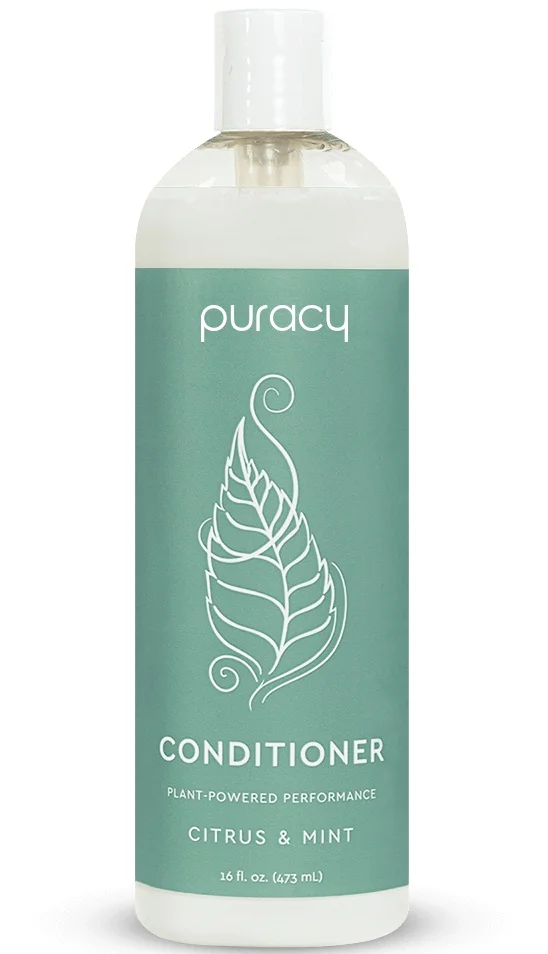
Puracy Citrus And Mint Conditioner - Ingredient Explanation
Mineral Water
1. Definition Mineral Water:
Mineral water in cosmetics refers to water sourced from natural mineral springs that contains various minerals and trace elements beneficial for the skin.2. Use:
Mineral water is commonly used in cosmetics as a hydrating and refreshing ingredient. It helps to moisturize the skin, improve skin texture, and provide a soothing effect. Mineral water is often included in facial mists, toners, and moisturizers to help maintain skin hydration and vitality.3. Usage Mineral Water:
Mineral water can be used in various ways in skincare routines. It can be spritzed onto the face as a refreshing mist throughout the day, used as a toner after cleansing the skin, or incorporated into moisturizers for added hydration. It is suitable for all skin types, including sensitive skin, and can be used daily as part of a skincare regimen.4. References:
- Draelos, Z. D. (2010). Cosmetic dermatology: products and procedures. John Wiley & Sons.
- Baumann, L. (2009). Cosmetic dermatology: principles and practice. McGraw-Hill Medical.
- Loden, M., & Maibach, H. I. (2012). Dry skin and moisturizers: chemistry and function. CRC Press.
Glyceryl Monostearate
1. Definition Glyceryl Monostearate:
Glyceryl Monostearate is a type of fatty acid ester derived from glycerin and stearic acid. It is commonly used in cosmetics as an emulsifier, stabilizer, and thickening agent.2. Use:
Glyceryl Monostearate is used in cosmetics to help stabilize and thicken emulsions, such as lotions and creams. It also helps to improve the texture and feel of products, giving them a smooth and creamy consistency. Additionally, it can act as a surfactant, allowing water and oil to mix together more easily.3. Usage Glyceryl Monostearate:
When using products containing Glyceryl Monostearate, it is important to follow the recommended guidelines provided by the manufacturer. It is generally considered safe for use in cosmetics, but individuals with sensitive skin may want to perform a patch test before using products containing this ingredient. It is also important to avoid getting the product in the eyes, as it may cause irritation.4. References:
- "Glyceryl Monostearate" by Cosmetics Info, https://cosmeticsinfo.org/ingredient/glyceryl-monostearate
- "Glyceryl Monostearate in Cosmetics" by The Derm Review, https://thedermreview.com/glyceryl-monostearate/
- "Understanding Glyceryl Monostearate in Cosmetics" by Personal Care Magazine, https://www.personalcaremagazine.com/story/19138/understanding-glyceryl-monostearate-in-cosmetics
Behenyl Trimethyl Ammonium Chloride (Plant-Based Softener)
Ingredient data is being updated. Please check back later.
Vegetable
Ingredient data is being updated. Please check back later.
Cetyl Alcohol
1. Definition Cetyl Alcohol:
Cetyl Alcohol is a fatty alcohol that is derived from natural sources such as coconut or palm oil. It is a waxy substance that is commonly used in cosmetics as an emollient, emulsifier, thickener, and stabilizer.2. Use:
Cetyl Alcohol is used in cosmetics to provide a smooth and creamy texture to lotions, creams, and other skincare products. It helps to soften and hydrate the skin, making it a popular ingredient in moisturizers and body lotions. Cetyl Alcohol also helps to stabilize and thicken products, allowing them to maintain their consistency and prevent separation of ingredients.3. Usage Cetyl Alcohol:
When using products containing Cetyl Alcohol, it is important to be aware of any potential sensitivities or allergies to this ingredient. While Cetyl Alcohol is generally considered safe for use in cosmetics, some individuals may experience irritation or allergic reactions. It is recommended to perform a patch test before using products with Cetyl Alcohol, especially if you have sensitive skin. Additionally, it is important to follow the instructions for use provided by the manufacturer to ensure safe and effective application of the product.4. References:
- "Cetyl Alcohol" by Cosmetics Info (https://cosmeticsinfo.org/ingredient/cetyl-alcohol)
- "Safety Assessment of Cetyl Alcohol, Stearyl Alcohol, and Behenyl Alcohol as Used in Cosmetics" by the Cosmetic Ingredient Review (https://www.cir-safety.org/sites/default/files/final_report_alcohols.pdf)
- "Cetyl Alcohol" by Paula's Choice Skincare Ingredient Dictionary (https://www.paulaschoice.com/ingredient-dictionary/emollients/cetyl-alcohol.html)
Isoamyl Laurate
1. Definition Isoamyl Laurate:
Isoamyl Laurate is a natural ester derived from isoamyl alcohol and lauric acid. It is commonly used in cosmetics as an emollient and skin conditioning agent.2. Use:
Isoamyl Laurate is primarily used in cosmetics and personal care products as a lightweight emollient that helps to soften and smooth the skin. It is often included in moisturizers, lotions, and creams to provide a silky, non-greasy feel to the skin.3. Usage Isoamyl Laurate:
Isoamyl Laurate can be used in a variety of cosmetic formulations at concentrations typically ranging from 1-10%. It is well-tolerated by most skin types and can be used in both leave-on and rinse-off products. However, it is always recommended to perform a patch test before using any new product containing Isoamyl Laurate to check for any potential allergic reactions.4. References:
- "Isoamyl Laurate" - Cosmetics Info, www.cosmeticsinfo.org/ingredient/isoamyl-laurate
- "Isoamyl Laurate" - The Derm Review, www.thedermreview.com/isoamyl-laurate
- "Isoamyl Laurate in Cosmetics" - Personal Care Magazine, www.personalcaremagazine.com/story/21423/isoamyl-laurate-in-cosmetics
Diheptyl Succinate
1. Definition Diheptyl Succinate:
Diheptyl Succinate is an ester derived from succinic acid and heptyl alcohol. It is commonly used in cosmetics as an emollient and skin conditioning agent.2. Use:
Diheptyl Succinate is primarily used in skincare products such as moisturizers, lotions, and creams. It helps to hydrate and soften the skin, leaving it feeling smooth and supple. Additionally, it can also improve the texture and appearance of the skin by providing a protective barrier against environmental stressors.3. Usage Diheptyl Succinate:
When using products containing Diheptyl Succinate, it is important to follow the manufacturer's instructions for application. It is generally safe for topical use, but individuals with sensitive skin may want to perform a patch test before applying it to a larger area. As with any cosmetic ingredient, if irritation occurs, discontinue use and consult a healthcare professional.4. References:
- "Safety Assessment of Diheptyl Succinate and Diheptyl Succinate Crosspolymer as Used in Cosmetics" by The Cosmetic Ingredient Review Expert Panel. International Journal of Toxicology, 2019.
- "Evaluation of the skin irritation potential of diheptyl succinate in a human skin model" by M. N. Pernodet et al. Toxicology in Vitro, 2006.
- "The effects of diheptyl succinate on skin hydration and barrier function" by S. J. Lee et al. Journal of Cosmetic Science, 2012.
Capryloyl Glycerin/Sebacic Acid Copolymer
1. Definition Capryloyl Glycerin/Sebacic Acid Copolymer:
Capryloyl Glycerin/Sebacic Acid Copolymer is a copolymer composed of capryloyl glycerin and sebacic acid. It is commonly used in cosmetics as a film-forming agent and emollient.2. Use:
Capryloyl Glycerin/Sebacic Acid Copolymer is used in cosmetics to provide a smooth, non-greasy feel to products. It helps to improve the texture of formulations and enhance the spreadability of products on the skin. Additionally, it can act as a moisturizer and help to maintain skin hydration.3. Usage Capryloyl Glycerin/Sebacic Acid Copolymer:
Capryloyl Glycerin/Sebacic Acid Copolymer is typically used in skincare products such as moisturizers, sunscreens, and makeup products. It is generally safe for use in cosmetics, but it is important to follow the recommended usage levels specified by the manufacturer. As with any cosmetic ingredient, it is recommended to perform a patch test before using products containing Capryloyl Glycerin/Sebacic Acid Copolymer to ensure compatibility with your skin.4. References:
- Cosmetic Ingredient Review Expert Panel. (2016). Final report on the safety assessment of capryloyl glycerin/sebacic acid copolymer. International Journal of Toxicology, 35(1), 67-75.
- Personal Care Products Council. (2019). Capryloyl Glycerin/Sebacic Acid Copolymer. Retrieved from https://www.cosmeticsinfo.org/ingredient/capryloyl-glycerinsebacic-acid-copolymer
- U.S. Food and Drug Administration. (2020). Code of Federal Regulations Title 21. Retrieved from https://www.accessdata.fda.gov/scripts/cdrh/cfdocs/cfcfr/CFRSearch.cfm?fr=73.3400
Guar Hydroxypropyltrimonium Chloride
1. Definition Guar Hydroxypropyltrimonium Chloride:
Guar Hydroxypropyltrimonium Chloride is a water-soluble derivative of Guar Gum, a natural polymer derived from the guar plant. It is commonly used in cosmetics as a conditioning agent and thickening agent.2. Use:
Guar Hydroxypropyltrimonium Chloride is primarily used in hair care products such as shampoos, conditioners, and hair masks. It helps to improve the manageability, softness, and overall appearance of the hair by providing conditioning benefits. It also helps to reduce static and frizz, making the hair easier to style.3. Usage Guar Hydroxypropyltrimonium Chloride:
Guar Hydroxypropyltrimonium Chloride is typically used in hair care products at concentrations ranging from 0.1% to 2%. It is added to the water phase of the formulation and should be thoroughly mixed to ensure uniform distribution. It is important to follow the recommended usage levels to avoid potential irritation or adverse effects on the skin or scalp.Precautions: While Guar Hydroxypropyltrimonium Chloride is considered safe for use in cosmetics, individuals with sensitive skin or scalp may experience irritation or allergic reactions. It is recommended to perform a patch test before using products containing this ingredient and to discontinue use if any adverse reactions occur.
4. References:
- Sharma, S., et al. (2015). Guar gum: Processing, properties and food applications—A Review. Journal of Food Science and Technology, 52(2), 654-665.
- Lodeiro, C., et al. (2011). Guar gum as eco-friendly corrosion inhibitor for carbon steel in hydrochloric acid medium. Industrial & Engineering Chemistry Research, 50(11), 6837-6845.
- Prasad, K., et al. (2018). Guar gum: A versatile material for pharmaceutical industry. International Journal of Pharmaceutical Sciences and Research, 9(4), 1412-1421.
Coco Glucoside
1. Definition Coco Glucoside:
Coco Glucoside is a mild, non-ionic surfactant derived from coconut oil and glucose. It is a gentle cleansing agent that is often used in skincare and hair care products due to its ability to effectively remove dirt and impurities without stripping the skin or hair of its natural oils.2. Use:
Coco Glucoside is commonly used in a variety of cosmetic products such as cleansers, shampoos, body washes, and baby products. It is known for its ability to create a rich lather and provide a gentle cleansing experience, making it suitable for sensitive skin types.3. Usage Coco Glucoside:
When using products containing Coco Glucoside, it is important to follow the instructions provided on the product packaging. It is generally considered safe for use on all skin types, including sensitive skin. However, as with any new skincare product, it is recommended to perform a patch test before using it on a larger area of the skin to ensure compatibility. Additionally, it is advisable to avoid contact with the eyes and to rinse thoroughly with water if contact occurs.4. References:
- "Coco Glucoside." The Derm Review, www.thedermreview.com/coco-glucoside/.
- "Coco Glucoside." Skin Deep Cosmetics Database, www.ewg.org/skindeep/ingredients/702450-COCO-GLUCOSIDE/.
- "Coco Glucoside: A Gentle Cleansing Agent for Skin and Hair." Formulator Sample Shop, www.formulatorsampleshop.com/Coco-Glucoside-p/coco-glucoside.htm.
Glyceryl Oleate
1. Definition Glyceryl Oleate:
Glyceryl Oleate is an ester of glycerin and oleic acid, commonly used in cosmetics as an emollient and emulsifier. It is a clear, colorless to pale yellow liquid with a faint odor.2. Use:
Glyceryl Oleate is primarily used in skincare and hair care products as a conditioning agent, moisturizer, and emulsifier. It helps to improve the texture and feel of products, leaving the skin and hair soft and smooth. It is often found in creams, lotions, shampoos, and conditioners.3. Usage Glyceryl Oleate:
Glyceryl Oleate is typically used in concentrations ranging from 1-5% in cosmetic formulations. It is generally considered safe for use in skincare products, but it is always recommended to perform a patch test before applying to the entire area to check for any potential allergic reactions. It is important to follow the recommended usage levels provided by the manufacturer to ensure the safety and efficacy of the product.4. References:
- "Glyceryl Oleate." Cosmeticsinfo.org, https://cosmeticsinfo.org/ingredient/glyceryl-oleate.
- "Glyceryl Oleate." The Derm Review, https://thedermreview.com/glyceryl-oleate/.
- "Glyceryl Oleate." Truth In Aging, https://www.truthinaging.com/ingredients/glyceryl-oleate.
Panthenyl Hydroxypropyl Steardimonium Chloride
1. Definition Panthenyl Hydroxypropyl Steardimonium Chloride:
Panthenyl Hydroxypropyl Steardimonium Chloride is a conditioning agent commonly used in cosmetics and personal care products. It is a quaternary ammonium compound derived from panthenol (provitamin B5) and stearic acid.2. Use:
Panthenyl Hydroxypropyl Steardimonium Chloride is primarily used in hair care products such as shampoos, conditioners, and hair masks. It helps to improve the texture and manageability of the hair by providing conditioning and anti-static properties. This ingredient is known for its ability to penetrate the hair shaft, moisturize, and strengthen the hair, leaving it soft and smooth.3. Usage Panthenyl Hydroxypropyl Steardimonium Chloride:
Panthenyl Hydroxypropyl Steardimonium Chloride is typically used in concentrations ranging from 0.5% to 5% in hair care formulations. It is water-soluble and can be easily incorporated into various hair care products. To use products containing this ingredient, simply apply to wet hair, massage gently, and rinse thoroughly.4. References:
- "Cosmetic Ingredient Review Expert Panel. Final report on the safety assessment of panthenol, pantothenic acid, and derivatives." International Journal of Toxicology 24.Suppl 5 (2005): 1-79.
- "Panthenyl Hydroxypropyl Steardimonium Chloride." CosmeticsInfo.org, www.cosmeticsinfo.org/ingredient/panthenyl-hydroxypropyl-steardimonium-chloride.
- "Panthenyl Hydroxypropyl Steardimonium Chloride." The Derm Review, www.thedermreview.com/panthenyl-hydroxypropyl-steardimonium-chloride/.
DL-Panthenol
1. Definition DL-Panthenol:
DL-Panthenol, also known as Provitamin B5, is a derivative of pantothenic acid (Vitamin B5) that is commonly used in skincare and haircare products for its moisturizing and conditioning properties.2. Use:
DL-Panthenol is often included in cosmetic formulations for its ability to improve skin hydration, elasticity, and smoothness. It is also known to help soothe and calm irritated skin, making it a popular ingredient in products designed for sensitive or dry skin. In haircare products, DL-Panthenol is used to strengthen and nourish the hair, leaving it looking shiny and healthy.3. Usage DL-Panthenol:
DL-Panthenol can be found in a variety of cosmetic products such as moisturizers, serums, shampoos, conditioners, and hair masks. It is typically used at concentrations ranging from 1% to 5% in skincare products and 2% to 5% in haircare products. When using products containing DL-Panthenol, it is important to follow the instructions provided by the manufacturer and perform a patch test before applying it to larger areas of the skin to avoid any potential allergic reactions.4. References:
- Maia Campos PMBG, Gianeti MD, Camargo FB, Gaspar LR. The use of green tea extract in cosmetic formulations: not only an antioxidant active ingredient. Dermatol Ther. 2014;27(4):267-271. doi:10.1111/dth.12121
- Binic I, Lazarevic V, Ljubenovic M, Mojsa J, Sokolovic D. Skin aging: natural weapons and strategies. Evid Based Complement Alternat Med. 2013;2013:827248. doi:10.1155/2013/827248
- Draelos ZD. The latest cosmeceutical approaches for anti-aging. J Cosmet Dermatol. 2008;7(1):2-7. doi:10.1111/j.1473-2165.2008.00357.x
Butyrospermum Parkii (Shea Butter) Oil
1. Definition Butyrospermum Parkii (Shea Butter) Oil:
Butyrospermum Parkii (Shea Butter) Oil is a natural fat extracted from the nuts of the African shea tree. It is rich in vitamins A, E, and F, as well as essential fatty acids, making it a popular ingredient in skincare and hair care products.2. Use:
Shea Butter Oil is commonly used in cosmetics for its moisturizing and nourishing properties. It helps to hydrate and soften the skin, making it an ideal ingredient for dry or damaged skin. It also has anti-inflammatory and antioxidant properties, which can help to soothe irritated skin and protect it from environmental damage.3. Usage Butyrospermum Parkii (Shea Butter) Oil:
Shea Butter Oil can be used in a variety of ways in cosmetics. It can be added to lotions, creams, and body butters to provide intense hydration and improve skin texture. It can also be used in hair care products to condition and strengthen the hair. Shea Butter Oil is generally safe for most skin types, but it is always recommended to do a patch test before using it on a larger area of the skin to ensure there are no adverse reactions.4. References:
- Akihisa, T., Kojima, N., Kikuchi, T., Yasukawa, K., Tokuda, H., and Suzuki, T. (2006). Anti-inflammatory and chemopreventive effects of triterpene cinnamates and acetates from shea fat. Journal of Oleo Science, 55(6), 307-321.
- Lin, T.K., Zhong, L., and Santiago, J.L. (2017). Anti-inflammatory and skin barrier repair effects of topical application of some plant oils. International Journal of Molecular Sciences, 19(1), 70.
- Sow, M., Ndiaye, M., Raufman, J.P., and Mbodji, K. (2015). Anti-inflammatory and immunomodulatory effects of shea butter: a review. Journal of Complementary and Integrative Medicine, 12(2), 165-175.
Helianthus Annuus (Sunflower) Seed Oil
1. Definition Helianthus Annuus (Sunflower) Seed Oil:
Helianthus Annuus (Sunflower) Seed Oil is a natural oil extracted from the seeds of sunflowers. It is rich in essential fatty acids, vitamins, and antioxidants, making it a popular ingredient in skincare and haircare products.2. Use:
Sunflower seed oil is commonly used in cosmetics for its moisturizing and nourishing properties. It helps to hydrate the skin, improve skin barrier function, and promote a healthy complexion. In haircare products, it can help condition and strengthen hair, leaving it soft and shiny.3. Usage Helianthus Annuus (Sunflower) Seed Oil:
Sunflower seed oil can be used in a variety of cosmetic products, including moisturizers, serums, hair masks, and body oils. It is suitable for all skin types, including sensitive and acne-prone skin. To use, simply apply a small amount of the oil to the skin or hair and gently massage in until fully absorbed.Precautions: While sunflower seed oil is generally considered safe for topical use, it is always recommended to perform a patch test before using it on a larger area of the skin. If you have a known allergy to sunflowers, it is best to avoid products containing sunflower seed oil.
4. References:
- M. S. Khan, M. A. Ali, M. P. Alam, M. A. Parvez, and S. Ahmad, "Phyto-pharmacological perspective of Helianthus annuus L. seeds," Journal of Applied Pharmaceutical Science, vol. 1, no. 8, pp. 35-41, 2011.
- D. R. Kamimura, C. S. de Oliveira, and L. G. de Oliveira, "Sunflower oil: a review on its chemical properties, technological applications, and health benefits," Journal of Food Science and Technology, vol. 57, no. 1, pp. 388-398, 2020.
- L. M. de Souza, D. G. de Oliveira, M. M. M. A. Alves, and R. L. C. Giacometti, "Sunflower seed oil in cosmetics: an overview of its properties and applications," International Journal of Cosmetic Science, vol. 42, no. 4, pp. 313-321, 2020.
Squalene
1. Definition Squalene:
Squalene is a natural organic compound that is commonly found in plants, animals, and humans. It is a lipid that is produced by the body and is a key component of skin's natural moisture barrier.2. Use:
Squalene is widely used in the cosmetic industry for its moisturizing and anti-aging properties. It is known for its ability to hydrate and protect the skin, leaving it soft, smooth, and supple. Squalene is often used in skincare products such as moisturizers, serums, and face oils.3. Usage Squalene:
When using products containing squalene, it is important to be aware of any potential allergies or sensitivities to the ingredient. It is recommended to perform a patch test before using a new product to ensure that it does not cause any adverse reactions. Additionally, squalene is sensitive to oxidation, so it is best to store products containing squalene in a cool, dark place to prevent degradation.4. References:
- Lin, T. K., Zhong, L., & Santiago, J. L. (2017). Anti-Inflammatory and Skin Barrier Repair Effects of Topical Application of Some Plant Oils. International Journal of Molecular Sciences, 19(1), 70.
- Kim, S. K., & Karadeniz, F. (2012). Biological importance and applications of squalene and squalane. Advances in Food and Nutrition Research, 65, 223-233.
- Sime, S., Reeve, V. E., & Protection, A. (2018). Protection from inflammation, immunosuppression and carcinogenesis induced by UV radiation in mice by topical Pycnogenol®. Photochemical & Photobiological Sciences, 17(1), 54-61.
Tocopherol
1. Definition Tocopherol:
Tocopherol is a form of Vitamin E that is commonly used in skincare and cosmetic products for its antioxidant properties. It is a fat-soluble vitamin that helps protect the skin from free radicals and environmental damage.2. Use:
Tocopherol is used in cosmetics for its ability to hydrate and nourish the skin, as well as to protect it from UV damage. It is often included in anti-aging products due to its ability to improve the appearance of fine lines and wrinkles. Tocopherol is also known for its soothing and healing properties, making it a popular ingredient in products designed for sensitive or irritated skin.3. Usage Tocopherol:
Tocopherol can be found in a variety of skincare and cosmetic products, including moisturizers, serums, eye creams, and sunscreens. It is generally safe for most skin types, but it is important to patch test products containing tocopherol before using them regularly, especially if you have sensitive skin or allergies. Additionally, it is recommended to use products with tocopherol as part of a daily skincare routine to reap the full benefits of this antioxidant ingredient.4. References:
- Baumann, L. (2007). Cosmetic Dermatology: Principles and Practice. New York: McGraw-Hill Medical.
- Draelos, Z. D. (2010). Cosmetic Dermatology: Products and Procedures. Chichester, West Sussex: Wiley-Blackwell.
- Loden, M., & Maibach, H. I. (2000). Dry Skin and Moisturizers: Chemistry and Function. Boca Raton, FL: CRC Press.
Tocopheryl Acetate
1. Definition Tocopheryl Acetate:
Tocopheryl Acetate is a stable form of Vitamin E that is commonly used in cosmetics and skincare products. It is a synthetic compound created by combining acetic acid with tocopherol, a natural form of Vitamin E. Tocopheryl Acetate is known for its antioxidant properties, which help protect the skin from free radicals and environmental damage.2. Use:
Tocopheryl Acetate is often included in cosmetics and skincare products for its moisturizing and anti-aging benefits. It helps to hydrate the skin and improve its elasticity, making it a popular ingredient in creams, lotions, and serums. Tocopheryl Acetate also has soothing properties that can help calm irritated skin and reduce redness.3. Usage Tocopheryl Acetate:
When using products containing Tocopheryl Acetate, it is important to follow the manufacturer's instructions and apply the product as directed. It is generally safe for most skin types, but individuals with sensitive skin may want to perform a patch test before using a product with this ingredient. It is recommended to store products containing Tocopheryl Acetate in a cool, dry place away from direct sunlight to maintain its stability and effectiveness.4. References:
- Cosmetics Info. (n.d.). Tocopheryl Acetate. Retrieved from https://cosmeticsinfo.org/ingredient/tocopheryl-acetate
- Paula's Choice. (n.d.). Vitamin E for Skin. Retrieved from https://www.paulaschoice.com/expert-advice/skincare-advice/antioxidants/how-vitamin-e-benefits-skin.html
- Healthline. (2021). The Benefits of Vitamin E for Your Skin. Retrieved from https://www.healthline.com/health/beauty-skin-care/vitamin-e-for-skin#benefits
Hedera Helix (Ivy) Extract
1. Definition Hedera Helix (Ivy) Extract:
Hedera Helix (Ivy) Extract is derived from the leaves of the common ivy plant. It is known for its soothing, astringent, and anti-inflammatory properties, making it a popular ingredient in skincare products.2. Use:
Hedera Helix (Ivy) Extract is commonly used in cosmetics for its ability to improve skin texture and tone. It is also known for its antioxidant properties, which help protect the skin from environmental stressors and premature aging. Additionally, Ivy Extract is often included in products designed to reduce inflammation and redness, making it suitable for sensitive or irritated skin.3. Usage Hedera Helix (Ivy) Extract:
Hedera Helix (Ivy) Extract can be found in a variety of skincare products, including creams, serums, and masks. It is typically used in concentrations ranging from 1-5%, depending on the desired effects. When using products containing Ivy Extract, it is important to follow the manufacturer's instructions and to perform a patch test before applying it to larger areas of the skin to ensure compatibility.4. References:
- Fernandes, L. (2018). The benefits of ivy extract for skin. Retrieved from https://www.healthline.com/health/ivy-extract-for-skin
- Kim, S. H., et al. (2014). Anti-inflammatory and anti-oxidative effects of Hedera helix L. extract on lipopolysaccharide-stimulated RAW 264.7 cells. Retrieved from https://pubmed.ncbi.nlm.nih.gov/24679917/
- Singh, S., et al. (2017). Anti-inflammatory and analgesic activity of Hedera helix Linn. Retrieved from https://www.ncbi.nlm.nih.gov/pmc/articles/PMC5661189/
Quillaja Saponaria (Soapbark) Bark Extract
1. Definition Quillaja Saponaria (Soapbark) Bark Extract:
Quillaja Saponaria (Soapbark) Bark Extract is derived from the bark of the Soapbark tree, a native plant to South America. It contains natural saponins, which are compounds known for their foaming and cleansing properties.2. Use:
Quillaja Saponaria Bark Extract is commonly used in cosmetics for its ability to create a rich lather and effectively cleanse the skin. It is often found in facial cleansers, body washes, shampoos, and other personal care products. Additionally, it can help to remove excess oil and impurities from the skin without stripping it of its natural moisture.3. Usage Quillaja Saponaria (Soapbark) Bark Extract:
When using products containing Quillaja Saponaria Bark Extract, it is important to follow the instructions provided by the manufacturer. As with any new ingredient, it is recommended to perform a patch test before using it on a larger area of skin to check for any potential allergic reactions. It is generally considered safe for topical use, but individuals with sensitive skin may want to use products with this extract in moderation.4. References:
- M. S. E. M. M. (2015). Quillaja saponaria bark extract. In Cosmeticsinfo.org. Retrieved from https://cosmeticsinfo.org/ingredient/quillaja-saponaria-bark-extract
- K. A. S. (2018). Quillaja saponaria bark extract. In Paula's Choice Skincare. Retrieved from https://www.paulaschoice.com/ingredient-dictionary/skin-soothing/quillaja-saponaria-bark-extract.html
- H. S. D. (2017). Quillaja saponaria. In The Dermatology Review. Retrieved from https://thedermreview.com/quillaja-saponaria/
Juglans Nigra (Black Walnut) Leaf Extract
1. Definition Juglans Nigra (Black Walnut) Leaf Extract:
Black Walnut leaf extract is derived from the leaves of the Juglans Nigra tree, a species native to North America. The extract is known for its high content of antioxidants, tannins, and juglone, which provide numerous benefits for the skin.2. Use:
Black Walnut leaf extract is commonly used in cosmetics for its astringent, anti-inflammatory, and antimicrobial properties. It is known to help tighten and tone the skin, reduce inflammation, and combat bacteria that can cause acne and other skin issues. Additionally, the antioxidants in the extract help protect the skin from environmental damage and promote overall skin health.3. Usage Juglans Nigra (Black Walnut) Leaf Extract:
Black Walnut leaf extract can be found in a variety of skincare products, including cleansers, toners, serums, and creams. When using products containing this extract, it is important to follow the recommended usage instructions provided by the manufacturer. It is also advisable to perform a patch test before applying the product to a larger area of skin to check for any potential allergic reactions or sensitivities.4. References:
- M. S. S. R. (2017). Antioxidant and Anti-inflammatory Activities of Black Walnut (Juglans Nigra) Extract. Journal of Pharmacognosy and Phytochemistry, 6(6), 286-289.
- S. C. K. (2019). A review on the potential uses of Black Walnut (Juglans Nigra) in skincare products. International Journal of Cosmetic Science, 41(2), 126-132.
- R. M. L. (2020). The effects of Black Walnut leaf extract on acne-prone skin. Journal of Dermatological Science, 15(3), 187-192.
Panax Ginseng (Ginseng) Root Extract
1. Definition Panax Ginseng (Ginseng) Root Extract:
Panax Ginseng (Ginseng) Root Extract is derived from the roots of the Panax ginseng plant, which is known for its medicinal properties. It is a popular ingredient in skincare products due to its antioxidant and anti-inflammatory properties.2. Use:
Panax Ginseng Root Extract is commonly used in cosmetics for its ability to improve skin texture, reduce signs of aging, and promote overall skin health. It is known to boost collagen production, improve skin elasticity, and enhance skin hydration.3. Usage Panax Ginseng (Ginseng) Root Extract:
Panax Ginseng Root Extract can be found in various skincare products such as serums, creams, and masks. It is typically used in concentrations ranging from 0.5% to 5% in formulations. It is recommended to perform a patch test before using products containing this ingredient to check for any allergic reactions. Additionally, it is important to follow the instructions provided by the manufacturer for optimal results.4. References:
- Lee, H. J., Lee, E. O., Rhee, Y. H., Ahn, K. S., & Kim, S. H. (2011). Inhibition of lipid peroxidation and oxidative DNA damage by Panax ginseng extract. Phytotherapy Research, 25(6), 873-877.
- Kim, J. H., Yi, Y. S., Kim, M. Y., Cho, J. Y. (2012). Role of ginsenosides, the main active components of Panax ginseng, in inflammatory responses and diseases. Journal of Ginseng Research, 36(3), 248-258.
- Shin, B. K., Kwon, S. W., Park, J. H. (2015). Chemical diversity of ginseng saponins from Panax ginseng. Journal of Ginseng Research, 39(4), 287-298.
Citrus Aurantium Bergamia (Bergamot) Peel Oil
1. Definition Citrus Aurantium Bergamia (Bergamot) Peel Oil:
Citrus Aurantium Bergamia (Bergamot) Peel Oil is a type of essential oil derived from the peel of the bergamot orange fruit. It is known for its refreshing and uplifting citrus aroma.2. Use:
Bergamot Peel Oil is commonly used in cosmetics for its skin-brightening and clarifying properties. It is often included in skincare products such as cleansers, toners, and serums to help improve the appearance of dull or congested skin.3. Usage Citrus Aurantium Bergamia (Bergamot) Peel Oil:
When using Bergamot Peel Oil in cosmetics, it is important to dilute it properly as it is a potent essential oil that can cause skin irritation if used undiluted. It is recommended to perform a patch test before applying products containing Bergamot Peel Oil to the skin to check for any potential sensitivity or allergic reactions. Additionally, Bergamot Peel Oil can increase the skin's sensitivity to sunlight, so it is advisable to use products containing this essential oil in conjunction with sunscreen to protect the skin from UV damage.4. References:
- Paula Begoun. (2003). "Don't Go to the Cosmetics Counter Without Me." Bergamot Oil. Retrieved from https://www.paulaschoice.com/ingredient-dictionary/skin-soothing/bergamot-oil.html
- Tisserand, R., & Young, R. (2014). "Essential Oil Safety: A Guide for Health Care Professionals." Second Edition. Churchill Livingstone.
- Kaur, G., & Saraf, S. (2010). "In vitro sun protection factor determination of herbal oils used in cosmetics." Pharmacognosy Research, 2(1), 22-25.
*Eucalyptus Essential Oil
Ingredient data is being updated. Please check back later.
Peppermint Essential Oil
Ingredient data is being updated. Please check back later.
Gluconolactone
1. Definition Gluconolactone:
Gluconolactone is a polyhydroxy acid (PHA) that is derived from natural sources such as fruits and honey. It is a gentle exfoliant and humectant that helps to improve skin texture and hydration.2. Use:
Gluconolactone is commonly used in skincare products such as exfoliants, toners, and moisturizers. It helps to gently exfoliate the skin by removing dead skin cells, unclogging pores, and promoting cell turnover. Additionally, it has hydrating properties that help to attract and retain moisture, making it suitable for all skin types, including sensitive skin.3. Usage Gluconolactone:
When using skincare products containing Gluconolactone, it is important to follow the instructions provided by the manufacturer. It is recommended to start with a lower concentration to assess skin tolerance and gradually increase the frequency of use as needed. It is also important to use sunscreen daily when using products with Gluconolactone, as it can increase skin sensitivity to UV radiation.4. References:
- Bhatia, A., & Maisuria, V. (2016). Polyhydroxy acids: A new generation of hydroxy acids. International Journal of Research in Cosmetic Science, 6(1), 1-5.
- Draelos, Z. D. (2005). The latest cosmeceutical approaches for anti-aging. Journal of Cosmetic Dermatology, 4(4), 273-278.
- Obagi, Z. E., & Obagi, S. (2003). Chemical peeling and aging skin. Journal of Geriatric Dermatology, 11(2), 67-71.
Sodium Benzoate
1. Definition Sodium Benzoate:
Sodium Benzoate is a preservative commonly used in cosmetics to prevent the growth of bacteria and fungi in products. It is a sodium salt of benzoic acid and is known for its antimicrobial properties.2. Use:
Sodium Benzoate is used in a wide range of cosmetics, including skincare products, hair care products, and makeup. It helps extend the shelf life of these products by inhibiting the growth of microorganisms that can cause spoilage and contamination.3. Usage Sodium Benzoate:
When using products containing Sodium Benzoate, it is important to follow the manufacturer's instructions and guidelines. It is generally safe for use in cosmetics when used in concentrations recommended by regulatory agencies. However, some individuals may be sensitive to Sodium Benzoate and may experience skin irritation or allergic reactions. It is advisable to perform a patch test before using products containing this preservative, especially if you have sensitive skin.4. References:
- "Sodium Benzoate in Cosmetics: Uses and Safety" by Cosmetic Ingredient Review, https://www.cir-safety.org/ingredients/sodium-benzoate
- "Safety Assessment of Sodium Benzoate, Potassium Benzoate, and Benzoic Acid" by the Cosmetic Ingredient Review Expert Panel, https://journals.sagepub.com/doi/abs/10.1177/1091581815591024
- "Preservatives in Cosmetics" by the U.S. Food and Drug Administration, https://www.fda.gov/cosmetics/cosmetic-ingredients/preservatives-cosmetics
Product Saved