- Home
- Ingredient
- Ingredient Detail
- Moroccan Lava Clay
Moroccan Lava Clay
We found 141 products that contain Moroccan Lava Clay
Moroccan Lava Clay - Ingredient Explanation
Moroccan Lava Clay
Function: Viscosity Controlling, Emulsion Stabilising, Abrasive, Absorbent, Bulking Agent, Opacifying, Viscosityincreasing Agent - Aqueous
1. Definition Moroccan Lava Clay:
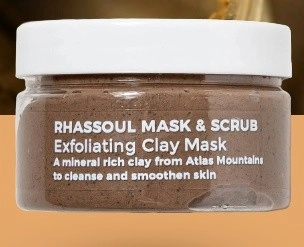
Moroccan Lava Clay, also known as Rhassoul Clay, is a natural mineral clay that is mined from the Atlas Mountains in Morocco. It has been used for centuries in traditional Moroccan beauty rituals due to its high mineral content and detoxifying properties.2. Use:
Moroccan Lava Clay is commonly used in cosmetics for its ability to absorb excess oil, dirt, and impurities from the skin. It is also known for its exfoliating and brightening properties, making it a popular ingredient in face masks, cleansers, and scrubs.3. Usage Moroccan Lava Clay:
To use Moroccan Lava Clay in skincare, it is typically mixed with water or other liquid ingredients to form a paste. This paste can then be applied to the skin and left on for a few minutes before rinsing off. It is important to follow the instructions on the product packaging and to patch test before using, as some individuals may be sensitive to the clay.Precautions: While Moroccan Lava Clay is generally considered safe for most skin types, it is always recommended to do a patch test before using to check for any adverse reactions. It is also important to avoid getting the clay in contact with the eyes or mouth, as it can be drying and irritating to these sensitive areas.
4. References:
- "Rhassoul Clay: Benefits for Skin and Hair" by Dr. Debra Jaliman, MD (https://www.healthline.com/health/rhassoul-clay)
- "The Benefits of Moroccan Rhassoul Clay for Skin and Hair" by Ksenia Avdulova (https://www.byrdie.com/rhassoul-clay-benefits)
- "Moroccan Rhassoul Clay: The Natural Beauty Secret" by The Derm Review (https://www.thedermreview.com/rhassoul-clay/)
Ingredient Overview
(Click on the ingredient name for more details)
Quick Ingredient Analysis
Paraben free
Sulfate free
Alcohol free
Silicone free
Fungal Acne Safe
EU Allergent Free
Fragrance free
Key Ingredients
Ingredients Related to Skin Types
Click the arrows next to Skin Type! Green = Good & Red = Bad

Dry skin
Unknown

Oily Skin
Unknown

Sensitive skin
Unknown
Ingredient Safety Breakdown (EWG Health Ratings)
Low Risk
Moderate Risk
High Risk
Unknown
100%
Ingredient List
| EWG | CIR | Ingredient Name & Cosmetic Function | Notes |
|---|---|---|---|
| 1 | - | (Viscosity Controlling, Emulsion Stabilising, Abrasive, Absorbent, Bulking Agent, Opacifying, Viscosityincreasing Agent - Aqueous) | |
Try Chanh's Tools
View other ingredients
-
-
PEG-9 Oleate
(Emulsifying, Surfactant, Surfactant - Solubilizingagent)
-
-
Vaccinium Myrtillus Seed Extract
(Skin Conditioning)
-
-
Isostearoyl Hydrolyzed Keratin
(Emollient, Skinprotectant)
-
-
Glyceryl Lactate
(pH adjusting agent, Emollient, Moisturising)
-
-
Calcium Phosphoryl Oligosaccharide
(Skinprotectant)
Products containing Moroccan Lava Clay