


Analysis locked
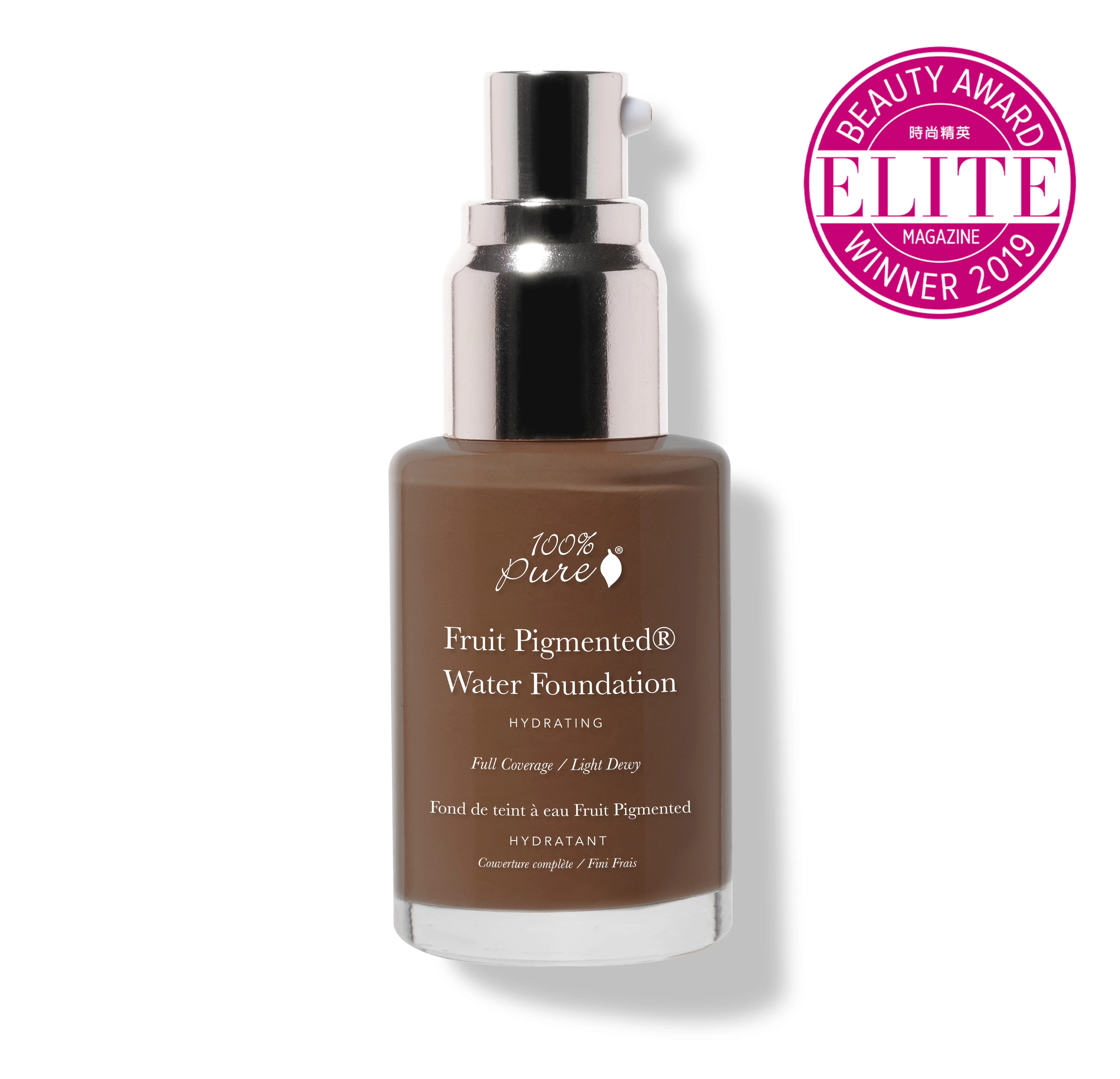
How well does your skin match with 100% Pure Fruit Pigmented® Full Coverage Water Foundation?
Login to see detailsOr continue via
Quick 1-minute survey • Completely free
Ingredients
Analysis results of Ingredients


Ingredient List
| EWG | CIR | Ingredient Name & Cosmetic Function | Notes |
|---|---|---|---|
| - | B | (Masking) |  |
| - | - | Rice Starch | |
| - | - | Extracts Of Prunus Persica (Peach) Fruit | |
| 1 | - | (Skin Conditioning, Cosmetic Astringent) | |


100% Pure Fruit Pigmented® Full Coverage Water Foundation - Ingredient Explanation
Aloe Barbadensis Leaf
1. Definition Aloe Barbadensis Leaf:
Aloe Barbadensis Leaf, commonly known as Aloe Vera, is a succulent plant species that is widely used in various cosmetic products for its soothing and healing properties. The gel extracted from the leaves of the Aloe Vera plant is rich in vitamins, minerals, enzymes, and amino acids, making it a popular ingredient in skincare and haircare products.2. Use:
Aloe Barbadensis Leaf is known for its moisturizing, anti-inflammatory, and wound-healing properties, making it a versatile ingredient in cosmetics. It is often used in creams, lotions, gels, masks, and serums to hydrate the skin, reduce redness and irritation, and promote healing of minor skin injuries. Aloe Vera is also used in shampoos and conditioners to nourish and strengthen hair, leaving it soft and shiny.3. Usage Aloe Barbadensis Leaf:
When using products containing Aloe Barbadensis Leaf, it is important to patch test first to ensure that you are not allergic to the ingredient. Apply a small amount of the product on a small area of skin and wait for 24 hours to check for any adverse reactions. If no irritation occurs, you can safely use the product as directed. Avoid contact with the eyes and do not ingest Aloe Vera products.4. References:
- Surjushe, A., Vasani, R., & Saple, D. G. (2008). Aloe Vera: A short review. Indian Journal of Dermatology, 53(4), 163–166.
- Reynolds, T., & Dweck, A. C. (1999). Aloe Vera leaf gel: a review update. Journal of Ethnopharmacology, 68(1-3), 3-37.
- Radha, M. H., & Laxmipriya, N. P. (2015). Evaluation of biological properties and clinical effectiveness of Aloe Vera: A systematic review. Journal of Traditional and Complementary Medicine, 5(1), 21-26.
Rice Starch
Ingredient data is being updated. Please check back later.
Extracts Of Prunus Persica (Peach) Fruit
Ingredient data is being updated. Please check back later.
Prunus Armeniaca (Apricot) Fruit
1. Definition Prunus Armeniaca (Apricot) Fruit:
Prunus Armeniaca (Apricot) Fruit is the fruit of the apricot tree, scientifically known as Prunus armeniaca. It is a small, yellow to orange-colored fruit with a smooth skin and a juicy, sweet flesh.2. Use:
Apricot fruit is commonly used in cosmetics for its nourishing and moisturizing properties. It is rich in vitamins A, C, and E, as well as antioxidants, which help to protect the skin from environmental damage and promote healthy skin cell regeneration. Apricot fruit extract is often found in skincare products such as creams, lotions, and serums, where it can help to hydrate and soften the skin, improve skin tone and texture, and reduce the appearance of fine lines and wrinkles.3. Usage Prunus Armeniaca (Apricot) Fruit:
Apricot fruit extract can be used in a variety of ways in cosmetics. It can be found in skincare products as a key ingredient, or it can be used as a standalone ingredient in DIY beauty treatments. When using apricot fruit extract in cosmetics, it is important to follow the manufacturer's instructions for proper dilution and application. It is also recommended to perform a patch test before using apricot fruit extract on the skin, especially if you have sensitive skin or are prone to allergies.4. References:
- Sharma, S., & Sharma, S. (2012). Prunus armeniaca (Apricot): An overview. International Journal of Research in Pharmaceutical and Biomedical Sciences, 3(1), 222-228.
- Nour, V., Trandafir, I., & Cosmulescu, S. (2013). Antioxidant capacity, phenolic compounds, carotenoids, and vitamin C content in apricot (Prunus armeniaca L.) from Romania. Notulae Botanicae Horti Agrobotanici Cluj-Napoca, 41(1), 68-73.
- Gull, J., Sultana, B., Anwar, F., & Naseer, R. (2013). Formulation and quality evaluation of apricot (Prunus armeniaca L.) kernel oil-based cosmetic emulsions. Journal of Cosmetic Science, 64(4), 219-233.
Review

Didn't find
the information you need?






Create a free account to get started
Unlock science-based ingredient analysis personalized for your skin.
Already have an account? Log in
We protect your privacy. We never send spam.