


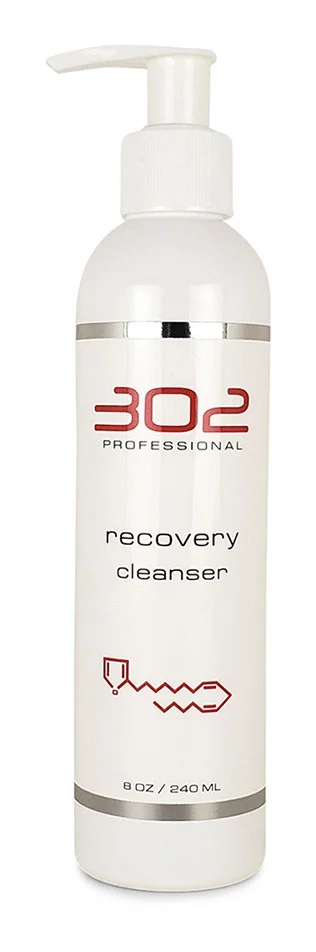
Analysis locked
How well does your skin match with 302 Professional Recovery Cleanser?
Login to see detailsOr continue via
Quick 1-minute survey • Completely free
Ingredients
Analysis results of Ingredients


Ingredient List
| EWG | CIR | Ingredient Name & Cosmetic Function | Notes |
|---|---|---|---|
| 1 | B | (Masking, Humectant, Skin Protecting, Uv Absorber, Skin Conditioning, Antioxidant, Emollient, Antimicrobial, Astringent, Tonic) |  |
| - | - | Arnica Montana Flower Water | |
| - | A |  | |
| 1 | A | (Hair Conditioning, Skin Conditioning, Emollient, Refatting) | |


302 Professional Recovery Cleanser - Ingredient Explanation
Camellia Sinensis Leaf Extract
1. Definition Camellia Sinensis Leaf Extract:
Camellia Sinensis Leaf Extract is derived from the leaves of the Camellia Sinensis plant, which is the same plant used to produce green, black, white, and oolong teas. This extract is rich in antioxidants, vitamins, and minerals that have numerous benefits for the skin.2. Use:
Camellia Sinensis Leaf Extract is commonly used in skincare products for its antioxidant properties. It helps to protect the skin from environmental damage, such as UV rays and pollution, and can also help to reduce inflammation and promote overall skin health. Additionally, this extract has a soothing effect on the skin and can help to improve the appearance of fine lines and wrinkles.3. Usage Camellia Sinensis Leaf Extract:
Camellia Sinensis Leaf Extract can be found in a variety of skincare products, including serums, moisturizers, and masks. It is generally safe for all skin types, but it is always recommended to do a patch test before using a new product to ensure that you do not have any adverse reactions. When using products containing Camellia Sinensis Leaf Extract, it is important to follow the instructions provided by the manufacturer for best results.4. References:
- Baek, J. H., Kim, S. M., Lee, H., Lee, J. Y., & Kim, J. H. (2016). Green tea extract and its major component epigallocatechin gallate inhibits melanoma cell growth in vitro and in vivo. Food and chemical toxicology, 87, 1-11.
- Yoon, J. H., Baek, S. J., & Lee, S. H. (2012). Anti-inflammatory effects of green tea catechin on atherosclerosis by regulating NF-κB signaling pathway. Nutrition research and practice, 6(4), 294-301.
- Hsu, S. (2005). Green tea and the skin. Journal of the American Academy of Dermatology, 52(6), 1049-1059.
Arnica Montana Flower Water
Ingredient data is being updated. Please check back later.
Cucumis Sativus Fruit
1. Definition Cucumis Sativus (Cucumber) Fruit:
Cucumis Sativus, commonly known as cucumber, is a fruit that belongs to the gourd family. It is widely cultivated for its edible fruit, which is typically consumed fresh or pickled. Cucumber is known for its high water content, refreshing taste, and cooling properties.2. Use:
Cucumber fruit is a popular ingredient in cosmetics due to its numerous skincare benefits. It is rich in antioxidants, vitamins (such as C and K), and minerals, making it a valuable addition to skincare products. Cucumber extract is known for its soothing, hydrating, and anti-inflammatory properties, making it ideal for sensitive or irritated skin. It can help reduce puffiness, calm redness, and improve overall skin tone and texture.3. Usage Cucumis Sativus (Cucumber) Fruit:
Cucumber extract is commonly used in various skincare products, including moisturizers, toners, serums, and masks. It can be applied topically to the skin to provide hydration, soothe irritation, and promote a healthy complexion. Cucumber-infused products are suitable for all skin types, including dry, oily, combination, and sensitive skin. However, individuals with cucumber allergies should exercise caution when using products containing cucumber extract.4. References:
- Mukherjee, P. K., Nema, N. K., Maity, N., & Sarkar, B. K. (2013). Phytochemical and therapeutic potential of cucumber. Fitoterapia, 84, 227-236.
- Park, G. H., Park, K. Y., Cho, H. I., & Lee, S. M. (2009). Protective effect of cucumber extract on skin aging in in vivo model. Journal of the Society of Cosmetic Scientists of Korea, 35(4), 357-365.
- Draelos, Z. D. (2010). Cosmetic Dermatology: Products and Procedures. John Wiley & Sons.
Squalane
1. Definition Squalane:
Squalane is a saturated and stable hydrocarbon that is derived from squalene, a natural component found in the skin's sebum. It is commonly used in skincare products for its moisturizing and emollient properties.2. Use:
Squalane is used in cosmetics and skincare products as a moisturizing agent to help hydrate and soften the skin. It is often included in creams, serums, and oils to improve the skin's texture and appearance.3. Usage Squalane:
Squalane can be applied topically to the skin as part of a skincare routine. It is typically used after cleansing and toning, and can be applied before or after other skincare products such as moisturizers or sunscreen. Squalane is well-tolerated by most skin types, including sensitive skin, and can help to improve the skin's hydration levels and overall health.Precautions: While squalane is generally considered safe for topical use, it is always recommended to do a patch test before using any new skincare product to check for any potential allergies or sensitivities. Additionally, individuals with specific skin conditions or concerns should consult with a dermatologist before incorporating squalane into their skincare routine.
4. References:
- Baumann, L. (2005). Cosmetic Dermatology: Principles and Practice. New York: McGraw-Hill.
- Draelos, Z. D. (2015). Cosmeceuticals. Philadelphia: Saunders.
- Mukherjee, S., Date, A., Patravale, V., Korting, H. C., Roeder, A., & Weindl, G. (2006). Retinoids in the treatment of skin aging: an overview of clinical efficacy and safety. Clinical interventions in aging, 1(4), 327-348.
Review

Didn't find
the information you need?





Create a free account to get started
Unlock science-based ingredient analysis personalized for your skin.
Already have an account? Log in
We protect your privacy. We never send spam.