Ingredients
Analysis results of Ingredients


Ingredient List
| EWG | CIR | Ingredient Name & Cosmetic Function | Notes |
|---|---|---|---|
| 3 | - | (Antiacne Agent, Oxidising Agent) |  |
| - | - | Docusate Sodium | |
| - | - | Disodium Edetate | |
| 2 | - | (Surfactant, Emulsifying) | |


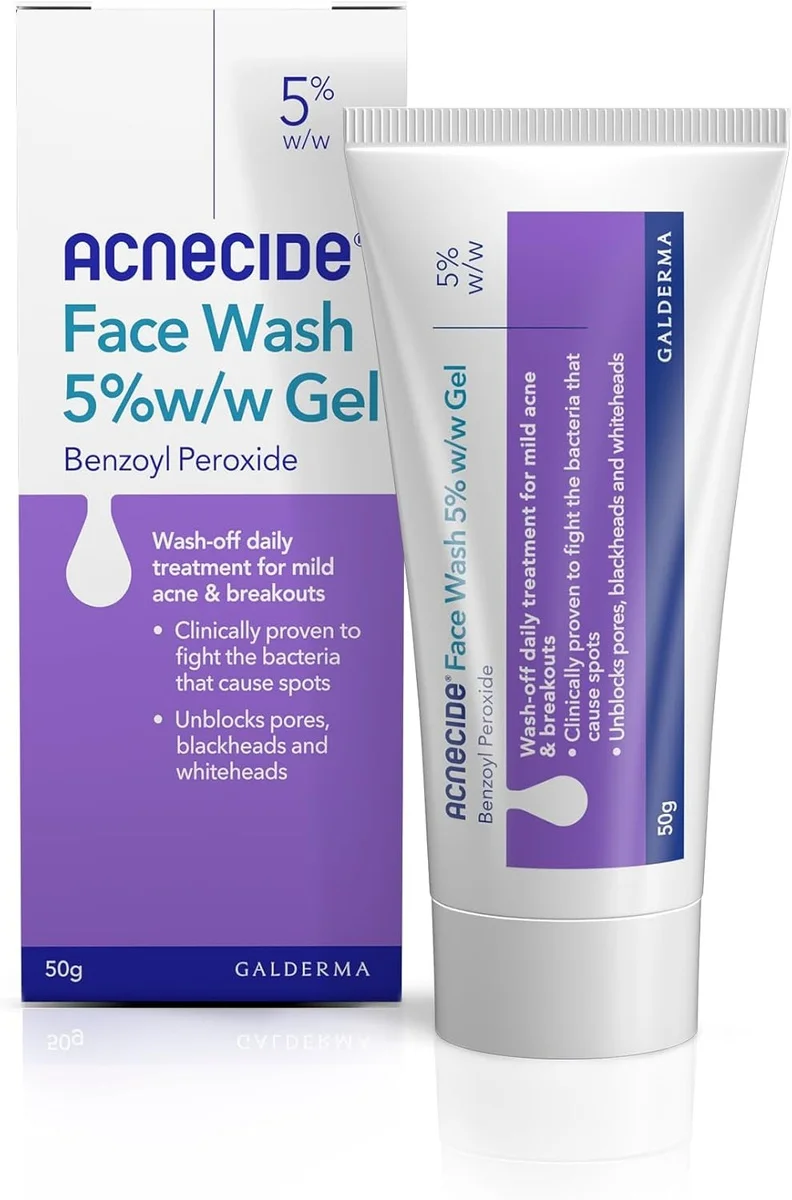
Acnecide Face Wash Gel 5% Benzoyl Peroxide Acne Treatment For Spot-prone Skin - Ingredient Explanation
Benzoyl Peroxide (5%)
1. Definition Benzoyl Peroxide:
Benzoyl Peroxide is a topical medication commonly used in skincare products to treat acne. It works by reducing the amount of acne-causing bacteria on the skin and helping to unclog pores.2. Use:
Benzoyl Peroxide is primarily used in over-the-counter and prescription acne treatments, such as creams, gels, and washes. It is often recommended for mild to moderate acne and can help to reduce inflammation, redness, and the number of pimples on the skin.3. Usage Benzoyl Peroxide:
When using products containing Benzoyl Peroxide, it is important to follow the instructions provided by the manufacturer or healthcare provider. Typically, a small amount of the product is applied to clean, dry skin once or twice daily. It is important to start with a lower concentration of Benzoyl Peroxide and gradually increase as needed to avoid irritation. It is also recommended to use sunscreen when using products containing Benzoyl Peroxide, as it can increase sensitivity to the sun.4. References:
- Draelos, Z. D. (2016). Over-the-counter acne treatments. Dermatologic clinics, 34(2), 175-184.
- Zaenglein, A. L., Pathy, A. L., Schlosser, B. J., Alikhan, A., Baldwin, H. E., Berson, D. S., ... & Bhushan, R. (2016). Guidelines of care for the management of acne vulgaris. Journal of the American Academy of Dermatology, 74(5), 945-973.
- Thiboutot, D., Dréno, B., Abanmi, A., Alexis, A., Araviiskaia, E., Barona Cabal, M. I., ... & Layton, A. M. (2019). Practical management of acne for clinicians: An international consensus from the Global Alliance to Improve Outcomes in Acne. Journal of the American Academy of Dermatology, 81(3), 775-789.
Docusate Sodium
Ingredient data is being updated. Please check back later.
Disodium Edetate
Ingredient data is being updated. Please check back later.
Poloxamer 182
1. Definition Poloxamer 182:
Poloxamer 182 is a nonionic surfactant that belongs to the family of block copolymers, specifically composed of poly(ethylene oxide) and poly(propylene oxide) blocks. It is commonly used in cosmetics as an emulsifier, solubilizer, and stabilizer due to its ability to improve the texture and consistency of products.2. Use:
Poloxamer 182 is utilized in cosmetics to create stable emulsions, enhance the solubility of ingredients, and improve the overall performance of formulations. It is often found in creams, lotions, and makeup products to ensure a smooth application and even distribution of active ingredients.3. Usage Poloxamer 182:
When using products containing Poloxamer 182, it is important to follow the recommended guidelines provided by the manufacturer. It is generally considered safe for topical application, but individuals with sensitive skin may want to perform a patch test before using products with this ingredient extensively. Additionally, avoid contact with eyes and mucous membranes to prevent irritation.4. References:
- A. Sharma, S. K. Sharma, R. Kumar, "Poloxamers: A pharmaceutical excipients with therapeutic behaviors," International Journal of Pharmaceutical Sciences and Research, vol. 4, no. 1, pp. 249-260, 2013.
- M. M. Bhise, A. S. Patil, S. R. Mahajan, "Poloxamers in pharmaceutical formulations," International Journal of Pharmaceutical Sciences Review and Research, vol. 6, no. 1, pp. 115-122, 2011.
- A. S. Sawant, S. S. Pandit, S. S. Kulkarni, "Poloxamers: A versatile pharmaceutical excipient," World Journal of Pharmacy and Pharmaceutical Sciences, vol. 6, no. 6, pp. 1576-1593, 2017.
Review