


Analysis locked
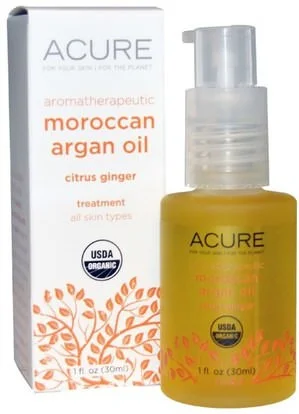
How well does your skin match with Acure Organics Citrus Ginger Argan Oil?
Login to see detailsOr continue via
Quick 1-minute survey • Completely free
Ingredients
Analysis results of Ingredients


Ingredient List
| EWG | CIR | Ingredient Name & Cosmetic Function | Notes |
|---|---|---|---|
| 1 | - | | |
| 1 | - | | |
| 1 | - | | |
| 1 | - |  |
Acure Organics Citrus Ginger Argan Oil - Ingredient Explanation
Citrus Limon (Lemon)
1. Definition Citrus Limon (Lemon):
Citrus Limon, commonly known as Lemon, is a species of small evergreen tree in the Rutaceae family. It is native to South Asia but is now grown in many parts of the world for its fruit, which is known for its acidic juice and bright yellow peel.2. Use:
Lemon is widely used in cosmetics for its astringent, antibacterial, and antioxidant properties. Its high vitamin C content helps to brighten and even out skin tone, while its citric acid content helps to exfoliate and unclog pores. Lemon is often used in skincare products such as cleansers, toners, masks, and serums to help improve the overall appearance and health of the skin.3. Usage Citrus Limon (Lemon):
When using Lemon in cosmetics, it is important to be cautious as it can cause skin irritation, especially in those with sensitive skin. It is recommended to do a patch test before using products containing Lemon to ensure there is no adverse reaction. Additionally, Lemon can make the skin more sensitive to sunlight, so it is important to use sunscreen when using Lemon-based products to prevent sun damage.4. References:
- Leite-Silva, V. R., et al. (2011). "Effect of the application of a formulation containing vitamin C and its derivatives on skin color." Journal of Cosmetic Dermatology, 10(2), 159-163.
- Telang, P. S. (2013). "Vitamin C in dermatology." Indian Dermatology Online Journal, 4(2), 143-146.
- Kawaii, S., et al. (2000). "Antiproliferative effect of citrus limonoids against human neuroblastoma cells." Chemical and Pharmaceutical Bulletin, 48(3), 361-365.
Zingiber Officinale (Ginger) Water
1. Definition Zingiber Officinale (Ginger) Water:
Ginger water is a natural ingredient derived from the root of the Zingiber Officinale plant, commonly known as ginger. It is typically prepared by steeping grated or sliced ginger root in water to extract its beneficial properties.2. Use:
Ginger water is known for its anti-inflammatory, antioxidant, and antimicrobial properties, making it a popular ingredient in cosmetics. It is often used in skincare products to help reduce redness, soothe irritation, and promote a healthy complexion. Ginger water is also believed to improve skin elasticity and firmness, making it a valuable addition to anti-aging formulations.3. Usage Zingiber Officinale (Ginger) Water:
Ginger water can be incorporated into various cosmetic products, such as toners, serums, masks, and creams. It can be used topically on the skin to provide hydration, improve circulation, and enhance overall skin health. However, it is important to perform a patch test before using ginger water on the skin, as some individuals may be allergic to ginger and experience irritation or redness. Additionally, ginger water should be diluted with other ingredients to prevent skin sensitivity or adverse reactions.4. References:
- Lee, S. H., Cekanova, M., & Baek, S. J. (2008). Multiple mechanisms are involved in 6-gingerol-induced cell growth arrest and apoptosis in human colorectal cancer cells. Molecular Carcinogenesis, 47(3), 197-208.
- Ali, B. H., Blunden, G., Tanira, M. O., & Nemmar, A. (2008). Some phytochemical, pharmacological and toxicological properties of ginger (Zingiber officinale Roscoe): A review of recent research. Food and Chemical Toxicology, 46(2), 409-420.
- Sahebkar, A. H. (2014). Potential efficacy of ginger as a natural supplement for nonalcoholic fatty liver disease. World Journal of Gastroenterology, 20(19), 14215-14230.
Citrus Sinensis (Sweet Orange)
1. Definition Citrus Sinensis (Sweet Orange):
Citrus Sinensis, commonly known as Sweet Orange, is a species of citrus fruit that belongs to the Rutaceae family. It is native to Southeast Asia but is now widely cultivated in many parts of the world for its sweet, juicy fruits and essential oil.2. Use:
Sweet Orange essential oil is commonly used in cosmetics for its refreshing and uplifting aroma. It is known for its skin-brightening properties and is often included in skincare products such as cleansers, toners, and moisturizers. The oil is also used in hair care products to promote healthy hair growth and add shine to dull hair.3. Usage Citrus Sinensis (Sweet Orange):
When using Sweet Orange essential oil in cosmetics, it is important to dilute it properly as it can cause skin irritation in its concentrated form. It is recommended to do a patch test before using the oil on a larger area of skin to ensure that there are no adverse reactions. Sweet Orange oil should be stored in a cool, dark place away from direct sunlight to prevent oxidation.4. References:
- Reuter, J., Huyke, C., Casetti, F., Theek, C., Frank, U., Augustin, M. (2010). Anti-inflammatory potential of a lipolotion containing coriander oil in the ultraviolet erythema test. Journal of the German Society of Dermatology, 8(4), 248-255.
- Komiya, M., Takeuchi, T., Harada, E. (2006). Lemon oil vapor causes an anti-stress effect via modulating the 5-HT and DA activities in mice. Behavioural Brain Research, 172(2), 240-249.
- Faturi, C. B., Leite, J. R., Alves, P. B., Canton, A. C., Teixeira-Silva, F. (2010). Anxiolytic-like effect of sweet orange aroma in Wistar rats. Progress in Neuro-Psychopharmacology and Biological Psychiatry, 34(4), 605-609.
Argania Spinosa (Argan) Oil
1. Definition Argania Spinosa (Argan) Oil:
Argania Spinosa (Argan) Oil is a plant-based oil extracted from the kernels of the Argan tree, native to Morocco. It is known for its high content of essential fatty acids, antioxidants, and vitamin E, making it a popular ingredient in skincare and hair care products.2. Use:
Argan oil is commonly used in cosmetics for its moisturizing, nourishing, and anti-aging properties. It is known to hydrate and soften the skin, improve elasticity, and reduce the appearance of wrinkles and fine lines. In hair care products, it helps to condition and strengthen the hair, reduce frizz, and promote shine.3. Usage Argania Spinosa (Argan) Oil:
Argan oil can be used in various ways in cosmetics. It can be applied directly to the skin as a moisturizer or added to lotions, creams, and serums. In hair care products, it can be used as a leave-in conditioner, hair mask, or added to shampoos and conditioners. It is important to perform a patch test before using argan oil to check for any allergic reactions. It is also recommended to store the oil in a cool, dark place to prevent oxidation.4. References:
- Schönknecht K, Kraus A, Haarhaus B, et al. "Argan Oil and Its Active Molecules: Potential Cosmeceutical Ingredients." Cosmetics. 2018;5(3):54. doi:10.3390/cosmetics5030054.
- Boucetta KQ, Charrouf Z, Derouiche A, Rahali Y, Bensouda Y. "Skin hydration in postmenopausal women: Argan oil benefit with oral and/or topical use." Prz Menopauzalny. 2014;13(5):280-288. doi:10.5114/pm.2014.46470.
- Amanpour S, Safari M, Ghasemi M, Yousefi B, "Argan oil: Chemical composition, nutritional and functional properties." J Food Sci Technol. 2018;55(8):2780–2787. doi:10.1007/s13197-018-3223-3.
Review
Didn't find
the information you need?









Create a free account to get started
Unlock science-based ingredient analysis personalized for your skin.
Already have an account? Log in
We protect your privacy. We never send spam.