


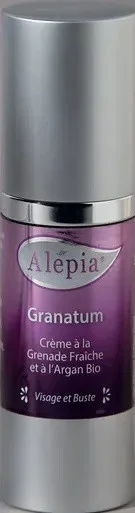
Analysis locked
How well does your skin match with Alepia Day Cream Granatum?
Login to see detailsOr continue via
Quick 1-minute survey • Completely free
Ingredients
Analysis results of Ingredients


Ingredient List
| EWG | CIR | Ingredient Name & Cosmetic Function | Notes |
|---|---|---|---|
| 1 | - | (Skin Conditioning, Masking, Skin Protecting) | |
| 1 | B | | |
| 1 | - | (Skin Conditioning, Fragrance) | |
| 1 | - | (Skin Conditioning, Masking) | |



Alepia Day Cream Granatum - Ingredient Explanation
Rosa Damascena Flower Water
1. Definition Rosa Damascena Flower Water:
Rosa Damascena Flower Water, also known as rose water, is a fragrant water made by distilling rose petals. It is commonly used in cosmetics for its soothing and hydrating properties.2. Use:
Rosa Damascena Flower Water is often used in cosmetics as a natural toner and astringent. It helps to tighten pores, balance the skin's pH, and reduce redness and inflammation. Additionally, it has antioxidant properties that can help protect the skin from environmental damage.3. Usage Rosa Damascena Flower Water:
Rosa Damascena Flower Water can be used in a variety of ways in skincare routines. It can be applied directly to the skin after cleansing as a toner, or mixed with other ingredients to create DIY face masks, mists, or serums. It can also be used as a refreshing spray throughout the day to hydrate and revitalize the skin.Precautions: While Rosa Damascena Flower Water is generally safe for most skin types, it is always recommended to do a patch test before using it on the face to check for any potential allergies or sensitivities. If irritation occurs, discontinue use immediately.
4. References:
- Tabassum, N., & Hamdani, M. (2014). Plants used in cosmetics. Phytopharmacology, 5(2), 133-143.
- Riaz, A., & Rasul, A. (2013). Rose water: a natural gift for skincare. International Journal of Chemical and Biochemical Sciences, 4(2), 62-67.
- Boskabady, M. H., Shafei, M. N., Saberi, Z., & Amini, S. (2011). Pharmacological effects of Rosa damascena. Iranian Journal of Basic Medical Sciences, 14(4), 295-307.
Rosmarinus Officinalis (Rosemary) Flower Water
1. Definition Rosmarinus Officinalis (Rosemary) Flower Water:
Rosmarinus Officinalis (Rosemary) Flower Water is a natural hydrosol produced through the steam distillation of rosemary flowers. It is known for its refreshing and invigorating scent, as well as its various skincare benefits.2. Use:
Rosemary Flower Water is commonly used in cosmetics for its astringent, toning, and antioxidant properties. It helps to tighten and tone the skin, reduce the appearance of pores, and promote a more youthful complexion. Additionally, it can help to soothe irritation, reduce redness, and calm sensitive skin.3. Usage Rosmarinus Officinalis (Rosemary) Flower Water:
Rosemary Flower Water can be used in a variety of ways in cosmetics, such as a facial toner, mist, or as an ingredient in creams, lotions, and serums. It can be applied directly to the skin with a cotton pad or spritzed onto the face for a refreshing boost throughout the day. It is gentle enough for daily use and suitable for all skin types.4. References:
- Ali, B., Al-Wabel, N. A., Shams, S., Ahamad, A., Khan, S. A., & Anwar, F. (2015). Essential oils used in aromatherapy: A systemic review. Asian Pacific Journal of Tropical Biomedicine, 5(8), 601-611.
- Tundis, R., Loizzo, M. R., Menichini, F., & Statti, G. A. (2008). Biological and pharmacological activities of iridoids: recent developments. Mini Reviews in Medicinal Chemistry, 8(4), 399-420.
- Silva, F., Ferreira, S., Queiroz, J. A., & Domingues, F. C. (2011). Coriander (Coriandrum sativum L.) essential oil: its antibacterial activity and mode of action evaluated by flow cytometry. Journal of Medical Microbiology, 60(10), 1479-1486.
Lavandula Angustifolia (Lavender) Flower Water
1. Definition Lavandula Angustifolia (Lavender) Flower Water:
Lavandula Angustifolia (Lavender) Flower Water is a natural byproduct of the steam distillation process used to extract lavender essential oil from the flowers of the Lavandula Angustifolia plant. It is a clear, fragrant liquid that retains some of the therapeutic properties of lavender essential oil.2. Use:
Lavender Flower Water is commonly used in cosmetics and skincare products for its soothing and calming properties. It is known for its anti-inflammatory, antibacterial, and antioxidant properties, making it beneficial for a variety of skin types. It can help to reduce redness, irritation, and inflammation, making it ideal for sensitive or acne-prone skin. Lavender Flower Water can also help to balance the skin's natural oil production and promote a clear, healthy complexion.3. Usage Lavandula Angustifolia (Lavender) Flower Water:
Lavender Flower Water can be used in a variety of ways in skincare products. It can be used as a facial toner to help balance the skin's pH levels and tighten pores. It can also be used as a refreshing mist throughout the day to hydrate and soothe the skin. Additionally, Lavender Flower Water can be added to bath water or used as a natural fragrance in homemade skincare products.4. References:
- Ali, B., et al. (2015). Essential oils used in aromatherapy: A systemic review. Asian Pacific Journal of Tropical Biomedicine, 5(8), 601-611.
- Cavanagh, H. M., & Wilkinson, J. M. (2002). Biological activities of lavender essential oil. Phytotherapy Research, 16(4), 301-308.
- Koulivand, P. H., et al. (2013). Lavender and the nervous system. Evidence-Based Complementary and Alternative Medicine, 2013, 681304.
Punica Granatum Fruit Juice
1. Definition Punica Granatum Fruit Juice:
Punica Granatum Fruit Juice, commonly known as pomegranate juice, is derived from the fruit of the Punica granatum tree. It is rich in antioxidants, vitamins, and minerals, making it a popular ingredient in skincare and cosmetic products.2. Use:
Punica Granatum Fruit Juice is used in cosmetics for its anti-inflammatory, anti-aging, and hydrating properties. It helps to improve skin texture, reduce the appearance of wrinkles, and protect the skin from environmental damage. Additionally, pomegranate juice has been found to promote collagen production, resulting in firmer and more youthful-looking skin.3. Usage Punica Granatum Fruit Juice:
When using cosmetics containing Punica Granatum Fruit Juice, it is important to patch test the product first to check for any allergic reactions. It is generally safe for most skin types, but individuals with sensitive skin should use caution and consult with a dermatologist before incorporating products with pomegranate juice into their skincare routine. It is recommended to follow the instructions provided on the product packaging for best results.4. References:
- Aslam MN, Lansky EP, Varani J. Pomegranate as a cosmeceutical source: pomegranate fractions promote proliferation and procollagen synthesis and inhibit matrix metalloproteinase-1 production in human skin cells. J Ethnopharmacol. 2006 Sep 19;103(3):311-8. doi: 10.1016/j.jep.2005.08.027. Epub 2005 Oct 18. PMID: 16157482.
- Afaq F, Saleem M, Krueger CG, Reed JD, Mukhtar H. Anthocyanin- and hydrolyzable tannin-rich pomegranate fruit extract modulates MAPK and NF-kappaB pathways and inhibits skin tumorigenesis in CD-1 mice. Int J Cancer. 2005 Sep 20;113(3):423-33. doi: 10.1002/ijc.20658. PMID: 15729734.
- Aslam MN, Lansky EP, Varani J. Pomegranate as a cosmeceutical source: pomegranate fractions promote proliferation and procollagen synthesis and inhibit matrix metalloproteinase-1 production in human skin cells. J Ethnopharmacol. 2006 Sep 19;103(3):311-8. doi: 10.1016/j.jep.2005.08.027. Epub 2005 Oct 18. PMID: 16157482.
Review

Didn't find
the information you need?








Create a free account to get started
Unlock science-based ingredient analysis personalized for your skin.
Already have an account? Log in
We protect your privacy. We never send spam.