


Analysis locked
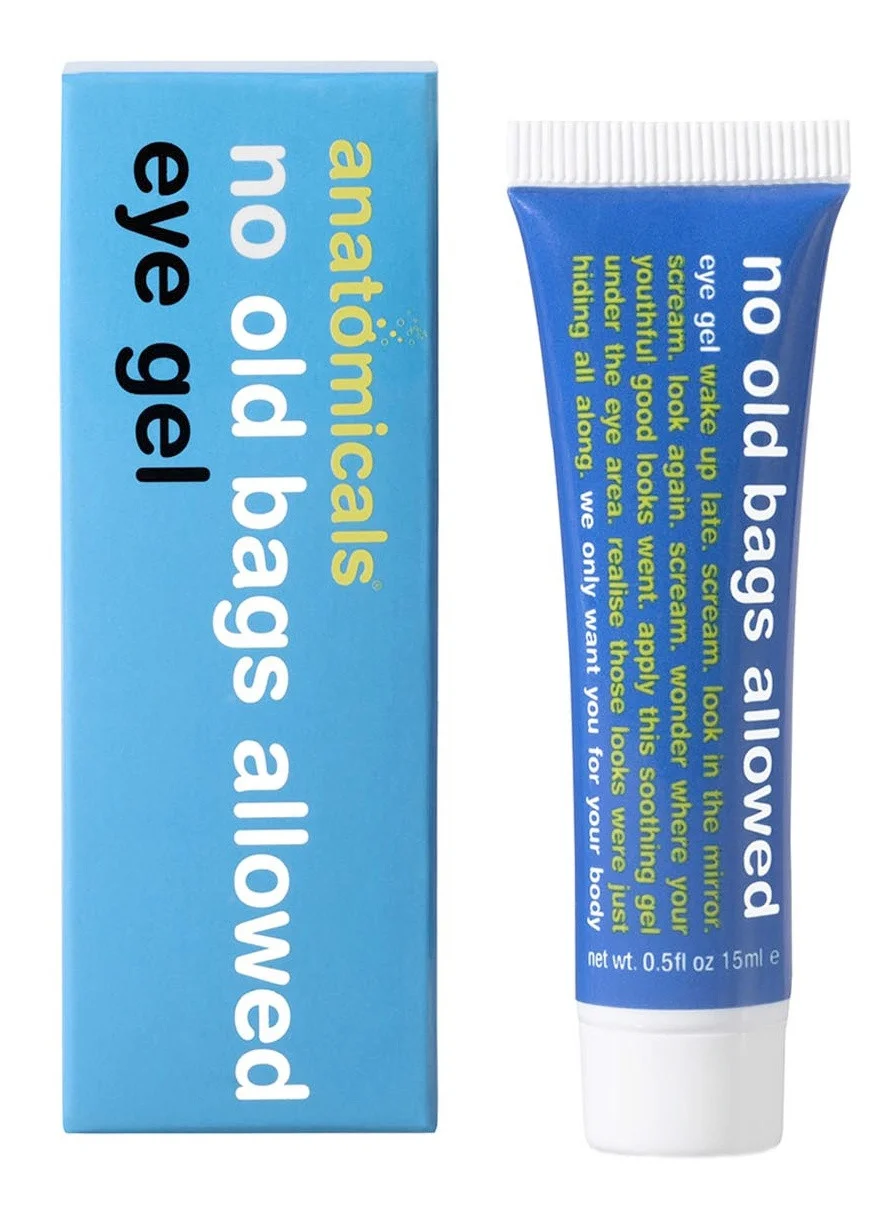
How well does your skin match with Anatomicals No Old Bags Allowed Eye Gel?
Login to see detailsOr continue via
Quick 1-minute survey • Completely free
Ingredients
Analysis results of Ingredients


Ingredient List
| EWG | CIR | Ingredient Name & Cosmetic Function | Notes |
|---|---|---|---|
| 1 | A | (Skin Conditioning, Bulking Agent) |  |
| 1 | - | (Skin Conditioning, Emollient) | |
| 1 | - | (Skin Conditioning, Emollient, Film Forming) | |
| 1 | B | (Skin Conditioning, Antistatic Agent, Hair Conditioning) | |


Anatomicals No Old Bags Allowed Eye Gel - Ingredient Explanation
Beta Glucan
1. Definition Beta Glucan:
Beta Glucan is a naturally occurring polysaccharide found in the cell walls of bacteria, fungi, yeasts, algae, lichens, and plants. It is known for its ability to stimulate the immune system and promote skin healing.2. Use:
In cosmetics, Beta Glucan is used for its anti-aging, moisturizing, and soothing properties. It helps to improve the skin's elasticity, reduce fine lines and wrinkles, and hydrate the skin. Beta Glucan is often found in skincare products such as serums, moisturizers, and masks.3. Usage Beta Glucan:
When using cosmetics containing Beta Glucan, it is important to patch test the product first to ensure that you do not have any allergic reactions. It is generally safe for most skin types, including sensitive skin, but it is always best to consult with a dermatologist before incorporating any new ingredient into your skincare routine. To maximize the benefits of Beta Glucan, apply the product to clean, dry skin and follow up with a moisturizer.4. References:
- Choi, J. K., Kim, S. H. (2018). Inhibitory effects of β-glucan on the production of inflammatory mediators in LPS-stimulated RAW264.7 macrophages. The Journal of Nutritional Biochemistry, 54, 72-80.
- Kim, H. S., Hong, J. T., Kim, Y., Han, S. B. (2016). Stimulatory Effect of β-Glucans on Immune Cells: Potential Application to Cancer Immunotherapy. Anti-Cancer Agents in Medicinal Chemistry, 16(1), 30-37.
- Zykova, T. A., Zhu, F., Zhai, X., Ma, W. Y., Ermakova, S. P., Lee, K. W., Bode, A. M., Dong, Z. (2005). Resveratrol directly targets COX-2 to inhibit carcinogenesis. Molecular Carcinogenesis, 45(10), 842-851.
Astragalus Membranaceus Root Extract
1. Definition Astragalus Membranaceus Root Extract:
Astragalus Membranaceus Root Extract is a natural plant extract derived from the root of the Astragalus membranaceus plant, also known as Huang Qi in traditional Chinese medicine. It is known for its anti-inflammatory, antioxidant, and immune-boosting properties.2. Use:
Astragalus Membranaceus Root Extract is commonly used in cosmetics for its ability to improve skin health and appearance. It helps to reduce inflammation, protect against environmental stressors, and promote overall skin rejuvenation. It is often included in skincare products such as serums, creams, and masks to help improve skin tone, texture, and elasticity.3. Usage Astragalus Membranaceus Root Extract:
When using products containing Astragalus Membranaceus Root Extract, it is important to follow the instructions provided by the manufacturer. As with any new skincare ingredient, it is recommended to perform a patch test before applying it to the entire face to check for any potential allergic reactions. It is also advisable to consult with a dermatologist or skincare professional before incorporating Astragalus Membranaceus Root Extract into your skincare routine, especially if you have sensitive skin or existing skin conditions.4. References:
- Kim, S. H., Lee, S. H., Lee, S. Y., Kim, Y. J., Lee, Y. C., & Kim, C. D. (2018). Astragalus membranaceus ameliorates reproductive toxicity induced by cyclophosphamide in male mice. Phytotherapy Research, 32(10), 2097-2104.
- Zhang, C., Yang, L., Zhao, X., Chen, X., Wang, X., & Zhang, H. (2016). Astragalus polysaccharides enhance the humoral and cellular immune responses of hepatitis B surface antigen vaccination through inhibiting the expression of transforming growth factor β and the frequency of regulatory T cells. FEMS Immunology & Medical Microbiology, 56(3), 248-255.
- Yang, L., Zhang, C., Chen, X., Zhang, H., & Zhang, H. (2015). Effect of Astragalus polysaccharides on expression of TNF-α, IL-1β and NFATc4 in a rat model of experimental colitis. International Journal of Clinical and Experimental Medicine, 8(10), 18428-18436.
Glycosaminoglycans
1. Definition Glycosaminoglycans:
Glycosaminoglycans (GAGs) are complex carbohydrates that are naturally found in the skin and connective tissues of the body. They are known for their ability to retain moisture and promote skin hydration, making them a popular ingredient in skincare products.2. Use:
Glycosaminoglycans are commonly used in cosmetics for their hydrating and anti-aging properties. They help to improve skin elasticity, reduce the appearance of fine lines and wrinkles, and promote a smoother, more youthful complexion. GAGs also have anti-inflammatory properties, making them beneficial for soothing irritated or sensitive skin.3. Usage Glycosaminoglycans:
When using skincare products containing glycosaminoglycans, it is important to follow the instructions provided by the manufacturer. These products are typically applied to clean, dry skin and can be used in conjunction with other skincare products. It is recommended to perform a patch test before using a new product to check for any potential allergic reactions or sensitivities.4. References:
- Saravanan, S., Madhavan, V., & Sathishkumar, K. (2018). Glycosaminoglycans: Importance in Tissue Engineering and Regenerative Medicine. Journal of Stem Cell Research & Therapy, 8(1), 1-6.
- Lupo, M. P. (2014). Cosmeceutical peptides. Dermatologic Therapy, 27(5), 317-324.
- Papakonstantinou, E., Roth, M., & Karakiulakis, G. (2012). Hyaluronic acid: A key molecule in skin aging. Dermato-Endocrinology, 4(3), 253-258.
Hydrolyzed Oat Protein
1. Definition Hydrolyzed Oat Protein:
Hydrolyzed Oat Protein is a natural ingredient derived from oats that has been broken down into smaller peptides through a process called hydrolysis. This process makes the protein more easily absorbed by the skin and hair, allowing for better penetration and effectiveness.2. Use:
Hydrolyzed Oat Protein is commonly used in cosmetics and personal care products for its moisturizing and conditioning properties. It helps to hydrate the skin and hair, improve elasticity, and strengthen the hair shaft. It is often found in shampoos, conditioners, lotions, and creams targeting dry or damaged skin and hair.3. Usage Hydrolyzed Oat Protein:
When using products containing Hydrolyzed Oat Protein, it is important to follow the instructions provided on the packaging. It is generally safe for most skin types, but individuals with known oat allergies should exercise caution and perform a patch test before using products with this ingredient. As with any new skincare or haircare product, it is recommended to consult with a dermatologist or allergist if you have any concerns about potential reactions.4. References:
- Barel, A., Paye, M., & Maibach, H. (2001). Handbook of Cosmetic Science and Technology. CRC Press.
- Draelos, Z. D. (2010). Cosmeceuticals. Elsevier Health Sciences.
- Loden, M., & Maibach, H. (1999). Dry Skin and Moisturizers: Chemistry and Function. CRC Press.
Review

Didn't find
the information you need?




Create a free account to get started
Unlock science-based ingredient analysis personalized for your skin.
Already have an account? Log in
We protect your privacy. We never send spam.