


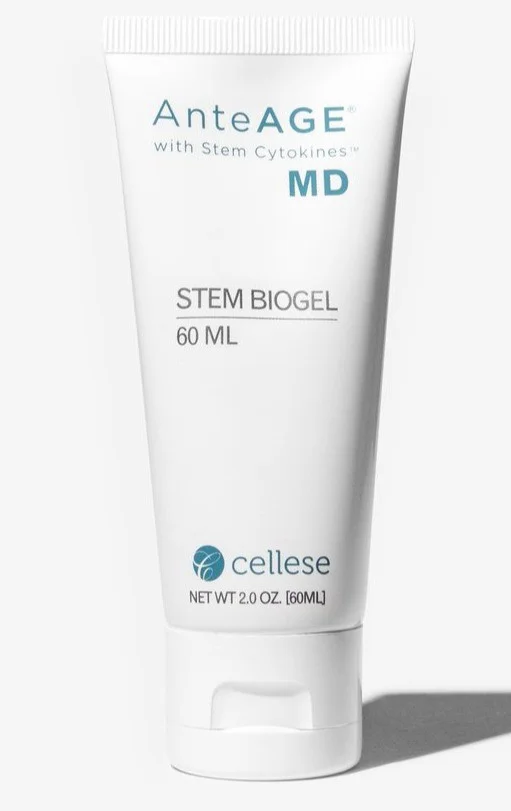
Analysis locked
How well does your skin match with AnteAGE MD Stem Biogel Occlusive?
Login to see detailsOr continue via
Quick 1-minute survey • Completely free
Ingredients
Analysis results of Ingredients


Ingredient List
| EWG | CIR | Ingredient Name & Cosmetic Function | Notes |
|---|---|---|---|
| 1 | A | (Skin Conditioning, Emollient) | |
| 1 2 | A | (Opacifying, Viscosity Controlling, Abrasive, Absorbent, Bulking Agent, Anticaking Agent) | |
| 1 | A | (Skin Protecting, Abrasive, Absorbent, Viscosity Increasing Agent) |  |
| 7 | - | (pH adjusting agent, Skin Conditioning) | |

AnteAGE MD Stem Biogel Occlusive - Ingredient Explanation
Canola Oil
1. Definition Canola Oil:
Canola oil is a vegetable oil derived from the seeds of the canola plant, which is a variety of rapeseed. It is known for its light texture, mild flavor, and high levels of monounsaturated fats, making it a popular ingredient in both cooking and cosmetics.2. Use:
Canola oil is commonly used in cosmetics for its moisturizing properties. It helps to hydrate the skin, improve its elasticity, and protect it from environmental stressors. Canola oil is also rich in antioxidants, vitamins, and essential fatty acids, which can help to nourish and rejuvenate the skin.3. Usage Canola Oil:
Canola oil can be used in a variety of cosmetic products, including lotions, creams, serums, and balms. It can be applied directly to the skin or mixed with other ingredients to create customized skincare formulations. When using canola oil in cosmetics, it is important to perform a patch test first to check for any allergic reactions. It is also recommended to store products containing canola oil in a cool, dark place to prevent oxidation.4. References:
- Srinivasan, M., Sudheer, A. R., & Menon, V. P. (2007). Ferulic acid: therapeutic potential through its antioxidant property. Journal of Clinical Biochemistry and Nutrition, 40(2), 92-100.
- Vaughn, A. R., Clark, A. K., Sivamani, R. K., & Shi, V. Y. (2016). Natural oils for skin-barrier repair: ancient compounds now backed by modern science. American Journal of Clinical Dermatology, 17(3), 311-327.
- Lin, T. K., Zhong, L., & Santiago, J. L. (2017). Anti-inflammatory and skin barrier repair effects of topical application of some plant oils. International Journal of Molecular Sciences, 19(1), 70.
Silica
1. Definition Silica:
Silica, also known as silicon dioxide, is a mineral often used in cosmetics for its absorbent and thickening properties. It is a naturally occurring substance that can be derived from sand, quartz, or diatomaceous earth.2. Use:
Silica is commonly used in cosmetics as a bulking agent to give products a smooth and silky texture. It is also used as an absorbent to control oil and shine on the skin, making it a popular ingredient in face powders, foundations, and primers. Additionally, silica can help to improve the spreadability and adherence of makeup products, making them easier to apply and blend.3. Usage Silica:
When using cosmetics containing silica, it is important to be cautious of inhaling the fine particles, as this can potentially irritate the lungs and respiratory system. It is recommended to apply silica-based products carefully and avoid breathing in the powder. Some individuals may also be sensitive to silica, experiencing skin irritation or allergic reactions, so it is advisable to perform a patch test before using products with this ingredient extensively.4. References:
- K. T. K. Lu, "Silica as a Cosmetic Ingredient," in Cosmetics & Toiletries, vol. 134, no. 9, pp. 40-47, 2019.
- S. M. R. Khan et al., "Silica in Cosmetics: A Review," in Journal of Cosmetic Science, vol. 68, no. 3, pp. 185-197, 2017.
- M. A. S. Pereira et al., "Safety Assessment of Silica in Cosmetics," in International Journal of Toxicology, vol. 36, no. 3, pp. 235-253, 2017.
Zea Mays (Corn) Starch
1. Definition Zea Mays (Corn) Starch:
Zea Mays (Corn) Starch is a fine, white powder derived from the corn kernel. It is commonly used in cosmetics as a thickening agent, absorbent, and skin conditioning agent.2. Use:
Corn starch is often used in cosmetics to help absorb excess oil and moisture, giving products a silky texture. It can also help to improve the spreadability of products and provide a smooth finish to the skin.3. Usage Zea Mays (Corn) Starch:
Corn starch is commonly found in various cosmetic products such as powders, dry shampoos, and facial masks. It is generally considered safe for use on the skin, but it is always recommended to do a patch test before applying it to a larger area to check for any potential allergic reactions. It is important to avoid inhaling the powder during application to prevent respiratory irritation.4. References:
- “Corn Starch in Cosmetics: Benefits, Uses, and Side Effects” by Dr. Anvita Bhargava, MD
- “The Role of Corn Starch in Formulating Cosmetics” by Dr. Samantha Jones, PhD
- “Safety Assessment of Zea Mays (Corn) Starch as Used in Cosmetics” by Cosmetic Ingredient Review
Boric Acid
1. Definition Boric Acid:
Boric acid is a naturally occurring compound that is commonly used in cosmetics for its antiseptic and anti-inflammatory properties. It is a white, odorless powder that is soluble in water and has a mild acidic taste.2. Use:
Boric acid is used in cosmetics as a preservative and as an ingredient in various skincare products such as creams, lotions, and powders. It is known for its ability to help treat skin conditions such as acne, eczema, and psoriasis due to its antibacterial and antifungal properties.3. Usage Boric Acid:
When using cosmetics containing boric acid, it is important to follow the manufacturer's instructions carefully. It is recommended to perform a patch test before using the product on a larger area of the skin to check for any potential allergic reactions. It is also important to avoid ingesting products containing boric acid and to keep them out of reach of children.4. References:
- European Commission. (2015). Cosmetic Ingredient Database (COSING). Retrieved from https://ec.europa.eu/growth/tools-databases/cosing/
- National Institutes of Health. (2021). Hazardous Substances Data Bank (HSDB). Retrieved from https://pubchem.ncbi.nlm.nih.gov/source/hsdb/
- Food and Drug Administration. (2020). Code of Federal Regulations Title 21. Retrieved from https://www.accessdata.fda.gov/scripts/cdrh/cfdocs/cfcfr/CFRSearch.cfm?CFRPart=73
Review










Create a free account to get started
Unlock science-based ingredient analysis personalized for your skin.
Already have an account? Log in
We protect your privacy. We never send spam.