


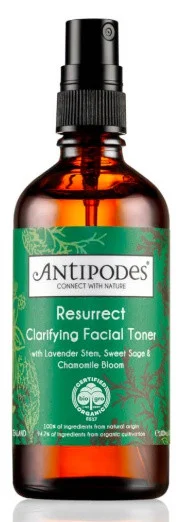
Analysis locked
How well does your skin match with Antipodes Resurrect Clarifying Facial Toner?
Login to see detailsOr continue via
Quick 1-minute survey • Completely free
Ingredients
Analysis results of Ingredients


Ingredient List
| EWG | CIR | Ingredient Name & Cosmetic Function | Notes |
|---|---|---|---|
| 1 | - | (Solvent) | |
| 1 | - | (Masking, Fragrance) | |
| 1 | - | | |
| 4 | - | (Solvent, Perfuming, Deodorant) |  |

Antipodes Resurrect Clarifying Facial Toner - Ingredient Explanation
Water
1. Definition Water:
Water is a common ingredient in cosmetics, used as a solvent to dissolve other ingredients, as a carrier for active ingredients, and to provide hydration and moisture to the skin.2. Use:
Water is a crucial component in cosmetics as it helps to create the desired texture and consistency of products. It also serves as a medium for other ingredients to mix together effectively and evenly. Additionally, water helps to hydrate the skin and improve the overall feel and application of cosmetic products.3. Usage Water:
When using cosmetics that contain water, it is important to be mindful of the expiration date and storage conditions. Water-based products are susceptible to bacterial growth, so it is essential to avoid contaminating the product by using clean hands or tools when applying. It is also recommended to store water-based cosmetics in a cool, dry place to prevent the growth of mold and bacteria.4. References:
- Draelos, Z. D. (2010). Cosmetic dermatology: products and procedures. John Wiley & Sons.
- Winter, R. (2009). A consumer's dictionary of cosmetic ingredients: complete information about the harmful and desirable ingredients found in cosmetics and cosmeceuticals. Crown.
- Begoun, P. (2003). Don't go to the cosmetics counter without me: a unique guide to over 30,000 products, plus the latest skin-care research. Beginning Press.
Lavender Officinalis (Pure Distilled Lavender) Water*
1. Definition Lavandula Angustifolia (Lavender) Water:
Lavandula Angustifolia (Lavender) Water is a hydrosol produced through the steam distillation of lavender flowers. It contains the water-soluble components of the plant, including essential oils, and has a soothing floral scent.2. Use:
Lavender water is commonly used in cosmetics for its calming and balancing properties. It is known for its anti-inflammatory and antiseptic properties, making it beneficial for soothing irritated skin and reducing redness. Lavender water is also used for its aromatherapy benefits, promoting relaxation and stress relief.3. Usage Lavandula Angustifolia (Lavender) Water:
Lavender water can be used in a variety of cosmetic products, such as toners, facial mists, creams, and lotions. It can be applied directly to the skin or added to DIY beauty recipes. To use lavender water, simply spritz it onto the face or body, or apply it with a cotton pad. It can be used daily as part of a skincare routine or as needed for a quick pick-me-up.4. References:
- Granger, R. E., Campbell, E. L., Johnston, G. A., & Desborough, M. J. (2009). Constituents of lavender essential oil modulate cognitive performance and mood in healthy adults. The Journal of Alternative and Complementary Medicine, 15(5), 577-582.
- Hajhashemi, V., Ghannadi, A., & Sharif, B. (2003). Anti-inflammatory and analgesic properties of the leaf extracts and essential oil of Lavandula angustifolia Mill. Journal of Ethnopharmacology, 89(1), 67-71.
- Cavanagh, H. M., & Wilkinson, J. M. (2002). Biological activities of lavender essential oil. Phytotherapy Research, 16(4), 301-308.
Salvia Officinalis (Sage) Water
1. Definition Salvia Officinalis (Sage) Water:
Salvia Officinalis (Sage) Water is a natural hydrosol obtained through the steam distillation of sage leaves. It contains the water-soluble components of the plant, giving it a mild herbal scent and therapeutic properties.2. Use:
Sage water is commonly used in cosmetics for its astringent, antiseptic, and antioxidant properties. It is known to help balance oily skin, tighten pores, and reduce inflammation. Sage water is also used in hair care products to promote scalp health and stimulate hair growth.3. Usage Salvia Officinalis (Sage) Water:
Sage water can be used as a facial toner, mist, or added to creams, lotions, and masks. It can be applied directly to the skin or hair, or used as a base for DIY beauty products. To use, simply spray or apply a small amount to the desired area and gently massage in.Precautions: While sage water is generally considered safe for most skin types, it is always recommended to do a patch test before using it on a larger area. Some individuals may be sensitive to sage and may experience skin irritation. Avoid contact with eyes and mucous membranes. If any adverse reactions occur, discontinue use immediately.
4. References:
- Salehi, B., et al. (2019). Sage (Salvia) in Medicinal and Aromatic Plants. Elsevier.
- Dall'Acqua, S., et al. (2019). Sage as a Potential Natural Antioxidant and Anti-inflammatory Agent in Skin Care: A Review. Frontiers in Pharmacology.
- Tundis, R., et al. (2014). Potential Role of Sage (Salvia officinalis) Water Extracts in the Prevention of Oxidative Stress and Inflammation. Journal of Medicinal Food.
D Limonene
1. Definition D Limonene:
D Limonene is a natural compound found in the peel of citrus fruits such as lemons, oranges, and grapefruits. It is commonly used as a fragrance ingredient in cosmetics due to its citrusy scent.2. Use:
D Limonene is primarily used in cosmetics as a fragrance ingredient to impart a fresh and invigorating citrus scent to products such as perfumes, lotions, and skincare products. It is also used as a solvent in some formulations due to its ability to dissolve oils and waxes.3. Usage D Limonene:
When using products containing D Limonene, it is important to be aware of potential skin sensitization and irritation. Some individuals may be allergic to D Limonene and may experience reactions such as redness, itching, or swelling upon contact with the skin. It is recommended to perform a patch test before using products containing D Limonene to determine if any sensitivity exists.Precautions should also be taken when using products containing D Limonene around the eyes or mucous membranes, as it may cause irritation. It is advisable to avoid direct contact with these areas and to wash hands thoroughly after use.
4. References:
- RIFM. (2013). Safety Assessment of Limonene. Retrieved from https://www.rifm.org/limonene
- Cosmetic Ingredient Review. (2008). Final Report on the Safety Assessment of Limonene. Retrieved from https://www.cir-safety.org/sites/default/files/limonene.pdf
- FDA. (2020). Code of Federal Regulations Title 21. Retrieved from https://www.accessdata.fda.gov/scripts/cdrh/cfdocs/cfcfr/CFRSearch.cfm?fr=182.60
Review
Didn't find
the information you need?






Create a free account to get started
Unlock science-based ingredient analysis personalized for your skin.
Already have an account? Log in
We protect your privacy. We never send spam.