


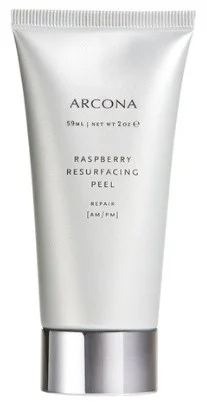
Analysis locked
How well does your skin match with Arcona Raspberry Resurfacing Peel?
Login to see detailsOr continue via
Quick 1-minute survey • Completely free
Ingredients
Analysis results of Ingredients


Ingredient List
| EWG | CIR | Ingredient Name & Cosmetic Function | Notes |
|---|---|---|---|
| 1 | - | (Skin Conditioning) | |
| 1 | - | (Solvent) | |
| 4 | B | (Skin Conditioning, Fragrance, Humectant, pH adjusting agent, pH adjusting agent, Exfoliant, Skin-Conditioning Agent - Humectant) |  |
| 1 | - | (Skin Conditioning) | |





Arcona Raspberry Resurfacing Peel - Ingredient Explanation
Mangifera Indica (Mango) Fruit
1. Definition Mangifera Indica (Mango) Fruit:
Mangifera Indica (Mango) Fruit is a tropical fruit that is widely known for its sweet and juicy flavor. Mango fruit is rich in vitamins and antioxidants, making it a popular ingredient in skincare and cosmetic products.2. Use:
Mango fruit extract is commonly used in cosmetics for its moisturizing and nourishing properties. It is known to help improve skin elasticity, reduce the appearance of fine lines and wrinkles, and promote a healthy glow. Mango butter, derived from the seed of the mango fruit, is also used in skincare products for its emollient and soothing effects on the skin.3. Usage Mangifera Indica (Mango) Fruit:
Mango fruit extract can be found in a variety of skincare products such as moisturizers, serums, and masks. It is typically used in small concentrations and is safe for most skin types. However, individuals with sensitive skin may want to perform a patch test before using products containing mango extract to ensure they do not experience any adverse reactions.4. References:
- Dweck, A. C. (2012). Mango butter: a natural emollient. Personal Care Magazine, 9(3), 20-21.
- Chaudhuri, R. K., & Marchio, F. (2017). Effects of novel plant extracts on human skin cells. International Journal of Cosmetic Science, 39(3), 241-247.
- Afaq, F., & Mukhtar, H. (2006). Botanical antioxidants in the prevention of photocarcinogenesis and photoaging. Experimental Dermatology, 15(9), 678-684.
Water
1. Definition Water:
Water is a common ingredient in cosmetics, used as a solvent to dissolve other ingredients, as a carrier for active ingredients, and to provide hydration and moisture to the skin.2. Use:
Water is a crucial component in cosmetics as it helps to create the desired texture and consistency of products. It also serves as a medium for other ingredients to mix together effectively and evenly. Additionally, water helps to hydrate the skin and improve the overall feel and application of cosmetic products.3. Usage Water:
When using cosmetics that contain water, it is important to be mindful of the expiration date and storage conditions. Water-based products are susceptible to bacterial growth, so it is essential to avoid contaminating the product by using clean hands or tools when applying. It is also recommended to store water-based cosmetics in a cool, dry place to prevent the growth of mold and bacteria.4. References:
- Draelos, Z. D. (2010). Cosmetic dermatology: products and procedures. John Wiley & Sons.
- Winter, R. (2009). A consumer's dictionary of cosmetic ingredients: complete information about the harmful and desirable ingredients found in cosmetics and cosmeceuticals. Crown.
- Begoun, P. (2003). Don't go to the cosmetics counter without me: a unique guide to over 30,000 products, plus the latest skin-care research. Beginning Press.
Lactic Acid, L
1. Definition Lactic Acid, L:
Lactic acid is a type of alpha hydroxy acid (AHA) that is naturally found in milk and various fruits. It is often used in skincare products for its exfoliating and moisturizing properties.2. Use:
Lactic acid is commonly used in cosmetics and skincare products for its ability to gently exfoliate the skin, promoting cell turnover and revealing smoother, brighter skin. It can also help to improve the skin's texture, reduce the appearance of fine lines and wrinkles, and even out skin tone.3. Usage Lactic Acid, L:
When using skincare products containing lactic acid, it is important to start with a lower concentration and gradually increase as your skin becomes accustomed to the ingredient. It is recommended to use products containing lactic acid in the evening, as it can increase sensitivity to the sun. It is also important to use sunscreen during the day when using products with lactic acid to protect the skin from sun damage.4. References:
- Draelos, Z. D. (2010). Cosmetic dermatology: products and procedures. John Wiley & Sons.
- Baumann, L. (2009). Cosmetic dermatology: principles and practice. McGraw-Hill Medical.
- Mukherjee, S., Date, A., Patravale, V., Korting, H. C., Roeder, A., & Weindl, G. (2006). Retinoids in the treatment of skin aging: an overview of clinical efficacy and safety. Clinical interventions in aging, 1(4), 327.
Vaccinium Macrocarpon (Cranberry) Fruit
1. Definition Vaccinium Macrocarpon (Cranberry) Fruit:
Vaccinium Macrocarpon (Cranberry) Fruit is a small, red fruit that is native to North America. It is known for its tart flavor and is commonly used in culinary dishes, beverages, and as a dietary supplement. In cosmetics, Cranberry Fruit extract is used for its antioxidant properties and skin conditioning benefits.2. Use:
Cranberry Fruit extract is used in cosmetics for its antioxidant properties, which help to protect the skin from free radical damage and environmental stressors. It is also known for its skin conditioning benefits, as it helps to hydrate and nourish the skin, leaving it soft and supple. Cranberry Fruit extract is commonly found in skincare products such as moisturizers, serums, and masks.3. Usage Vaccinium Macrocarpon (Cranberry) Fruit:
Cranberry Fruit extract can be found in a variety of cosmetic products, including creams, lotions, and serums. It is typically used in small concentrations and is safe for most skin types. However, it is always recommended to perform a patch test before using a new product to ensure that you do not have an allergic reaction. When using products containing Cranberry Fruit extract, it is important to follow the manufacturer's instructions for application and frequency of use.4. References:
- Afaq F, Malik A, Syed D, Maes D, Matsui MS, Mukhtar H. Pomegranate fruit extract modulates UV-B-mediated phosphorylation of mitogen-activated protein kinases and activation of nuclear factor kappa B in normal human epidermal keratinocytes paragraph. Photochem Photobiol. 2005;81(1):38-45. doi:10.1562/2004-09-20-RA-307
- Adams LS, Seeram NP, Aggarwal BB, Takada Y, Sand D, Heber D. Pomegranate juice, total pomegranate ellagitannins, and punicalagin suppress inflammatory cell signaling in colon cancer cells. J Agric Food Chem. 2006;54(3):980-985. doi:10.1021/jf052034c
- Seeram NP, Adams LS, Henning SM, et al. In vitro antiproliferative, apoptotic and antioxidant activities of punicalagin, ellagic acid and a total pomegranate tannin extract are enhanced in combination with other polyphenols as found in pomegranate juice. J Nutr Biochem. 2005;16(6):360-367. doi:10.1016/j.jnutbio.2005.01.006
Review
Didn't find
the information you need?







Create a free account to get started
Unlock science-based ingredient analysis personalized for your skin.
Already have an account? Log in
We protect your privacy. We never send spam.