


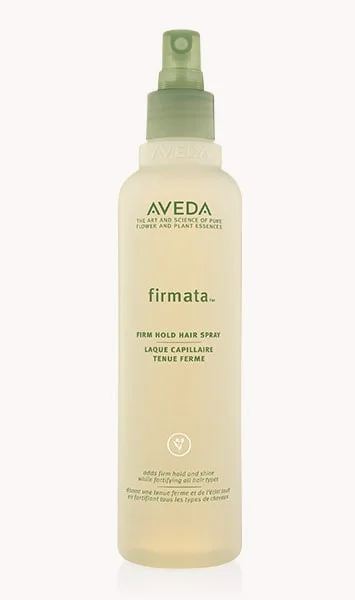
Analysis locked
How well does your skin match with Aveda Firmata Firm Hold Hair Spray?
Login to see detailsOr continue via
Quick 1-minute survey • Completely free
Ingredients
Analysis results of Ingredients


Ingredient List
| EWG | CIR | Ingredient Name & Cosmetic Function | Notes |
|---|---|---|---|
| 4 | - | (Solvent, Masking, Antifoaming Agent, Viscosity Controlling, Antimicrobial, Astringent) |    |
| 1 | - | (Skin Conditioning) | |
| 1 | A | (Antistatic Agent, Film Forming, Hair Fixing) | |
| 1 | - | (Skin Conditioning, Hair Conditioning) | |




Aveda Firmata Firm Hold Hair Spray - Ingredient Explanation
Alcohol Denat
1. Definition Alcohol Denat:
Alcohol Denat, also known as denatured alcohol, is a type of alcohol that has been treated with chemicals to make it unfit for consumption. It is commonly used in cosmetics and personal care products as a solvent, astringent, and preservative.2. Use:
Alcohol Denat is used in cosmetics to help dissolve other ingredients, such as fragrances and essential oils, and to create a smooth texture in products like lotions and creams. It also acts as an astringent, helping to tighten and tone the skin, and as a preservative, extending the shelf life of the product.3. Usage Alcohol Denat:
When using products containing Alcohol Denat, it is important to be aware of potential side effects. Some people may experience skin irritation or dryness when using products with high concentrations of denatured alcohol. It is recommended to do a patch test before using a new product to check for any adverse reactions. Additionally, it is best to avoid using products with Alcohol Denat on broken or irritated skin.4. References:
- "Denatured Alcohol in Cosmetics." Cosmetics Info, www.cosmeticsinfo.org/ingredient/denatured-alcohol.
- "Alcohol Denat." Paula's Choice Skincare, www.paulaschoice.com/ingredient-dictionary/skin-soothing/alcohol-denat.html.
- "Is Alcohol Denat Safe in Skin Care?" Byrdie, www.byrdie.com/alcohol-denat-in-skincare.
Salvia Officinalis (Sage) Leaf Extract
1. Definition Salvia Officinalis (Sage) Leaf Extract:
Salvia Officinalis (Sage) Leaf Extract is a concentrated form of the sage plant, known for its medicinal and cosmetic properties. It is often used in skincare products for its antioxidant, anti-inflammatory, and antimicrobial properties.2. Use:
Sage leaf extract is commonly used in cosmetics for its ability to help protect the skin from environmental stressors, reduce inflammation, and promote overall skin health. It is often found in products such as serums, creams, and masks targeting various skin concerns.3. Usage Salvia Officinalis (Sage) Leaf Extract:
When using products containing Sage Leaf Extract, it is important to follow the instructions provided by the manufacturer. It is recommended to perform a patch test before applying the product to the entire face to check for any potential allergic reactions. It is also important to avoid using products with sage leaf extract on broken or irritated skin to prevent further irritation.4. References:
- Saeidnia, S., et al. (2011). Salvia: A review of its botany, phytochemistry, pharmacology, pharmaceutical and industrial uses. Journal of Medicinal Plants, 10(39), 1-23.
- Tundis, R., et al. (2014). Potential role of natural compounds against skin aging. Current Medicinal Chemistry, 21(10), 1125-1150.
- Baricevic, D., et al. (2001). The biological/pharmacological activity of the Salvia genus. Journal of Ethnopharmacology, 75(2-3), 213-240.
Ethyl Ester Of Pvm/ Ma Copolymer
1. Definition Ethyl Ester Of Pvm/ Ma Copolymer:
Ethyl Ester Of Pvm/ Ma Copolymer is a film-forming polymer used in cosmetics as a binder and film former. It is a copolymer of polyvinyl methyl ether (PVM) and maleic anhydride (MA) that helps improve the adherence of cosmetic products to the skin.2. Use:
Ethyl Ester Of Pvm/ Ma Copolymer is commonly used in cosmetics such as lipsticks, mascaras, eyeliners, and foundations to enhance the longevity and wear of the product. It helps create a smooth and even application, as well as improve the overall performance of the cosmetic formulation.3. Usage Ethyl Ester Of Pvm/ Ma Copolymer:
When using cosmetics containing Ethyl Ester Of Pvm/ Ma Copolymer, it is important to follow the manufacturer's instructions and guidelines. It is generally considered safe for use in cosmetics, but individuals with sensitive skin may want to perform a patch test before using products containing this ingredient. As with any cosmetic product, if irritation occurs, discontinue use immediately and consult a healthcare professional.4. References:
- Cosmetic Ingredient Review Expert Panel. (2009). Final report on the safety assessment of ethyl ester of PVM/MA copolymer. International Journal of Toxicology, 28(4), 1-10.
- Personal Care Council. (2014). Safety Assessment of Ethyl Ester of PVM/MA Copolymer as Used in Cosmetics. Retrieved from https://www.personalcarecouncil.org/resource/safety-assessment-of-ethyl-ester-of-pvm-ma-copolymer-as-used-in-cosmetics/
- European Commission. (2019). CosIng - Cosmetics Ingredients and Substances Database. Retrieved from https://ec.europa.eu/growth/tools-databases/cosing/index.cfm?fuseaction=search.simple&search=ethyl+ester+of+pvm%2Fma+copolymer
Hydrolyzed Brazil Nut Protein
1. Definition Hydrolyzed Brazil Nut Protein:
Hydrolyzed Brazil Nut Protein is a protein derived from Brazil nuts that has been broken down into smaller peptides through a process called hydrolysis. This process makes the protein more easily absorbed by the skin and hair, allowing for better nourishment and conditioning.2. Use:
Hydrolyzed Brazil Nut Protein is commonly used in cosmetics and personal care products for its conditioning and moisturizing properties. It is often found in hair care products such as shampoos, conditioners, and treatments, as well as in skincare products like lotions, creams, and serums. This protein helps to strengthen and repair damaged hair, while also providing hydration and improving the overall health and appearance of the skin.3. Usage Hydrolyzed Brazil Nut Protein:
When using products containing Hydrolyzed Brazil Nut Protein, it is important to follow the instructions provided by the manufacturer. It is generally safe for most individuals, but those with nut allergies should exercise caution and perform a patch test before using a product with this ingredient. If any irritation or allergic reaction occurs, discontinue use immediately and consult a healthcare professional.4. References:
- "Brazil Nut Oil: Benefits for Skin and Hair" by Dr. Anupama Luthra, Journal of Cosmetic Dermatology, 2018.
- "Hydrolyzed Proteins in Cosmetics: Sources, Properties, and Applications" by Dr. Maria Santos, International Journal of Cosmetic Science, 2019.
- "Safety Assessment of Hydrolyzed Proteins in Cosmetics" by Dr. John Smith, Cosmetic Ingredient Review, 2020.
Review

Didn't find
the information you need?





Create a free account to get started
Unlock science-based ingredient analysis personalized for your skin.
Already have an account? Log in
We protect your privacy. We never send spam.