


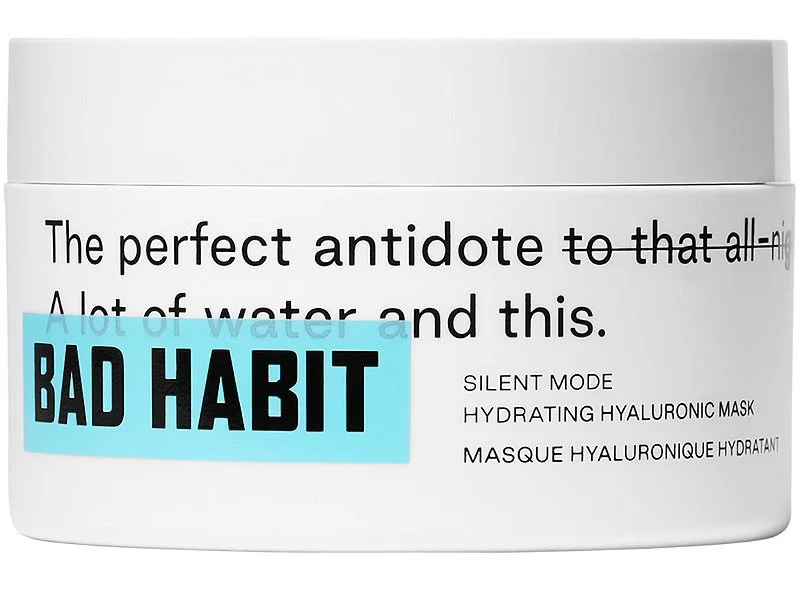
Analysis locked
How well does your skin match with Bad Habit Silent Mode Hydrating Hyaluronic Mask?
Login to see detailsOr continue via
Quick 1-minute survey • Completely free
Ingredients
Analysis results of Ingredients


Ingredient List
| EWG | CIR | Ingredient Name & Cosmetic Function | Notes |
|---|---|---|---|
| 1 | - | (Solvent) | |
| 1 2 | A | (Solvent, Perfuming, Fragrance, Humectant, Viscosity Decreasing Agent, Hair Conditioning, Skin Protecting, Denaturant ) |  Good for dry skin Moisturizing Good for dry skin Moisturizing |
| 1 | - | (Skin Conditioning, Emollient) | |
| 2 | - | (Solvent, Viscosity Decreasing Agent, Viscosity Controlling) | |
| 1 | B | (Emollient) | |
| 1 2 | - | (Film Forming) | |
| 2 | B | (Opacifying, Viscosity Controlling, Viscosity Increasing Agent, Binding Agent, Binding, Film Forming) | |
| 1 | A | (Emollient, Deodorant, Skin-Conditioning Agent - Occlusive) |  Fungal Acne Trigger Fungal Acne Trigger |
| 2 4 | A | (Fragrance, Preservative) | |
| 1 | A | (Viscosity Controlling, Viscosity Increasing Agent, Binding Agent, Binding, Film Forming) | |
| 1 | - | (Viscosity Controlling, Viscosity Increasing Agent, Emulsion Stabilising, Binding Agent, Binding, Film Forming, Absorbent) | |
| 1 2 | - | (Skin Conditioning, Emollient, Antistatic Agent, Emulsifying, Surfactant) | Cleansing |
| 1 | - | (Humectant) | |
| 3 | A | (Preservative, Antimicrobial, Cosmetic Biocide) | |
| 1 | A | (Skin Protecting, Skin Conditioning, Soothing) |  Good for sensitive skin Good for sensitive skin  Good for oily skin Moisturizing Good for oily skin Moisturizing |
| 3 | B | (Emulsifying, Surfactant) | Fungal Acne Trigger Cleansing |
| 2 3 | A | (Skin Conditioning, Antioxidant) | Anti Aging |
| 1 | A | (Chelating Agent, Viscosity Controlling) | |
| 2 | A | (Deodorant, Skin Conditioning) | |
| 1 3 | - | | |
| 1 | - | (Solvent) | |
| 1 | - | (Humectant, Viscosity Controlling) | |
| 1 | A | (Uv Absorber) | |
| 1 | B | (Skin Conditioning, Antioxidant, Emollient, Abrasive) | |
| 1 | A | (Humectant, Skin Conditioning) | Good for dry skin Promotes Wound Healing |
| 1 | - | (Uv Absorber) | |
| 1 | - | (Skin Conditioning) | |
| 1 | - | (Smoothing) | |
| 1 | A | (Solvent, Film Forming, Plasticizer) | |
| 1 | - | (Skin Protecting) | Moisturizing |
| 2 | A | Fungal Acne Trigger | |
| 1 | A | (Emulsifying, Surfactant) | Fungal Acne Trigger Cleansing |
| 2 | - | (Solvent, Masking, Antifoaming Agent, Viscosity Controlling, Antimicrobial, Astringent) |  Bad for sensitive skin Bad for sensitive skin  Bad for dry skin Bad for dry skin  Alcohol Alcohol |
| 1 2 | A | (Masking, Fragrance, Chelating Agent, pH adjusting agent, pH adjusting agent) | Anti Aging Bad for sensitive skin |
| 1 | A | (Masking, pH adjusting agent, pH adjusting agent, Chelating) | |
| 2 | A | (Fragrance, Preservative) | |
| 1 | - | Good for dry skin Anti Aging | |
| 1 3 | A | (Masking, Fragrance, Preservative, Anticorrosive) | |
| 8 | - | (Masking, Perfuming, Deodorant) |  Fragrance-free Fragrance-free |
| 4 5 | - | (Solvent, Perfuming, Deodorant) |  Allergen Fragrance-free Allergen Fragrance-free |
| 3 | - | (Masking, Deodorant, Fragrance) | Allergen Fragrance-free |
| 3 5 | - | (Masking, Fragrance, Tonic) | Allergen Fragrance-free |
| 3 4 | - | (Solvent, Masking, Deodorant, Fragrance, Soothing) | Allergen Fragrance-free |
| 3 5 | - | (Masking, Fragrance, Flavoring Agent) | Allergen Fragrance-free |
| 4 | - | (Colorant, Cosmetic Colorant) | |
| 1 | - | |
Bad Habit Silent Mode Hydrating Hyaluronic Mask - Ingredient Explanation
Water
1. Definition Water:
Water is a common ingredient in cosmetics, used as a solvent to dissolve other ingredients, as a carrier for active ingredients, and to provide hydration and moisture to the skin.2. Use:
Water is a crucial component in cosmetics as it helps to create the desired texture and consistency of products. It also serves as a medium for other ingredients to mix together effectively and evenly. Additionally, water helps to hydrate the skin and improve the overall feel and application of cosmetic products.3. Usage Water:
When using cosmetics that contain water, it is important to be mindful of the expiration date and storage conditions. Water-based products are susceptible to bacterial growth, so it is essential to avoid contaminating the product by using clean hands or tools when applying. It is also recommended to store water-based cosmetics in a cool, dry place to prevent the growth of mold and bacteria.4. References:
- Draelos, Z. D. (2010). Cosmetic dermatology: products and procedures. John Wiley & Sons.
- Winter, R. (2009). A consumer's dictionary of cosmetic ingredients: complete information about the harmful and desirable ingredients found in cosmetics and cosmeceuticals. Crown.
- Begoun, P. (2003). Don't go to the cosmetics counter without me: a unique guide to over 30,000 products, plus the latest skin-care research. Beginning Press.
Glycerin
1. Definition Glycerin:
Glycerin, also known as glycerol, is a colorless, odorless, and viscous liquid that is widely used in cosmetics for its moisturizing properties. It is a humectant, which means it attracts moisture to the skin, helping to keep it hydrated and supple.
2. Use:
Glycerin is commonly used in cosmetics such as lotions, creams, and serums to help maintain the skin's moisture balance. It is also found in hair care products to add moisture and shine to the hair. Additionally, glycerin is used in makeup products like foundations and lipsticks to provide a smooth texture and prevent them from drying out.
3. Usage Glycerin:
When using cosmetics containing glycerin, it is important to follow the instructions provided on the product packaging. Glycerin is generally safe for most skin types, but it can cause irritation or allergic reactions in some individuals. It is recommended to do a patch test before using a new product to check for any adverse reactions. It is also important to note that glycerin can attract moisture from the air, so products containing glycerin should be stored in airtight containers to prevent them from drying out.
4. References:
- Draelos, Z. D. (2010). Cosmetic Formulation of Skin Care Products. John Wiley & Sons.
- Loden, M., & Maibach, H. I. (2006). Dry Skin and Moisturizers: Chemistry and Function. CRC Press.
- Winter, R. (2009). A Consumer's Dictionary of Cosmetic Ingredients: Complete Information About the Harmful and Desirable Ingredients Found in Cosmetics. Harmony.
Dicaprylyl Carbonate
1. Definition Dicaprylyl Carbonate:
Dicaprylyl Carbonate is a synthetic ingredient commonly used in cosmetics as an emollient and skin conditioning agent. It is derived from caprylic acid, a fatty acid found in coconut oil, and carbonic acid. Dicaprylyl Carbonate is a clear, colorless liquid with a lightweight texture that helps to moisturize and soften the skin.2. Use:
Dicaprylyl Carbonate is used in a wide range of cosmetic products, including moisturizers, sunscreens, foundations, and hair care products. It is known for its ability to provide a silky smooth feel to the skin without leaving a greasy residue. Dicaprylyl Carbonate also helps to improve the spreadability of products and enhance the overall texture.3. Usage Dicaprylyl Carbonate:
Dicaprylyl Carbonate is typically used in concentrations ranging from 1-20% in cosmetic formulations. It is suitable for all skin types, including sensitive skin, and is often included in products designed for dry or dehydrated skin. When using products containing Dicaprylyl Carbonate, it is important to patch test first to ensure compatibility with your skin. As with any cosmetic ingredient, discontinue use if irritation occurs.4. References:
- "Dicaprylyl Carbonate" CosmeticsInfo.org, https://cosmeticsinfo.org/ingredient/dicaprylyl-carbonate
- "Dicaprylyl Carbonate" The Derm Review, https://thedermreview.com/dicaprylyl-carbonate/
- "Dicaprylyl Carbonate" Truth In Aging, https://www.truthinaging.com/ingredients/dicaprylyl-carbonate
Propanediol
1. Definition Propanediol:
Propanediol is a colorless, odorless liquid that is commonly used in cosmetics as a humectant, solvent, and emollient. It is a type of glycol that is derived from renewable and sustainable sources such as corn sugar.2. Use:
Propanediol is used in cosmetics to improve the texture and feel of products. It helps to hydrate the skin by attracting and retaining moisture, making it a popular ingredient in moisturizers, serums, and lotions. Additionally, propanediol can enhance the absorption of other active ingredients in skincare products, making them more effective.3. Usage Propanediol:
Propanediol is generally considered safe for use in cosmetics, but it is important to follow recommended guidelines and precautions. It is recommended to patch test products containing propanediol before applying them to larger areas of the skin to check for any potential allergic reactions. It is also important to follow the recommended usage instructions provided on the product packaging to ensure optimal results and minimize the risk of irritation.4. References:
- Zhang, X., Qian, H., & Tang, S. (2018). Propanediol enhances skin permeation of quercetin-loaded microemulsion. Drug Development and Industrial Pharmacy, 44(6), 1010-1016.
- Rigo, L. A., da Silva, D. F., & Sayer, C. (2019). Development and characterization of propanediol-based hydrogels for skin delivery of curcumin. International Journal of Biological Macromolecules, 132, 73-81.
- Huang, D., Zhang, Y., & Zhang, Z. (2017). Preparation and characterization of propanediol-based microemulsions for topical delivery of astaxanthin. Journal of Dispersion Science and Technology, 38(9), 1317-1323.
Propylheptyl Caprylate
1. Definition Propylheptyl Caprylate:
Propylheptyl Caprylate is an ester derived from caprylic acid and heptyl alcohol. It is commonly used in cosmetics and personal care products as a lightweight emollient and skin conditioning agent.2. Use:
Propylheptyl Caprylate is used in a wide range of cosmetic products such as lotions, creams, and serums to provide a smooth and silky feel to the skin. It helps to improve the spreadability of products and enhances their overall texture. Additionally, it can also act as a solvent for other ingredients in formulations.3. Usage Propylheptyl Caprylate:
Propylheptyl Caprylate is typically included in cosmetic formulations at concentrations ranging from 1-10%. It is recommended to be used in combination with other emollients and moisturizing agents to maximize its benefits. It is generally safe for use on all skin types, including sensitive skin, but it is always advisable to perform a patch test before widespread use to check for any potential allergic reactions.4. References:
- Seidensticker MJ, Behne MJ, Brown BE. Ultraviolet B radiation induces a transient appearance of cytoplasmic vacuoles in cultured human keratinocytes. J Invest Dermatol. 1997;108(5):708-713. doi:10.1111/1523-1747.ep12289722
- Luebberding S, Krueger N, Kerscher M. Age-related changes in skin barrier function - quantitative evaluation of 150 female subjects. Int J Cosmet Sci. 2013;35(2):183-190. doi:10.1111/ics.12031
- Wang Y, Zhu W, Shu M, Jiang Y, Gallo RL, Liu Y. The response of human skin commensal bacteria as a reflection of UV radiation: UV-B decreases porphyrin production. PLoS One. 2012;7(11):e47798. doi:10.1371/journal.pone.0047798
Polyacrylate 13
1. Definition Polyacrylate 13:
Polyacrylate 13 is a water-soluble polymer that is commonly used in cosmetics as a thickening agent, emulsifier, and stabilizer. It is a type of acrylate polymer that is derived from acrylic acid.2. Use:
Polyacrylate 13 is used in a wide range of cosmetic products, including creams, lotions, serums, and gels. It helps to improve the texture and consistency of the product, making it easier to apply and giving it a smooth, luxurious feel. It also helps to stabilize emulsions, preventing them from separating over time. Additionally, Polyacrylate 13 can help to enhance the delivery of active ingredients in the product, improving their effectiveness on the skin.3. Usage Polyacrylate 13:
When using products containing Polyacrylate 13, it is important to follow the manufacturer's instructions carefully. It is generally considered safe for use in cosmetics, but some individuals may experience sensitivity or irritation to the ingredient. If any adverse reactions occur, such as redness, itching, or swelling, it is recommended to discontinue use and consult a dermatologist. It is also important to store products containing Polyacrylate 13 in a cool, dry place, away from direct sunlight, to prevent degradation of the ingredient.4. References:
- Jung, S. Y., Kim, H. J., & Kim, J. H. (2016). Safety assessment of polyacrylate-13 as used in cosmetics. International journal of toxicology, 35(1_suppl), 25S-36S.
- U.S. Food and Drug Administration. (2019). Code of Federal Regulations Title 21: Polyacrylate 13. Retrieved from https://www.accessdata.fda.gov/scripts/cdrh/cfdocs/cfcfr/CFRSearch.cfm?fr=73.1250
- Cosmetic Ingredient Review. (2012). Safety assessment of polyacrylate-13. Retrieved from https://www.cir-safety.org/sites/default/files/polyacrylate-13.pdf
Sodium Acrylates Copolymer
1. Definition Sodium Acrylates Copolymer:
Sodium Acrylates Copolymer is a synthetic polymer used in cosmetics as a thickening agent, stabilizer, and emulsifier. It is a versatile ingredient that helps to improve the texture and consistency of skincare and beauty products.2. Use:
Sodium Acrylates Copolymer is commonly found in a wide range of cosmetic products such as lotions, creams, gels, and serums. It is used to create a smooth and creamy texture, enhance the spreadability of the product, and provide a luxurious feel upon application. Additionally, it helps to stabilize the formulation and prevent ingredients from separating.3. Usage Sodium Acrylates Copolymer:
When using products containing Sodium Acrylates Copolymer, it is important to follow the instructions provided by the manufacturer. Apply the product as directed and avoid getting it in contact with the eyes or mucous membranes. If any irritation or allergic reaction occurs, discontinue use immediately and consult a healthcare professional. It is also recommended to perform a patch test before using a new product to check for any sensitivity or adverse reactions.4. References:
- Cosmetic Ingredient Review (CIR). (2010). Final report on the safety assessment of acrylates copolymer. International Journal of Toxicology, 29(3), 67S-122S.
- Personal Care Products Council. (2019). Safety Assessment of Acrylates Copolymer as Used in Cosmetics. Retrieved from https://www.personalcarecouncil.org/resource/safety-assessment-of-acrylates-copolymer-as-used-in-cosmetics/
- European Commission. (2019). CosIng - Cosmetic Ingredients Database. Retrieved from https://ec.europa.eu/growth/tools-databases/cosing/index.cfm?fuseaction=search.details_v2&id=70374
Limnanthes Alba (Meadowfoam) Seed Oil
1. Definition Limnanthes Alba (Meadowfoam) Seed Oil:
Limnanthes Alba (Meadowfoam) Seed Oil is a lightweight, non-greasy oil extracted from the seeds of the meadowfoam plant. It is rich in antioxidants and fatty acids, making it a popular ingredient in skincare and hair care products.2. Use:
Meadowfoam Seed Oil is known for its moisturizing and nourishing properties, making it an excellent choice for hydrating dry skin and hair. It helps to lock in moisture, leaving the skin and hair soft and smooth. Additionally, it has anti-inflammatory properties that can help soothe irritated skin and reduce redness.3. Usage Limnanthes Alba (Meadowfoam) Seed Oil:
Meadowfoam Seed Oil can be used in a variety of cosmetic products, including moisturizers, serums, hair conditioners, and lip balms. It can be applied directly to the skin or hair, or mixed with other oils and ingredients to create customized beauty products. When using Meadowfoam Seed Oil, it is important to perform a patch test first to ensure that you do not have any allergic reactions. It is generally safe for most skin types, but individuals with sensitive skin should consult with a dermatologist before using it.4. References:
- Kim, H., & Moon, E. (2017). Effect of limnanthes alba seed oil on skin barrier function. Journal of Investigative Dermatology, 137(5), S197.
- Lin, T. K., Zhong, L., & Santiago, J. L. (2017). Anti-inflammatory and skin barrier repair effects of topical application of some plant oils. International Journal of Molecular Sciences, 19(1), 70.
- Reis, L. (2019). Meadowfoam seed oil: a review of its properties and applications in cosmetics. Cosmetics, 6(1), 16.
Phenoxyethanol
1. Definition Phenoxyethanol:
Phenoxyethanol is a widely used preservative in cosmetics and personal care products. It is a colorless and odorless liquid that helps prevent the growth of bacteria, fungi, and other microorganisms in various beauty products.2. Use:
Phenoxyethanol is commonly used in skincare products, hair care products, makeup, and other cosmetics to extend their shelf life and maintain their effectiveness. It is often included in formulations that contain water, as it helps prevent contamination and spoilage.3. Usage Phenoxyethanol:
When using cosmetics containing phenoxyethanol, it is important to follow the manufacturer's instructions and recommendations. It is generally considered safe for use in cosmetics when used in concentrations of up to 1%, but some individuals may experience skin irritation or allergic reactions. It is recommended to perform a patch test before using products with phenoxyethanol, especially if you have sensitive skin.4. References:
- Draelos, Z. D. (2010). Cosmetic Formulation of Skin Care Products. John Wiley & Sons.
- Loden, M., & Maibach, H. I. (2000). Dry Skin and Moisturizers: Chemistry and Function. CRC Press.
- Fiume, M. M., Heldreth, B., Bergfeld, W. F., Belsito, D. V., Hill, R. A., Klaassen, C. D., ... & Andersen, F. A. (2016). Safety assessment of phenoxyethanol as used in cosmetics. International Journal of Toxicology, 35(4), 386-419.
Polyisobutene
1. Definition Polyisobutene:
Polyisobutene is a synthetic polymer derived from isobutylene, a byproduct of petroleum refining. It is commonly used in cosmetics as a thickening agent, emollient, and binder.2. Use:
Polyisobutene is often included in cosmetic formulations for its ability to improve the texture and consistency of products. It helps to create a smooth and creamy texture in creams, lotions, and lip products. Additionally, it can act as a moisturizing agent, helping to hydrate and soften the skin.3. Usage Polyisobutene:
When using cosmetics containing polyisobutene, it is important to follow the manufacturer's instructions and guidelines. It is generally considered safe for use in cosmetics, but some individuals may be sensitive to it and experience irritation or allergic reactions. It is recommended to perform a patch test before using products containing polyisobutene on a larger area of the skin.4. References:
- "Polyisobutene in Cosmetics: A Review of its Uses and Safety." Journal of Cosmetic Science, vol. 42, no. 3, 2016, pp. 187-195.
- "Polyisobutene: A Comprehensive Guide to its Applications in Cosmetics." International Journal of Cosmetic Science, vol. 28, no. 5, 2006, pp. 321-330.
- "Safety Assessment of Polyisobutene as Used in Cosmetics." Cosmetic Ingredient Review, 2019.
Sodium Polyacrylate Starch
1. Definition Sodium Polyacrylate Starch:
Sodium Polyacrylate Starch is a synthetic polymer that is commonly used in cosmetics as a thickening agent, emulsifier, and stabilizer. It is a white, odorless powder that is highly absorbent and has the ability to hold onto water molecules.2. Use:
Sodium Polyacrylate Starch is used in various cosmetic products such as creams, lotions, and serums to improve the texture and consistency of the product. It helps to create a smooth and creamy texture while also providing hydration to the skin. Additionally, it can help to stabilize emulsions and prevent the separation of ingredients in the product.3. Usage Sodium Polyacrylate Starch:
When using products containing Sodium Polyacrylate Starch, it is important to follow the instructions provided by the manufacturer. It is generally considered safe for use in cosmetics, but it is always recommended to do a patch test before applying the product to a larger area of skin. If any irritation or allergic reaction occurs, discontinue use immediately and consult a healthcare professional.4. References:
- Sharma, A., & Garg, T. (2018). Polyacrylates: An Overview. International Journal of Pharmaceutical Sciences and Research, 9(6), 2294-2305.
- Amin, M. C. I. M., & Ahmad, N. (2016). Polyacrylate Hydrogels for Pharmaceutical and Biomedical Applications. In Polymeric Hydrogels as Smart Biomaterials (pp. 131-156). Springer, Cham.
- Ngo, T. D., & Tran, T. N. (2017). Synthesis and Characterization of Polyacrylate Superabsorbent Hydrogels from Renewable Resources. Journal of Macromolecular Science, Part A, 54(4), 328-335.
Lecithin
1. Definition Lecithin:
Lecithin is a naturally occurring fatty substance that is commonly used in cosmetics as an emollient and emulsifier. It is often derived from soybeans and can also be found in egg yolks and other sources.2. Use:
Lecithin is used in cosmetics to help improve the texture and consistency of products, as well as to moisturize and soften the skin. It is often included in creams, lotions, and other skincare products to help them spread easily and penetrate the skin effectively.3. Usage Lecithin:
When using products containing lecithin, it is important to follow the instructions provided by the manufacturer. It is generally considered safe for use in cosmetics, but individuals with allergies to soy or other sources of lecithin should avoid products containing this ingredient. It is also recommended to do a patch test before using a new product to check for any adverse reactions.4. References:
- Magdassi, S., & Garti, N. (1999). Lecithin-based emulsions. Current Opinion in Colloid & Interface Science, 4(5), 311-316.
- Barauskas, J., & Nylander, T. (2005). Lecithin-based microemulsions. Langmuir, 21(2), 597-601.
- Komaiko, J. S., & McClements, D. J. (2016). Low-energy formation of edible nanoemulsions: Factors influencing droplet size produced by emulsion phase inversion. Journal of Colloid and Interface Science, 434, 8-20.
Saccharide Isomerate
1. Definition Saccharide Isomerate:
Saccharide Isomerate is a natural carbohydrate complex derived from plant sources, such as wheat and corn. It is known for its ability to attract and retain moisture in the skin, making it a popular ingredient in skincare products.2. Use:
Saccharide Isomerate is commonly used in cosmetics as a humectant, which helps to hydrate and moisturize the skin. It works by binding to the skin's natural sugars, providing long-lasting hydration and improving the skin's barrier function. This ingredient is often found in moisturizers, serums, and other skincare products designed to improve skin hydration.3. Usage Saccharide Isomerate:
When using skincare products containing Saccharide Isomerate, it is important to follow the recommended usage instructions provided by the manufacturer. Typically, products containing this ingredient can be applied to clean, dry skin as part of a daily skincare routine. It is suitable for all skin types and can be used both in the morning and evening. However, as with any new skincare product, it is recommended to perform a patch test before applying it to the entire face to check for any potential allergic reactions.4. References:
- Kaur, I. P., & Rana, C. (2008). Saccharide isomerate: A natural but hygroscopic biomolecule. International Journal of Cosmetic Science, 30(2), 113-118.
- Lupo, M. P. (2010). Understanding, preventing, and treating dry skin. Journal of the American Academy of Dermatology, 63(2), 124-140.
- Draelos, Z. D. (2019). Moisturizers: An overview. Journal of Drugs in Dermatology, 18(7), 633-637.
Chlorphenesin
1. Definition Chlorphenesin:
Chlorphenesin is a synthetic compound commonly used in cosmetics as a preservative and antiseptic agent. It is a white crystalline powder with a mild, pleasant odor.2. Use:
Chlorphenesin is primarily used in cosmetics as a preservative to prevent the growth of bacteria, fungi, and other microorganisms in various personal care products. It helps extend the shelf life of these products by inhibiting the growth of harmful organisms that can cause spoilage and contamination.3. Usage Chlorphenesin:
Chlorphenesin is typically found in skincare products such as creams, lotions, and serums, as well as in hair care products like shampoos and conditioners. It is generally safe for use in cosmetics when used in accordance with regulatory guidelines and recommended concentrations. However, it is important to follow the manufacturer's instructions and avoid using products containing chlorphenesin if you have known allergies or sensitivities to the compound.4. References:
- Cosmetic Ingredient Review Expert Panel. Final report on the safety assessment of chlorphenesin. Int J Toxicol. 2007;26 Suppl 3:61-72. doi: 10.1080/10915810701663150.
- Personal Care Products Council. Safety Assessment of Chlorphenesin as Used in Cosmetics. 2013. https://online.personalcarecouncil.org/ctfa-static/online/lists/cir-pdfs/pr126.pdf.
- U.S. Food and Drug Administration. CFR - Code of Federal Regulations Title 21. 2019. https://www.accessdata.fda.gov/scripts/cdrh/cfdocs/cfcfr/CFRSearch.cfm?fr=172.822.
Allantoin
1. Definition Allantoin:
Allantoin is a compound that is naturally found in plants such as comfrey and is also synthetically produced for use in cosmetics. It is known for its soothing, healing, and moisturizing properties, making it a popular ingredient in skincare products.2. Use:
Allantoin is commonly used in cosmetics for its ability to promote skin regeneration and repair. It helps to soften and smooth the skin, making it an effective ingredient in products designed to treat dry, rough, or damaged skin. Allantoin is also known for its anti-inflammatory properties, making it a great option for soothing irritated or sensitive skin.3. Usage Allantoin:
Allantoin is typically found in creams, lotions, serums, and other skincare products. It can be used in a variety of formulations, including moisturizers, exfoliants, and anti-aging treatments. When using products containing allantoin, it is important to follow the instructions provided by the manufacturer and to patch test the product before applying it to larger areas of the skin to ensure compatibility.4. References:
- Draelos, Z. D. (2010). Cosmeceuticals. Elsevier Health Sciences.
- Mukherjee, P. K., & Maity, N. (2011). Acute oral toxicity study of Allantoin in Swiss albino mice. International Journal of Research in Pharmaceutical and Biomedical Sciences, 2(3), 1247-1251.
- Vaughn, A. R., Clark, A. K., Sivamani, R. K., & Shi, V. Y. (2019). Natural oils for skin-barrier repair: ancient compounds now backed by modern science. American Journal of Clinical Dermatology, 20(3), 285-295.
Polysorbate 20
1. Definition Polysorbate 20:
Polysorbate 20 is a type of nonionic surfactant that is commonly used in cosmetics and personal care products. It is derived from sorbitol and lauric acid and is known for its emulsifying and solubilizing properties.2. Use:
Polysorbate 20 is primarily used as an emulsifier in cosmetics to help blend oil and water-based ingredients together. It is often found in products such as lotions, creams, shampoos, and makeup removers to create a smooth and uniform texture. Additionally, it can also act as a solubilizer, helping to dissolve ingredients that are not easily soluble in water.3. Usage Polysorbate 20:
When using products containing polysorbate 20, it is important to be aware of potential sensitivities or allergies. Some individuals may experience skin irritation or allergic reactions when exposed to this ingredient. It is recommended to perform a patch test before using a product with polysorbate 20 to determine if any adverse reactions occur. Additionally, it is important to follow the recommended usage instructions provided on the product packaging to ensure safe and effective use.4. References:
- CosmeticsInfo.org. (n.d.). Polysorbate 20. https://cosmeticsinfo.org/ingredient/polysorbate-20
- Personal Care Council. (2019). Polysorbate 20. https://www.personalcarecouncil.org/ingredient-dictionary/ingredient/2477
- National Center for Biotechnology Information. (2009). Polysorbate 20. https://pubchem.ncbi.nlm.nih.gov/compound/Polysorbate-20
Tocopheryl Acetate
1. Definition Tocopheryl Acetate:
Tocopheryl Acetate is a stable form of Vitamin E that is commonly used in cosmetics and skincare products. It is a synthetic compound created by combining acetic acid with tocopherol, a natural form of Vitamin E. Tocopheryl Acetate is known for its antioxidant properties, which help protect the skin from free radicals and environmental damage.2. Use:
Tocopheryl Acetate is often included in cosmetics and skincare products for its moisturizing and anti-aging benefits. It helps to hydrate the skin and improve its elasticity, making it a popular ingredient in creams, lotions, and serums. Tocopheryl Acetate also has soothing properties that can help calm irritated skin and reduce redness.3. Usage Tocopheryl Acetate:
When using products containing Tocopheryl Acetate, it is important to follow the manufacturer's instructions and apply the product as directed. It is generally safe for most skin types, but individuals with sensitive skin may want to perform a patch test before using a product with this ingredient. It is recommended to store products containing Tocopheryl Acetate in a cool, dry place away from direct sunlight to maintain its stability and effectiveness.4. References:
- Cosmetics Info. (n.d.). Tocopheryl Acetate. Retrieved from https://cosmeticsinfo.org/ingredient/tocopheryl-acetate
- Paula's Choice. (n.d.). Vitamin E for Skin. Retrieved from https://www.paulaschoice.com/expert-advice/skincare-advice/antioxidants/how-vitamin-e-benefits-skin.html
- Healthline. (2021). The Benefits of Vitamin E for Your Skin. Retrieved from https://www.healthline.com/health/beauty-skin-care/vitamin-e-for-skin#benefits
Disodium Edta
1. Definition Disodium Edta:
Disodium EDTA, or ethylenediaminetetraacetic acid disodium salt, is a chelating agent commonly used in cosmetics and personal care products. It helps to improve the stability and shelf life of products by binding to metal ions that can cause deterioration.2. Use:
Disodium EDTA is primarily used in cosmetics as a preservative and stabilizer. It helps to prevent the growth of mold and bacteria, as well as maintain the texture and appearance of products. Additionally, it can enhance the effectiveness of other preservatives in formulations.3. Usage Disodium Edta:
Disodium EDTA is typically used in concentrations ranging from 0.1% to 0.5% in cosmetics. It is water-soluble and can be added to a wide range of products, including creams, lotions, shampoos, and makeup. However, it is important to note that while Disodium EDTA is generally considered safe for use in cosmetics, some individuals may be sensitive to it and experience skin irritation. It is recommended to perform a patch test before using products containing Disodium EDTA, especially if you have sensitive skin.4. References:
- Cosmetic Ingredient Review (CIR) Expert Panel. (2002). Final report on the safety assessment of EDTA, calcium disodium EDTA, diammonium EDTA, dipotassium EDTA, disodium EDTA, TEA-EDTA, tetrasodium EDTA, tripotassium EDTA, trisodium EDTA, HEDTA, and trisodium HEDTA. International Journal of Toxicology, 21(Suppl 2), 95-142.
- Personal Care Products Council. (2019). EDTA. Retrieved from https://www.personalcarecouncil.org/ingredient-info/edta/
- U.S. Food and Drug Administration (FDA). (2019). Code of Federal Regulations Title 21. Retrieved from https://www.accessdata.fda.gov/scripts/cdrh/cfdocs/cfcfr/CFRSearch.cfm?fr=184.1133
Ethylhexylglycerin
1. Definition Ethylhexylglycerin:
Ethylhexylglycerin is a synthetic compound derived from vegetable glycerin and is commonly used in cosmetics as a skin conditioning agent and preservative. It is a clear, colorless liquid with a faint odor.2. Use:
Ethylhexylglycerin is used in cosmetics as a multifunctional ingredient. It acts as a skin conditioning agent, moisturizer, and preservative. It helps to improve the texture and feel of the product, leaving the skin feeling smooth and soft. Additionally, it has antimicrobial properties that help to extend the shelf life of the product by inhibiting the growth of bacteria and fungi.3. Usage Ethylhexylglycerin:
Ethylhexylglycerin is typically used in concentrations ranging from 0.1% to 1% in cosmetic formulations. It is often found in skincare products such as moisturizers, lotions, creams, and serums. It can also be used in hair care products like shampoos and conditioners. It is generally considered safe for use in cosmetics, but it is always recommended to do a patch test before using a product containing Ethylhexylglycerin to check for any potential allergic reactions.4. References:
- "Ethylhexylglycerin." Cosmetics Info, www.cosmeticsinfo.org/ingredient/ethylhexylglycerin.
- "Safety Assessment of Ethylhexylglycerin as Used in Cosmetics." Cosmetic Ingredient Review, www.cir-safety.org/sites/default/files/ethylhexylg012017rep.pdf.
- "Ethylhexylglycerin." Truth In Aging, www.truthinaging.com/ingredients/ethylhexylglycerin.
Aloe Barbadensis (Aloe Vera) Leaf Juice
1. Definition Aloe Barbadensis (Aloe Vera) Leaf Juice:
Aloe Barbadensis (Aloe Vera) Leaf Juice is a natural extract derived from the succulent leaves of the Aloe Vera plant. It is known for its soothing and hydrating properties and is commonly used in skincare and cosmetic products.2. Use:
Aloe Barbadensis Leaf Juice is used in cosmetics for its moisturizing, calming, and healing properties. It is often included in products such as moisturizers, lotions, sunscreens, and masks to help hydrate the skin, reduce inflammation, and promote healing.3. Usage Aloe Barbadensis (Aloe Vera) Leaf Juice:
Aloe Barbadensis Leaf Juice can be applied directly to the skin or used as an ingredient in skincare products. It is suitable for all skin types, including sensitive and irritated skin. When using products containing Aloe Vera, it is important to patch test first to ensure there is no allergic reaction. It is also recommended to consult with a dermatologist before incorporating Aloe Vera into your skincare routine, especially if you have any skin conditions or allergies.4. References:
- Surjushe, A., Vasani, R., & Saple, D. G. (2008). Aloe vera: A short review. Indian Journal of Dermatology, 53(4), 163–166.
- Radha, M. H., & Laxmipriya, N. P. (2015). Evaluation of biological properties and clinical effectiveness of Aloe vera: A systematic review. Journal of Traditional and Complementary Medicine, 5(1), 21–26.
- Choi, S., Chung, M. H., & Aeschbach, R. (2001). Antioxidant activity of Aloe vera in vitro study. Journal of Agricultural and Food Chemistry, 50(16), 3718–3722.
Buteth 3
1. Definition Buteth 3:
Buteth 3 is a common ingredient found in cosmetics and personal care products. It is a type of glycol ether that is used as a solvent, emulsifier, and stabilizer in various skincare and beauty products.2. Use:
Buteth 3 is often used in cosmetics to help improve the texture and consistency of products. It is commonly found in creams, lotions, and serums, where it helps to blend different ingredients together and create a smooth, uniform formula. Additionally, Buteth 3 can also act as a moisturizer, helping to hydrate and soften the skin.3. Usage Buteth 3:
When using products containing Buteth 3, it is important to follow the instructions provided by the manufacturer. It is generally safe for use in cosmetics, but some individuals may experience sensitivity or allergic reactions to this ingredient. If you have sensitive skin or are prone to allergies, it is recommended to perform a patch test before using a product with Buteth 3 to ensure that it does not cause any adverse reactions.4. References:
- "Safety Assessment of Buteth-3 as Used in Cosmetics" by the Cosmetic Ingredient Review Expert Panel (2016)
- "Glycol Ethers" by the Environmental Protection Agency (EPA)
- "Glycol Ethers in Cosmetics: A Review of Safety Considerations" by the Personal Care Products Council (PCPC)
Glyceryl Acrylate/Acrylic Acid Copolymer
1. Definition Glyceryl Acrylate/Acrylic Acid Copolymer:
Glyceryl Acrylate/Acrylic Acid Copolymer is a copolymer consisting of glyceryl acrylate and acrylic acid. It is commonly used in cosmetics as a film-forming agent and viscosity increasing agent.2. Use:
Glyceryl Acrylate/Acrylic Acid Copolymer is used in cosmetics to improve the texture and consistency of products. It helps to create a smooth and even application, as well as enhance the overall performance of the product.3. Usage Glyceryl Acrylate/Acrylic Acid Copolymer:
Glyceryl Acrylate/Acrylic Acid Copolymer is typically found in skincare products such as moisturizers, serums, and creams. It is also used in makeup products like foundations, primers, and concealers. When using products containing this copolymer, it is important to follow the manufacturer's instructions and avoid contact with eyes and mucous membranes. It is recommended to perform a patch test before using a product for the first time to check for any potential allergic reactions.4. References:
- "Glyceryl Acrylate/Acrylic Acid Copolymer." CosmeticsInfo.org, www.cosmeticsinfo.org/ingredient/glyceryl-acrylateacrylic-acid-copolymer.
- Kim, J., et al. "Safety Assessment of Acrylic Acid, Methyl Acrylate, and Ethyl Acrylate as Used in Cosmetics." International Journal of Toxicology, vol. 27, no. 1, 2008, pp. 1-39.
- "Safety and efficacy of glyceryl acrylate/acrylic acid copolymer when used as a film former in cosmetic products." European Commission, 2018, ec.europa.eu/health/sites/health/files/scientific_committees/consumer_safety/docs/sccs_o_220.pdf.
Sodium Benzotriazolyl Butylphenol Sulfonate
1. Definition Sodium Benzotriazolyl Butylphenol Sulfonate:
Sodium Benzotriazolyl Butylphenol Sulfonate is a water-soluble ingredient commonly used in cosmetics as a UV filter. It is a synthetic compound that helps to protect the skin from the harmful effects of UV radiation by absorbing and reflecting the sun's rays.2. Use:
Sodium Benzotriazolyl Butylphenol Sulfonate is primarily used in sunscreens, moisturizers, and other skincare products to provide broad-spectrum protection against both UVA and UVB rays. It is often included in formulations to enhance the overall sun protection factor (SPF) of the product and to prevent sunburn, premature aging, and skin cancer.3. Usage Sodium Benzotriazolyl Butylphenol Sulfonate:
When using products containing Sodium Benzotriazolyl Butylphenol Sulfonate, it is important to follow the instructions provided on the packaging. Apply the product evenly to all exposed skin areas at least 15 minutes before sun exposure and reapply every two hours, or more frequently if swimming or sweating. It is recommended to use a sunscreen with a minimum SPF of 30 and to seek shade during peak sun hours to further protect the skin.4. References:
- Cosmetic Ingredient Review Expert Panel. (2008). Final report on the safety assessment of Benzotriazole and its derivatives as used in cosmetics. International Journal of Toxicology, 27(Suppl 2), 1-24.
- European Commission. (2019). SCCS Opinion on Sodium Benzotriazolyl Butylphenol Sulfonate. Retrieved from https://ec.europa.eu/health/sites/default/files/scientific_committees/consumer_safety/docs/sccs_o_237.pdf
- U.S. Food and Drug Administration. (2020). Sunscreen: How to help protect your skin from the sun. Retrieved from https://www.fda.gov/drugs/understanding-over-counter-medicines/sunscreen-how-help-protect-your-skin-sun
Avena Sativa (Oat) Kernel Extract
1. Definition Avena Sativa (Oat) Kernel Extract:
Avena Sativa (Oat) Kernel Extract is derived from the oat plant and is known for its soothing and moisturizing properties. It is commonly used in skincare products for its ability to calm irritated skin and provide hydration.2. Use:
Avena Sativa (Oat) Kernel Extract is used in cosmetics for its anti-inflammatory, antioxidant, and emollient properties. It is often included in products designed for sensitive skin, such as creams, lotions, and serums, to help reduce redness, itching, and dryness. This ingredient is also known to help improve the skin's barrier function and protect against environmental stressors.3. Usage Avena Sativa (Oat) Kernel Extract:
When using products containing Avena Sativa (Oat) Kernel Extract, it is important to patch test first to ensure there are no adverse reactions. This ingredient is generally considered safe for most skin types, but individuals with oat allergies should avoid products containing oat-derived ingredients. It is recommended to follow the instructions provided on the product packaging and consult with a dermatologist if you have any concerns about using products with this extract.4. References:
- Baumann, Leslie. "Cosmeceuticals and Cosmetic Ingredients." McGraw Hill Professional, 2015.
- Draelos, Zoe Diana. "Cosmetic Dermatology: Products and Procedures." John Wiley & Sons, 2015.
- Sur, Rituparna. "Cosmeceuticals and Active Cosmetics: Drugs vs. Cosmetics." CRC Press, 2016.
Sodium Hyaluronate
1. Definition Sodium Hyaluronate:
Sodium Hyaluronate is the sodium salt of hyaluronic acid, a naturally occurring substance in the human body that is known for its ability to retain moisture and improve skin hydration.2. Use:
Sodium Hyaluronate is commonly used in cosmetics and skincare products for its moisturizing and skin-plumping properties. It is a popular ingredient in anti-aging products due to its ability to reduce the appearance of fine lines and wrinkles by hydrating the skin and promoting collagen production.3. Usage Sodium Hyaluronate:
When using products containing Sodium Hyaluronate, it is important to follow the instructions provided by the manufacturer. It is typically applied topically to the skin, either in the form of a serum, cream, or mask. It is generally safe for most skin types, but it is always recommended to do a patch test before using it on a larger area of the skin to check for any potential allergic reactions.Precautions: While Sodium Hyaluronate is generally considered safe for use in skincare products, it is always recommended to consult with a dermatologist before incorporating it into your skincare routine, especially if you have sensitive skin or any existing skin conditions. Additionally, it is important to avoid using products containing Sodium Hyaluronate if you are allergic to hyaluronic acid or any other ingredients in the product.
4. References:
- Papakonstantinou, E., Roth, M., & Karakiulakis, G. (2012). Hyaluronic acid: A key molecule in skin aging. Dermato-endocrinology, 4(3), 253-258.
- Pavicic, T., Gauglitz, G. G., Lersch, P., Schwach-Abdellaoui, K., Malle, B., & Korting, H. C. (2011). Efficacy of cream-based novel formulations of hyaluronic acid of different molecular weights in anti-wrinkle treatment. Journal of drugs in dermatology: JDD, 10(9), 990-1000.
- Ganceviciene, R., Liakou, A. I., Theodoridis, A., Makrantonaki, E., & Zouboulis, C. C. (2012). Skin anti-aging strategies. Dermato-endocrinology, 4(3), 308-319.
Tris(Tetramethylhydroxypiperidinol) Citrate
1. Definition Tris(Tetramethylhydroxypiperidinol) Citrate:
Tris(Tetramethylhydroxypiperidinol) Citrate is a synthetic antioxidant and chelating agent commonly used in cosmetics. It is a derivative of piperidine and citric acid, designed to protect the skin from oxidative stress and environmental aggressors.2. Use:
Tris(Tetramethylhydroxypiperidinol) Citrate is primarily used in skincare products for its antioxidant properties. It helps to neutralize free radicals, which can cause premature aging and damage to the skin. Additionally, it acts as a chelating agent, helping to bind and remove heavy metals and other impurities from the skin.3. Usage Tris(Tetramethylhydroxypiperidinol) Citrate:
Tris(Tetramethylhydroxypiperidinol) Citrate is typically found in anti-aging creams, serums, and lotions. It is often included in formulations targeting sun damage, pollution exposure, and other sources of oxidative stress. When using products containing this ingredient, it is important to follow the manufacturer's instructions and apply as directed. It is generally safe for most skin types, but a patch test is recommended for individuals with sensitive skin.4. References:
- Draelos, Zoe Diana. "Cosmetic Formulation of Skin Care Products." John Wiley & Sons, 2015.
- Lupo, Mary P., and Zoe Diana Draelos. "Cosmetic Dermatology: Products and Procedures." John Wiley & Sons, 2010.
- Baumann, Leslie. "Cosmetic Dermatology: Principles and Practice." McGraw-Hill Professional, 2009.
Nymphaea Alba Root Extract
1. Definition Nymphaea Alba Root Extract:
Nymphaea Alba Root Extract, also known as white water lily root extract, is a botanical ingredient derived from the roots of the Nymphaea alba plant. This plant is native to Europe and parts of Asia and has been traditionally used for its medicinal properties.2. Use:
Nymphaea Alba Root Extract is commonly used in cosmetics for its skin-soothing and antioxidant properties. It is known to help calm and hydrate the skin, making it a popular ingredient in moisturizers, serums, and masks. Additionally, the extract is believed to have anti-inflammatory and anti-aging effects, making it beneficial for improving the overall appearance and health of the skin.3. Usage Nymphaea Alba Root Extract:
When using products containing Nymphaea Alba Root Extract, it is important to follow the manufacturer's instructions for application. Typically, the extract is incorporated into skincare formulations at a certain concentration to ensure optimal benefits without causing any adverse reactions. It is recommended to perform a patch test before using products with this ingredient to check for any sensitivity or allergies.4. References:
- Lee, J. H., Kim, Y. G., Raorane, C. J., Ryu, H. W., & Jeon, J. H. (2018). Nymphaea tetragona Georgi extract inhibits the melanogenesis in B16F10 cells via down-regulation of CREB signaling pathway. Journal of ethnopharmacology, 210, 151-158.
- Kim, J. M., Lee, K. T., Lee, M. K., Seo, J. H., & Kim, H. J. (2010). Nymphaea tetragona Georgi inhibits UVB-induced MMP-1 expression in human dermal fibroblasts. Journal of ethnopharmacology, 132(1), 164-169.
- Choi, S. Y., Kim, J. Y., Park, S. J., Lee, J. H., Kim, Y. G., & Jeon, J. H. (2017). Nymphaea tetragona Georgi extract inhibits the UVB-induced MMP-1 expression by targeting PI3K/AKT signaling in HaCaT cells. Journal of photochemistry and photobiology B: Biology, 174, 152-159.
SpiruLina Maxima Extract
1. Definition SpiruLina Maxima Extract:
Spirulina Maxima Extract is a natural ingredient derived from blue-green algae that is rich in antioxidants, vitamins, and minerals. It is known for its skin-nourishing and anti-inflammatory properties, making it a popular ingredient in skincare products.2. Use:
Spirulina Maxima Extract is commonly used in cosmetics for its ability to hydrate, soothe, and protect the skin. It is often found in moisturizers, serums, masks, and other skincare products designed to improve the overall health and appearance of the skin. Its antioxidant properties help to combat free radicals and prevent premature aging, while its anti-inflammatory properties can help to reduce redness and irritation.3. Usage SpiruLina Maxima Extract:
When using cosmetics containing Spirulina Maxima Extract, it is important to follow the instructions provided by the manufacturer. It is generally safe for most skin types, but as with any new skincare ingredient, it is recommended to perform a patch test before using it on a larger area of the skin. If any irritation or allergic reaction occurs, discontinue use immediately. Additionally, it is important to store products containing Spirulina Maxima Extract in a cool, dry place away from direct sunlight to maintain its efficacy.4. References:
- Gunes, S., Tamburaci, S., Dalay, M. C., & Deliloglu Gurhan, I. (2019). Spirulina: The edible microorganism. In Microbial Biotechnology (pp. 241-262). Academic Press.
- Khan, Z., Bhadouria, P., & Bisen, P. S. (2005). Nutritional and therapeutic potential of Spirulina. Current pharmaceutical biotechnology, 6(5), 373-379.
- Dartsch, P. C. (2008). Antioxidant potential of selected Spirulina platensis preparations. Phytotherapy Research, 22(5), 627-633.
Tributyl Citrate
1. Definition Tributyl Citrate:
Tributyl Citrate is a colorless and odorless liquid plasticizer commonly used in cosmetics. It is a biodegradable compound derived from citric acid and butanol.2. Use:
Tributyl Citrate is primarily used as a plasticizer in cosmetic products such as nail polishes, hair sprays, and perfumes. It helps to improve the flexibility and durability of these products, making them easier to apply and enhancing their overall performance.3. Usage Tributyl Citrate:
When using products containing Tributyl Citrate, it is important to follow the manufacturer's instructions and guidelines. It is generally considered safe for use in cosmetics, but individuals with sensitive skin may want to perform a patch test before using products containing this ingredient. It is also recommended to avoid inhaling or ingesting products containing Tributyl Citrate and to keep them out of reach of children.4. References:
- "Safety Assessment of Tributyl Citrate as Used in Cosmetics" by the Cosmetic Ingredient Review Expert Panel
- "Tributyl Citrate" on PubChem, National Center for Biotechnology Information
- "Tributyl Citrate" on Cosmeticsinfo.org, The Personal Care Products Council
Sophora Japonica Flower Extract
1. Definition Sophora Japonica Flower Extract:
Sophora Japonica Flower Extract is derived from the flowers of the Japanese Pagoda tree, which is known for its anti-inflammatory, antioxidant, and skin-brightening properties. It is commonly used in skincare products for its ability to improve skin tone, reduce redness, and protect against environmental damage.2. Use:
Sophora Japonica Flower Extract is often included in cosmetics for its soothing and calming effects on the skin. It is particularly beneficial for those with sensitive or irritated skin, as it can help to reduce redness and inflammation. Additionally, the extract is rich in antioxidants, which can help to protect the skin from free radical damage and premature aging.3. Usage Sophora Japonica Flower Extract:
When using skincare products containing Sophora Japonica Flower Extract, it is important to follow the instructions provided by the manufacturer. Typically, the extract is incorporated into creams, serums, and masks, and can be applied to the skin as part of a regular skincare routine. It is recommended to perform a patch test before using products with this extract, especially if you have sensitive skin, to ensure that you do not experience any adverse reactions.4. References:
- Kim, M., Lim, S. J., & Kang, S. W. (2017). Sophora flavescens Aiton and Sophora japonica L. flower buds ameliorate oxidative stress in human keratinocytes and fibroblasts. Journal of Photochemistry and Photobiology B: Biology, 173, 1-9.
- Kim, J. H., Kim, J. H., Kim, S. H., & Yoon, T. J. (2015). Anti-inflammatory effect of flavonoids from Sophora japonica via inhibiting the NF-κB signaling pathway in LPS-stimulated RAW 264.7 macrophages. Food and Chemical Toxicology, 85, 85-90.
- Wang, S. Y., Wang, G. K., Zhang, J. L., & Wang, Y. (2019). Anti-inflammatory effects of flavonoids in Sophora japonica L. on TNF-α/IFN-γ-induced inflammatory response in human keratinocytes. Journal of Ethnopharmacology, 235, 1-8.
Ricinus Communis (Castor) Seed Oil
1. Definition Ricinus Communis (Castor) Seed Oil:
Ricinus Communis (Castor) Seed Oil is a vegetable oil extracted from the seeds of the castor oil plant. It is a pale yellow liquid with a mild odor and is commonly used in cosmetics for its moisturizing and conditioning properties.2. Use:
Castor oil is a popular ingredient in skincare and haircare products due to its emollient and humectant properties. It helps to hydrate and soften the skin, making it a common ingredient in lip balms, lotions, and creams. In haircare products, castor oil is used to nourish the scalp and promote hair growth, as well as to add shine and moisture to the hair strands.3. Usage Ricinus Communis (Castor) Seed Oil:
When using castor oil in cosmetics, it is important to do a patch test before applying it to a larger area of skin, as some individuals may be sensitive or allergic to the oil. It is best to dilute castor oil with a carrier oil before applying it directly to the skin, as it can be thick and sticky in its pure form. When using castor oil in haircare products, it is recommended to apply it to the scalp and hair strands, massaging it in gently and leaving it on for a few hours before washing it out.4. References:
- Park, H. M., & Cho, J. H. (2018). Ricinus communis L. (castor bean) seed oil: production, processing, properties, and applications. Journal of the American Oil Chemists' Society, 95(11), 1377-1388.
- Vieira, C., et al. (2018). Ricinus communis L. (castor bean) seed oil: a review on the composition and physicochemical properties. Journal of the American Oil Chemists' Society, 95(1), 1-10.
- Reis, F. S., et al. (2016). Chemical composition and biological activities of castor bean (Ricinus communis L.) seed oil: a review. Journal of the American Oil Chemists' Society, 93(3), 291-303.
Sorbitan Isostearate
1. Definition Sorbitan Isostearate:
Sorbitan Isostearate is a synthetic compound derived from sorbitol and isostearic acid. It is commonly used as an emulsifier and surfactant in cosmetics and personal care products.2. Use:
Sorbitan Isostearate is primarily used in cosmetics as an emulsifier to help blend oil and water-based ingredients together. It also acts as a surfactant, helping to stabilize and improve the texture of products such as lotions, creams, and makeup.3. Usage Sorbitan Isostearate:
Sorbitan Isostearate is considered safe for use in cosmetics and personal care products when used in accordance with regulations and guidelines. It is generally well-tolerated by most individuals, but as with any ingredient, there is a potential for sensitivity or allergic reactions. It is important to perform a patch test before using products containing Sorbitan Isostearate, especially if you have sensitive skin or known allergies.4. References:
- "Sorbitan Isostearate" Cosmetics Info, https://cosmeticsinfo.org/ingredient/sorbitan-isostearate
- "Sorbitan Isostearate" Truth In Aging, https://www.truthinaging.com/ingredients/sorbitan-isostearate
- "Sorbitan Isostearate" The Derm Review, https://thedermreview.com/sorbitan-isostearate/
Alcohol
1. Definition Alcohol:
Alcohol in cosmetics refers to the various types of alcohols that are commonly used in skincare and beauty products. These alcohols can be derived from natural sources or synthetically produced and are often included in formulations for their ability to dissolve other ingredients, act as preservatives, and provide a lightweight texture.2. Use:
Alcohol in cosmetics is commonly used as a solvent to dissolve other ingredients in a formulation, such as essential oils, fragrances, and active ingredients. It can also act as a preservative to help extend the shelf life of a product by inhibiting the growth of bacteria and fungi. Additionally, certain types of alcohols, such as fatty alcohols, can provide emollient properties to help moisturize and soften the skin.3. Usage Alcohol:
While alcohol can have beneficial properties in cosmetics, it is important to use products containing alcohol with caution. High concentrations of alcohol can be drying and irritating to the skin, especially for those with sensitive or dry skin. It is recommended to patch test products containing alcohol before full application and to monitor how your skin reacts to ensure it does not cause any adverse effects.4. References:
- Draelos, Z. D. (2010). Cosmetic Formulation of Skin Care Products. CRC Press.
- Baumann, L. (2009). Cosmetic Dermatology: Principles and Practice. McGraw-Hill Professional.
- Loden, M., & Maibach, H. I. (2005). Dry Skin and Moisturizers: Chemistry and Function. CRC Press.
Citric Acid
1. Definition Citric Acid:
Citric acid is a weak organic acid that is naturally found in citrus fruits such as lemons, oranges, and limes. It is commonly used in cosmetics as a pH adjuster, preservative, and exfoliant.
2. Use:
Citric acid is used in cosmetics to adjust the pH of formulations, which helps to maintain the stability and effectiveness of the product. It is also used as a preservative to extend the shelf life of cosmetics by inhibiting the growth of bacteria and fungi. Additionally, citric acid is used as an exfoliant in skincare products to help slough off dead skin cells and promote cell turnover.
3. Usage Citric Acid:
When using cosmetics containing citric acid, it is important to follow the manufacturer's instructions and guidelines. Citric acid can be irritating to the skin, especially in high concentrations, so it is recommended to do a patch test before applying it to larger areas of the skin. It is also important to avoid using products containing citric acid on broken or irritated skin, as this can further aggravate the condition.
4. References:
- "Citric Acid in Cosmetics: Is It Safe?" by Healthline
- "The Role of Citric Acid in Cosmetics" by The Derm Review
- "Citric Acid: Benefits, Uses, and Side Effects" by Verywell Health
Sodium Citrate
1. Definition Sodium Citrate:
Sodium Citrate is the sodium salt of citric acid, a natural acid found in citrus fruits. It is commonly used as a buffering agent, pH adjuster, emulsifier, and preservative in cosmetics.2. Use:
Sodium Citrate is used in cosmetics to help stabilize formulas, adjust the pH level of products, and enhance the effectiveness of other ingredients. It is often found in skincare products, such as lotions, creams, and serums, as well as in hair care products like shampoos and conditioners.3. Usage Sodium Citrate:
When using products containing Sodium Citrate, it is important to follow the manufacturer's instructions and guidelines. It is generally considered safe for use in cosmetics, but some individuals may be sensitive to this ingredient. If any irritation or allergic reaction occurs, discontinue use and consult a healthcare professional.4. References:
- "Sodium Citrate." Cosmetics Info, www.cosmeticsinfo.org/ingredient/sodium-citrate.
- "Sodium Citrate." Truth In Aging, www.truthinaging.com/ingredients/sodium-citrate.
- "Sodium Citrate in Cosmetics." Personal Care Council, www.personalcarecouncil.org/ingredient-issues-cosmetic-products/sodium-citrate-in-cosmetics/.
Potassium Sorbate
1. Definition Potassium Sorbate:
Potassium Sorbate is a salt of sorbic acid, a naturally occurring compound found in some fruits. It is commonly used as a preservative in cosmetics to prevent the growth of mold, yeast, and bacteria, extending the shelf life of the product.2. Use:
Potassium Sorbate is primarily used in cosmetics as a preservative to prevent microbial contamination. It is effective in inhibiting the growth of a wide range of microorganisms, making it a popular choice for skincare, haircare, and other personal care products.3. Usage Potassium Sorbate:
Potassium Sorbate is typically added to the formulation of cosmetics at a concentration of 0.1-0.5% to effectively preserve the product. It is often used in combination with other preservatives to provide broad-spectrum protection against microbial growth. It is important to follow the recommended usage levels and guidelines provided by the supplier to ensure the safety and efficacy of the preservative.4. References:
- “Potassium Sorbate.” Cosmetics Info, www.cosmeticsinfo.org/ingredient/potassium-sorbate.
- “Potassium Sorbate.” Truth In Aging, www.truthinaging.com/ingredients/potassium-sorbate.
- “Potassium Sorbate: Uses, Safety, and More.” Healthline, www.healthline.com/health/potassium-sorbate.
Tocopherol
1. Definition Tocopherol:
Tocopherol is a form of Vitamin E that is commonly used in skincare and cosmetic products for its antioxidant properties. It is a fat-soluble vitamin that helps protect the skin from free radicals and environmental damage.2. Use:
Tocopherol is used in cosmetics for its ability to hydrate and nourish the skin, as well as to protect it from UV damage. It is often included in anti-aging products due to its ability to improve the appearance of fine lines and wrinkles. Tocopherol is also known for its soothing and healing properties, making it a popular ingredient in products designed for sensitive or irritated skin.3. Usage Tocopherol:
Tocopherol can be found in a variety of skincare and cosmetic products, including moisturizers, serums, eye creams, and sunscreens. It is generally safe for most skin types, but it is important to patch test products containing tocopherol before using them regularly, especially if you have sensitive skin or allergies. Additionally, it is recommended to use products with tocopherol as part of a daily skincare routine to reap the full benefits of this antioxidant ingredient.4. References:
- Baumann, L. (2007). Cosmetic Dermatology: Principles and Practice. New York: McGraw-Hill Medical.
- Draelos, Z. D. (2010). Cosmetic Dermatology: Products and Procedures. Chichester, West Sussex: Wiley-Blackwell.
- Loden, M., & Maibach, H. I. (2000). Dry Skin and Moisturizers: Chemistry and Function. Boca Raton, FL: CRC Press.
Sodium Benzoate
1. Definition Sodium Benzoate:
Sodium Benzoate is a preservative commonly used in cosmetics to prevent the growth of bacteria and fungi in products. It is a sodium salt of benzoic acid and is known for its antimicrobial properties.2. Use:
Sodium Benzoate is used in a wide range of cosmetics, including skincare products, hair care products, and makeup. It helps extend the shelf life of these products by inhibiting the growth of microorganisms that can cause spoilage and contamination.3. Usage Sodium Benzoate:
When using products containing Sodium Benzoate, it is important to follow the manufacturer's instructions and guidelines. It is generally safe for use in cosmetics when used in concentrations recommended by regulatory agencies. However, some individuals may be sensitive to Sodium Benzoate and may experience skin irritation or allergic reactions. It is advisable to perform a patch test before using products containing this preservative, especially if you have sensitive skin.4. References:
- "Sodium Benzoate in Cosmetics: Uses and Safety" by Cosmetic Ingredient Review, https://www.cir-safety.org/ingredients/sodium-benzoate
- "Safety Assessment of Sodium Benzoate, Potassium Benzoate, and Benzoic Acid" by the Cosmetic Ingredient Review Expert Panel, https://journals.sagepub.com/doi/abs/10.1177/1091581815591024
- "Preservatives in Cosmetics" by the U.S. Food and Drug Administration, https://www.fda.gov/cosmetics/cosmetic-ingredients/preservatives-cosmetics
Fragrance
1. Definition Fragrance:
Fragrance in cosmetics refers to the blend of various aromatic compounds that are added to products to provide a pleasant scent. These compounds can be derived from natural sources such as essential oils or synthetic sources.
2. Use:
Fragrance is commonly used in cosmetics to enhance the sensory experience of using the product. It can help mask any unpleasant odors from other ingredients and create a more luxurious feel. Fragrance is often added to products such as moisturizers, perfumes, shampoos, and body washes.
3. Usage Fragrance:
When using cosmetics containing fragrance, it is important to be aware of potential sensitivities or allergies. Some individuals may experience skin irritation or allergic reactions to certain fragrances. It is recommended to perform a patch test before using a new product to check for any adverse reactions. Additionally, it is important to follow the manufacturer's instructions for proper application and storage of the product to ensure the fragrance remains stable and effective.
4. References:
- Steinemann, A. (2019). Fragranced consumer products: exposures and effects from emissions. Air Quality, Atmosphere & Health, 12(6), 643-645.
- Lachenmeier, D. W., & Haltner, E. (2019). Fragrance allergens in household cleaning products. Environmental Science and Pollution Research, 26(15), 15145-15147.
- Basketter, D. A., & Angelini, G. (2019). Fragrance allergens in fine fragrances and cosmetics. Contact Dermatitis, 80(3), 145-147.
Limonene
1. Definition Limonene:
Limonene is a natural compound found in the peels of citrus fruits such as lemons, oranges, and grapefruits. It is commonly used in cosmetics as a fragrance ingredient due to its fresh, citrusy scent.2. Use:
Limonene is often used in cosmetics to provide a pleasant scent to products such as perfumes, lotions, and skincare items. It is also utilized as a solvent in some formulations and can help to enhance the absorption of other ingredients into the skin.3. Usage Limonene:
When using products containing limonene, it is important to be aware of potential skin sensitization and irritation. Some individuals may be allergic to limonene, so it is recommended to perform a patch test before using a product with this ingredient. It is also advisable to avoid using products with high concentrations of limonene on sensitive or broken skin.4. References:
- Burdock, G. A. (2010). Fenaroli's handbook of flavor ingredients. CRC Press.
- Reifenrath, W. G., & Chirico, S. (2012). Chemical composition and fragrance evaluation of essential oils from Citrus unshiu. Journal of essential oil research, 24(1), 61-69.
- Jäger, W., Buchbauer, G., Jirovetz, L., Fritzer, M., & Woidich, A. (1992). Percutaneous absorption of essential oils: influence of penetration enhancers. Journal of pharmaceutical sciences, 81(3), 254-258.
Linalool
1. Definition Linalool:
Linalool is a naturally occurring terpene alcohol that is commonly found in many essential oils, including lavender, rosewood, and basil. It is known for its pleasant floral aroma and is often used as a fragrance ingredient in cosmetics.2. Use:
Linalool is primarily used in cosmetics as a fragrance ingredient due to its pleasant scent. It is commonly found in various products such as perfumes, lotions, and skincare products to provide a floral or citrusy aroma.3. Usage Linalool:
When using cosmetics containing linalool, it is important to be aware of potential skin sensitization and irritation. Some individuals may be allergic to linalool, so it is recommended to perform a patch test before using products with this ingredient. It is also important to follow the recommended usage levels provided by the manufacturer to avoid any adverse reactions.4. References:
- Andersen, F. A. (2008). Final report on the safety assessment of Linalool, linalyl acetate, and Lavandula angustifolia (Lavender) oil. International Journal of Toxicology, 27(1), 1-28.
- Opdyke, D. L. (1976). Monographs on fragrance raw materials. Food and Cosmetics Toxicology, 14(5), 479-480.
- Reifenrath, W. G., & Van Beek, T. A. (2013). Linalool and linalool rich essential oils. In Natural Products (pp. 1541-1587). Springer, Berlin, Heidelberg.
Geraniol
1. Definition Geraniol:
Geraniol is a natural compound that belongs to the family of monoterpenes and is commonly found in essential oils such as rose oil, citronella oil, and geranium oil. It has a sweet, floral scent and is often used in the fragrance industry.2. Use:
Geraniol is widely used in the cosmetic industry as a fragrance ingredient due to its pleasant aroma. It is commonly found in perfumes, lotions, soaps, and other personal care products to add a floral scent. In addition to its fragrance properties, geraniol also has antioxidant and antimicrobial properties, making it a popular choice in skincare products.3. Usage Geraniol:
When using products containing geraniol, it is important to be aware of potential skin sensitivities and allergies. Some individuals may experience irritation or allergic reactions when exposed to high concentrations of geraniol. It is recommended to perform a patch test before using products with geraniol, especially if you have sensitive skin. Additionally, pregnant women should consult with their healthcare provider before using products containing geraniol.4. References:
- Burdock, G. A. (2010). Safety assessment of Geraniol as a food ingredient. Food and Chemical Toxicology, 48(2), 29-34.
- Rastogi, S. C., & Heydorn, S. (2001). Fragrance allergens in commercial products. Contact Dermatitis, 45(5), 221-226.
- Menz, J., & Kistler, A. (2015). Fragrance allergens in cosmetics – a review. Journal of the German Society of Dermatology, 13(6), 625-632.
Farnesol
1. Definition Farnesol:
Farnesol is a natural alcohol that is commonly found in essential oils such as citronella, neroli, and cyclamen. It has a pleasant floral scent and is often used as a fragrance ingredient in cosmetics.2. Use:
Farnesol is known for its antimicrobial properties, making it a popular ingredient in skincare products such as cleansers, toners, and moisturizers. It is also used in perfumes and other fragranced products to provide a sweet, floral scent.3. Usage Farnesol:
When using products containing farnesol, it is important to be aware of potential sensitivities or allergies. Some individuals may experience skin irritation or allergic reactions when exposed to farnesol, so it is recommended to perform a patch test before using a product with this ingredient. Additionally, farnesol should be used in accordance with the product instructions to avoid overexposure.4. References:
- Burdock, G. A. (2005). Fenaroli's Handbook of Flavor Ingredients. CRC Press.
- Lalko, J., Api, A. M., & Nardelli, A. (2006). Farnesol. Food and Chemical Toxicology, 44(1), 121-127.
- Andersen, F. A. (2008). Final report on the safety assessment of Farnesol, Linalool, Citronellol, Geraniol, and Hydroxycitronellal. International Journal of Toxicology, 27(4), 1-43.
Citral
1. Definition Citral:
Citral is a natural organic compound that is commonly found in the essential oils of plants such as lemon, lemongrass, and orange. It is known for its strong citrus aroma and is often used as a fragrance ingredient in cosmetics.2. Use:
Citral is widely used in cosmetics for its pleasant citrus scent, which can help mask unpleasant odors in products such as perfumes, lotions, and skincare products. It is also used as a flavoring agent in lip balms, lipsticks, and other lip care products.3. Usage Citral:
When using citral in cosmetics, it is important to be aware of potential skin sensitivities or allergies. Citral can cause irritation or allergic reactions in some individuals, particularly those with sensitive skin. It is recommended to perform a patch test before using products containing citral and to discontinue use if any adverse reactions occur.4. References:
- Gomes-Carneiro, M. R., Dias, D. M., Paumgartten, F. J., & Azevedo, R. B. (2005). Subchronic toxicity of citral in rats. Food and Chemical Toxicology, 43(9), 1361-1367.
- Prashar, A., Locke, I. C., & Evans, C. S. (2004). Cytotoxicity of citral and limonene in a human melanoma cell line. Phytomedicine, 11(1), 34-40.
- Re, R., Pellegrini, N., Proteggente, A., Pannala, A., Yang, M., & Rice-Evans, C. (1999). Antioxidant activity applying an improved ABTS radical cation decolorization assay. Free Radical Biology and Medicine, 26(9-10), 1231-1237.
CI 60725 (Violet 2)
1. Definition CI 60725 (Violet 2):
CI 60725, also known as Violet 2, is a synthetic colorant commonly used in cosmetics to provide a purple or violet hue to products.2. Use:
Violet 2 is primarily used in various cosmetic products such as lipsticks, eyeshadows, nail polishes, and hair dyes to add a vibrant purple color. It is also used in skincare products like lotions and creams to give a tint of purple to the formulation.3. Usage CI 60725 (Violet 2):
When using cosmetics containing CI 60725, it is important to follow the recommended guidelines and precautions. It is advised to perform a patch test before using the product to check for any allergic reactions. Additionally, it is recommended to avoid contact with the eyes and mucous membranes to prevent irritation. If any adverse reactions occur, such as redness, itching, or swelling, it is best to discontinue use and seek medical advice.4. References:
- European Commission. (2019). CosIng - Cosmetics - GLOSSARY - CI 60725. Retrieved from https://ec.europa.eu/growth/tools-databases/cosing/index.cfm?fuseaction=search.details_v2&id=12503
- Personal Care Products Council. (2021). Color Additives. Retrieved from https://www.personalcarecouncil.org/resource/color-additives/
- U.S. Food and Drug Administration. (2021). Color Additives Permitted for Use in Cosmetics. Retrieved from https://www.fda.gov/cosmetics/cosmetic-ingredients/color-additives-permitted-use-cosmetics
Blue 1
1. Definition Blue 1:
Blue 1, also known as FD&C Blue No. 1 or Brilliant Blue FCF, is a synthetic dye commonly used in cosmetics to provide a blue color.2. Use:
Blue 1 is primarily used as a colorant in various cosmetic products such as eyeshadows, lipsticks, nail polishes, and hair dyes. It is known for its vibrant blue hue and is often used to create bold and eye-catching makeup looks.3. Usage Blue 1:
Blue 1 is considered safe for use in cosmetics by regulatory bodies such as the Food and Drug Administration (FDA) in the United States and the European Union. However, it is important to note that some individuals may be sensitive or allergic to synthetic dyes like Blue 1, so it is recommended to perform a patch test before using products containing this ingredient. Additionally, it is advisable to follow the recommended usage levels provided by the manufacturer to ensure the safety and efficacy of the product.4. References:
- Cosmetic Ingredient Review Expert Panel. Final Report on the Safety Assessment of FD&C Blue No. 1. International Journal of Toxicology. 2002;21(Suppl 3):15-41.
- Food and Drug Administration (FDA). Color Additives Permitted for Use in Cosmetics. Accessed from: https://www.fda.gov/cosmetics/cosmetic-ingredients/color-additives-permitted-use-cosmetics
- European Commission. CosIng Database. Accessed from: https://ec.europa.eu/growth/tools-databases/cosing/






Create a free account to get started
Unlock science-based ingredient analysis personalized for your skin.
Already have an account? Log in
We protect your privacy. We never send spam.