


Analysis locked
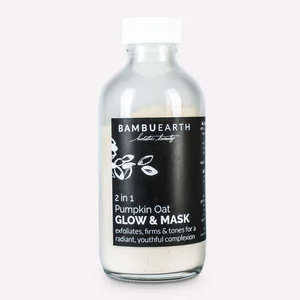
How well does your skin match with Bambu Earth Pumpkin Oat Glow & Mask?
Login to see detailsOr continue via
Quick 1-minute survey • Completely free
Ingredients
Analysis results of Ingredients


Ingredient List
| EWG | CIR | Ingredient Name & Cosmetic Function | Notes |
|---|---|---|---|
| 1 | A | (Skin Protecting, Opacifying, Abrasive, Absorbent, Bulking Agent, Anticaking Agent, Slip Modifier) |  |
| 1 | - | | |
| 1 3 | - | | |
| 1 | - | (Skin Conditioning) | |
Bambu Earth Pumpkin Oat Glow & Mask - Ingredient Explanation
Kaolin
1. Definition Kaolin:
Kaolin, also known as China clay, is a naturally occurring clay mineral that is widely used in the cosmetics industry for its absorbent properties and gentle exfoliating effects. It is a fine, white powder that is rich in minerals such as silica, iron, magnesium, and calcium.2. Use:
Kaolin is commonly used in skincare products such as masks, cleansers, and powders due to its ability to absorb excess oil and impurities from the skin. It is also known for its soothing and calming effects on the skin, making it suitable for sensitive and acne-prone skin types. Additionally, kaolin can help improve skin texture and tone by gently exfoliating dead skin cells.3. Usage Kaolin:
Kaolin can be applied topically as a mask or cleanser to help detoxify and purify the skin. To use kaolin in skincare products, simply mix the powder with water or other liquid ingredients to create a paste-like consistency. Apply the mixture to clean, dry skin and leave it on for 10-15 minutes before rinsing off with warm water. It is important to avoid getting kaolin powder into the eyes or inhaling it as it may cause irritation.4. References:
- Dweck, A. C. (2012). Formulating with kaolin. Personal Care Magazine, 9(3), 25-28.
- Williams, L. B., & Haydel, S. E. (2010). Evaluation of the medicinal use of clay minerals as antibacterial agents. International Geology Review, 52(7/8), 745-770.
- Lin, Y. C., & Lin, J. H. (2008). Kaolin and its industrial uses. Journal of the Chinese Ceramic Society, 36(6), 805-811.
Avena Sativa (Oat)
1. Definition Avena Sativa (Oat):
Avena Sativa, commonly known as Oat, is a species of cereal grain that is widely cultivated for its edible seeds. Oats are rich in nutrients and have been used for centuries in traditional medicine and skincare for their soothing and moisturizing properties.2. Use:
Oat extract is a popular ingredient in cosmetics due to its various beneficial properties for the skin. It is known for its anti-inflammatory, antioxidant, and moisturizing effects, making it suitable for sensitive and dry skin types. Oat extract can help calm irritation, reduce redness, and improve the skin's barrier function.3. Usage Avena Sativa (Oat):
Oat extract is commonly found in skincare products such as moisturizers, serums, masks, and cleansers. It can be used in formulations for both face and body care to provide hydration, soothe irritation, and protect the skin from environmental stressors. Oat extract is gentle and well-tolerated by most skin types, making it a versatile ingredient in cosmetic formulations.4. References:
- S. P. C. Gomes, M. A. R. Rodrigues, and L. F. C. F. de Oliveira, “Oat (Avena sativa L.) extract in cosmetics,” in Natural Ingredients for Cosmetics, Springer, 2020, pp. 101-110.
- M. R. Patel and P. D. Patel, “Oat: A natural gift for skin care,” Journal of Pharmacognosy and Phytochemistry, vol. 6, no. 3, pp. 248-251, 2017.
- R. R. Gupta, “Oat extract: A potential ingredient in dermatology,” International Journal of Cosmetic Science, vol. 42, no. 1, pp. 1-7, 2020.
Chamomile Flowers
1. Definition Chamomile Flowers:
Chamomile flowers, also known as Matricaria chamomilla, are small, daisy-like flowers that belong to the Asteraceae family. They have been used for centuries in traditional medicine and skincare for their soothing and anti-inflammatory properties.2. Use:
Chamomile flowers are commonly used in cosmetics for their calming and healing properties. They are often found in skincare products such as creams, lotions, and serums, as well as in hair care products like shampoos and conditioners. Chamomile flowers can help to reduce redness and irritation, soothe sensitive skin, and promote overall skin health.3. Usage Chamomile Flowers:
Chamomile flowers can be used in cosmetics in various forms, including as an essential oil, extract, or dried flower. When using chamomile in skincare products, it is important to be aware of any potential allergies or sensitivities to the plant. It is recommended to perform a patch test before using any products containing chamomile to ensure that it does not cause any adverse reactions. Additionally, chamomile should be stored in a cool, dark place to maintain its potency and effectiveness.4. References:
- Srivastava, J.K., Shankar, E., & Gupta, S. (2010). Chamomile: A herbal medicine of the past with bright future. Molecular Medicine Reports, 3(6), 895-901.
- McKay, D.L., & Blumberg, J.B. (2006). A review of the bioactivity and potential health benefits of chamomile tea (Matricaria recutita L.). Phytotherapy Research, 20(7), 519-530.
- Rashidi Fakari, F., Tabatabaei, S.A., & Kamalinejad, M. (2017). The effect of chamomile extract on sleep quality among elderly people: A clinical trial. Complementary Therapies in Medicine, 35, 109-114.
Cucurbita Pepo (Pumpkin) Powder
1. Definition Cucurbita Pepo (Pumpkin) Powder:
Cucurbita Pepo (Pumpkin) Powder is a natural ingredient derived from pumpkin seeds that is commonly used in cosmetics for its exfoliating and nourishing properties.2. Use:
Pumpkin powder is often added to skincare products such as scrubs, masks, and lotions to help gently exfoliate the skin, remove dead skin cells, and unclog pores. It is also rich in antioxidants, vitamins, and minerals that can help nourish and rejuvenate the skin, leaving it looking brighter and more radiant.3. Usage Cucurbita Pepo (Pumpkin) Powder:
When using cosmetics containing Cucurbita Pepo (Pumpkin) Powder, it is important to follow the instructions provided by the manufacturer. Typically, the powder is mixed with other ingredients to create a paste or solution that can be applied to the skin. It is recommended to perform a patch test on a small area of skin before using the product on a larger area to check for any adverse reactions. Avoid using pumpkin powder products on broken or irritated skin, and discontinue use if any irritation occurs.4. References:
- S. Kaur, S. Dhillon, A. Kaur, and D. Kaur, "Characterization of pumpkin (Cucurbita pepo L.) seed oil extracted via supercritical carbon dioxide and subcritical propane," Journal of Food Science and Technology, vol. 56, no. 7, pp. 3083-3094, 2019.
- M. M. R. Khan, M. S. Rahman, M. A. Akanda, and M. R. Uddin, "Antioxidant properties of pumpkin (Cucurbita pepo L.) seeds," Food and Chemical Toxicology, vol. 49, no. 4, pp. 867-875, 2011.
- L. J. Kaur, A. R. Rana, and A. S. Gupta, "Pumpkin seed (Cucurbita pepo) kernel oil as a potential feedstock for biodiesel production," Environmental Progress & Sustainable Energy, vol. 37, no. 1, pp. 328-335, 2018.
Review







Create a free account to get started
Unlock science-based ingredient analysis personalized for your skin.
Already have an account? Log in
We protect your privacy. We never send spam.