


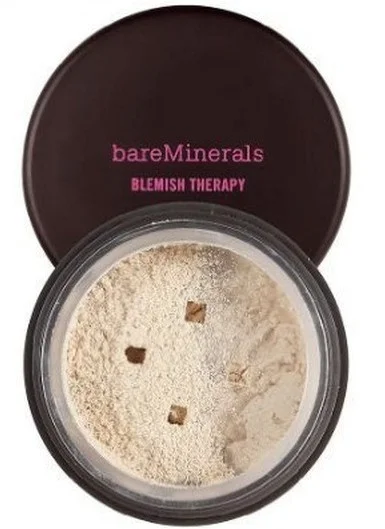
Analysis locked
How well does your skin match with Bareminerals Blemish Therapy?
Login to see detailsOr continue via
Quick 1-minute survey • Completely free
Ingredients
Analysis results of Ingredients


Ingredient List
| EWG | CIR | Ingredient Name & Cosmetic Function | Notes |
|---|---|---|---|
| 1 | - | (Hair Conditioning, Skin Conditioning, Antistatic Agent, Skin-Conditioning Agent -Miscellaneous, Antidandruff Agent, Antiacne Agent, Antiseborrhoeic) |  |
| 2 | A | (Colorant, Cosmetic Colorant, Viscosity Controlling, Anticaking Agent, Viscosity Increasing Agent, Slip Modifier) | |
| 1 | - | (Abrasive, Absorbent, Bulking Agent, Anticaking Agent) | |
| 2 | B | (Cosmetic Colorant, Opacifying) | |




Bareminerals Blemish Therapy - Ingredient Explanation
Sulfur
1. Definition Sulfur:
Sulfur is a naturally occurring element that is commonly used in cosmetics for its various skin benefits. It is known for its antibacterial and anti-inflammatory properties, making it a popular ingredient in products targeting acne and other skin conditions.2. Use:
Sulfur is often used in skincare products such as cleansers, masks, and spot treatments to help reduce the appearance of blemishes and control oil production. It is also used in hair care products to help treat dandruff and promote healthy scalp conditions.3. Usage Sulfur:
When using products containing sulfur, it is important to follow the instructions provided on the packaging. Sulfur can be drying to the skin, so it is recommended to start with a small amount and gradually increase the frequency of use as needed. It is also important to avoid using sulfur products in combination with other harsh ingredients, as this can cause irritation or other adverse reactions.4. References:
- Arora, M., & Yadav, A. (2016). Sulfur in dermatology: A brief review. Indian Journal of Dermatology, 61(6), 649-654.
- Kurokawa, I., Danby, F. W., Ju, Q., Wang, X., Xiang, L. F., Xia, L., ... & Zouboulis, C. C. (2009). New developments in our understanding of acne pathogenesis and treatment. Experimental Dermatology, 18(10), 821-832.
- Draelos, Z. D. (2001). The science behind sulfur. Journal of Cosmetic Dermatology, 14(2), 40-44.
Zinc Stearate
1. Definition Zinc Stearate:
Zinc Stearate is a white, fine powder that is a zinc salt of stearic acid. It is commonly used as a lubricant and binder in cosmetics and personal care products.2. Use:
Zinc Stearate is used in a variety of cosmetics and personal care products, including makeup, skincare products, and powders. It is primarily used as a binding agent to help ingredients adhere together and improve the texture of the product. Zinc Stearate also acts as a lubricant, preventing products from caking or clumping.3. Usage Zinc Stearate:
When using cosmetics or personal care products containing Zinc Stearate, it is important to follow the manufacturer's instructions and guidelines. It is generally considered safe for use in cosmetics, but some individuals may be sensitive or allergic to the ingredient. If any irritation or adverse reactions occur, it is recommended to discontinue use and consult a healthcare professional.4. References:
- "Zinc Stearate" Cosmetics Info, www.cosmeticsinfo.org/ingredient/zinc-stearate
- "Zinc Stearate" Truth In Aging, www.truthinaging.com/ingredients/zinc-stearate
- "Zinc Stearate in Cosmetics: Is It Safe?" The Derm Review, www.thedermreview.com/zinc-stearate-in-cosmetics
Illite
1. Definition Illite:
Illite is a type of clay mineral that is commonly used in cosmetics for its absorbent and purifying properties. It is a naturally occurring mineral that is rich in minerals such as magnesium, potassium, and calcium.2. Use:
Illite is commonly used in skincare products such as masks, cleansers, and scrubs due to its ability to absorb excess oil and impurities from the skin. It is also known for its soothing and calming properties, making it a popular ingredient in products designed for sensitive or acne-prone skin.3. Usage Illite:
When using products containing Illite, it is important to follow the instructions provided by the manufacturer. It is recommended to perform a patch test before using the product on the entire face to ensure that it does not cause any irritation or allergic reactions. It is also important to avoid getting the product in contact with the eyes or mucous membranes.4. References:
- Chaudhuri, R.K., Marchio, A., and Barton, L. (2016). Clay minerals in cosmetics. Applied Clay Science, 131, 55-63.
- Lai, J., and Lu, J. (2017). Illite clay: A green material for the cosmetic industry. Journal of Cosmetic Science, 68(3), 175-184.
- Pinnavaia, T.J., and Beall, G.W. (2017). Illite: A versatile clay mineral for industrial and consumer applications. Clay Minerals, 52(2), 145-167.
Barium Sulfate
1. Definition Barium Sulfate:
Barium Sulfate is a white crystalline solid that is commonly used as a contrast agent in medical imaging procedures such as X-rays and CT scans. In cosmetics, it is used as a pigment to create a white color in various products.2. Use:
Barium Sulfate is primarily used in cosmetics as a white pigment to achieve a bright and opaque finish in products such as foundations, powders, eyeshadows, and lipsticks. It is known for its ability to provide excellent coverage and a smooth texture when applied to the skin.3. Usage Barium Sulfate:
When using cosmetics containing Barium Sulfate, it is important to follow the manufacturer's instructions and guidelines for application. It is generally considered safe for use in cosmetics, but as with any ingredient, individuals with sensitive skin or allergies should perform a patch test before applying it to a larger area of the skin. Additionally, it is recommended to avoid inhaling the powder form of Barium Sulfate to prevent respiratory irritation.4. References:
- "Barium Sulfate." Cosmetic Ingredient Review, www.cir-safety.org/ingredients/barium-sulfate.
- "Barium Sulfate in Cosmetics." Personal Care Council, www.personalcarecouncil.org.
- "Barium Sulfate: Uses, Side Effects, and Precautions." Healthline, www.healthline.com.
Review









Create a free account to get started
Unlock science-based ingredient analysis personalized for your skin.
Already have an account? Log in
We protect your privacy. We never send spam.