


Analysis locked
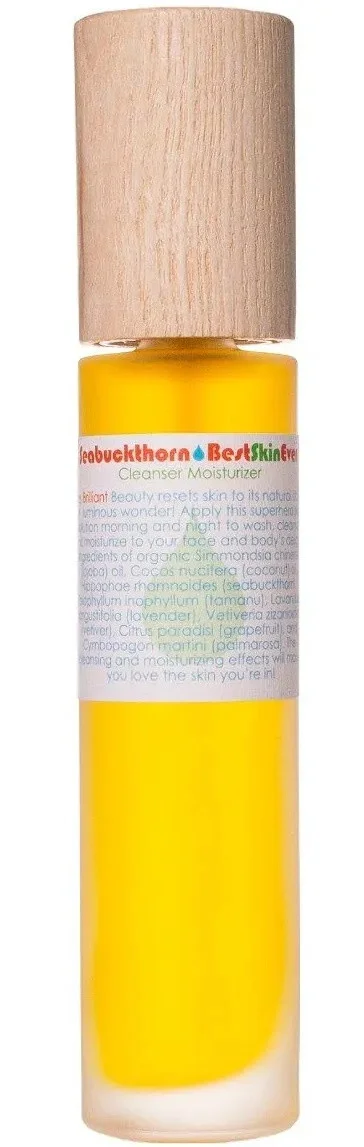
How well does your skin match with BestSkinEver Seabuckthorn Cleanser Moisturizer?
Login to see detailsOr continue via
Quick 1-minute survey • Completely free
Ingredients
Analysis results of Ingredients


Ingredient List
| EWG | CIR | Ingredient Name & Cosmetic Function | Notes |
|---|---|---|---|
| 1 | - | | |
| 1 | - | | |
| 1 | A | (Solvent, Skin Conditioning, Masking, Emollient, Fragrance, Hair Conditioning) |   |
| 1 | - | |
BestSkinEver Seabuckthorn Cleanser Moisturizer - Ingredient Explanation
Hippophae Rhamnoides (Sea Buckthorn)
1. Definition Hippophae Rhamnoides (Sea Buckthorn):
Sea Buckthorn, scientifically known as Hippophae Rhamnoides, is a shrub that produces small, bright orange berries. These berries are rich in nutrients, including vitamins, minerals, antioxidants, and fatty acids, making them a popular ingredient in cosmetics.2. Use:
Sea Buckthorn is used in cosmetics for its nourishing and rejuvenating properties. It is known to promote skin hydration, improve skin elasticity, and protect against environmental stressors. The high content of vitamins A, C, and E in Sea Buckthorn helps to brighten the skin, reduce inflammation, and promote collagen production. Additionally, the fatty acids found in Sea Buckthorn oil can help to repair and strengthen the skin barrier.3. Usage Hippophae Rhamnoides (Sea Buckthorn):
Sea Buckthorn is commonly found in skincare products such as serums, moisturizers, and facial oils. It can be applied directly to the skin or mixed with other ingredients to create a customized skincare solution. When using Sea Buckthorn in cosmetics, it is important to patch test first to ensure compatibility with your skin. As with any new skincare ingredient, it is recommended to start with a small amount and gradually increase usage to avoid any potential irritation.4. References:
- Jurenka, J. S. (2009). Anti-inflammatory properties of sea buckthorn (Hippophae rhamnoides L.). International Journal of Molecular Sciences, 10(1), 247-258.
- Yang, B., & Kallio, H. (2002). Composition and physiological effects of sea buckthorn (Hippophae) lipids. Trends in Food Science & Technology, 13(5), 160-167.
- Gupta, A., Kumar, R., Pal, K., Singh, V., & Banerjee, P. K. (2008). Simultaneous quantification of six major polyphenols in sea buckthorn (Hippophae rhamnoides) juice using high performance liquid chromatography with diode array detection. Journal of Food Composition and Analysis, 21(3), 225-231.
Simmondsia Chinensis (Jojoba)
1. Definition Simmondsia Chinensis (Jojoba):
Simmondsia Chinensis, commonly known as Jojoba, is a shrub native to the southwestern United States and northern Mexico. The oil extracted from the seeds of this plant is a popular ingredient in cosmetics due to its moisturizing and nourishing properties.2. Use:
Jojoba oil is commonly used in skincare products such as lotions, creams, and serums. It is known for its ability to mimic the skin's natural oils, making it suitable for all skin types, including sensitive and acne-prone skin. Jojoba oil is also used in hair care products to hydrate and condition the hair, leaving it soft and shiny.3. Usage Simmondsia Chinensis (Jojoba):
Jojoba oil can be used on its own as a moisturizer or added to existing skincare and hair care products. It can be applied directly to the skin or hair, massaged in gently until fully absorbed. Jojoba oil can also be used as a carrier oil for essential oils or other active ingredients.Precautions: While jojoba oil is generally considered safe for most people, it is always recommended to do a patch test before using it on a larger area of skin. Some individuals may be allergic to jojoba oil, so it is important to discontinue use if any irritation or allergic reaction occurs. It is also important to store jojoba oil in a cool, dark place to prevent it from going rancid.
4. References:
- Meier L, Stange R, Michalsen A, Uehleke B. Clay jojoba oil facial mask for lesioned skin and mild acne--results of a prospective, observational pilot study. Forsch Komplementmed. 2012;19(2):75-9. doi: 10.1159/000338076. Epub 2012 Apr 19. PMID: 22585103.
- Pazyar N, Yaghoobi R, Ghassemi MR, Kazerouni A, Rafeie E, Jamshydian N. Jojoba in dermatology: a succinct review. G Ital Dermatol Venereol. 2013 Dec;148(6):687-91. PMID: 24305429.
- Ranzato E, Martinotti S, Burlando B. Wound healing properties of jojoba liquid wax: an in vitro study. J Ethnopharmacol. 2011 Sep 1;134(2):443-9. doi: 10.1016/j.jep.2011.01.027. Epub 2011 Jan 27. PMID: 21276990.
Cocos Nucifera (Coconut) Oil
1. Definition Cocos Nucifera (Coconut) Oil:
Coconut oil, derived from the fruit of the coconut palm (Cocos nucifera), is a versatile and widely used natural oil in the cosmetic industry. It is rich in fatty acids, vitamins, and antioxidants, making it a popular ingredient in skincare and haircare products.2. Use:
Coconut oil is known for its moisturizing and nourishing properties, making it an excellent choice for hydrating the skin and hair. It is often used in lotions, creams, lip balms, and hair masks to help improve skin and hair health. Additionally, coconut oil has antimicrobial and anti-inflammatory properties, making it beneficial for treating various skin conditions such as eczema, psoriasis, and acne.3. Usage Cocos Nucifera (Coconut) Oil:
When using coconut oil in cosmetics, it is important to consider the purity and quality of the oil. Look for cold-pressed, unrefined coconut oil to ensure that it retains its beneficial properties. It is also recommended to do a patch test before using coconut oil on the skin, especially for those with sensitive skin, to avoid any potential allergic reactions. Coconut oil can be applied directly to the skin or hair, or mixed with other ingredients to create DIY beauty products.4. References:
- Rele, A. S., & Mohile, R. B. (2003). Effect of mineral oil, sunflower oil, and coconut oil on prevention of hair damage. Journal of cosmetic science, 54(2), 175-192.
- Evangelista, M. T., Abad-Casintahan, F., & Lopez-Villafuerte, L. (2014). The effect of topical virgin coconut oil on SCORAD index, transepidermal water loss, and skin capacitance in mild to moderate pediatric atopic dermatitis: a randomized, double-blind, clinical trial. International Journal of Dermatology, 53(1), 100-108.
- Nevin, K. G., & Rajamohan, T. (2010). Beneficial effects of virgin coconut oil on lipid parameters and in vitro LDL oxidation. Clinical biochemistry, 43(4-5), 349-357.
Calophyllum Inophyllum Oil
1. Definition Calophyllum Inophyllum Oil:
Calophyllum Inophyllum Oil, also known as Tamanu Oil, is a botanical oil extracted from the nuts of the Calophyllum inophyllum tree. It is rich in fatty acids, antioxidants, and anti-inflammatory properties, making it a popular ingredient in skincare products.2. Use:
Calophyllum Inophyllum Oil is commonly used in cosmetics for its moisturizing and healing properties. It is known to promote skin regeneration, reduce inflammation, and improve the overall appearance of the skin. It is often used in products for treating scars, stretch marks, acne, eczema, and other skin conditions.3. Usage Calophyllum Inophyllum Oil:
When using Calophyllum Inophyllum Oil in cosmetics, it is important to perform a patch test before applying it to the skin, as some individuals may be sensitive to the oil. It can be used directly on the skin as a moisturizer or added to skincare products such as serums, creams, and lotions. It is recommended to use the oil sparingly, as a little goes a long way due to its rich and potent properties.4. References:
- Kim, S. K., Karadeniz, F., & Kim, Y. T. (2013). Anti-inflammatory effect of Calophyllum inophyllum L. in RAW264.7 cells. Journal of Functional Foods, 5(4), 2197-2204.
- Nair, R., Kalariya, T., & Chanda, S. (2009). Antibacterial activity of some selected Indian medicinal flora. Turkish Journal of Biology, 33(2), 71-75.
- Léguillier, T., Lémus, C., Souza, C., Queiroz, V., Marcourt, L., Beniddir, M. A., ... & Espindola, L. (2015). In vitro antiplasmodial activity of Brazilian Cerrado plants used as traditional remedies. Journal of Ethnopharmacology, 173, 545-555.
Review
Didn't find
the information you need?





Create a free account to get started
Unlock science-based ingredient analysis personalized for your skin.
Already have an account? Log in
We protect your privacy. We never send spam.