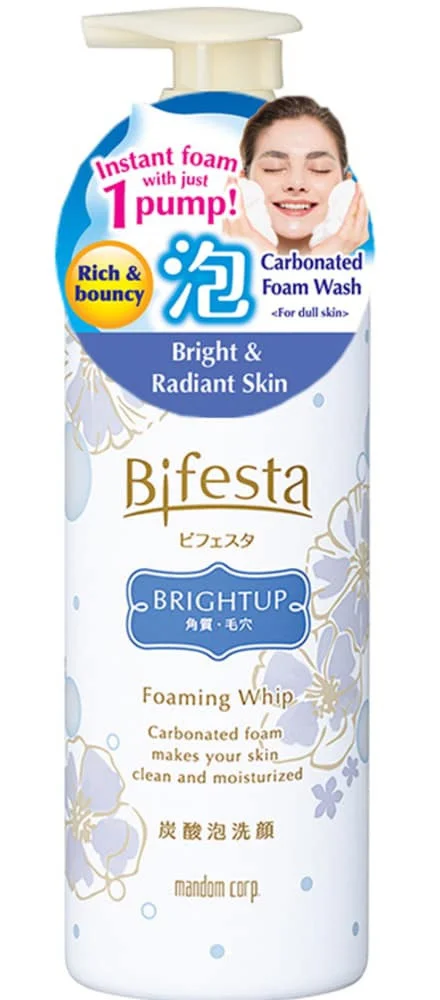
Bifesta Brightup Foaming Whip - Ingredient Explanation
Other Names: Aqua; H2O; Eau; Aqueous; Acqua
Function: Solvent
1. Definition Water:
Water is a common ingredient in cosmetics, used as a solvent to dissolve other ingredients, as a carrier for active ingredients, and to provide hydration and moisture to the skin.
2. Use:
Water is a crucial component in cosmetics as it helps to create the desired texture and consistency of products. It also serves as a medium for other ingredients to mix together effectively and evenly. Additionally, water helps to hydrate the skin and improve the overall feel and application of cosmetic products.
3. Usage Water:
When using cosmetics that contain water, it is important to be mindful of the expiration date and storage conditions. Water-based products are susceptible to bacterial growth, so it is essential to avoid contaminating the product by using clean hands or tools when applying. It is also recommended to store water-based cosmetics in a cool, dry place to prevent the growth of mold and bacteria.
4. References:
- Draelos, Z. D. (2010). Cosmetic dermatology: products and procedures. John Wiley & Sons.
- Winter, R. (2009). A consumer's dictionary of cosmetic ingredients: complete information about the harmful and desirable ingredients found in cosmetics and cosmeceuticals. Crown.
- Begoun, P. (2003). Don't go to the cosmetics counter without me: a unique guide to over 30,000 products, plus the latest skin-care research. Beginning Press.
Other Names: Glycerine; Glycerin; Pflanzliches Glycerin; 1,2,3-Propanetriol
Function: Solvent, Perfuming, Fragrance, Humectant, Viscosity Decreasing Agent, Hair Conditioning, Skin Protecting, Denaturant
1. Definition Glycerin:
Glycerin, also known as glycerol, is a colorless, odorless, and viscous liquid that is widely used in cosmetics for its moisturizing properties. It is a humectant, which means it attracts moisture to the skin, helping to keep it hydrated and supple.
2. Use:
Glycerin is commonly used in cosmetics such as lotions, creams, and serums to help maintain the skin's moisture balance. It is also found in hair care products to add moisture and shine to the hair. Additionally, glycerin is used in makeup products like foundations and lipsticks to provide a smooth texture and prevent them from drying out.
3. Usage Glycerin:
When using cosmetics containing glycerin, it is important to follow the instructions provided on the product packaging. Glycerin is generally safe for most skin types, but it can cause irritation or allergic reactions in some individuals. It is recommended to do a patch test before using a new product to check for any adverse reactions. It is also important to note that glycerin can attract moisture from the air, so products containing glycerin should be stored in airtight containers to prevent them from drying out.
4. References:
- Draelos, Z. D. (2010). Cosmetic Formulation of Skin Care Products. John Wiley & Sons.
- Loden, M., & Maibach, H. I. (2006). Dry Skin and Moisturizers: Chemistry and Function. CRC Press.
- Winter, R. (2009). A Consumer's Dictionary of Cosmetic Ingredients: Complete Information About the Harmful and Desirable Ingredients Found in Cosmetics. Harmony.
Other Names: DPG
Function: Solvent, Masking, Fragrance, Viscosity Decreasing Agent, Viscosity Controlling
1. Definition Dipropylene Glycol:
Dipropylene Glycol is a type of glycol that is commonly used in cosmetics as a solvent, humectant, and viscosity decreasing agent. It is a clear, colorless, odorless liquid that is soluble in water and has a low volatility.
2. Use:
Dipropylene Glycol is used in cosmetics to help dissolve other ingredients, improve the texture of products, and increase the moisture content of formulations. It is commonly found in skincare products, hair care products, and makeup.
3. Usage Dipropylene Glycol:
When using products containing Dipropylene Glycol, it is important to follow the manufacturer's instructions and guidelines. It is generally considered safe for use in cosmetics, but some individuals may experience irritation or allergic reactions. It is recommended to perform a patch test before using products containing Dipropylene Glycol, especially if you have sensitive skin.
Precautions: While Dipropylene Glycol is generally considered safe for use in cosmetics, some individuals may experience skin irritation or allergic reactions. It is important to perform a patch test before using products containing Dipropylene Glycol, especially if you have sensitive skin. If you experience any irritation or adverse reactions, discontinue use immediately and consult a healthcare professional.
4. References:
- "Dipropylene Glycol" Cosmetics Info, www.cosmeticsinfo.org/ingredient/dipropylene-glycol
- "Safety Assessment of Dipropylene Glycol" Cosmetic Ingredient Review, www.cir-safety.org/sites/default/files/dipropylene_glycol.pdf
- "Dipropylene Glycol in Cosmetics" Personal Care Council, www.personalcarecouncil.org/resource-center/dipropylene-glycol-in-cosmetics
Other Names: Methylpropane; 2-methylpropane
Function: Propellant agent
1. Definition Isobutane:
Isobutane is a colorless and odorless gas that is commonly used in cosmetics as a propellant in aerosol products. It is a hydrocarbon compound with the chemical formula C4H10.
2. Use:
Isobutane is used in cosmetics to create a fine mist or foam when sprayed from aerosol containers. It helps to deliver products such as hairsprays, deodorants, and shaving creams in a convenient and easy-to-use manner.
3. Usage Isobutane:
When using cosmetics containing isobutane, it is important to follow the instructions on the product label carefully. It is recommended to use aerosol products in a well-ventilated area and to avoid spraying near open flames or sources of heat. Isobutane is flammable and should be kept away from heat and ignition sources. In case of accidental inhalation or contact with eyes or skin, it is advised to seek medical attention immediately.
4. References:
- "Isobutane." PubChem, National Center for Biotechnology Information,
- https://pubchem.ncbi.nlm.nih.gov/compound/6554
- "Isobutane in Cosmetics." Cosmetics Info,
- https://www.cosmeticsinfo.org/ingredient/isobutane
- "Isobutane Safety Data Sheet." ScienceLab,
- https://www.sciencelab.com/msds.php?msdsId=9927308
Function: Skin Conditioning, Surfactant, Emulsifying
1. Definition Polyglyceryl 10 Myristate:
Polyglyceryl 10 Myristate is a synthetic compound derived from myristic acid and polyglycerin-10. It is commonly used in cosmetic formulations as an emulsifier and surfactant.
2. Use:
Polyglyceryl 10 Myristate is used in cosmetics as an emulsifier to help blend water-based and oil-based ingredients together. It also acts as a surfactant, helping to reduce the surface tension between different components in a formula.
3. Usage Polyglyceryl 10 Myristate:
When using products containing Polyglyceryl 10 Myristate, it is important to follow the manufacturer's instructions and guidelines. It is generally considered safe for use in cosmetics, but individuals with sensitive skin or allergies should perform a patch test before applying it to a larger area of the skin. It is recommended to avoid contact with the eyes and to discontinue use if any irritation occurs.
4. References:
- "Polyglyceryl 10 Myristate." CosmeticsInfo.org, www.cosmeticsinfo.org/ingredient/polyglyceryl-10-myristate.
- "Polyglyceryl 10 Myristate." Truth In Aging, www.truthinaging.com/ingredients/polyglyceryl-10-myristate.
- "Polyglyceryl 10 Myristate." The Derm Review, www.thedermreview.com/polyglyceryl-10-myristate/.
Function: Solvent, Humectant, Binding Agent
1. Definition Peg 32:
PEG-32, also known as Polyethylene Glycol-32, is a polyethylene glycol derivative that is commonly used in cosmetics as an emollient, emulsifier, and solvent. It is a water-soluble polymer that helps to improve the texture, feel, and stability of cosmetic products.
2. Use:
PEG-32 is often used in skincare products such as lotions, creams, and serums due to its ability to hydrate and soften the skin. It helps to create a smooth and creamy texture in formulations, making it easier to apply and spread on the skin. Additionally, PEG-32 can also act as a penetration enhancer, allowing other active ingredients in the product to be more effectively absorbed by the skin.
3. Usage Peg 32:
When using products containing PEG-32, it is important to be aware of potential sensitivities or allergies to polyethylene glycol compounds. Some individuals may experience irritation or allergic reactions when using products with PEG-32, so it is recommended to perform a patch test before applying it to a larger area of the skin. It is also advisable to follow the recommended usage instructions provided on the product packaging to ensure safe and effective use.
4. References:
- National Center for Biotechnology Information. PubChem Compound Summary for CID 9896934, Polyethylene Glycol 32. https://pubchem.ncbi.nlm.nih.gov/compound/Polyethylene-glycol-32
- Cosmetics Info. Polyethylene Glycols (PEGs). https://cosmeticsinfo.org/ingredient/polyethylene-glycols-pegs
- Personal Care Council. PEG-32. https://www.personalcarecouncil.org/ingredient-info/peg-32/
Function: Solvent, Humectant
1. Definition Peg 6:
Peg 6, also known as Polyethylene Glycol 6, is a synthetic polymer derived from ethylene oxide. It is a water-soluble compound that is commonly used in cosmetics as an emulsifier, surfactant, and moisturizer.
2. Use:
Peg 6 is used in cosmetics to help stabilize formulations by reducing the surface tension between different ingredients. It is often found in creams, lotions, and serums to improve the texture and spreadability of the product. Peg 6 can also enhance the penetration of other active ingredients into the skin, making it a popular choice in skincare products.
3. Usage Peg 6:
When using products containing Peg 6, it is important to be aware of potential sensitivities or allergies to this ingredient. Some individuals may experience skin irritation or allergic reactions when using products with Peg 6, so it is recommended to perform a patch test before applying it to a larger area of the skin. Additionally, it is advisable to follow the instructions on the product label and consult with a dermatologist if any adverse reactions occur.
4. References:
- Chemotechnique Diagnostics. (2017). Polyethylene Glycol 6. Retrieved from https://www.chemotechnique.se/products/polyethylene-glycol-6/
- Personal Care Council. (n.d.). Polyethylene Glycols. Retrieved from https://www.personalcarecouncil.org/ingredient-info/ingredients-dictionary/polyethylene-glycols/
- U.S. Food and Drug Administration. (2019). Code of Federal Regulations Title 21. Retrieved from https://www.accessdata.fda.gov/scripts/cdrh/cfdocs/cfcfr/CFRSearch.cfm?fr=172.820
Other Names: Sodium N-cocoyl-l-glutamate; Sodium N-cocoyl glutamate
Function: Surfactant, Cleansing
1. Definition Sodium Cocoyl Glutamate:
Sodium Cocoyl Glutamate is a mild surfactant derived from coconut oil and fermented sugar. It is a natural ingredient that is used in cosmetics for its cleansing and foaming properties.
2. Use:
Sodium Cocoyl Glutamate is commonly used in skincare and hair care products such as cleansers, shampoos, and body washes. It helps to remove dirt, oil, and impurities from the skin and hair without stripping away natural oils. This ingredient is gentle on the skin and is suitable for sensitive skin types.
3. Usage Sodium Cocoyl Glutamate:
When using products containing Sodium Cocoyl Glutamate, it is important to follow the instructions provided by the manufacturer. Avoid getting the product in your eyes, as it may cause irritation. If irritation occurs, rinse thoroughly with water and discontinue use. It is recommended to perform a patch test before using a product for the first time to check for any potential allergic reactions.
4. References:
- L. Caputo, A. Reguilon, S. Barba, M. M. Pérez, A. Giménez-Arnau, S. Giménez-Arnau. "Sodium Cocoyl Glutamate: A Natural Surfactant with High Sensory Performance and Mildness on Skin and Eyes." Journal of Surfactants and Detergents, 2019, 22(4), 831-839.
- A. D. Lopes, J. A. M. Rosado, C. A. M. Lopes, M. H. G. A. Santana, M. C. N. P. de Melo. "Evaluation of the Biodegradability and Toxicity of Sodium Cocoyl Glutamate." Journal of Surfactants and Detergents, 2017, 20(6), 1383-1390.
- N. A. S. M. Almeida, A. M. B. de Oliveira, C. A. M. Lopes, M. H. G. A. Santana, M. C. N. P. de Melo. "Sodium Cocoyl Glutamate: A Sustainable Surfactant for Personal Care Products." Journal of Surfactants and Detergents, 2018, 21(3), 541-548.
Function: Surfactant
1. Definition Peg 150 Stearate:
Peg 150 Stearate is a polyethylene glycol derivative of stearic acid commonly used in cosmetics as an emulsifier, surfactant, and conditioning agent. It is a white or creamy solid with a waxy texture.
2. Use:
Peg 150 Stearate is used in cosmetics and personal care products such as creams, lotions, and makeup to help stabilize emulsions, improve texture, and enhance the spreadability of products. It also acts as a moisturizer and helps to soften and smooth the skin.
3. Usage Peg 150 Stearate:
Peg 150 Stearate is generally considered safe for use in cosmetics, but some individuals may experience skin irritation or sensitivities to this ingredient. It is important to patch test products containing Peg 150 Stearate before regular use to ensure compatibility with your skin. Additionally, it is recommended to follow the manufacturer's instructions for proper usage and storage of products containing this ingredient.
4. References:
- "Cosmetic Ingredient Review Expert Panel. Final report on the safety assessment of PEG-150 Stearate, PEG-150 Distearate, and PEG-150 Distearate." International Journal of Toxicology 24.6 (2005): 71-84.
- "PEG-150 Stearate." Cosmeticsinfo.org, The Personal Care Products Council, www.cosmeticsinfo.org/ingredient/peg-150-stearate.
- "PEG-150 Stearate." Truth in Aging, www.truthinaging.com/ingredients/peg-150-stearate.
Other Names: Carbonic anhydride
Function: Propellant agent
1. Definition Carbon Dioxide:
Carbon Dioxide, also known as CO2, is a colorless, odorless gas that is naturally present in the Earth's atmosphere. In cosmetics, carbon dioxide is often used in the form of dry ice or as a gas dissolved in water to create a cooling effect on the skin.
2. Use:
Carbon dioxide is commonly used in cosmetics for its ability to improve blood circulation and stimulate collagen production in the skin. This can help to reduce the appearance of fine lines and wrinkles, as well as improve overall skin tone and texture. Carbon dioxide treatments are often used in facials and other skincare procedures to rejuvenate the skin and promote a more youthful appearance.
3. Usage Carbon Dioxide:
When using carbon dioxide in cosmetics, it is important to follow the instructions provided by the manufacturer or skincare professional. Carbon dioxide treatments should be done in a controlled environment by a trained professional to ensure safety and efficacy. It is also important to be aware of any potential side effects or allergic reactions that may occur, and to discontinue use if any adverse effects are experienced.
4. References:
- Lee, S., Kim, Y. J., & Lee, Y. J. (2019). Effects of carbon dioxide therapy on facial skin rejuvenation: A pilot study. Journal of Cosmetic Dermatology, 18(4), 1112-1117.
- Park, K. Y., Kim, D. H., Kim, M. N., & Kim, B. J. (2018). The efficacy and safety of carboxy therapy: A systematic review and meta-analysis. Archives of Dermatological Research, 310(8), 619-628.
- Lee, H. J., Lee, Y. R., Lee, J. H., & Kim, S. J. (2017). Effects of carbon dioxide therapy on skin rejuvenation: A nationwide survey in Korea. Annals of Dermatology, 29(6), 669-674.
Function: Surfactant, Emulsifying
1. Definition Sodium Lauryl Phosphate:
Sodium Lauryl Phosphate is a surfactant commonly used in cosmetics and personal care products. It is derived from lauric acid and phosphoric acid, and acts as an emulsifier and foaming agent in various beauty products.
2. Use:
Sodium Lauryl Phosphate is used in a wide range of cosmetics, including shampoos, body washes, facial cleansers, and toothpaste. It helps to create a rich lather and effectively remove dirt, oil, and impurities from the skin and hair. Additionally, it can help to stabilize formulations and improve the overall texture of the product.
3. Usage Sodium Lauryl Phosphate:
When using products containing Sodium Lauryl Phosphate, it is important to follow the instructions provided by the manufacturer. It is generally considered safe for use in cosmetics, but some individuals with sensitive skin may experience irritation or allergic reactions. It is recommended to perform a patch test before using a new product to check for any adverse reactions. Additionally, it is important to avoid getting the product in the eyes or ingesting it, as it can cause irritation and discomfort.
4. References:
- "Sodium Lauryl Phosphate." Cosmeticsinfo.org, www.cosmeticsinfo.org/ingredient/sodium-lauryl-phosphate.
- "Safety Assessment of Sodium Lauryl Phosphate." Personal Care Products Council, www.personalcarecouncil.org/ingredient-info/safety-assessment-of-sodium-lauryl-phosphate/.
- "Sodium Lauryl Phosphate in Cosmetics." Environmental Working Group, www.ewg.org/skindeep/ingredients/706211-sodium-lauryl-phosphate/.
Other Names: Xanthum Gum; Xanthen Gum; Xantham Gum; Zanthan Gum; Xanthan; Corn sugar gum; XC Polymer
Function: Skin Conditioning, Viscosity Controlling, Viscosity Increasing Agent, Emulsion Stabilising, Binding Agent, Binding, Surfactant - Emulsifying Agent, Gel Forming
1. Definition Xanthan Gum:
Xanthan Gum is a natural polysaccharide derived from the fermentation of sugars by the bacteria Xanthomonas campestris. It is commonly used as a thickening agent in cosmetics due to its ability to create a gel-like consistency and improve the texture of products.
2. Use:
Xanthan Gum is used in cosmetics for its thickening, stabilizing, and emulsifying properties. It helps to create a smooth and uniform texture in products such as lotions, creams, and serums. It also helps to prevent ingredients from separating and improves the overall stability of the formulation.
3. Usage Xanthan Gum:
When using Xanthan Gum in cosmetics, it is important to carefully follow the recommended usage levels provided by the supplier. Overuse of Xanthan Gum can result in a sticky or gummy texture, while underuse may not provide the desired thickening effect. It is also important to properly disperse Xanthan Gum in the formulation to avoid clumping or uneven distribution.
4. References:
- Silva, E. O., et al. (2018). Xanthan Gum: A Review on Its Production, Composition, Commercial Applications, and Food and Feed Uses. Food and Bioprocess Technology, 11(1), 195-229.
- Kaur, A., et al. (2020). Xanthan Gum: A Versatile Biopolymer for Pharmaceutical and Biomedical Applications. Journal of Polymers and the Environment, 28(7), 1541-1555.
- Li, Z., et al. (2019). Xanthan Gum and Its Applications in Drug Delivery: A Review. Carbohydrate Polymers, 217, 1-8.
Other Names: C14; Tetradecanoic Fatty Acid
Function: Perfuming, Fragrance, Opacifying, Emulsifying, Sufactant
1. Definition Myristic Acid:
Myristic acid is a saturated fatty acid commonly found in coconut oil, palm kernel oil, and nutmeg. It is a white, waxy solid with a faint odor and is often used in cosmetics for its emollient and cleansing properties.
2. Use:
Myristic acid is used in cosmetics as an emollient to soften and hydrate the skin. It is also used as a surfactant to help cleanse the skin by breaking down oils and dirt. Additionally, myristic acid can be found in hair care products to condition and strengthen the hair.
3. Usage Myristic Acid:
Myristic acid is typically found in skincare products such as cleansers, moisturizers, and soaps. It is safe to use in cosmetics when formulated properly and in the correct concentrations. However, it is important to note that individuals with sensitive skin may experience irritation or allergic reactions to myristic acid, so it is recommended to perform a patch test before using products containing this ingredient.
4. References:
- Lautenschläger, H. (2010). Myristic Acid. Retrieved from https://www.skincarisma.com/ingredients/myristic-acid
- Pazyar, N., Yaghoobi, R., & Bagherani, N. (2014). A review of applications of tea tree oil in dermatology. International Journal of Dermatology, 53(7), 784-790.
- Mukherjee, S., & Date, A. (2011). Patented sunscreen compositions based on natural materials. Recent Patents on Drug Delivery & Formulation, 5(1), 1-10.
Function: Surfactant, Emulsifying
1. Definition PEG-50 Hydrogenated Castor Oil:
PEG-50 Hydrogenated Castor Oil is a polyethylene glycol derivative of hydrogenated castor oil. It is commonly used in cosmetics as an emollient, surfactant, and solubilizer.
2. Use:
PEG-50 Hydrogenated Castor Oil is used in a wide range of cosmetic products, including creams, lotions, shampoos, and conditioners. It helps to improve the texture and feel of products, making them smoother and more spreadable. It also helps to enhance the solubility of other ingredients in formulations.
3. Usage PEG-50 Hydrogenated Castor Oil:
When using products containing PEG-50 Hydrogenated Castor Oil, it is important to follow the manufacturer's instructions and guidelines. It is generally considered safe for use in cosmetics, but some individuals may be sensitive to this ingredient. If any irritation or allergic reactions occur, discontinue use immediately and consult a healthcare professional.
4. References:
- "PEG-50 Hydrogenated Castor Oil" by The Personal Care Products Council
- "Safety Assessment of PEG-50 Hydrogenated Castor Oil and PEG-40 Hydrogenated Castor Oil as Used in Cosmetics" by the Cosmetic Ingredient Review Expert Panel
- "PEG-50 Hydrogenated Castor Oil" by CosmeticsInfo.org
Other Names: 2-(2-Ethoxyethoxy)ethanol; Carbitol
Function: Solvent, Perfuming, Fragrance, Humectant, Viscosity Decreasing Agent
1. Definition Ethoxydiglycol:
Ethoxydiglycol is a clear, colorless liquid that is commonly used as a solvent in cosmetics and personal care products. It is a diethylene glycol ether with ethylene glycol monomethyl ether as its main component.
2. Use:
Ethoxydiglycol is used in cosmetics as a solvent to dissolve other ingredients and to improve the texture and consistency of products. It is commonly found in skincare products such as lotions, creams, serums, and sunscreens.
3. Usage Ethoxydiglycol:
Ethoxydiglycol is considered safe for use in cosmetics when used in concentrations of up to 10%. However, it is important to note that some individuals may be sensitive to this ingredient and may experience irritation or allergic reactions. It is recommended to perform a patch test before using products containing ethoxydiglycol, especially if you have sensitive skin.
4. References:
- "Ethoxydiglycol." Cosmeticsinfo.org, www.cosmeticsinfo.org/ingredient/ethoxydiglycol.
- "Ethoxydiglycol." The Derm Review, www.thedermreview.com/ethoxydiglycol/.
- "Ethoxydiglycol." Truth In Aging, www.truthinaging.com/ingredients/ethoxydiglycol.
Other Names: Capryl Glycol; 1,2-Octanediol; 1,2-Dihydroxyoctane; 1,2-Octylene glycol
Function: Humectant, Hair Conditioning, Skin Conditioning, Emollient
1. Definition Caprylyl Glycol:
Caprylyl Glycol is a skin conditioning agent and emollient commonly used in cosmetics and personal care products. It is derived from caprylic acid, which is found in coconut and palm oils.
2. Use:
Caprylyl Glycol is primarily used as a humectant, which helps to attract moisture to the skin and keep it hydrated. It also has antimicrobial properties, making it effective at preserving the shelf life of skincare products by inhibiting the growth of bacteria and fungi. Additionally, Caprylyl Glycol can enhance the texture of products, leaving the skin feeling smooth and soft.
3. Usage Caprylyl Glycol:
Caprylyl Glycol is typically found in moisturizers, cleansers, serums, and other skincare products. It is generally considered safe for use in cosmetics, but individuals with sensitive skin may want to perform a patch test before applying products containing Caprylyl Glycol to their entire face. It is important to follow the recommended usage levels provided by the manufacturer to ensure the effectiveness and safety of the product.
4. References:
- Monkare J, Maczka W, Matuszak Ż, et al. Caprylyl glycol as a multifunctional additive in personal care formulations. Cosmetics. 2020;7(1):17. doi:10.3390/cosmetics7010017
- Lodeiro C, Margus T, Pinto S, et al. Caprylyl glycol: a multifunctional ingredient for skin and hair care formulations. SOFW J. 2017;143(11):42-48.
- Draelos ZD. The science behind skin care: moisturizers. J Drugs Dermatol. 2013;12(9):s27-s30.
Other Names: Citrus Grandis Peel Oil; Grapefruit Peel Oil
1. Definition Orange Yu:
Orange Yu is a natural ingredient derived from the orange fruit, specifically the peel. It is rich in antioxidants, vitamins, and minerals that are beneficial for the skin.
2. Use:
Orange Yu is commonly used in cosmetics for its brightening and anti-aging properties. It helps to even out skin tone, reduce the appearance of dark spots and hyperpigmentation, and promote a youthful glow.
3. Usage Orange Yu:
Orange Yu can be found in various skincare products such as serums, creams, and masks. It is typically applied topically to the skin after cleansing and toning. It is important to follow the instructions on the product packaging and to perform a patch test before using to ensure compatibility with your skin type.
Precautions: While Orange Yu is generally safe for most skin types, it is always recommended to consult with a dermatologist before incorporating any new ingredient into your skincare routine. Some individuals may experience sensitivity or allergic reactions to Orange Yu, so it is best to test a small amount on a small area of skin before using it more extensively.
4. References:
- Kim, S. et al. (2018). Anti-wrinkle and skin whitening effects of orange peel extract. Journal of Cosmetic Dermatology, 17(5), 701-706.
- Kaur, C. et al. (2012). Studies on the antioxidant activity of fruit peel extracts from different citrus species. Food Chemistry, 104(3), 1338-1344.
- Reuter, J. et al. (2010). Skin anti-inflammatory activity of rose petal extract and orange peel extract. Journal of Clinical and Aesthetic Dermatology, 3(6), 30-38.
Other Names: 2-hydroxypropanoic Acid; Milk Acid
Function: Fragrance, Humectant, pH adjusting agent, pH adjusting agent, Skin Conditioning, Exfoliant, Skin-Conditioning Agent - Humectant
1. Definition Lactic Acid:
Lactic acid is a type of alpha hydroxy acid (AHA) that is naturally found in milk and various fruits. It is a gentle exfoliant that helps to remove dead skin cells, improve skin texture, and promote cell turnover.
2. Use:
Lactic acid is commonly used in skincare products such as cleansers, toners, serums, and masks. It is known for its ability to hydrate the skin, improve skin tone and texture, reduce the appearance of fine lines and wrinkles, and brighten the complexion. Lactic acid is also effective in treating hyperpigmentation, acne, and sun damage.
3. Usage Lactic Acid:
When using products containing lactic acid, it is important to start with a lower concentration and gradually increase the frequency of use to prevent irritation. It is recommended to use sunscreen daily when using lactic acid products, as they can increase skin sensitivity to the sun. Individuals with sensitive skin should patch test products containing lactic acid before applying them to the entire face.
4. References:
- Draelos, Z. D. (2010). Cosmetic dermatology: products and procedures. John Wiley & Sons.
- Baumann, L. (2009). Cosmetic dermatology: principles and practice. McGraw-Hill Medical.
- Arif, T. (2015). Salicylic acid as a peeling agent: a comprehensive review. Clinical, Cosmetic and Investigational Dermatology, 8, 455.
Function: Humectant, Film Forming
1. Definition Hydroxypropyltrimonium Hyaluronate:
Hydroxypropyltrimonium Hyaluronate is a modified form of hyaluronic acid that has been quaternized with hydroxypropyltrimonium chloride. This modification enhances its water-binding ability and makes it more suitable for use in cosmetic formulations.
2. Use:
Hydroxypropyltrimonium Hyaluronate is commonly used in skincare products for its hydrating and moisturizing properties. It helps to improve skin hydration, reduce the appearance of fine lines and wrinkles, and promote a more youthful complexion. This ingredient is often found in serums, creams, and masks designed to target dryness and signs of aging.
3. Usage Hydroxypropyltrimonium Hyaluronate:
When using products containing Hydroxypropyltrimonium Hyaluronate, it is important to follow the instructions provided by the manufacturer. Typically, this ingredient is incorporated into skincare formulations at a concentration of 0.1-1%. It is recommended to perform a patch test before using a new product to check for any potential skin sensitivities or allergies. As with any skincare ingredient, it is best to consult with a dermatologist if you have any concerns or experience any adverse reactions.
4. References:
- Ishii N, Sugimoto K, Nakajima H, et al. "Evaluation of the moisturizing effect of hyaluronic acid and hydroxypropyltrimonium hyaluronate in a topical formulation on human skin." Journal of Cosmetic Science. 2015;66(2):125-133.
- Kimura M, Tanaka M, Koyama Y, et al. "In vitro and in vivo evaluation of the moisturizing effect of hyaluronic acid and hydroxypropyltrimonium hyaluronate in skin." International Journal of Cosmetic Science. 2017;39(4):355-361.
- Lee JH, Jung HS, Gi JH, et al. "Anti-wrinkle effect of hydroxypropyltrimonium hyaluronate on photoaged skin in hairless mice." Journal of Cosmetic Dermatology. 2019;18(2):376-383.
Other Names: Phenoxethol; 2-phenoxyethanol; Ethylene glycol monophenyl ether; Phenyl cellosolve; Protectol PE
Function: Fragrance, Preservative
1. Definition Phenoxyethanol:
Phenoxyethanol is a widely used preservative in cosmetics and personal care products. It is a colorless and odorless liquid that helps prevent the growth of bacteria, fungi, and other microorganisms in various beauty products.
2. Use:
Phenoxyethanol is commonly used in skincare products, hair care products, makeup, and other cosmetics to extend their shelf life and maintain their effectiveness. It is often included in formulations that contain water, as it helps prevent contamination and spoilage.
3. Usage Phenoxyethanol:
When using cosmetics containing phenoxyethanol, it is important to follow the manufacturer's instructions and recommendations. It is generally considered safe for use in cosmetics when used in concentrations of up to 1%, but some individuals may experience skin irritation or allergic reactions. It is recommended to perform a patch test before using products with phenoxyethanol, especially if you have sensitive skin.
4. References:
- Draelos, Z. D. (2010). Cosmetic Formulation of Skin Care Products. John Wiley & Sons.
- Loden, M., & Maibach, H. I. (2000). Dry Skin and Moisturizers: Chemistry and Function. CRC Press.
- Fiume, M. M., Heldreth, B., Bergfeld, W. F., Belsito, D. V., Hill, R. A., Klaassen, C. D., ... & Andersen, F. A. (2016). Safety assessment of phenoxyethanol as used in cosmetics. International Journal of Toxicology, 35(4), 386-419.