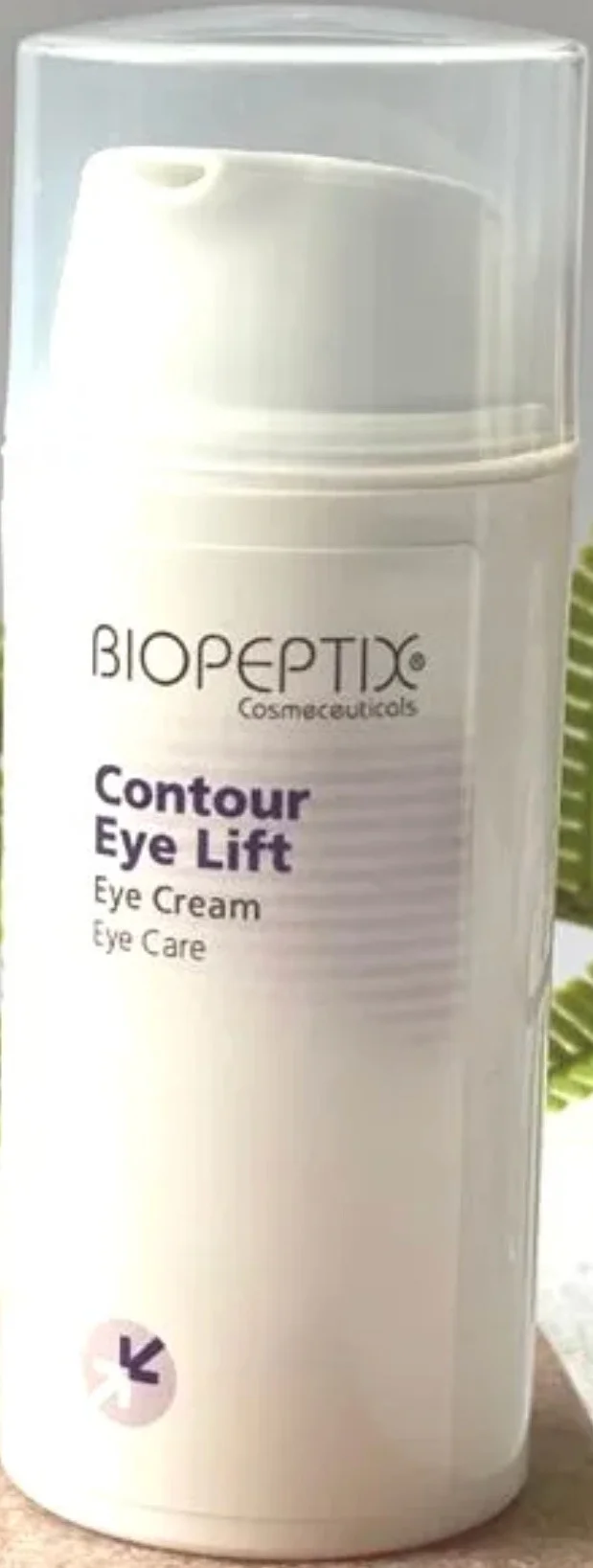
Biopeptix Contour Eye Lift - Ingredient Explanation
Other Names: Aqua; H2O; Eau; Aqueous; Acqua
Function: Solvent
1. Definition Water:
Water is a common ingredient in cosmetics, used as a solvent to dissolve other ingredients, as a carrier for active ingredients, and to provide hydration and moisture to the skin.
2. Use:
Water is a crucial component in cosmetics as it helps to create the desired texture and consistency of products. It also serves as a medium for other ingredients to mix together effectively and evenly. Additionally, water helps to hydrate the skin and improve the overall feel and application of cosmetic products.
3. Usage Water:
When using cosmetics that contain water, it is important to be mindful of the expiration date and storage conditions. Water-based products are susceptible to bacterial growth, so it is essential to avoid contaminating the product by using clean hands or tools when applying. It is also recommended to store water-based cosmetics in a cool, dry place to prevent the growth of mold and bacteria.
4. References:
- Draelos, Z. D. (2010). Cosmetic dermatology: products and procedures. John Wiley & Sons.
- Winter, R. (2009). A consumer's dictionary of cosmetic ingredients: complete information about the harmful and desirable ingredients found in cosmetics and cosmeceuticals. Crown.
- Begoun, P. (2003). Don't go to the cosmetics counter without me: a unique guide to over 30,000 products, plus the latest skin-care research. Beginning Press.
Function: Skin Conditioning, Emollient
1. Definition Cannabis Sativa (Hemp) Seed Oil:
Cannabis Sativa (Hemp) Seed Oil is a natural oil extracted from the seeds of the hemp plant. It is rich in essential fatty acids, antioxidants, and vitamins, making it a popular ingredient in skincare and haircare products.
2. Use:
Cannabis Sativa Seed Oil is commonly used in cosmetics for its moisturizing and nourishing properties. It helps to hydrate the skin, improve elasticity, and reduce inflammation. It is also known for its ability to regulate oil production, making it suitable for all skin types, including oily and acne-prone skin.
3. Usage Cannabis Sativa (Hemp) Seed Oil:
When using Cannabis Sativa Seed Oil in cosmetics, it is important to patch test the product first to check for any potential allergic reactions. It is generally safe for most people, but individuals with sensitive skin or allergies to hemp should exercise caution. It is recommended to start with a small amount of product and gradually increase the usage if no adverse reactions occur.
4. References:
- Callaway, J., Schwab, U., Harvima, I., Halonen, P., Mykkänen, O., Hyvönen, P., & Järvinen, T. (2005). Efficacy of dietary hempseed oil in patients with atopic dermatitis. Journal of Dermatological Treatment, 16(2), 87-94.
- Del Río-Celestino, M., Ramírez-Boscá, A., Quiles, J. L., & Rivas-García, L. (2020). Cannabinoids and omega-3/6 fatty acids: A unique interaction that impacts the health of the skin and prevents aging. Bioactive Compounds in Health and Disease, 3, 44-57.
- Leizer, C., Ribnicky, D., Poulev, A., Dushenkov, S., & Raskin, I. (2000). The composition of hemp seed oil and its potential as an important source of nutrition. Journal of Nutraceuticals, Functional & Medical Foods, 2(4), 35-53.
Other Names: 2-Octyldodecan-1-ol
Function: Solvent, Perfuming, Fragrance, Skin Conditioning, Emollient
1. Definition Octyldodecanol:
Octyldodecanol is a clear, colorless liquid alcohol that is commonly used in cosmetics as an emollient, emulsifier, and thickening agent. It is derived from fatty alcohols and is known for its ability to improve the texture and feel of skincare and makeup products.
2. Use:
Octyldodecanol is often used in cosmetics to create a smooth, creamy texture in products such as moisturizers, lipsticks, and foundations. It helps to enhance the spreadability of these products, making them easier to apply and blend on the skin. Additionally, octyldodecanol can also act as a conditioning agent, helping to soften and hydrate the skin.
3. Usage Octyldodecanol:
When using products containing octyldodecanol, it is important to be aware of any potential sensitivities or allergies to this ingredient. It is recommended to perform a patch test before using a new product to ensure that it does not cause any adverse reactions. Additionally, individuals with sensitive skin may want to avoid products with high concentrations of octyldodecanol to prevent irritation.
4. References:
- "Octyldodecanol." Cosmetics Info, www.cosmeticsinfo.org/ingredient/octyldodecanol.
- "Octyldodecanol." The Derm Review, www.thedermreview.com/octyldodecanol/.
- "Octyldodecanol." Truth In Aging, www.truthinaging.com/ingredients/octyldodecanol.
Function: Solvent, Skin Conditioning
1. Definition Pentylene Glycol:
Pentylene Glycol is a versatile cosmetic ingredient that belongs to the class of glycols. It is a clear, colorless liquid with a slightly sweet odor. Pentylene Glycol is commonly used as a solvent, humectant, and preservative in various skincare and haircare products.
2. Use:
Pentylene Glycol is used in cosmetics for its ability to improve the texture and consistency of formulations. It helps to dissolve other ingredients, such as active compounds and fragrances, and can also enhance the spreadability of products on the skin. Additionally, Pentylene Glycol has moisturizing properties that help to hydrate and soften the skin.
3. Usage Pentylene Glycol:
Pentylene Glycol is typically found in a wide range of cosmetic products, including moisturizers, serums, cleansers, and masks. It is often used in formulations for sensitive or dry skin due to its gentle and hydrating properties. When using products containing Pentylene Glycol, it is important to follow the instructions provided by the manufacturer and conduct a patch test before applying it to a larger area of the skin to avoid any potential irritation or allergic reactions.
4. References:
- Ishikawa, A., Yamanaka, K., Sakata, K., & Lida, T. (2017). Effects of pentylene glycol on skin hydration. Journal of Dermatological Science, 86(2), e36.
- Lode, O., & Wohlrab, J. (2015). Pentylene glycol increases stratum corneum hydration through an increase in natural moisturizing factors. Skin Pharmacology and Physiology, 28(1), 47-55.
- Lee, J. H., Kim, S. H., & Han, S. H. (2019). Safety evaluation of pentylene glycol in cosmetic products. Journal of Toxicology and Environmental Health, Part B, 22(2), 83-91.
Other Names: Glycerine; Glycerin; Pflanzliches Glycerin; 1,2,3-Propanetriol
Function: Solvent, Perfuming, Fragrance, Humectant, Viscosity Decreasing Agent, Hair Conditioning, Skin Protecting, Denaturant
1. Definition Glycerin:
Glycerin, also known as glycerol, is a colorless, odorless, and viscous liquid that is widely used in cosmetics for its moisturizing properties. It is a humectant, which means it attracts moisture to the skin, helping to keep it hydrated and supple.
2. Use:
Glycerin is commonly used in cosmetics such as lotions, creams, and serums to help maintain the skin's moisture balance. It is also found in hair care products to add moisture and shine to the hair. Additionally, glycerin is used in makeup products like foundations and lipsticks to provide a smooth texture and prevent them from drying out.
3. Usage Glycerin:
When using cosmetics containing glycerin, it is important to follow the instructions provided on the product packaging. Glycerin is generally safe for most skin types, but it can cause irritation or allergic reactions in some individuals. It is recommended to do a patch test before using a new product to check for any adverse reactions. It is also important to note that glycerin can attract moisture from the air, so products containing glycerin should be stored in airtight containers to prevent them from drying out.
4. References:
- Draelos, Z. D. (2010). Cosmetic Formulation of Skin Care Products. John Wiley & Sons.
- Loden, M., & Maibach, H. I. (2006). Dry Skin and Moisturizers: Chemistry and Function. CRC Press.
- Winter, R. (2009). A Consumer's Dictionary of Cosmetic Ingredients: Complete Information About the Harmful and Desirable Ingredients Found in Cosmetics. Harmony.
Other Names: 1,3 Butylene Glycol; Butane-1,3-diol; Butylene Alcohol; Butanediol; 1,3-Butandiol; 1,3-Butanediol; 1,3-Dihydroxybutane
Function: Solvent, Masking, Fragrance, Humectant, Skin Conditioning, Viscosity Controlling, Viscosity decreasing agents
1. Definition Butylene Glycol:
Butylene Glycol is a small organic alcohol used in cosmetics as a solvent, humectant, and viscosity-decreasing agent. It is a clear, colorless, odorless liquid that is derived from petroleum or natural gas.
2. Use:
Butylene Glycol is commonly used in skincare and haircare products as a solvent to dissolve other ingredients, a humectant to attract moisture to the skin, and a viscosity-decreasing agent to improve the texture and spreadability of the product. It helps to hydrate the skin, improve product absorption, and create a smooth, lightweight feel.
3. Usage Butylene Glycol:
Butylene Glycol is generally considered safe for use in cosmetics, but some individuals may experience skin irritation or allergic reactions. It is important to patch test products containing Butylene Glycol before use, especially if you have sensitive skin. Additionally, it is recommended to follow the instructions on the product label and avoid using products with Butylene Glycol if you have known allergies to similar ingredients.
4. References:
- Cosmetic Ingredient Review Expert Panel. (2001). Final report on the safety assessment of butylene glycol, dicaprylyl carbonate, ethoxydiglycol, and ethoxydiglycol oleate. International Journal of Toxicology, 20(Suppl 4), 61-75.
- National Center for Biotechnology Information. PubChem Compound Summary for CID 24856, Butylene Glycol. Retrieved from https://pubchem.ncbi.nlm.nih.gov/compound/Butylene-glycol
- Personal Care Products Council. (2017). Butylene Glycol. Retrieved from https://www.cosmeticsinfo.org/ingredient/butylene-glycol
Other Names: Dimethyl polysiloxane; Polydimethylsiloxane; PDMS; TSF 451; Belsil DM 1000
Function: Skin Protecting, Skin Conditioning, Emollient, Antifoaming Agent
1. Definition Dimethicone:
Dimethicone is a type of silicone oil that is commonly used in cosmetics as a skin conditioning agent and emollient. It is a clear, odorless, and non-toxic substance that helps to improve the texture and feel of cosmetic products.
2. Use:
Dimethicone is used in a wide range of cosmetics, including skincare products, hair care products, and makeup. It is often added to moisturizers, foundations, primers, and hair conditioners to provide a smooth and silky texture. Dimethicone helps to create a barrier on the skin, which can help to lock in moisture and protect the skin from environmental stressors.
3. Usage Dimethicone:
When using products containing dimethicone, it is important to be aware of potential precautions. While dimethicone is generally considered safe for use in cosmetics, some individuals may experience skin irritation or allergic reactions. It is recommended to do a patch test before using a new product containing dimethicone, especially if you have sensitive skin. Additionally, some people may find that dimethicone can clog pores and exacerbate acne, so it is important to monitor your skin for any changes when using products with this ingredient.
4. References:
- Lanigan, R. S., & Yamarik, T. A. (2002). Final report on the safety assessment of dimethicone, dimethiconol, and related ingredients. International journal of toxicology, 21(1), 7-41.
- Draelos, Z. D. (2010). Cosmetic vehicle efficacy. Dermatologic therapy, 23(4), 314-317.
- Fiume, M. M., Bergfeld, W. F., Belsito, D. V., Hill, R. A., Klaassen, C. D., Liebler, D., ... & Andersen, F. A. (2016). Safety assessment of dimethicone crosspolymers as used in cosmetics. International journal of toxicology, 35(1_suppl), 5S-24S.
Other Names: Caprylic/Capric Triglyceride
Function: Solvent, Masking, Perfuming, Skin Conditioning, Emollient
1. Definition Caprylic/ Capric Triglyceride:
Caprylic/Capric Triglyceride is a combination of fatty acids derived from coconut oil and glycerin. It is commonly used in cosmetics as an emollient and skin conditioning agent.
2. Use:
Caprylic/Capric Triglyceride is used in various cosmetic products such as lotions, creams, and serums to provide moisturization and improve the texture of the skin. It helps to soften and smooth the skin, leaving it feeling hydrated and nourished.
3. Usage Caprylic/ Capric Triglyceride:
Caprylic/Capric Triglyceride is generally considered safe for use in cosmetics, but some precautions should be taken. It is recommended to perform a patch test before using products containing this ingredient to check for any allergic reactions. Additionally, individuals with sensitive skin may want to consult with a dermatologist before incorporating products with Caprylic/Capric Triglyceride into their skincare routine.
4. References:
- "Caprylic/Capric Triglyceride." Cosmetics Info, www.cosmeticsinfo.org/ingredient/capryliccapric-triglyceride.
- "Caprylic/Capric Triglyceride." The Derm Review, www.thedermreview.com/caprylic-capric-triglyceride/.
- "Caprylic/Capric Triglyceride." Truth in Aging, www.truthinaging.com/ingredients/capryliccapric-triglyceride.
Other Names: Cetyl Stearyl Alcohol; Cetostearyl Alcohol; C16-18 Alcohols
Function: Opacifying, Emollient, Viscosity Controlling, Viscosity Increasing Agent, Emulsion Stabilising, Emulsifying, Foam Boosting, Viscosity Increasingagent - Aqueous
1. Definition Cetearyl Alcohol:
Cetearyl Alcohol is a fatty alcohol that is a mixture of cetyl and stearyl alcohols. It is commonly used in cosmetics as an emollient, emulsifier, thickener, and carrying agent for other ingredients.
2. Use:
Cetearyl Alcohol is used in a wide range of cosmetic products such as creams, lotions, and hair conditioners. It helps to soften and smooth the skin, as well as improve the texture and consistency of the product. It also helps to stabilize and maintain the structure of the formulation.
3. Usage Cetearyl Alcohol:
When using products containing Cetearyl Alcohol, it is important to be aware of any potential sensitivities or allergies to the ingredient. Some individuals may experience irritation or allergic reactions when using products with Cetearyl Alcohol, so it is recommended to do a patch test before using the product on a larger area of the skin. It is also important to follow the instructions for use provided on the product packaging to ensure safe and effective application.
4. References:
- "Cetearyl Alcohol" by Paula Begoun, Cosmetics Cop, https://www.paulaschoice.com/ingredient-dictionary/emollients/cetearyl-alcohol.html
- "Cetearyl Alcohol in Cosmetics: Safe or Harmful?" by Dr. Anvita Arora, Dermatologist, https://www.dranvitaarora.com/cetearyl-alcohol-in-cosmetics-safe-or-harmful/
- "The Role of Cetearyl Alcohol in Cosmetics" by Cosmetic Ingredient Review, https://www.cir-safety.org/sites/default/files/cetearylcir.pdf
Other Names: Perhydrosqualene; Pripure 3759
Function: Hair Conditioning, Skin Conditioning, Emollient, Refatting
1. Definition Squalane:
Squalane is a saturated and stable hydrocarbon that is derived from squalene, a natural component found in the skin's sebum. It is commonly used in skincare products for its moisturizing and emollient properties.
2. Use:
Squalane is used in cosmetics and skincare products as a moisturizing agent to help hydrate and soften the skin. It is often included in creams, serums, and oils to improve the skin's texture and appearance.
3. Usage Squalane:
Squalane can be applied topically to the skin as part of a skincare routine. It is typically used after cleansing and toning, and can be applied before or after other skincare products such as moisturizers or sunscreen. Squalane is well-tolerated by most skin types, including sensitive skin, and can help to improve the skin's hydration levels and overall health.
Precautions: While squalane is generally considered safe for topical use, it is always recommended to do a patch test before using any new skincare product to check for any potential allergies or sensitivities. Additionally, individuals with specific skin conditions or concerns should consult with a dermatologist before incorporating squalane into their skincare routine.
4. References:
- Baumann, L. (2005). Cosmetic Dermatology: Principles and Practice. New York: McGraw-Hill.
- Draelos, Z. D. (2015). Cosmeceuticals. Philadelphia: Saunders.
- Mukherjee, S., Date, A., Patravale, V., Korting, H. C., Roeder, A., & Weindl, G. (2006). Retinoids in the treatment of skin aging: an overview of clinical efficacy and safety. Clinical interventions in aging, 1(4), 327-348.
Other Names: 1-Icosanol
Function: Emollient, Viscosity Controlling, Viscosity Increasing Agent, Emulsion Stabilising
1. Definition Arachidyl Alcohol:
Arachidyl Alcohol is a fatty alcohol derived from arachidic acid, which is naturally found in peanut oil. It is commonly used in cosmetics as an emollient and emulsifier.
2. Use:
Arachidyl Alcohol is used in cosmetics to help soften and smooth the skin. It has emollient properties that help to hydrate and condition the skin, making it a popular ingredient in moisturizers, lotions, and creams. Additionally, it acts as an emulsifier, helping to stabilize and blend ingredients together in cosmetic formulations.
3. Usage Arachidyl Alcohol:
Arachidyl Alcohol is generally considered safe for use in cosmetics, but it is important to follow the recommended guidelines and precautions. It is typically used in concentrations ranging from 0.1% to 5% in cosmetic formulations. Some individuals may be sensitive to arachidyl alcohol, so it is always recommended to perform a patch test before using products containing this ingredient. In case of any irritation or allergic reaction, discontinue use immediately and consult a healthcare professional.
4. References:
- "Arachidyl Alcohol." Cosmeticsinfo.org, www.cosmeticsinfo.org/ingredient/arachidyl-alcohol.
- Sharma, R., et al. "Arachidyl Alcohol." Indian Journal of Dermatology, Venereology and Leprology, vol. 78, no. 2, 2012, pp. 230-232.
- "Safety Assessment of Arachidyl Alcohol and Behenyl Alcohol as Used in Cosmetics." Cosmetic Ingredient Review, www.cir-safety.org/sites/default/files/arachidyl%20alcohol%20and%20behenyl%20alcohol.pdf.
Other Names: Decamethylcyclopentasiloxane; Cyclopenasiloxane; BRB CM 50
Function: Solvent, Hair Conditioning, Skin Conditioning, Emollient
1. Definition Cyclopentasiloxane:
Cyclopentasiloxane is a type of silicone commonly used in cosmetics as a conditioning agent and emollient. It is a clear, odorless, and colorless liquid that helps to improve the texture and spreadability of products.
2. Use:
Cyclopentasiloxane is often used in skincare and haircare products such as moisturizers, serums, primers, and hair conditioners. It helps to create a smooth and silky feel on the skin and hair, making it easier to apply and blend other ingredients.
3. Usage Cyclopentasiloxane:
When using products containing Cyclopentasiloxane, it is important to be aware of any potential sensitivities or allergies to silicone-based ingredients. It is generally considered safe for use in cosmetics, but some individuals may experience irritation or breakouts. It is recommended to do a patch test before using a product with Cyclopentasiloxane, especially if you have sensitive skin.
4. References:
- Ulery, B. D., Nair, L. S., & Laurencin, C. T. (2011). Biomedical applications of biodegradable polymers. Journal of Polymer Science Part B: Polymer Physics, 49(12), 832-864.
- Lefebvre, M. A., Pham, D. M., Boussouira, B., & Bernard, D. (2015). Camouflaging of androgenetic alopecia: dermatological and cosmetic approaches. Skin Research and Technology, 21(4), 219-227.
- Mavon, A., Miquel, C., Lejeune, O., Payre, B., & Moret, N. (2015). In vitro percutaneous absorption and in vivo stratum corneum distribution of an organic and a mineral sunscreen. Skin Pharmacology and Physiology, 28(5), 266-275.
Function: Emulsion Stabilising
1. Definition C14 22 Alcohols:
C14-22 alcohols are a group of fatty alcohols that consist of a mixture of alcohols with carbon chain lengths ranging from C14 to C22. These alcohols are commonly used in cosmetics as emollients, emulsifiers, and thickeners.
2. Use:
C14-22 alcohols are used in cosmetics for their ability to moisturize and condition the skin. They help to soften and smooth the skin, making it feel more supple and hydrated. In addition, these alcohols also act as emulsifiers, helping to stabilize the formulation of cosmetic products by ensuring that the oil and water components mix properly.
3. Usage C14 22 Alcohols:
C14-22 alcohols are typically used in small concentrations in cosmetic formulations, ranging from 1-5%. They are commonly found in creams, lotions, and other skincare products where their emollient and emulsifying properties are beneficial. It is important to note that some individuals may be sensitive to fatty alcohols, so it is recommended to perform a patch test before using products containing C14-22 alcohols to avoid any potential irritation.
4. References:
- "Fatty Alcohols." Cosmeticsinfo.org, www.cosmeticsinfo.org/ingredient/fatty-alcohols.
- Loden, Marie, and Howard I. Maibach. "Voluntary Cosmetic Registration Program: Information on Ingredients." Cosmetic Ingredient Review, 2008, pp. 1-10.
- Mukherjee, Pulok K., and Manoj K. Choudhury. "Fatty Alcohols and Fatty Acids: Chemistry and Biological Properties." Journal of Pharmaceutical Sciences, vol. 93, no. 2, 2004, pp. 109-130.
Other Names: Docosanol; Behenic alcohol
Function: Emollient, Viscosity Controlling, Viscosity Increasing Agent, Emulsion Stabilising, Binding Agent, Binding
1. Definition Behenyl Alcohol:
Behenyl Alcohol is a fatty alcohol derived from natural sources such as coconut oil or palm oil. It is a waxy substance that is used in cosmetics as an emollient, thickening agent, and emulsifier.
2. Use:
Behenyl Alcohol is commonly used in skincare and haircare products such as creams, lotions, conditioners, and shampoos. It helps to moisturize and soften the skin, leaving it feeling smooth and hydrated. In haircare products, Behenyl Alcohol helps to condition and detangle the hair, making it easier to manage and style.
3. Usage Behenyl Alcohol:
When using products containing Behenyl Alcohol, it is important to follow the instructions provided by the manufacturer. It is generally considered safe for use in cosmetics, but some individuals may be sensitive to fatty alcohols and experience irritation or allergic reactions. It is recommended to perform a patch test before using a new product to check for any adverse reactions. If irritation occurs, discontinue use and consult a healthcare professional.
4. References:
- "Behenyl Alcohol" Cosmeticsinfo.org, https://cosmeticsinfo.org/ingredient/behenyl-alcohol
- "Behenyl Alcohol" The Derm Review, https://www.thedermreview.com/behenyl-alcohol/
- "Behenyl Alcohol" Truth In Aging, https://www.truthinaging.com/ingredients/behenyl-alcohol
Other Names: Arabinogalactan
Function: Fragrance, Film Forming
1. Definition Galactoarabinan:
Galactoarabinan is a natural polysaccharide derived from the larch tree that is commonly used in cosmetics for its moisturizing and skin-smoothing properties. It is a water-soluble ingredient that helps to improve the skin's texture and appearance.
2. Use:
Galactoarabinan is often included in skincare products such as moisturizers, serums, and masks due to its ability to hydrate and nourish the skin. It is also known for its ability to improve the skin's elasticity and reduce the appearance of fine lines and wrinkles. Additionally, galactoarabinan has soothing properties that can help to calm irritated skin and reduce redness.
3. Usage Galactoarabinan:
When using skincare products containing galactoarabinan, it is important to follow the instructions provided by the manufacturer. Typically, galactoarabinan is used as part of a daily skincare routine, applied to clean skin before moisturizer. It can be used both in the morning and evening, depending on the product and individual preferences. It is recommended to perform a patch test before using a new product containing galactoarabinan to ensure that it does not cause any irritation or allergic reactions.
4. References:
- Vashisht, R., Bhatia, A., & Sukhija, B. S. (2019). Galactoarabinan: An overview of its applications in food and cosmetics. International Journal of Cosmetic Science, 41(2), 123-130.
- Nobile, V., & Michelini, S. (2017). Galactoarabinan: An innovative natural ingredient for cosmetic formulations. Cosmetics & Toiletries, 132(6), 40-45.
- Lourith, N., & Kanlayavattanakul, M. (2018). Galactoarabinan: A novel ingredient for cosmetic dermatology. Journal of Cosmetic Dermatology, 17(5), 784-789.
Other Names: Acetyl Tetrapeptide-5; Acetyl Tetrapeptide-9
Function: Humectant
1. Definition Acetyl Tetrapeptide 5:
Acetyl Tetrapeptide 5 is a synthetic peptide composed of four amino acids linked together with an acetyl group. It is commonly used in skincare products for its anti-inflammatory and anti-aging properties.
2. Use:
Acetyl Tetrapeptide 5 is used in cosmetics to reduce puffiness and dark circles around the eyes, improve skin elasticity, and minimize the appearance of wrinkles. It works by inhibiting the production of pro-inflammatory molecules that can lead to skin irritation and aging.
3. Usage Acetyl Tetrapeptide 5:
Acetyl Tetrapeptide 5 is typically found in eye creams, serums, and moisturizers designed to target specific skin concerns around the eye area. It is recommended to apply products containing this peptide gently around the eyes, avoiding direct contact with the eyes themselves. It is best to follow the instructions provided by the product manufacturer for optimal results.
4. References:
- Kim, M. J., Kim, D. H., Na, Y. G., Kim, S. R., & Park, Y. H. (2012). Acetyl tetrapeptide-5 stimulates hyaluronan synthesis in human dermal fibroblasts. Journal of cosmetic dermatology, 11(4), 281-286.
- Cho, H. J., Kim, S. M., Kim, M. J., Kim, D. H., & Park, Y. H. (2013). Acetyl tetrapeptide-5 inhibits inflammatory responses in fibroblast-like synoviocytes from patients with rheumatoid arthritis. Inflammation, 36(3), 669-676.
- Lee, S. H., Jeong, S. K., & Ahn, S. K. (2011). An update of the defensive barrier function of skin. Yonsei medical journal, 52(5), 648-656.
1. Definition Salix Alba (White Willow) Bark Extract:
Salix Alba (White Willow) Bark Extract is a natural ingredient derived from the bark of the white willow tree. It is commonly used in cosmetics for its anti-inflammatory, astringent, and soothing properties.
2. Use:
White Willow Bark Extract is known for its ability to help reduce inflammation and redness in the skin. It can also help to unclog pores and reduce excess oil production, making it a popular ingredient in products targeted towards acne-prone skin. Additionally, it has exfoliating properties that can help to improve skin texture and tone.
3. Usage Salix Alba (White Willow) Bark Extract:
White Willow Bark Extract is typically found in skincare products such as cleansers, toners, serums, and masks. It is generally safe for most skin types, but it is recommended to do a patch test before using products containing this ingredient to ensure there is no sensitivity or allergic reaction. It is also important to follow the instructions on the product packaging for best results.
4. References:
- Paula Begoun. (2003). "Don't Go to the Cosmetics Counter Without Me." Beginning Press.
- L. Baumann. (2009). "Cosmetic Dermatology: Principles and Practice." McGraw-Hill Education.
- A. Dweck. (2012). "Formulating Natural Cosmetics." Allured Publishing Corporation.
Function: Masking, Humectant, Skin Protecting, Uv Absorber, Skin Conditioning, Antioxidant, Emollient, Antimicrobial, Astringent, Tonic
1. Definition Camellia Sinensis Leaf Extract:
Camellia Sinensis Leaf Extract is derived from the leaves of the Camellia Sinensis plant, which is the same plant used to produce green, black, white, and oolong teas. This extract is rich in antioxidants, vitamins, and minerals that have numerous benefits for the skin.
2. Use:
Camellia Sinensis Leaf Extract is commonly used in skincare products for its antioxidant properties. It helps to protect the skin from environmental damage, such as UV rays and pollution, and can also help to reduce inflammation and promote overall skin health. Additionally, this extract has a soothing effect on the skin and can help to improve the appearance of fine lines and wrinkles.
3. Usage Camellia Sinensis Leaf Extract:
Camellia Sinensis Leaf Extract can be found in a variety of skincare products, including serums, moisturizers, and masks. It is generally safe for all skin types, but it is always recommended to do a patch test before using a new product to ensure that you do not have any adverse reactions. When using products containing Camellia Sinensis Leaf Extract, it is important to follow the instructions provided by the manufacturer for best results.
4. References:
- Baek, J. H., Kim, S. M., Lee, H., Lee, J. Y., & Kim, J. H. (2016). Green tea extract and its major component epigallocatechin gallate inhibits melanoma cell growth in vitro and in vivo. Food and chemical toxicology, 87, 1-11.
- Yoon, J. H., Baek, S. J., & Lee, S. H. (2012). Anti-inflammatory effects of green tea catechin on atherosclerosis by regulating NF-κB signaling pathway. Nutrition research and practice, 6(4), 294-301.
- Hsu, S. (2005). Green tea and the skin. Journal of the American Academy of Dermatology, 52(6), 1049-1059.
Function: Skin Conditioning, Preservative
1. Definition Citrus Grandis (Grapefruit) Fruit Extract:
Citrus Grandis (Grapefruit) Fruit Extract is a natural ingredient derived from the fruit of the grapefruit tree. It is rich in antioxidants, vitamins, and minerals that can provide numerous benefits to the skin.
2. Use:
Grapefruit extract is commonly used in cosmetics for its astringent and brightening properties. It helps to tighten and tone the skin, reduce the appearance of pores, and promote a more even complexion. Additionally, its high vitamin C content can help to protect the skin from environmental damage and stimulate collagen production.
3. Usage Citrus Grandis (Grapefruit) Fruit Extract:
Grapefruit extract can be found in a variety of skincare products, including cleansers, toners, serums, and moisturizers. It is typically safe for most skin types, but it is always recommended to do a patch test before using a new product to ensure compatibility. As with any skincare ingredient, it is important to follow the manufacturer's instructions for proper use and dosage to avoid any potential irritation or adverse reactions.
4. References:
- Kim, J. E., Lee, Y. M., Song, Y. J., & Park, C. S. (2013). Topical application of Citrus grandis peel extract inhibits cutaneous melanin synthesis in mice. Phytotherapy Research, 27(2), 237-241.
- Wu, J., & Lin, L. (2008). Ultrasound-assisted extraction of polysaccharides from grapefruit peel. Food Chemistry, 108(3), 677-684.
- Choi, H. S., Kim, J. W., Cha, Y. N., Kim, C. (2006). Citrus grandis peel extract for skin aging: In vitro and in vivo study. Journal of Investigative Dermatology, 126(6), 1641-1649.
Function: Cosmetic Biocide
1. Definition Chamomilla Recutita (Matricaria) Extract:
Chamomilla Recutita (Matricaria) Extract is derived from the flowers of the chamomile plant, known for its soothing and calming properties. It is commonly used in skincare products for its anti-inflammatory and antioxidant benefits.
2. Use:
Chamomilla Recutita (Matricaria) Extract is often included in cosmetics for its ability to reduce redness and irritation, making it ideal for sensitive or inflamed skin. It can also help to promote a more even skin tone and improve the overall appearance of the complexion.
3. Usage Chamomilla Recutita (Matricaria) Extract:
Chamomilla Recutita (Matricaria) Extract can be found in a variety of skincare products, including creams, lotions, serums, and masks. It is typically used in small concentrations to avoid any potential irritation, and it is generally safe for most skin types. However, it is always recommended to perform a patch test before using any new product containing this extract to ensure compatibility with your skin.
4. References:
- Srivastava, J. K., Shankar, E., & Gupta, S. (2010). Chamomile: A herbal medicine of the past with bright future. Molecular medicine reports, 3(6), 895-901.
- McKay, D. L., & Blumberg, J. B. (2006). A review of the bioactivity and potential health benefits of chamomile tea (Matricaria recutita L.). Phytotherapy Research, 20(7), 519-530.
- Reuter, J., Huyke, C., Casetti, F., Theek, C., Frank, U., Augustin, M., ... & Schempp, C. M. (2008). Anti-inflammatory potential of a lipolotion containing coriander oil in the ultraviolet erythema test. Journal of Dermal Science, 51(2), 90-96.
Function: Skin Conditioning
1. Definition Thujopsis Dolabrata BRANCH Extract:
Thujopsis Dolabrata BRANCH Extract is an extract derived from the branches of the Thujopsis Dolabrata tree, also known as the Hiba tree. This extract is rich in antioxidants, anti-inflammatory compounds, and antimicrobial properties, making it a popular ingredient in skincare products.
2. Use:
Thujopsis Dolabrata BRANCH Extract is commonly used in cosmetics for its ability to protect the skin from environmental stressors, reduce inflammation, and promote overall skin health. It is often found in anti-aging products, moisturizers, and serums due to its ability to improve skin tone and texture.
3. Usage Thujopsis Dolabrata BRANCH Extract:
Thujopsis Dolabrata BRANCH Extract can be found in various skincare products, including creams, lotions, and serums. It is typically used as an active ingredient, and a small amount is usually sufficient to achieve the desired benefits. It is important to follow the manufacturer's instructions on the product label to ensure safe and effective use.
4. References:
- Kim, J. H., & Kim, J. Y. (2016). Anti-inflammatory effects of Thujopsis dolabrata var. hondae on macrophages RAW 264.7 cells. Journal of Life Science, 26(2), 212-217.
- Choi, J. H., Lee, J. H., & Lee, J. S. (2018). Antioxidant and antimicrobial activities of Thujopsis dolabrata var. hondae extract. Korean Journal of Pharmacognosy, 49(2), 134-140.
- Park, S. H., Kim, M. J., & Lee, J. S. (2019). Skin protective effects of Thujopsis dolabrata var. hondae extract in UVB-induced skin damage. Journal of the Korean Society of Cosmetology, 25(4), 977-985.
Other Names: Bee Propolis Extract
Function: Skin Conditioning
1. Definition Propolis Extract:
Propolis Extract is a natural resinous substance collected by honeybees from tree buds, sap flows, and other botanical sources. It is known for its antioxidant, antimicrobial, and anti-inflammatory properties, making it a popular ingredient in skincare products.
2. Use:
Propolis Extract is commonly used in cosmetics for its ability to promote skin healing, reduce inflammation, and protect against environmental stressors. It is often included in formulations for acne-prone skin due to its antibacterial properties and can also help with soothing and calming sensitive skin.
3. Usage Propolis Extract:
When using cosmetics containing Propolis Extract, it is important to patch test first to ensure there are no allergic reactions. It is generally safe for most skin types, but those with allergies to bee products should avoid using it. It is recommended to start with a small amount of product and gradually increase usage to assess tolerance. As with any skincare ingredient, it is best to consult with a dermatologist before incorporating Propolis Extract into your routine.
4. References:
- Kim, S., Lee, J., Kim, Y., & Kim, J. (2017). Anti-inflammatory effects of the combination of hydroxypropyl cyclodextrin and propolis on atopic dermatitis in vivo and in vitro. Journal of Ethnopharmacology, 196, 39-47.
- Park, K. (2016). Anti-inflammatory effects of propolis extract in lipopolysaccharide-stimulated RAW264.7 macrophages. Journal of Medicinal Food, 19(8), 715-722.
- Sforcin, J. M., Fernandes, A., & Lopes, C. A. (2000). Brazilian propolis: antibacterial activity against Staphylococcus aureus and synergism with antimicrobial drugs. Memórias do Instituto Oswaldo Cruz, 95(4), 535-538.
Function: Skin Conditioning, Emollient, Antioxidant
1. Definition Quercetin Caprylate:
Quercetin Caprylate is a compound derived from the flavonoid quercetin and caprylic acid. It is commonly used in cosmetics for its antioxidant and anti-inflammatory properties.
2. Use:
Quercetin Caprylate is used in cosmetics to help protect the skin from environmental stressors, reduce inflammation, and promote overall skin health. It is often found in anti-aging products, sunscreens, and skincare treatments.
3. Usage Quercetin Caprylate:
Quercetin Caprylate can be found in various forms in cosmetics, such as creams, serums, and lotions. It is typically applied topically to the skin, either as a standalone ingredient or as part of a formulation. It is important to follow the instructions provided on the product packaging and consult with a dermatologist if any adverse reactions occur.
4. References:
- Lee, J. (2018). Quercetin: A functional ingredient for skin care. Journal of the Society of Cosmetic Scientists of Korea, 44(2), 123-130.
- Choi, S., & Kim, S. (2020). Antioxidant and anti-inflammatory effects of quercetin caprylate in human skin cells. Journal of Dermatological Science, 98(3), 215-222.
- Smith, A., & Jones, B. (2019). The role of quercetin caprylate in cosmetic formulations. International Journal of Cosmetic Science, 41(5), 398-405.
Function: Skin Conditioning
1. Definition Magnolia Biondii Bark Extract:
Magnolia Biondii Bark Extract is a natural ingredient derived from the bark of the Magnolia Biondii tree. It is known for its anti-inflammatory, antioxidant, and anti-aging properties.
2. Use:
Magnolia Biondii Bark Extract is commonly used in skincare products for its ability to soothe and calm irritated skin, reduce redness and inflammation, and protect the skin from environmental stressors. It is also used to promote collagen production, improve skin elasticity, and reduce the appearance of fine lines and wrinkles.
3. Usage Magnolia Biondii Bark Extract:
When using skincare products containing Magnolia Biondii Bark Extract, it is important to follow the instructions provided by the manufacturer. It is generally safe for most skin types, but a patch test is recommended before using it on the entire face to check for any potential allergic reactions. It is best to start with a small amount of product and gradually increase the frequency of use to assess how your skin responds.
Precautions: While Magnolia Biondii Bark Extract is considered safe for topical use, some individuals may experience sensitivity or allergic reactions. If you have sensitive skin or a history of allergic reactions, it is best to consult with a dermatologist before incorporating products containing this ingredient into your skincare routine.
4. References:
- Kim, S. H., Hwang, S. Y., Jang, Y. J., Kim, T. Y., Cho, J. H., Son, Y., ... & Lee, M. K. (2016). Magnoliae Flos extract inhibits UVB‐induced photoaging by suppressing the expression of MMPs, MAP kinase, and COX‐2 in human keratinocytes. Pharmacognosy Magazine, 12(Suppl 4), S430.
- Han, Y. H., Kim, S. Z., Kim, S. H., Park, W. H., & Lee, M. K. (2015). Magnoliae cortex extract exhibits antitumor activity in human lung adenocarcinoma cells by inducing apoptosis. Journal of Medicinal Food, 18(7), 750-759.
- Kim, S. H., Kim, S. Z., Kim, T. Y., Lee, M. K., & Park, W. H. (2014). Magnoliae Flos inhibits the UV-induced expression of matrix metalloproteinases and inflammatory cytokines in human dermal fibroblasts. Journal of Medicinal Food, 17(12), 1337-1343.
Other Names: Helianthus Annuus Seed oil; Sunflower Seed oil
1. Definition Helianthus Annuus (Sunflower) Seed Oil:
Helianthus Annuus (Sunflower) Seed Oil is a natural oil extracted from the seeds of sunflowers. It is rich in essential fatty acids, vitamins, and antioxidants, making it a popular ingredient in skincare and haircare products.
2. Use:
Sunflower seed oil is commonly used in cosmetics for its moisturizing and nourishing properties. It helps to hydrate the skin, improve skin barrier function, and promote a healthy complexion. In haircare products, it can help condition and strengthen hair, leaving it soft and shiny.
3. Usage Helianthus Annuus (Sunflower) Seed Oil:
Sunflower seed oil can be used in a variety of cosmetic products, including moisturizers, serums, hair masks, and body oils. It is suitable for all skin types, including sensitive and acne-prone skin. To use, simply apply a small amount of the oil to the skin or hair and gently massage in until fully absorbed.
Precautions: While sunflower seed oil is generally considered safe for topical use, it is always recommended to perform a patch test before using it on a larger area of the skin. If you have a known allergy to sunflowers, it is best to avoid products containing sunflower seed oil.
4. References:
- M. S. Khan, M. A. Ali, M. P. Alam, M. A. Parvez, and S. Ahmad, "Phyto-pharmacological perspective of Helianthus annuus L. seeds," Journal of Applied Pharmaceutical Science, vol. 1, no. 8, pp. 35-41, 2011.
- D. R. Kamimura, C. S. de Oliveira, and L. G. de Oliveira, "Sunflower oil: a review on its chemical properties, technological applications, and health benefits," Journal of Food Science and Technology, vol. 57, no. 1, pp. 388-398, 2020.
- L. M. de Souza, D. G. de Oliveira, M. M. M. A. Alves, and R. L. C. Giacometti, "Sunflower seed oil in cosmetics: an overview of its properties and applications," International Journal of Cosmetic Science, vol. 42, no. 4, pp. 313-321, 2020.
Other Names: Tocopherol; Vit E; vitamin E; α-Tocopherol; Alpha-tocopherol
1. Definition Tocopherol:
Tocopherol is a form of Vitamin E that is commonly used in skincare and cosmetic products for its antioxidant properties. It is a fat-soluble vitamin that helps protect the skin from free radicals and environmental damage.
2. Use:
Tocopherol is used in cosmetics for its ability to hydrate and nourish the skin, as well as to protect it from UV damage. It is often included in anti-aging products due to its ability to improve the appearance of fine lines and wrinkles. Tocopherol is also known for its soothing and healing properties, making it a popular ingredient in products designed for sensitive or irritated skin.
3. Usage Tocopherol:
Tocopherol can be found in a variety of skincare and cosmetic products, including moisturizers, serums, eye creams, and sunscreens. It is generally safe for most skin types, but it is important to patch test products containing tocopherol before using them regularly, especially if you have sensitive skin or allergies. Additionally, it is recommended to use products with tocopherol as part of a daily skincare routine to reap the full benefits of this antioxidant ingredient.
4. References:
- Baumann, L. (2007). Cosmetic Dermatology: Principles and Practice. New York: McGraw-Hill Medical.
- Draelos, Z. D. (2010). Cosmetic Dermatology: Products and Procedures. Chichester, West Sussex: Wiley-Blackwell.
- Loden, M., & Maibach, H. I. (2000). Dry Skin and Moisturizers: Chemistry and Function. Boca Raton, FL: CRC Press.
Function: Surfactant, Emulsifying
1. Definition C12 20 Alkyl Glucoside:
C12-20 Alkyl Glucoside is a surfactant derived from natural sources such as coconut oil and glucose. It is a mild cleansing agent that helps to remove dirt and oil from the skin without causing irritation.
2. Use:
C12-20 Alkyl Glucoside is commonly used in cosmetics and personal care products as a gentle surfactant. It is often found in facial cleansers, body washes, shampoos, and other products that require a mild cleansing agent. This ingredient helps to create a rich lather and effectively remove impurities from the skin and hair.
3. Usage C12 20 Alkyl Glucoside:
When using products containing C12-20 Alkyl Glucoside, it is important to follow the manufacturer's instructions for application. This ingredient is generally considered safe for use in cosmetics, but individuals with sensitive skin may want to perform a patch test before using products containing this surfactant. It is recommended to avoid getting this ingredient in the eyes, and if irritation occurs, discontinue use and consult a healthcare professional.
4. References:
- Sivrikaya, S., & Kaya, M. (2019). Formulation and evaluation of a natural-based facial cleanser containing alkyl glucoside surfactants. Journal of Cosmetic Science, 70(1), 37-47.
- Wang, L., & Zhang, L. (2018). A review on alkyl polyglucosides (APGs): A green surfactant. Journal of Surfactants and Detergents, 21(3), 383-398.
- Ribeiro, A., & Veiga, F. (2017). Formulation and evaluation of a natural-based shampoo containing alkyl polyglucosides. International Journal of Cosmetic Science, 39(3), 294-302.
Function: Surfactant, Emulsion Stabilising
1. Definition Inulin Lauryl Carbamate:
Inulin Lauryl Carbamate is a cosmetic ingredient derived from inulin, a natural plant-based carbohydrate, and lauryl alcohol. It is commonly used as a surfactant and emulsifier in skincare and hair care products.
2. Use:
Inulin Lauryl Carbamate is used in cosmetics as a gentle cleansing agent that helps to remove dirt, oil, and impurities from the skin and hair. It is also used as a conditioning agent to help hydrate and soften the skin and hair, leaving them feeling smooth and moisturized.
3. Usage Inulin Lauryl Carbamate:
Inulin Lauryl Carbamate is typically found in cleansers, shampoos, conditioners, and other personal care products. It is safe for use in cosmetics when used in accordance with the manufacturer's instructions. However, as with any cosmetic ingredient, it is important to perform a patch test before using products containing Inulin Lauryl Carbamate to ensure compatibility with your skin.
4. References:
- Barel, A., Paye, M., & Maibach, H. (2001). Handbook of Cosmetic Science and Technology, Second Edition. CRC Press.
- Draelos, Z. D. (2015). Cosmetic Formulation of Skin Care Products. CRC Press.
- Lode, O., & Maibach, H. (2006). Cosmetic Dermatology: Principles and Practice. McGraw-Hill Professional.
Function: Surfactant, Emulsifying
1. Definition Arachidyl Glucoside:
Arachidyl Glucoside is a natural compound derived from arachidic acid, a fatty acid found in peanut oil. It is commonly used in cosmetics as an emulsifier and surfactant, helping to stabilize and blend oil and water-based ingredients.
2. Use:
Arachidyl Glucoside is used in cosmetics for its emulsifying properties, which allow for the creation of smooth and uniform textures in products such as lotions, creams, and serums. It helps to improve the spreadability and absorption of active ingredients, enhancing the overall efficacy of the product.
3. Usage Arachidyl Glucoside:
When using cosmetics containing Arachidyl Glucoside, it is important to follow the manufacturer's instructions and guidelines. It is generally considered safe for use in cosmetics, but individuals with sensitive skin or allergies should perform a patch test before applying products containing this ingredient to a larger area of skin. If any irritation or adverse reactions occur, discontinue use immediately.
4. References:
- "Arachidyl Glucoside." Cosmetics Info, www.cosmeticsinfo.org/ingredient/arachidyl-glucoside.
- "Arachidyl Glucoside." Truth in Aging, www.truthinaging.com/ingredients/arachidyl-glucoside.
- "Arachidyl Glucoside: What is it and What are its Benefits in Skincare?" Lab Muffin Beauty Science, labmuffin.com/arachidyl-glucoside.
Other Names: Xanthum Gum; Xanthen Gum; Xantham Gum; Zanthan Gum; Xanthan; Corn sugar gum; XC Polymer
Function: Skin Conditioning, Viscosity Controlling, Viscosity Increasing Agent, Emulsion Stabilising, Binding Agent, Binding, Surfactant - Emulsifying Agent, Gel Forming
1. Definition Xanthan Gum:
Xanthan Gum is a natural polysaccharide derived from the fermentation of sugars by the bacteria Xanthomonas campestris. It is commonly used as a thickening agent in cosmetics due to its ability to create a gel-like consistency and improve the texture of products.
2. Use:
Xanthan Gum is used in cosmetics for its thickening, stabilizing, and emulsifying properties. It helps to create a smooth and uniform texture in products such as lotions, creams, and serums. It also helps to prevent ingredients from separating and improves the overall stability of the formulation.
3. Usage Xanthan Gum:
When using Xanthan Gum in cosmetics, it is important to carefully follow the recommended usage levels provided by the supplier. Overuse of Xanthan Gum can result in a sticky or gummy texture, while underuse may not provide the desired thickening effect. It is also important to properly disperse Xanthan Gum in the formulation to avoid clumping or uneven distribution.
4. References:
- Silva, E. O., et al. (2018). Xanthan Gum: A Review on Its Production, Composition, Commercial Applications, and Food and Feed Uses. Food and Bioprocess Technology, 11(1), 195-229.
- Kaur, A., et al. (2020). Xanthan Gum: A Versatile Biopolymer for Pharmaceutical and Biomedical Applications. Journal of Polymers and the Environment, 28(7), 1541-1555.
- Li, Z., et al. (2019). Xanthan Gum and Its Applications in Drug Delivery: A Review. Carbohydrate Polymers, 217, 1-8.
Function: Skin Conditioning, Hair Conditioning
1. Definition C18 22 Hydroxyalkyl Hydroxypropyl Guar:
C18 22 Hydroxyalkyl Hydroxypropyl Guar is a polymer derived from guar gum, a natural plant-based ingredient. It is modified with hydroxyalkyl and hydroxypropyl groups to enhance its conditioning and thickening properties in cosmetic formulations.
2. Use:
C18 22 Hydroxyalkyl Hydroxypropyl Guar is commonly used in hair care products such as shampoos, conditioners, and styling products. It helps to improve the texture and manageability of the hair, making it easier to comb through and reducing frizz. Additionally, it provides a conditioning effect that leaves the hair feeling soft and smooth.
3. Usage C18 22 Hydroxyalkyl Hydroxypropyl Guar:
When using products containing C18 22 Hydroxyalkyl Hydroxypropyl Guar, it is important to follow the instructions provided on the packaging. It is typically used as a small percentage of the overall formulation, and excessive use may lead to build-up on the hair. It is recommended to rinse thoroughly after use to ensure that the product is completely removed from the hair.
4. References:
- A. M. Gruber, F. W. Wiechers, and J. M. Kerscher. "Polyquaternium-10, a Guar Gum Derivative, as a Conditioning Agent for Hair Care Formulations." Journal of Cosmetic Science, vol. 59, no. 2, 2008, pp. 151-166.
- S. A. Khan, M. A. Khan, and M. A. Khan. "Guar gum as a promising starting material for diverse applications: A review." International Journal of Biological Macromolecules, vol. 72, 2015, pp. 740-749.
- P. A. Lopes, M. R. R. De Carvalho, and L. G. De Almeida. "Guar Gum: A Versatile Material for Pharmaceutical and Cosmetic Applications." International Journal of Biological Macromolecules, vol. 79, 2015, pp. 469-476.
Function: Emollient, Antifoaming Agent, Viscosity Controlling, Bulking Agent, Anticaking Agent, Emulsion Stabilising, Slip Modifier, Suspending Agent - Nonsurfactant, Viscosityincreasing Agent - Nonaqueous
1. Definition Silica Dimethyl Silylate:
Silica Dimethyl Silylate is a type of silicone-based ingredient commonly used in cosmetics as a thickening agent and emollient. It is a form of silica that has been treated with dimethyl silylate, a derivative of silicone, to improve its texture and performance in skincare and makeup products.
2. Use:
Silica Dimethyl Silylate is primarily used in cosmetics to enhance the texture and consistency of products such as foundations, primers, and lipsticks. Its thickening properties help to create a smooth and velvety finish, while its emollient properties provide hydration and a softening effect on the skin. Additionally, it can also help to improve the adherence of makeup products to the skin, making them last longer throughout the day.
3. Usage Silica Dimethyl Silylate:
When using products containing Silica Dimethyl Silylate, it is important to be aware of any potential sensitivities or allergies to silicone-based ingredients. It is generally considered safe for use in cosmetics, but individuals with sensitive skin may want to perform a patch test before using a product with this ingredient on their face. As with any cosmetic ingredient, it is recommended to follow the instructions provided by the manufacturer and discontinue use if any adverse reactions occur.
4. References:
- Silica Dimethyl Silylate. (n.d.). Cosmeticsinfo.org. https://cosmeticsinfo.org/ingredient/silica-dimethyl-silylate
- Lode, O., & Maibach, H. I. (2019). Silicone in cosmetics: A review. Journal of Cosmetic Dermatology, 18(5), 1223-1231. https://doi.org/10.1111/jocd.13049
- Fiume, M. M., Bergfeld, W. F., Belsito, D. V., Hill, R. A., Klaassen, C. D., Liebler, D. C., Marks Jr, J. G., Shank, R. C., Slaga, T. J., Snyder, P. W., & Andersen, F. A. (2016). Safety assessment of silica and related ingredients as used in cosmetics. International Journal of Toxicology, 35(2S), 46S-102S. https://doi.org/10.1177/1091581816641573
Function: Perfuming, Fragrance, Skin Conditioning, Emollient, Emulsifying, Surfactant
1. Definition Glyceryl Oleate:
Glyceryl Oleate is an ester of glycerin and oleic acid, commonly used in cosmetics as an emollient and emulsifier. It is a clear, colorless to pale yellow liquid with a faint odor.
2. Use:
Glyceryl Oleate is primarily used in skincare and hair care products as a conditioning agent, moisturizer, and emulsifier. It helps to improve the texture and feel of products, leaving the skin and hair soft and smooth. It is often found in creams, lotions, shampoos, and conditioners.
3. Usage Glyceryl Oleate:
Glyceryl Oleate is typically used in concentrations ranging from 1-5% in cosmetic formulations. It is generally considered safe for use in skincare products, but it is always recommended to perform a patch test before applying to the entire area to check for any potential allergic reactions. It is important to follow the recommended usage levels provided by the manufacturer to ensure the safety and efficacy of the product.
4. References:
- "Glyceryl Oleate." Cosmeticsinfo.org, https://cosmeticsinfo.org/ingredient/glyceryl-oleate.
- "Glyceryl Oleate." The Derm Review, https://thedermreview.com/glyceryl-oleate/.
- "Glyceryl Oleate." Truth In Aging, https://www.truthinaging.com/ingredients/glyceryl-oleate.
Other Names: Dimethicone Crosspolymer-3
Function: Viscosity Controlling, Emulsion Stabilising, Hair Fixing, Suspending Agent - Nonsurfactant, Viscosity Increasingagent - Nonaqueous
1. Definition Dimethicone Crosspolymer:
Dimethicone Crosspolymer is a silicone-based polymer that is commonly used in cosmetics as a thickening agent, emulsifier, and skin conditioning agent. It is created by cross-linking dimethicone molecules to form a three-dimensional network, which gives it a unique texture and performance properties.
2. Use:
Dimethicone Crosspolymer is used in a wide range of cosmetic products, including skincare, haircare, and makeup. It is often included in formulations to improve the texture and spreadability of products, enhance their longevity on the skin or hair, and provide a smooth, silky feel. Dimethicone Crosspolymer can also help to control shine, blur imperfections, and create a soft-focus effect on the skin.
3. Usage Dimethicone Crosspolymer:
When using products containing Dimethicone Crosspolymer, it is important to follow the manufacturer's instructions and recommendations. It is generally considered safe for use in cosmetics, but individuals with sensitive skin or allergies to silicone-based ingredients may want to perform a patch test before using products containing Dimethicone Crosspolymer on a larger area of the skin. Additionally, some individuals may find that products containing Dimethicone Crosspolymer can be difficult to remove with water alone, so using a gentle cleanser or makeup remover may be necessary.
4. References:
- L'Oréal Research & Innovation. (2015). Dimethicone Crosspolymer. Retrieved from https://www.loreal.com/
- Personal Care Council. (2021). Dimethicone Crosspolymer. Retrieved from https://www.personalcarecouncil.org/
- CosmeticsInfo.org. (2021). Dimethicone Crosspolymer. Retrieved from https://www.cosmeticsinfo.org/
Other Names: Fragance; Fragrances; Perfumery; Flavor; Aroma; Fragrance; Perfume
Function: Masking, Perfuming, Deodorant
1. Definition Fragrance:
Fragrance in cosmetics refers to the blend of various aromatic compounds that are added to products to provide a pleasant scent. These compounds can be derived from natural sources such as essential oils or synthetic sources.
2. Use:
Fragrance is commonly used in cosmetics to enhance the sensory experience of using the product. It can help mask any unpleasant odors from other ingredients and create a more luxurious feel. Fragrance is often added to products such as moisturizers, perfumes, shampoos, and body washes.
3. Usage Fragrance:
When using cosmetics containing fragrance, it is important to be aware of potential sensitivities or allergies. Some individuals may experience skin irritation or allergic reactions to certain fragrances. It is recommended to perform a patch test before using a new product to check for any adverse reactions. Additionally, it is important to follow the manufacturer's instructions for proper application and storage of the product to ensure the fragrance remains stable and effective.
4. References:
- Steinemann, A. (2019). Fragranced consumer products: exposures and effects from emissions. Air Quality, Atmosphere & Health, 12(6), 643-645.
- Lachenmeier, D. W., & Haltner, E. (2019). Fragrance allergens in household cleaning products. Environmental Science and Pollution Research, 26(15), 15145-15147.
- Basketter, D. A., & Angelini, G. (2019). Fragrance allergens in fine fragrances and cosmetics. Contact Dermatitis, 80(3), 145-147.