


Analysis locked
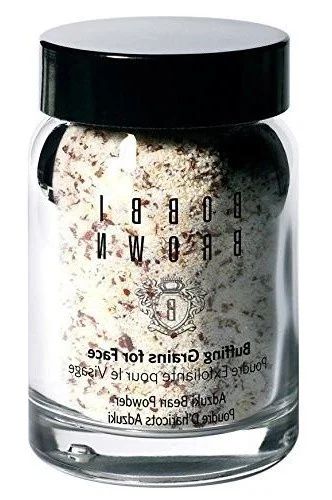
How well does your skin match with Bobbie Brown Buffing Grains For Face?
Login to see detailsOr continue via
Quick 1-minute survey • Completely free
Ingredients
Analysis results of Ingredients


Ingredient List
| EWG | CIR | Ingredient Name & Cosmetic Function | Notes |
|---|---|---|---|
| 1 | - | (Viscosity Controlling, Viscosity Increasing Agent) | |
| 1 | A | (Skin Conditioning, Emollient, Humectant, Viscosity Controlling, Viscosity Increasing Agent) |  |
| 1 | A | (Skin Conditioning, Emollient, Soothing, Moisturising) | |
| 1 | A | (Surfactant, Cleansing, Foaming) |  |
Bobbie Brown Buffing Grains For Face - Ingredient Explanation
Phaseolus Angularis Seed Powder
1. Definition Phaseolus Angularis Seed Powder:
Phaseolus Angularis Seed Powder is a natural ingredient derived from the seeds of the Phaseolus angularis plant, also known as adzuki beans. It is commonly used in cosmetics for its exfoliating and skin brightening properties.2. Use:
Phaseolus Angularis Seed Powder is often used in facial scrubs, masks, and exfoliating products to gently remove dead skin cells, unclog pores, and promote a smoother, more radiant complexion. It is suitable for all skin types, including sensitive skin, and can help improve the overall texture and appearance of the skin.3. Usage Phaseolus Angularis Seed Powder:
When using products containing Phaseolus Angularis Seed Powder, it is important to follow the instructions provided by the manufacturer. To use as an exfoliant, apply the product to damp skin and gently massage in circular motions, focusing on areas of concern. Rinse thoroughly with warm water and follow up with a moisturizer to lock in hydration. It is recommended to use exfoliating products containing Phaseolus Angularis Seed Powder 1-2 times per week to avoid over-exfoliation and irritation.Precautions: While Phaseolus Angularis Seed Powder is generally considered safe for use in cosmetics, it is always recommended to perform a patch test before using a new product to check for any potential allergic reactions. Avoid using exfoliating products containing this ingredient on broken or irritated skin, as it may cause further irritation. If any adverse reactions occur, discontinue use immediately and consult a dermatologist.
4. References:
- Lee, J. H., Kim, J. Y., Lee, M. H., & Youn, S. W. (2015). The effect of adzuki bean (Phaseolus angularis) extract on melanin synthesis and cytokine gene expression in B16F10 melanoma cells. Journal of cosmetic dermatology, 14(4), 335-341.
- Kim, J. H., Kim, Y. J., Lee, J. H., & Youn, S. W. (2015). The effect of adzuki bean (Phaseolus angularis) extract on skin aging. Journal of cosmetic dermatology, 14(3), 209-215.
- Kim, M. K., Kim, J. H., Kim, Y. J., Lee, M. H., & Youn, S. W. (2014). The effect of adzuki bean (Phaseolus angularis) extract on skin hydration and barrier function in healthy human subjects. International journal of cosmetic science, 36(2), 207-212.
Hydrogenated Soybean Oil
1. Definition Hydrogenated Soybean Oil:
Hydrogenated Soybean Oil is a vegetable-based oil that has undergone the process of hydrogenation, which involves the addition of hydrogen atoms to the oil to increase its stability and shelf life. This process transforms the liquid soybean oil into a solid or semi-solid form.2. Use:
Hydrogenated Soybean Oil is commonly used in cosmetics as an emollient and thickening agent. It helps to moisturize and soften the skin, making it a popular ingredient in lotions, creams, and lip balms. It also provides a smooth texture to cosmetic products and helps to improve their spreadability.3. Usage Hydrogenated Soybean Oil:
When using products containing Hydrogenated Soybean Oil, it is important to be aware of any potential allergies or sensitivities to soybean-derived ingredients. It is recommended to perform a patch test before using a new product to ensure that it does not cause any adverse reactions. Additionally, individuals with soy allergies should avoid products containing Hydrogenated Soybean Oil to prevent any allergic reactions.4. References:
- "Hydrogenated Soybean Oil" Cosmetics Info, www.cosmeticsinfo.org/ingredient/hydrogenated-soybean-oil
- "Soybean Oil" Paula's Choice Skincare Ingredient Dictionary, www.paulaschoice.com/ingredient-dictionary/emollients/soybean-oil
- "Soybean Oil: Uses, Benefits, and Risks" Healthline, www.healthline.com/nutrition/soybean-oil#benefits
Jojoba Esters
1. Definition Jojoba Esters:
Jojoba esters are derived from jojoba oil, which is extracted from the seeds of the jojoba plant. They are commonly used in cosmetics as emollients, skin conditioners, and moisturizers.2. Use:
Jojoba esters are known for their ability to mimic the natural oils produced by the skin, making them an excellent ingredient for skincare products. They help to hydrate and nourish the skin, leaving it soft and smooth. Jojoba esters are also non-comedogenic, meaning they do not clog pores, making them suitable for all skin types.3. Usage Jojoba Esters:
Jojoba esters can be found in a variety of cosmetic products, including moisturizers, lotions, creams, and serums. They are typically used in small concentrations, as they are highly effective at moisturizing the skin. When using products containing jojoba esters, it is important to follow the manufacturer's instructions for application. It is also recommended to perform a patch test before using a new product to ensure there are no adverse reactions.4. References:
- Guo, R., & Huang, L. (2013). Nanotechnology-based cosmeceuticals. Boca Raton, FL: CRC Press.
- Ranzato, E., Martinotti, S., & Burlando, B. (2011). Wound healing properties of jojoba liquid wax: an in vitro study. Journal of Ethnopharmacology, 134(2), 443-449.
- Meier, L., & Stange, R. (2008). The jojoba plant and its liquid wax. Industrial Crops and Products, 28(2), 241-253.
Sodium Lauryl Sulfoacetate
1. Definition Sodium Lauryl Sulfoacetate:
Sodium Lauryl Sulfoacetate is a mild surfactant derived from coconut and palm oils. It is a white powder that is water-soluble and often used as a foaming agent in cosmetics.2. Use:
Sodium Lauryl Sulfoacetate is commonly used in cosmetics such as shampoos, body washes, and facial cleansers to create a rich lather and effectively cleanse the skin and hair. It is considered to be a gentler alternative to Sodium Lauryl Sulfate, which can be harsh and drying on the skin.3. Usage Sodium Lauryl Sulfoacetate:
When using products containing Sodium Lauryl Sulfoacetate, it is important to follow the instructions provided by the manufacturer. It is generally safe for use on most skin types, including sensitive skin, but individuals with known allergies or sensitivities should perform a patch test before using products with this ingredient. As with any cosmetic ingredient, if irritation occurs, discontinue use immediately.4. References:
- Draelos, Z. D. (2010). Cosmetic Formulation of Skin Care Products. CRC Press.
- Winter, R. (2019). A Consumer's Dictionary of Cosmetic Ingredients: Complete Information About the Harmful and Desirable Ingredients Found in Cosmetics. Three Rivers Press.
- Steinberg, D. C. (2018). The Green Beauty Guide: Your Essential Resource to Organic and Natural Skin Care, Hair Care, Makeup, and Fragrances. HCI.
Review








Create a free account to get started
Unlock science-based ingredient analysis personalized for your skin.
Already have an account? Log in
We protect your privacy. We never send spam.