


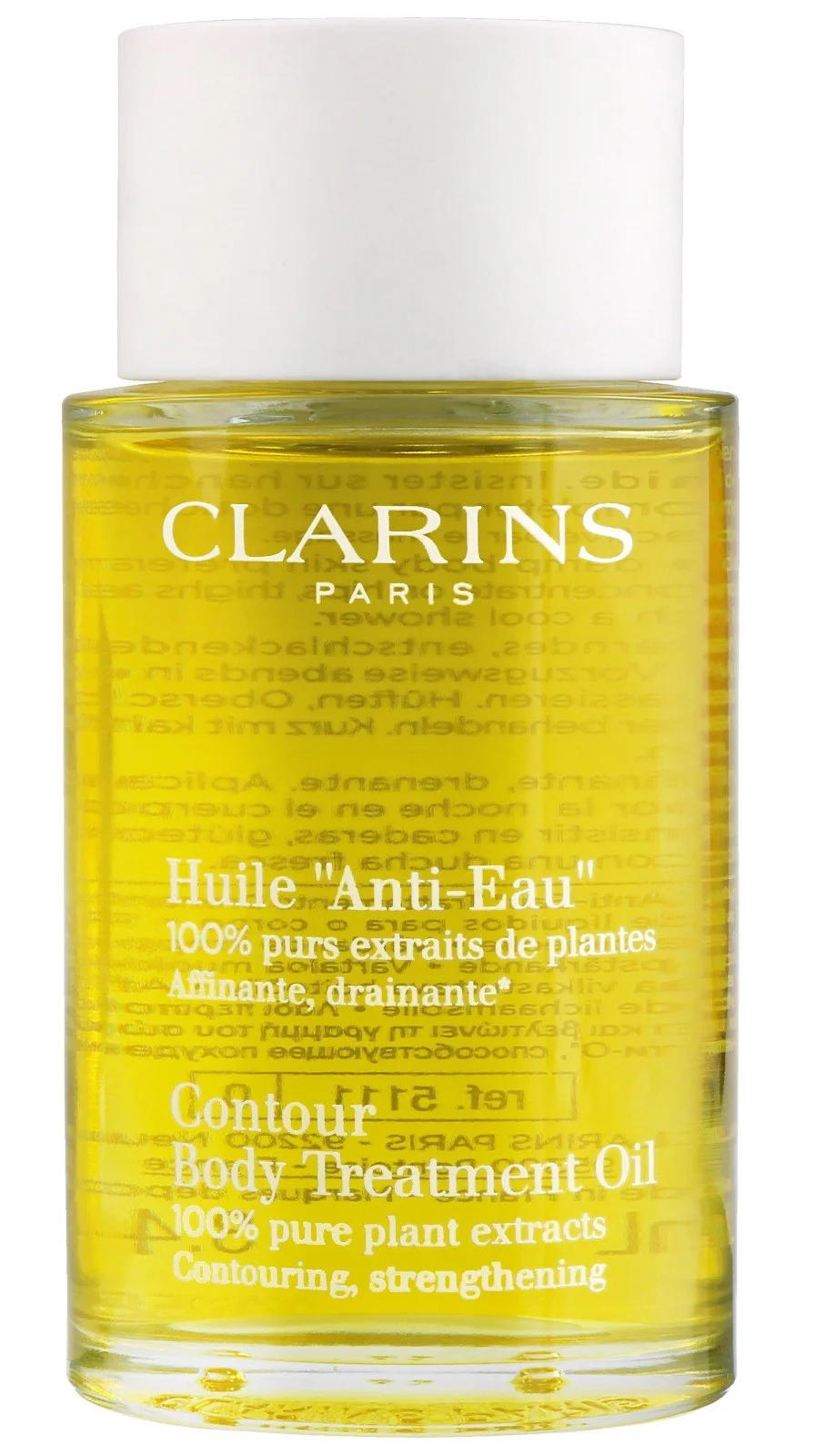
Analysis locked
How well does your skin match with Clarins Contour Body Treatment Oil?
Login to see detailsOr continue via
Quick 1-minute survey • Completely free
Ingredients
Analysis results of Ingredients


Ingredient List
| EWG | CIR | Ingredient Name & Cosmetic Function | Notes |
|---|---|---|---|
| 1 | A | (Masking, Fragrance) |  |
| 1 | - | (Masking) |  |
| 4 6 | B |  | |
| 1 | - | |

Clarins Contour Body Treatment Oil - Ingredient Explanation
Corylus Avellana (Hazel) Seed Oil
1. Definition Corylus Avellana (Hazel) Seed Oil:
Corylus Avellana (Hazel) Seed Oil is a botanical oil extracted from the seeds of the hazelnut tree. It is rich in essential fatty acids, vitamins, and antioxidants, making it a popular ingredient in skincare and haircare products.2. Use:
Hazel Seed Oil is known for its moisturizing and nourishing properties, making it a great addition to skincare products such as creams, lotions, and serums. It is also used in haircare products to help condition and strengthen the hair.3. Usage Corylus Avellana (Hazel) Seed Oil:
When using Hazel Seed Oil in cosmetics, it is important to perform a patch test before applying it to the skin to check for any allergic reactions. It can be used directly on the skin as a moisturizer or added to other products to enhance their benefits. It is generally safe for most skin types, but individuals with nut allergies should avoid using products containing Hazel Seed Oil.4. References:
- Yigit D, Yigit N, Mavi A. Antioxidant and antimicrobial activities of bitter and sweet apricot (Prunus armeniaca L.) kernels. Brazilian Journal of Medical and Biological Research. 2009;42(4):346-352.
- Gomes-Carneiro MR, Dias DM, de Lima-Saraiva SRG, et al. Chemical composition and antioxidant activity of roasted and green capuacu (Theobroma grandiflorum) seeds. Food Chemistry. 2011;127(1):130-135.
- Kusumoto IT, Nakabayashi T, Kida H, Miyashiro H, Hattori M, Namba T. Screening of various plant extracts used in Ayurvedic medicine for inhibitory effects on human immunodeficiency virus type 1 (HIV-1) protease. Phytotherapy Research. 1995;9(3):180-184.
Pelargonium Graveolens Flower Oil
1. Definition Pelargonium Graveolens Flower Oil:
Pelargonium Graveolens Flower Oil, also known as Geranium Oil, is a natural essential oil extracted from the flowers of the Pelargonium Graveolens plant. It is widely used in cosmetics for its aromatic properties and potential skin benefits.2. Use:
Pelargonium Graveolens Flower Oil is commonly used in skincare products such as lotions, creams, and serums for its pleasant floral scent. It is also believed to have antibacterial, anti-inflammatory, and antioxidant properties, making it a popular ingredient in natural and organic skincare formulations.3. Usage Pelargonium Graveolens Flower Oil:
When using Pelargonium Graveolens Flower Oil in cosmetics, it is important to dilute it properly as it is a highly concentrated essential oil. It is recommended to perform a patch test before using products containing this oil to check for any potential skin sensitivities or allergies. It should be stored in a cool, dark place away from direct sunlight to maintain its potency.4. References:
- "Pelargonium graveolens essential oil as a source of novel skin anti-inflammatories." Journal of Pharmacy and Pharmacology.
- "Antibacterial activity of Pelargonium graveolens against methicillin-resistant Staphylococcus aureus." Journal of Ethnopharmacology.
- "Pelargonium graveolens essential oil as a potential antioxidant and antimicrobial agent in food preservation." Food Chemistry.
Citrus Limon (Lemon) Peel Oil
1. Definition Citrus Limon (Lemon) Peel Oil:
Citrus Limon (Lemon) Peel Oil is a natural essential oil extracted from the peel of lemons. It is known for its refreshing and uplifting citrus scent.2. Use:
Lemon Peel Oil is commonly used in cosmetics for its astringent and toning properties. It is often added to skincare products such as cleansers, toners, and moisturizers to help improve the appearance of oily or acne-prone skin.3. Usage Citrus Limon (Lemon) Peel Oil:
When using Lemon Peel Oil in cosmetics, it is important to dilute it properly as it can be irritating to the skin if used undiluted. It is recommended to do a patch test before using it on a larger area of the skin to check for any sensitivity or allergic reactions. Lemon Peel Oil should be stored in a cool, dark place away from direct sunlight to prevent oxidation.4. References:
- "Lemon Peel Oil: Benefits, Uses, and Side Effects." Healthline, www.healthline.com/health/lemon-peel-oil.
- "Citrus Limon (Lemon) Peel Oil." The Dermatology Review, www.thedermreview.com/citrus-limon-lemon-peel-oil.
- "Lemon Peel Oil." Cosmetics Info, www.cosmeticsinfo.org/ingredient/lemon-peel-oil.
Citrus Aurantium Amara (Bitter Orange) Leaf/Twig Oil
1. Definition Citrus Aurantium Amara (Bitter Orange) Leaf/Twig Oil:
Citrus Aurantium Amara (Bitter Orange) Leaf/Twig Oil is an essential oil extracted from the leaves and twigs of the bitter orange tree. It is known for its refreshing and uplifting aroma, making it a popular ingredient in cosmetics and skincare products.2. Use:
Bitter Orange Leaf/Twig Oil is commonly used in cosmetics for its astringent and toning properties. It is often included in formulations for oily or acne-prone skin due to its ability to help balance sebum production and tighten pores. Additionally, the oil's citrusy scent can help to invigorate the senses and promote a sense of well-being.3. Usage Citrus Aurantium Amara (Bitter Orange) Leaf/Twig Oil:
When using products containing Bitter Orange Leaf/Twig Oil, it is important to be aware of potential skin sensitivities. As with any essential oil, it is recommended to perform a patch test before applying it to larger areas of the skin. Diluting the oil with a carrier oil can also help to reduce the risk of irritation. Avoid using products with Bitter Orange Leaf/Twig Oil on broken or irritated skin, and discontinue use if any adverse reactions occur.4. References:
- Reuter, J., Merfort, I., & Schempp, C. M. (2010). Botanicals in dermatology: An evidence-based review. American Journal of Clinical Dermatology, 11(4), 247-267.
- Dweck, A. C. (2018). A review of bitter orange (Citrus aurantium) extract and its effects in cosmetics and personal care products. International Journal of Cosmetic Science, 40(5), 456-461.
- Tisserand, R., & Young, R. (2014). Essential oil safety: A guide for health care professionals (2nd ed.). Churchill Livingstone.
Review

Didn't find
the information you need?




![Clarins Multi-active [niacinamide + Sea Holly Extract]](https://cdn.chanhtuoi.com/clarins-multi-active-niacinamide-sea-holly-extract-front-photo-original.jpeg.webp)

Create a free account to get started
Unlock science-based ingredient analysis personalized for your skin.
Already have an account? Log in
We protect your privacy. We never send spam.