


Analysis locked
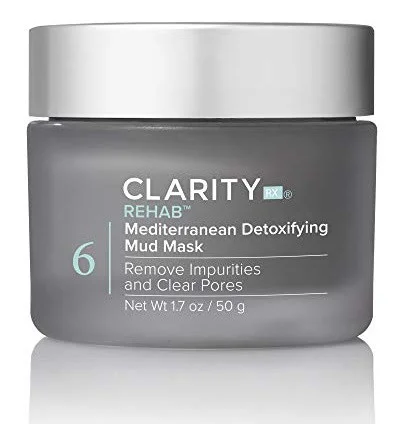
How well does your skin match with ClarityRx Rehab Mediterranean Detoxifying Mud Mask?
Login to see detailsOr continue via
Quick 1-minute survey • Completely free
Ingredients
Analysis results of Ingredients


Ingredient List
| EWG | CIR | Ingredient Name & Cosmetic Function | Notes |
|---|---|---|---|
| 1 3 | - | | |
| - | - | Mediterranean Mud | |
| 1 | - | | |
| 1 | - | |


ClarityRx Rehab Mediterranean Detoxifying Mud Mask - Ingredient Explanation
Aloe Barbadensis (Aloe Vera) Leaf Juice
1. Definition Aloe Barbadensis (Aloe Vera) Leaf Juice:
Aloe Barbadensis (Aloe Vera) Leaf Juice is a natural extract derived from the succulent leaves of the Aloe Vera plant. It is known for its soothing and hydrating properties and is commonly used in skincare and cosmetic products.2. Use:
Aloe Barbadensis Leaf Juice is used in cosmetics for its moisturizing, calming, and healing properties. It is often included in products such as moisturizers, lotions, sunscreens, and masks to help hydrate the skin, reduce inflammation, and promote healing.3. Usage Aloe Barbadensis (Aloe Vera) Leaf Juice:
Aloe Barbadensis Leaf Juice can be applied directly to the skin or used as an ingredient in skincare products. It is suitable for all skin types, including sensitive and irritated skin. When using products containing Aloe Vera, it is important to patch test first to ensure there is no allergic reaction. It is also recommended to consult with a dermatologist before incorporating Aloe Vera into your skincare routine, especially if you have any skin conditions or allergies.4. References:
- Surjushe, A., Vasani, R., & Saple, D. G. (2008). Aloe vera: A short review. Indian Journal of Dermatology, 53(4), 163–166.
- Radha, M. H., & Laxmipriya, N. P. (2015). Evaluation of biological properties and clinical effectiveness of Aloe vera: A systematic review. Journal of Traditional and Complementary Medicine, 5(1), 21–26.
- Choi, S., Chung, M. H., & Aeschbach, R. (2001). Antioxidant activity of Aloe vera in vitro study. Journal of Agricultural and Food Chemistry, 50(16), 3718–3722.
Mediterranean Mud
Ingredient data is being updated. Please check back later.
Dead Sea Mud
1. Definition Dead Sea Mud:
Dead Sea Mud is a natural substance that is rich in minerals and salts, harvested from the shores of the Dead Sea. It is known for its detoxifying, exfoliating, and nourishing properties, making it a popular ingredient in skincare products.2. Use:
Dead Sea Mud is commonly used in cosmetics such as face masks, body scrubs, and bath salts. It is believed to help draw out impurities from the skin, unclog pores, and improve overall skin texture. The minerals found in Dead Sea Mud, including magnesium, calcium, and potassium, are thought to provide numerous benefits for the skin, such as hydration, anti-inflammatory properties, and improved circulation.3. Usage Dead Sea Mud:
When using Dead Sea Mud in cosmetics, it is important to follow the instructions provided on the product packaging. Typically, Dead Sea Mud masks are applied to clean, dry skin and left on for a specified amount of time before being rinsed off with warm water. It is recommended to perform a patch test before using Dead Sea Mud products to check for any potential allergic reactions or skin sensitivities. It is also important to avoid getting the mud in contact with the eyes or mouth.4. References:
- "Dead Sea Mud: Benefits for Skin and Overall Health." Healthline, www.healthline.com/health/dead-sea-mud-benefits#benefits-for-skin.
- "The Healing Power of Dead Sea Mud." The Spa at the Dead Sea Marriott Resort & Spa, www.deadsea-marriott.com/the-healing-power-of-dead-sea-mud/.
- "Dead Sea Mud: Benefits and Uses for Skin." Byrdie, www.byrdie.com/dead-sea-mud-uses-and-benefits-5078563.
Fuller's Earth
1. Definition Fuller's Earth:
Fuller's Earth is a type of clay that is composed of various minerals such as montmorillonite, kaolinite, and attapulgite. It is known for its absorbent properties and is commonly used in cosmetics and skincare products.2. Use:
Fuller's Earth is used in cosmetics for its ability to absorb excess oil and impurities from the skin. It is often found in face masks, cleansers, and powders to help mattify the skin and reduce shine. Additionally, Fuller's Earth can also help to exfoliate the skin and improve its overall texture.3. Usage Fuller's Earth:
When using cosmetics containing Fuller's Earth, it is important to follow the instructions provided on the product packaging. It is typically recommended to apply the product to clean, dry skin and leave it on for a specified amount of time before rinsing off with water. It is important to avoid getting the product in contact with the eyes and to discontinue use if any irritation occurs.4. References:
- Dweck, A. C. (2002). Fuller's Earth: A history of calcium bentonite. Personal Care Magazine, 3(3), 15-20.
- Tadros, T. (2016). Formulating, packaging, and marketing of natural cosmetic products. William Andrew.
- Wertz, P. W., & Bunge, A. L. (2003). The skin lipid matrix: ceramides and the skin barrier. National Institute of Health.
Review







Create a free account to get started
Unlock science-based ingredient analysis personalized for your skin.
Already have an account? Log in
We protect your privacy. We never send spam.