


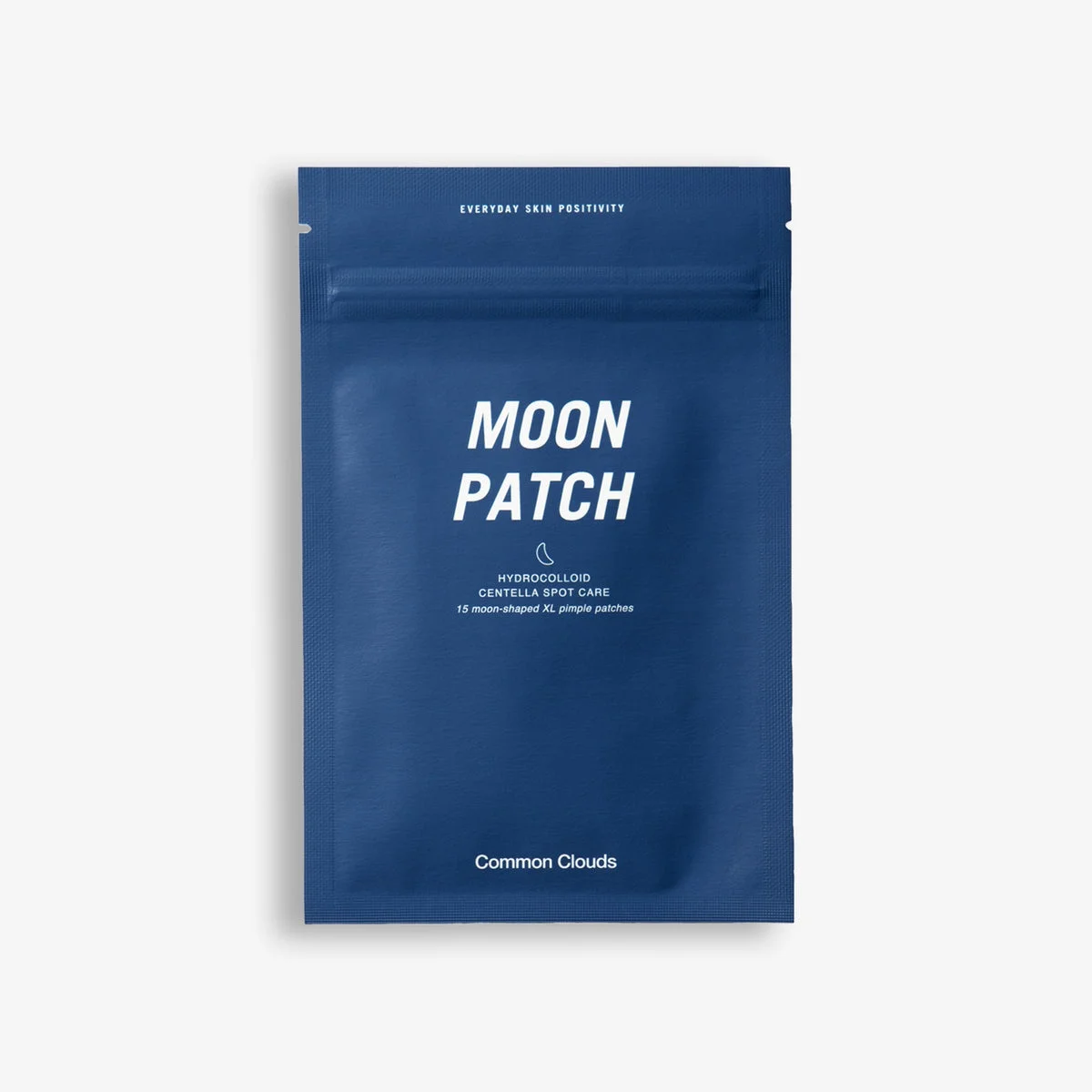
Analysis locked
How well does your skin match with Common Clouds Moon Patch?
Login to see detailsOr continue via
Quick 1-minute survey • Completely free
Ingredients
Analysis results of Ingredients


Ingredient List
| EWG | CIR | Ingredient Name & Cosmetic Function | Notes |
|---|---|---|---|
| - | - | (Viscosity Controlling) | |
| 1 | A | (Film Forming, Opacifying) | |
| - | A | (Skin Conditioning, Emollient, Viscosity Controlling) | |
| 1 | A | (Antioxidant) | |
Common Clouds Moon Patch - Ingredient Explanation
Hydrocolloid
1. Definition Hydrocolloid:
Hydrocolloids are substances that form a gel when combined with water, commonly used in cosmetics for their ability to thicken, stabilize, and moisturize products.2. Use:
Hydrocolloids are commonly used in skincare and makeup products such as creams, lotions, serums, and masks to provide texture, hydration, and a smooth application. They can also help to improve the overall efficacy of a product by enhancing its absorption into the skin.3. Usage Hydrocolloid:
When using cosmetics containing hydrocolloids, it is important to be aware of potential allergic reactions or sensitivities. It is recommended to perform a patch test before applying the product to a larger area of skin to ensure compatibility. Additionally, some hydrocolloids may have a tendency to clog pores, so individuals with acne-prone skin should use products containing hydrocolloids with caution.4. References:
- G. O. Phillips, P. A. Williams (Eds.), Handbook of Hydrocolloids (2nd ed.). Woodhead Publishing, 2009.
- S. M. S. Chauhan, A. K. Shrivastava, Hydrocolloids in cosmetics. International Journal of Cosmetic Science, 2011, 33(6), 446-454.
- E. Dickinson, Hydrocolloids as emulsifiers and emulsion stabilizers. Food Hydrocolloids, 2009, 23(6), 1473-1482.
Styrene/Isoprene Copolymer
1. Definition Styrene/Isoprene Copolymer:
Styrene/Isoprene Copolymer is a synthetic polymer that is commonly used in cosmetics as a film-forming agent and viscosity increasing agent. It is a copolymer of styrene and isoprene, two monomers that are commonly found in natural rubber.2. Use:
Styrene/Isoprene Copolymer is used in cosmetics to create a smooth and even application of products such as foundations, lipsticks, and mascaras. It helps to improve the texture and consistency of the product, making it easier to apply and ensuring that it stays in place throughout the day.3. Usage Styrene/Isoprene Copolymer:
When using cosmetics containing Styrene/Isoprene Copolymer, it is important to follow the manufacturer's instructions and guidelines. It is generally safe for use in cosmetics, but some individuals may be sensitive to the ingredient and may experience skin irritation or allergic reactions. It is always recommended to perform a patch test before using a new product to ensure that it is suitable for your skin.4. References:
- "Styrene/Isoprene Copolymer" Cosmeticsinfo.org, https://cosmeticsinfo.org/ingredient/styreneisoprene-copolymer
- "Safety Assessment of Styrene/Isoprene Copolymer as Used in Cosmetics" Cosmetic Ingredient Review, 2018, https://www.cir-safety.org/sites/default/files/Styrene%20Isoprene%20Copolymer.pdf
- "Styrene/Isoprene Copolymer" The Derm Review, https://thedermreview.com/styrene-isoprene-copolymer/
Hydrogenated Poly (C6-20 Olefin)
1. Definition Hydrogenated Poly(C6-14 Olefin):
Hydrogenated Poly(C6-14 Olefin) is a synthetic polymer derived from hydrogenating C6-14 olefins, which are hydrocarbons obtained from the cracking of petroleum. It is commonly used in cosmetics as a film-forming agent and emollient.2. Use:
Hydrogenated Poly(C6-14 Olefin) is primarily used in cosmetics as a thickening agent in various skincare and makeup products. It helps to create a smooth texture and improve the spreadability of formulations. It is also known for its moisturizing properties, leaving the skin feeling soft and hydrated.3. Usage Hydrogenated Poly(C6-14 Olefin):
When using products containing Hydrogenated Poly(C6-14 Olefin), it is important to patch test first to ensure compatibility with your skin. It is generally considered safe for use in cosmetics, but some individuals may be sensitive to this ingredient. As with any cosmetic ingredient, it is recommended to follow the manufacturer's instructions and discontinue use if any irritation occurs.4. References:
- "Hydrogenated Poly(C6-14 Olefin)" CosmeticsInfo.org, https://cosmeticsinfo.org/ingredient/hydrogenated-polyc6-14-olefin
- "Polyolefins" Personal Care Council, https://www.personalcarecouncil.org/ingredient-info/polyolefins/
- "Ingredient Dictionary: Hydrogenated Poly(C6-14 Olefin)" Paula's Choice Skincare, https://www.paulaschoice.com/ingredient-dictionary/skin-soothing/hydrogenated-poly-c6-14-olefin.html
Pentaerythrityl Tetra Di T Butyl Hydroxyhydrocinnamate
1. Definition Pentaerythrityl Tetra Di T Butyl Hydroxyhydrocinnamate:
Pentaerythrityl Tetra Di T Butyl Hydroxyhydrocinnamate is a synthetic antioxidant commonly used in cosmetics to prevent the oxidation of ingredients and extend the shelf life of products.2. Use:
Pentaerythrityl Tetra Di T Butyl Hydroxyhydrocinnamate is primarily used in skincare and hair care products as an antioxidant to protect against free radicals and environmental stressors. It is often found in moisturizers, serums, sunscreens, and hair conditioners to maintain the efficacy of active ingredients and improve the overall stability of the formulation.3. Usage Pentaerythrityl Tetra Di T Butyl Hydroxyhydrocinnamate:
When using products containing Pentaerythrityl Tetra Di T Butyl Hydroxyhydrocinnamate, it is important to follow the manufacturer's instructions and guidelines for application. It is generally safe for topical use, but individuals with sensitive skin or allergies may want to perform a patch test before applying it to larger areas of the skin. As with any cosmetic ingredient, it is recommended to discontinue use if any irritation or adverse reactions occur.4. References:
- Cosmetic Ingredient Review Expert Panel. (2010). Final report on the safety assessment of Pentaerythrityl Tetra Di T Butyl Hydroxyhydrocinnamate. International Journal of Toxicology, 29(3), 192S-207S.
- Personal Care Products Council. (2019). Pentaerythrityl Tetra Di T Butyl Hydroxyhydrocinnamate. Retrieved from https://www.cosmeticsinfo.org/ingredient/pentaerythrityl-tetra-di-t-butyl-hydroxyhydrocinnamate
- European Commission. (2019). CosIng - Cosmetics Ingredients Database. Retrieved from https://ec.europa.eu/growth/tools-databases/cosing/index.cfm?fuseaction=search.simple&search=1&btnSubmit=Submit&searchText=pentaerythrityl+tetra+di+t+butyl+hydroxyhydrocinnamate
Review

Didn't find
the information you need?








Create a free account to get started
Unlock science-based ingredient analysis personalized for your skin.
Already have an account? Log in
We protect your privacy. We never send spam.