


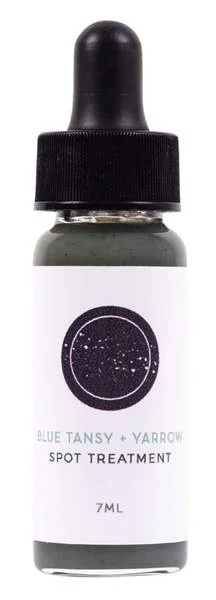
Analysis locked
How well does your skin match with communion botanicals Blue Tansy + Yarrow Spot Treatment?
Login to see detailsOr continue via
Quick 1-minute survey • Completely free
Ingredients
Analysis results of Ingredients


Ingredient List
| EWG | CIR | Ingredient Name & Cosmetic Function | Notes |
|---|---|---|---|
| 1 3 | - | | |
| 1 | - | | |
| 1 | - | | |
| - | - | Grain Alcohol | |
communion botanicals Blue Tansy + Yarrow Spot Treatment - Ingredient Explanation
Aloe Barbadensis (Aloe Vera) Juice
1. Definition Aloe Barbadensis (Aloe Vera) Juice:
Aloe Barbadensis (Aloe Vera) Juice is a natural ingredient derived from the leaves of the Aloe Vera plant. It is known for its soothing and hydrating properties and has been used for centuries in traditional medicine and skincare.2. Use:
Aloe Barbadensis Juice is commonly used in cosmetics for its moisturizing, healing, and anti-inflammatory properties. It is often included in skincare products such as lotions, creams, serums, and masks to help soothe and hydrate the skin. Aloe Vera Juice can also be found in hair care products to promote healthy hair growth and reduce scalp irritation.3. Usage Aloe Barbadensis (Aloe Vera) Juice:
When using products containing Aloe Barbadensis Juice, it is important to perform a patch test first to check for any allergic reactions. Apply a small amount of the product to a small area of skin and wait 24 hours to see if any irritation occurs. If no reaction occurs, the product can be safely used as directed.Precautions: While Aloe Vera Juice is generally considered safe for most people, some individuals may experience allergic reactions or skin irritation. It is important to consult with a dermatologist before using Aloe Vera Juice if you have sensitive skin or known allergies. Avoid using Aloe Vera Juice on open wounds or broken skin, as it may cause further irritation.
4. References:
- Foster, M., & Hunter, D. (2014). Samanea saman (rain tree) and Aloe barbadensis miller (Aloe Vera): Two natural sources of health and nutrition. Journal of Medicinal Plants Research, 8(28), 967-973.
- Surjushe, A., Vasani, R., & Saple, D. G. (2008). Aloe Vera: A short review. Indian Journal of Dermatology, 53(4), 163-166.
- Radha, M. H., & Laxmipriya, N. P. (2015). Evaluation of biological properties and clinical effectiveness of Aloe Vera: A systematic review. Journal of Traditional and Complementary Medicine, 5(1), 21-26.
Calendula Officinalis (Pot Marigold)
1. Definition Calendula Officinalis (Pot Marigold):
Calendula Officinalis, also known as Pot Marigold, is a flowering plant that belongs to the daisy family. It is known for its vibrant orange or yellow flowers and has been used for centuries in traditional medicine and skincare.2. Use:
Calendula Officinalis is commonly used in cosmetics for its soothing and anti-inflammatory properties. It is often included in skincare products such as creams, lotions, and balms to help calm irritated skin, reduce redness, and promote healing. Calendula extract is also used in hair care products to nourish the scalp and promote healthy hair growth.3. Usage Calendula Officinalis (Pot Marigold):
When using products containing Calendula Officinalis, it is important to patch test first to ensure that you do not have any allergic reactions. Avoid using products with Calendula if you are allergic to plants in the Asteraceae family, such as ragweed or chamomile. If you experience any adverse reactions, discontinue use immediately and consult a healthcare professional.4. References:
- Gupta, D., & Jain, N. (2010). Herbal cosmetics: used for skin and hair. International Journal of Pharma and Bio Sciences, 1(1), 1-21.
- Dweck, A. C. (2002). Calendula officinalis. International Journal of Cosmetic Science, 24(5), 297-306.
- Preethi, K. C., & Kuttan, R. (2009). Wound healing activity of flower extract of Calendula Officinalis. Journal of Basic and Clinical Physiology and Pharmacology, 20(1), 73-79.
Achillea Millefolium
1. Definition Achillea Millefolium:
Achillea Millefolium, commonly known as yarrow, is a perennial herb that belongs to the Asteraceae family. It is native to Europe and Asia but can now be found in various regions around the world. Yarrow has a long history of traditional use in herbal medicine and is known for its anti-inflammatory, antioxidant, and astringent properties.2. Use:
In cosmetics, Achillea Millefolium is often used for its skin-soothing and healing properties. It can help to reduce inflammation, redness, and irritation on the skin, making it a popular ingredient in products designed for sensitive or acne-prone skin. Yarrow extract is also believed to have antioxidant benefits, helping to protect the skin from environmental damage and signs of aging.3. Usage Achillea Millefolium:
Achillea Millefolium can be found in a variety of cosmetic products, including creams, lotions, serums, and masks. It is typically used in concentrations ranging from 1-5%, depending on the specific formulation and intended benefits. When using products containing yarrow extract, it is important to follow the manufacturer's instructions and patch test the product before applying it to larger areas of the skin to ensure compatibility.4. References:
- Jarić, S., et al. (2015). Traditional wound-healing plants used in the Balkan region (Southeast Europe). Journal of Ethnopharmacology, 157, 265-273.
- Kavalali, G., et al. (2011). Antioxidant activity and phenolic composition of yarrow (Achillea millefolium L.) during flowering. Natural Product Communications, 6(10), 1545-1548.
- Grieve, M. (1931). A Modern Herbal. Penguin Random House.
Grain Alcohol
Ingredient data is being updated. Please check back later.
Review

Didn't find
the information you need?




Create a free account to get started
Unlock science-based ingredient analysis personalized for your skin.
Already have an account? Log in
We protect your privacy. We never send spam.