


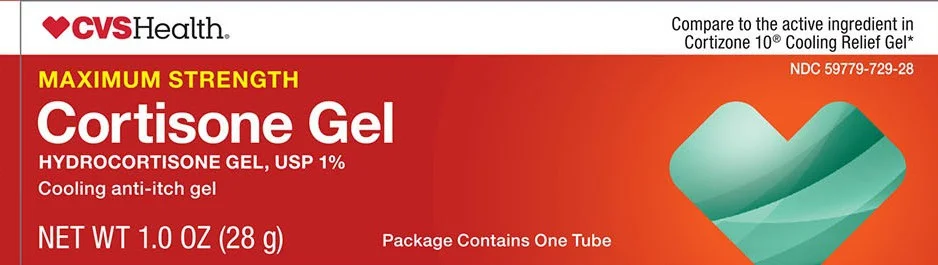
Analysis locked
How well does your skin match with CVS Health Cortisone Gel?
Login to see detailsOr continue via
Quick 1-minute survey • Completely free
Ingredients
Analysis results of Ingredients


Ingredient List
| EWG | CIR | Ingredient Name & Cosmetic Function | Notes |
|---|---|---|---|
| 1 | - | (Fragrance, Antioxidant, Hair Dyeing, Skin Bleaching Agent, Hair Dyeing Reducing) | |
| - | - | Aloe Vera Leaf | |
| - | - | Carboxypolymethylene | |
| 1 2 | A | (Solvent, Perfuming, Fragrance, Humectant, Viscosity Decreasing Agent, Hair Conditioning, Skin Protecting, Denaturant ) |  |


CVS Health Cortisone Gel - Ingredient Explanation
Hydrocortisone
1. Definition Hydrocortisone:
Hydrocortisone is a corticosteroid that is commonly used in skincare products for its anti-inflammatory properties. It helps to reduce redness, itching, and swelling associated with skin conditions such as eczema, psoriasis, and allergic reactions.2. Use:
Hydrocortisone is used in cosmetics to alleviate skin irritation and inflammation. It is often found in creams, lotions, and ointments designed to soothe and calm irritated skin. Hydrocortisone works by reducing the activity of the immune system in the skin, which helps to decrease inflammation and promote healing.3. Usage Hydrocortisone:
When using cosmetics containing hydrocortisone, it is important to follow the instructions provided on the product packaging. Only apply a thin layer of the product to the affected area and avoid using it on broken or infected skin. It is recommended to use hydrocortisone products for short periods of time and to consult a healthcare professional if symptoms persist or worsen.4. References:
- Draelos, Z. D. (2010). Cosmeceuticals: Procedures in Cosmetic Dermatology Series. Elsevier Health Sciences.
- Baumann, L. (2009). Cosmetic Dermatology: Principles and Practice. McGraw-Hill Medical.
- Mukherjee, S., Date, A., Patravale, V., Korting, H. C., Roeder, A., & Weindl, G. (2006). Retinoids in the treatment of skin aging: an overview of clinical efficacy and safety. Clinical interventions in aging, 1(4), 327-348.
Aloe Vera Leaf
Ingredient data is being updated. Please check back later.
Carboxypolymethylene
Ingredient data is being updated. Please check back later.
Glycerin
1. Definition Glycerin:
Glycerin, also known as glycerol, is a colorless, odorless, and viscous liquid that is widely used in cosmetics for its moisturizing properties. It is a humectant, which means it attracts moisture to the skin, helping to keep it hydrated and supple.
2. Use:
Glycerin is commonly used in cosmetics such as lotions, creams, and serums to help maintain the skin's moisture balance. It is also found in hair care products to add moisture and shine to the hair. Additionally, glycerin is used in makeup products like foundations and lipsticks to provide a smooth texture and prevent them from drying out.
3. Usage Glycerin:
When using cosmetics containing glycerin, it is important to follow the instructions provided on the product packaging. Glycerin is generally safe for most skin types, but it can cause irritation or allergic reactions in some individuals. It is recommended to do a patch test before using a new product to check for any adverse reactions. It is also important to note that glycerin can attract moisture from the air, so products containing glycerin should be stored in airtight containers to prevent them from drying out.
4. References:
- Draelos, Z. D. (2010). Cosmetic Formulation of Skin Care Products. John Wiley & Sons.
- Loden, M., & Maibach, H. I. (2006). Dry Skin and Moisturizers: Chemistry and Function. CRC Press.
- Winter, R. (2009). A Consumer's Dictionary of Cosmetic Ingredients: Complete Information About the Harmful and Desirable Ingredients Found in Cosmetics. Harmony.
Review










Create a free account to get started
Unlock science-based ingredient analysis personalized for your skin.
Already have an account? Log in
We protect your privacy. We never send spam.