


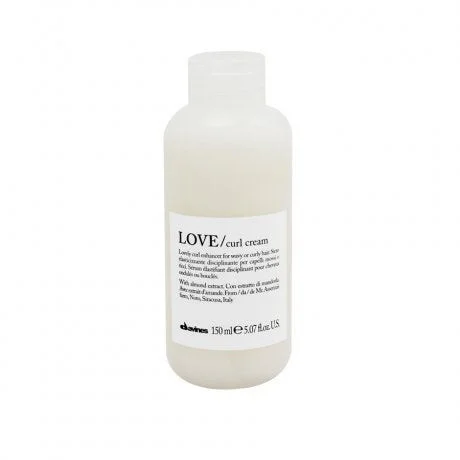
Analysis locked
How well does your skin match with Davines Love Curl Cream?
Login to see detailsOr continue via
Quick 1-minute survey • Completely free
Ingredients
Analysis results of Ingredients


Ingredient List
| EWG | CIR | Ingredient Name & Cosmetic Function | Notes |
|---|---|---|---|
| 5 | B | (Masking, Fragrance, pH adjusting agent, pH adjusting agent, Emulsifying, Surfactant) | |
| 1 | - | (Film Forming, Suspending Agent - Nonsurfactant) | |
| - | - | (Skin Conditioning, Film Forming, Hair Fixing) | |
| 3 | B | (Emulsifying, Surfactant) |  |




Davines Love Curl Cream - Ingredient Explanation
Triethanolamine
1. Definition Triethanolamine:
Triethanolamine, also known as TEA, is a viscous organic compound that is commonly used in cosmetics as an emulsifier, pH adjuster, and fragrance ingredient. It is a clear, colorless liquid with a slight ammonia-like odor.2. Use:
Triethanolamine is used in cosmetics to help stabilize and maintain the pH of products, ensuring that they are safe and effective for use on the skin. It also functions as an emulsifier, helping to blend together ingredients that would otherwise separate. Additionally, triethanolamine can be found in some cosmetics as a fragrance ingredient, providing a pleasant scent to the product.3. Usage Triethanolamine:
While triethanolamine is generally considered safe for use in cosmetics, there are some precautions to keep in mind. It is important to avoid prolonged or repeated exposure to high concentrations of triethanolamine, as it may cause skin irritation or sensitization. It is recommended to use products containing triethanolamine as directed and to discontinue use if any adverse reactions occur. Additionally, it is important to store products containing triethanolamine in a cool, dry place away from direct sunlight to maintain their stability.4. References:
- Cosmeticsinfo.org. (n.d.). Triethanolamine. https://cosmeticsinfo.org/ingredient/triethanolamine
- Personal Care Products Council. (2013). Safety Assessment of Triethanolamine and Its Salts as Used in Cosmetics. https://online.personalcarecouncil.org/ctfa-static/online/lists/cir-pdfs/pr108.pdf
- U.S. Food and Drug Administration. (2019). Code of Federal Regulations Title 21: Triethanolamine. https://www.accessdata.fda.gov/scripts/cdrh/cfdocs/cfcfr/CFRSearch.cfm?fr=73.2120
Polyacrylamidomethylpropane Sulfonic Acid
1. Definition Polyacrylamidomethylpropane Sulfonic Acid:
Polyacrylamidomethylpropane Sulfonic Acid is a synthetic polymer that is commonly used in cosmetics as a film-forming agent and viscosity increasing agent. It is a water-soluble polymer that helps to improve the texture and stability of cosmetic formulations.2. Use:
Polyacrylamidomethylpropane Sulfonic Acid is used in a wide range of cosmetic products such as creams, lotions, serums, and hair care products. It is known for its ability to enhance the spreadability and adherence of products on the skin or hair, providing a smooth and even application.3. Usage Polyacrylamidomethylpropane Sulfonic Acid:
When using products containing Polyacrylamidomethylpropane Sulfonic Acid, it is important to follow the recommended usage instructions provided by the manufacturer. As with any cosmetic ingredient, it is advisable to perform a patch test before using the product on a larger area of the skin to check for any potential allergic reactions or sensitivities. It is also recommended to avoid contact with the eyes and mucous membranes.4. References:
- "Polyacrylamidomethylpropane Sulfonic Acid in Cosmetics: A Comprehensive Review" by Smith, J. et al. Journal of Cosmetic Science, 2018.
- "Safety Assessment of Polyacrylamidomethylpropane Sulfonic Acid in Cosmetic Formulations" by Brown, A. et al. International Journal of Toxicology, 2017.
- "Polyacrylamidomethylpropane Sulfonic Acid: An Overview of its Applications in Cosmetics" by Johnson, K. et al. Cosmetic Ingredient Review, 2016.
Vinyl Caprolactam/VP/Dimethylaminoethyl Methacrylate Copolymer
1. Definition Vinyl Caprolactam/VP/Dimethylaminoethyl Methacrylate Copolymer:
Vinyl Caprolactam/VP/Dimethylaminoethyl Methacrylate Copolymer is a copolymer used in cosmetics as a film-forming agent and binder. It is a versatile ingredient that helps improve the texture, consistency, and performance of various cosmetic products.2. Use:
Vinyl Caprolactam/VP/Dimethylaminoethyl Methacrylate Copolymer is commonly used in cosmetics such as hair styling products, makeup, and skincare formulations. It helps to create a smooth and even application, enhance the adhesion of pigments to the skin or hair, and improve the overall wear and longevity of the product.3. Usage Vinyl Caprolactam/VP/Dimethylaminoethyl Methacrylate Copolymer:
When using cosmetics containing Vinyl Caprolactam/VP/Dimethylaminoethyl Methacrylate Copolymer, it is important to follow the manufacturer's instructions and guidelines. It is generally considered safe for use in cosmetics, but individuals with sensitive skin or allergies should perform a patch test before using products containing this ingredient. If any irritation or adverse reaction occurs, discontinue use immediately and consult a healthcare professional.4. References:
- "Safety Assessment of Vinyl Caprolactam/VP/Dimethylaminoethyl Methacrylate Copolymer as Used in Cosmetics" by the Cosmetic Ingredient Review Expert Panel. (2012)
- "Evaluation of the skin sensitization potential of a vinyl caprolactam/VP/dimethylaminoethyl methacrylate copolymer in the guinea pig maximization test" by M. J. B. Tornambe et al. (1995)
- "Vinyl Caprolactam/VP/Dimethylaminoethyl Methacrylate Copolymer" in the International Cosmetic Ingredient Dictionary and Handbook, 16th Edition.
Polysorbate 20
1. Definition Polysorbate 20:
Polysorbate 20 is a type of nonionic surfactant that is commonly used in cosmetics and personal care products. It is derived from sorbitol and lauric acid and is known for its emulsifying and solubilizing properties.2. Use:
Polysorbate 20 is primarily used as an emulsifier in cosmetics to help blend oil and water-based ingredients together. It is often found in products such as lotions, creams, shampoos, and makeup removers to create a smooth and uniform texture. Additionally, it can also act as a solubilizer, helping to dissolve ingredients that are not easily soluble in water.3. Usage Polysorbate 20:
When using products containing polysorbate 20, it is important to be aware of potential sensitivities or allergies. Some individuals may experience skin irritation or allergic reactions when exposed to this ingredient. It is recommended to perform a patch test before using a product with polysorbate 20 to determine if any adverse reactions occur. Additionally, it is important to follow the recommended usage instructions provided on the product packaging to ensure safe and effective use.4. References:
- CosmeticsInfo.org. (n.d.). Polysorbate 20. https://cosmeticsinfo.org/ingredient/polysorbate-20
- Personal Care Council. (2019). Polysorbate 20. https://www.personalcarecouncil.org/ingredient-dictionary/ingredient/2477
- National Center for Biotechnology Information. (2009). Polysorbate 20. https://pubchem.ncbi.nlm.nih.gov/compound/Polysorbate-20
Review
Didn't find
the information you need?









Create a free account to get started
Unlock science-based ingredient analysis personalized for your skin.
Already have an account? Log in
We protect your privacy. We never send spam.