


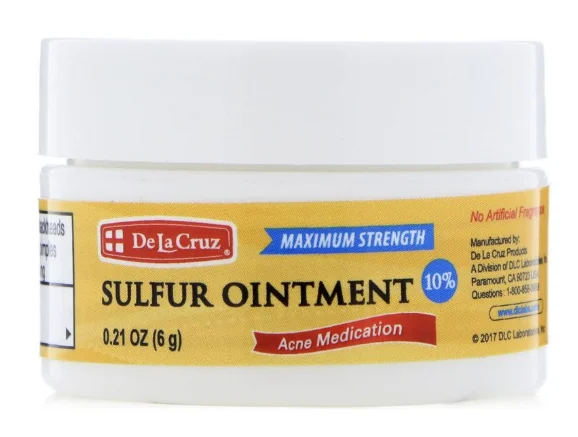
Analysis locked
How well does your skin match with De La Cruz Sulfur Ointment 10% Acne Medication Ointment?
Login to see detailsOr continue via
Quick 1-minute survey • Completely free
Ingredients
Analysis results of Ingredients


Ingredient List
| EWG | CIR | Ingredient Name & Cosmetic Function | Notes |
|---|---|---|---|
| 1 | - | (Hair Conditioning, Skin Conditioning, Antistatic Agent, Skin-Conditioning Agent -Miscellaneous, Antidandruff Agent, Antiacne Agent, Antiseborrhoeic) |  |
| 6 | - | (Solvent, Fragrance, Humectant, Viscosity Controlling, Viscosity Decreasing Agent) | |
De La Cruz Sulfur Ointment 10% Acne Medication Ointment - Ingredient Explanation
Sulfur
1. Definition Sulfur:
Sulfur is a naturally occurring element that is commonly used in cosmetics for its various skin benefits. It is known for its antibacterial and anti-inflammatory properties, making it a popular ingredient in products targeting acne and other skin conditions.2. Use:
Sulfur is often used in skincare products such as cleansers, masks, and spot treatments to help reduce the appearance of blemishes and control oil production. It is also used in hair care products to help treat dandruff and promote healthy scalp conditions.3. Usage Sulfur:
When using products containing sulfur, it is important to follow the instructions provided on the packaging. Sulfur can be drying to the skin, so it is recommended to start with a small amount and gradually increase the frequency of use as needed. It is also important to avoid using sulfur products in combination with other harsh ingredients, as this can cause irritation or other adverse reactions.4. References:
- Arora, M., & Yadav, A. (2016). Sulfur in dermatology: A brief review. Indian Journal of Dermatology, 61(6), 649-654.
- Kurokawa, I., Danby, F. W., Ju, Q., Wang, X., Xiang, L. F., Xia, L., ... & Zouboulis, C. C. (2009). New developments in our understanding of acne pathogenesis and treatment. Experimental Dermatology, 18(10), 821-832.
- Draelos, Z. D. (2001). The science behind sulfur. Journal of Cosmetic Dermatology, 14(2), 40-44.
Ethylene Glycol
1. Definition Ethylene Glycol:
Ethylene Glycol is a colorless, odorless, and syrupy liquid that is commonly used as a solvent in cosmetics. It is also known as monoethylene glycol or ethanediol.2. Use:
Ethylene Glycol is used in cosmetics as a humectant, solvent, and viscosity decreasing agent. It helps to retain moisture in the skin, dissolve other ingredients, and improve the texture of the product.3. Usage Ethylene Glycol:
Ethylene Glycol should be used in cosmetics according to the recommended concentration levels set by regulatory bodies, such as the FDA. It is important to follow the guidelines provided by the manufacturer and to avoid excessive use of products containing Ethylene Glycol to prevent any potential skin irritation or allergic reactions.4. References:
- "Ethylene Glycol" by Cosmetics Info, https://cosmeticsinfo.org/ingredient/ethylene-glycol
- "Safety Assessment of Ethylene Glycol and Propylene Glycol as Used in Cosmetics" by the Cosmetic Ingredient Review Expert Panel, https://pubmed.ncbi.nlm.nih.gov/25816721/
- "Ethylene Glycol" by Personal Care Council, https://www.personalcarecouncil.org/ingredient-info/ethylene-glycol/
Review
Didn't find
the information you need?








Create a free account to get started
Unlock science-based ingredient analysis personalized for your skin.
Already have an account? Log in
We protect your privacy. We never send spam.