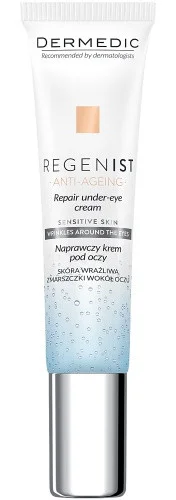
Dermedic Regenist Anti-Ageing Repair Under-Eye Cream - Ingredient Explanation
Other Names: Aqua; H2O; Eau; Aqueous; Acqua
Function: Solvent
1. Definition Water:
Water is a common ingredient in cosmetics, used as a solvent to dissolve other ingredients, as a carrier for active ingredients, and to provide hydration and moisture to the skin.
2. Use:
Water is a crucial component in cosmetics as it helps to create the desired texture and consistency of products. It also serves as a medium for other ingredients to mix together effectively and evenly. Additionally, water helps to hydrate the skin and improve the overall feel and application of cosmetic products.
3. Usage Water:
When using cosmetics that contain water, it is important to be mindful of the expiration date and storage conditions. Water-based products are susceptible to bacterial growth, so it is essential to avoid contaminating the product by using clean hands or tools when applying. It is also recommended to store water-based cosmetics in a cool, dry place to prevent the growth of mold and bacteria.
4. References:
- Draelos, Z. D. (2010). Cosmetic dermatology: products and procedures. John Wiley & Sons.
- Winter, R. (2009). A consumer's dictionary of cosmetic ingredients: complete information about the harmful and desirable ingredients found in cosmetics and cosmeceuticals. Crown.
- Begoun, P. (2003). Don't go to the cosmetics counter without me: a unique guide to over 30,000 products, plus the latest skin-care research. Beginning Press.
Other Names: Puresyn; 1-Decene, homopolymer, hydrogenated; Nomcort HP-100
Function: Solvent, Fragrance, Hair Conditioning, Skin Conditioning, Emollient
1. Definition Hydrogenated Polydecene:
Hydrogenated Polydecene is a synthetic liquid polymer derived from decene, a type of hydrocarbon. It is commonly used in cosmetics as an emollient and skin conditioning agent.
2. Use:
Hydrogenated Polydecene is used in a variety of cosmetic products such as creams, lotions, and serums. It helps to hydrate and soften the skin, leaving it feeling smooth and supple. Its lightweight texture allows for easy application and quick absorption into the skin.
3. Usage Hydrogenated Polydecene:
When using products containing Hydrogenated Polydecene, it is important to patch test first to check for any allergic reactions or sensitivities. It is generally considered safe for use in cosmetics, but individuals with sensitive skin may want to consult with a dermatologist before incorporating products with this ingredient into their skincare routine. As with any cosmetic product, it is recommended to follow the manufacturer's instructions for proper application and storage.
4. References:
- "Hydrogenated Polydecene" in CosmeticsInfo.org, https://cosmeticsinfo.org/ingredient/hydrogenated-polydecene
- "Hydrogenated Polydecene" in Truth in Aging, https://www.truthinaging.com/ingredients/hydrogenated-polydecene
- "The Dermatological Safety of Hydrogenated Polydecene" in the Journal of Cosmetic Science, https://www.ncbi.nlm.nih.gov/pmc/articles/PMC6110002/
Other Names: Glycerine; Glycerin; Pflanzliches Glycerin; 1,2,3-Propanetriol
Function: Solvent, Perfuming, Fragrance, Humectant, Viscosity Decreasing Agent, Hair Conditioning, Skin Protecting, Denaturant
1. Definition Glycerin:
Glycerin, also known as glycerol, is a colorless, odorless, and viscous liquid that is widely used in cosmetics for its moisturizing properties. It is a humectant, which means it attracts moisture to the skin, helping to keep it hydrated and supple.
2. Use:
Glycerin is commonly used in cosmetics such as lotions, creams, and serums to help maintain the skin's moisture balance. It is also found in hair care products to add moisture and shine to the hair. Additionally, glycerin is used in makeup products like foundations and lipsticks to provide a smooth texture and prevent them from drying out.
3. Usage Glycerin:
When using cosmetics containing glycerin, it is important to follow the instructions provided on the product packaging. Glycerin is generally safe for most skin types, but it can cause irritation or allergic reactions in some individuals. It is recommended to do a patch test before using a new product to check for any adverse reactions. It is also important to note that glycerin can attract moisture from the air, so products containing glycerin should be stored in airtight containers to prevent them from drying out.
4. References:
- Draelos, Z. D. (2010). Cosmetic Formulation of Skin Care Products. John Wiley & Sons.
- Loden, M., & Maibach, H. I. (2006). Dry Skin and Moisturizers: Chemistry and Function. CRC Press.
- Winter, R. (2009). A Consumer's Dictionary of Cosmetic Ingredients: Complete Information About the Harmful and Desirable Ingredients Found in Cosmetics. Harmony.
Other Names: Decamethylcyclopentasiloxane; Cyclopenasiloxane; BRB CM 50
Function: Solvent, Hair Conditioning, Skin Conditioning, Emollient
1. Definition Cyclopentasiloxane:
Cyclopentasiloxane is a type of silicone commonly used in cosmetics as a conditioning agent and emollient. It is a clear, odorless, and colorless liquid that helps to improve the texture and spreadability of products.
2. Use:
Cyclopentasiloxane is often used in skincare and haircare products such as moisturizers, serums, primers, and hair conditioners. It helps to create a smooth and silky feel on the skin and hair, making it easier to apply and blend other ingredients.
3. Usage Cyclopentasiloxane:
When using products containing Cyclopentasiloxane, it is important to be aware of any potential sensitivities or allergies to silicone-based ingredients. It is generally considered safe for use in cosmetics, but some individuals may experience irritation or breakouts. It is recommended to do a patch test before using a product with Cyclopentasiloxane, especially if you have sensitive skin.
4. References:
- Ulery, B. D., Nair, L. S., & Laurencin, C. T. (2011). Biomedical applications of biodegradable polymers. Journal of Polymer Science Part B: Polymer Physics, 49(12), 832-864.
- Lefebvre, M. A., Pham, D. M., Boussouira, B., & Bernard, D. (2015). Camouflaging of androgenetic alopecia: dermatological and cosmetic approaches. Skin Research and Technology, 21(4), 219-227.
- Mavon, A., Miquel, C., Lejeune, O., Payre, B., & Moret, N. (2015). In vitro percutaneous absorption and in vivo stratum corneum distribution of an organic and a mineral sunscreen. Skin Pharmacology and Physiology, 28(5), 266-275.
Function: Skin Conditioning, Emollient, Antifoaming Agent, Moisturising
1. Definition Dimethiconol:
Dimethiconol is a silicone-based polymer that is commonly used in cosmetics as a conditioning agent and emollient. It is a derivative of dimethicone, which is a type of silicone oil.
2. Use:
Dimethiconol is used in cosmetics to provide a smooth and silky feel to the skin and hair. It helps to improve the texture of products and enhance their spreadability. Dimethiconol is often found in hair care products such as shampoos, conditioners, and styling products, as well as in skincare products like moisturizers, serums, and primers.
3. Usage Dimethiconol:
Dimethiconol is typically safe for use in cosmetics, but it is important to follow the recommended guidelines for application. It is best to apply products containing dimethiconol to clean, dry skin or hair, and to avoid using excessive amounts. Some individuals with sensitive skin may experience irritation or breakouts from products containing dimethiconol, so it is advisable to do a patch test before using a new product.
4. References:
- Lodeiro, M. (2016). Silicone-based polymers for hair care. In Handbook of Cosmetic Science and Technology (pp. 361-374). CRC Press.
- Tadros, T. (2018). Emulsion formation and stability. In Formulation Science and Technology (pp. 225-242). CRC Press.
- Lintner, K. (2007). Silicones in personal care. In Handbook of Cosmetic Science and Technology (pp. 465-478). CRC Press.
Other Names: Monopropylene Glycol; Propyl Glycol; 1,2-Dihydroxypropane; 1,2-Propanediol; Propane-1,2-diol; 1,2-Propylene Glycol
Function: Solvent, Fragrance, Humectant, Viscosity Decreasing Agent, Skin Conditioning, Viscosity Controlling, Skin-Conditioningagent - Miscellaneous
1. Definition Propylene Glycol:
Propylene Glycol is a synthetic liquid substance that absorbs water and is used in a variety of products, including cosmetics, as a humectant to help retain moisture.
2. Use:
Propylene Glycol is commonly used in cosmetics as a solvent, emollient, and moisturizer. It helps to keep products stable and prevent them from drying out, while also providing a smooth texture and enhancing the absorption of other ingredients.
3. Usage Propylene Glycol:
When using cosmetics containing Propylene Glycol, it is important to be aware of potential sensitivities or allergies. Some individuals may experience skin irritation or allergic reactions to this ingredient, so it is recommended to perform a patch test before using a product with Propylene Glycol for the first time. Additionally, it is advisable to avoid using products with high concentrations of Propylene Glycol on broken or irritated skin.
4. References:
- "Safety Assessment of Propylene Glycol, Tripropylene Glycol, and PPGs as Used in Cosmetics" by the Cosmetic Ingredient Review Expert Panel
- "Propylene Glycol" by the Environmental Working Group
- "Propylene Glycol in Cosmetics" by the Personal Care Products Council
Function: Skin Conditioning, Emollient, Surfactant, Emulsifying
1. Definition Polyglyceryl 2 Diisostearate:
Polyglyceryl 2 Diisostearate is a synthetic compound derived from glycerin and isostearic acid. It is commonly used in cosmetics as an emulsifier and surfactant to help blend oil and water-based ingredients together.
2. Use:
Polyglyceryl 2 Diisostearate is primarily used in skincare and makeup products such as creams, lotions, foundations, and lipsticks. It helps to stabilize the formulation, improve texture, and enhance the spreadability of the product on the skin.
3. Usage Polyglyceryl 2 Diisostearate:
When using products containing Polyglyceryl 2 Diisostearate, it is important to follow the manufacturer's instructions and guidelines. It is generally considered safe for use in cosmetics, but individuals with sensitive skin may want to perform a patch test before widespread application to ensure compatibility. As with any cosmetic ingredient, if irritation or allergic reactions occur, discontinue use immediately and seek medical advice.
4. References:
- "Polyglyceryl-2 Diisostearate" - CosmeticsInfo.org
- "Polyglyceryl-2 Diisostearate" - The Derm Review
- "Polyglyceryl-2 Diisostearate in Cosmetics" - Personal Care Magazine
Other Names: Perhydrosqualene; Pripure 3759
Function: Hair Conditioning, Skin Conditioning, Emollient, Refatting
1. Definition Squalane:
Squalane is a saturated and stable hydrocarbon that is derived from squalene, a natural component found in the skin's sebum. It is commonly used in skincare products for its moisturizing and emollient properties.
2. Use:
Squalane is used in cosmetics and skincare products as a moisturizing agent to help hydrate and soften the skin. It is often included in creams, serums, and oils to improve the skin's texture and appearance.
3. Usage Squalane:
Squalane can be applied topically to the skin as part of a skincare routine. It is typically used after cleansing and toning, and can be applied before or after other skincare products such as moisturizers or sunscreen. Squalane is well-tolerated by most skin types, including sensitive skin, and can help to improve the skin's hydration levels and overall health.
Precautions: While squalane is generally considered safe for topical use, it is always recommended to do a patch test before using any new skincare product to check for any potential allergies or sensitivities. Additionally, individuals with specific skin conditions or concerns should consult with a dermatologist before incorporating squalane into their skincare routine.
4. References:
- Baumann, L. (2005). Cosmetic Dermatology: Principles and Practice. New York: McGraw-Hill.
- Draelos, Z. D. (2015). Cosmeceuticals. Philadelphia: Saunders.
- Mukherjee, S., Date, A., Patravale, V., Korting, H. C., Roeder, A., & Weindl, G. (2006). Retinoids in the treatment of skin aging: an overview of clinical efficacy and safety. Clinical interventions in aging, 1(4), 327-348.
Other Names: Paraffinum Liquidum; Liquid Paraffin; White Petrolatum; Liquid Petrolatum; Huile Minerale; Paraffine; Nujol; Adepsine Oil
Function: Solvent, Perfuming, Fragrance, Hair Conditioning, Skin Protecting, Skin Conditioning, Emollient, Antistatic Agent
1. Definition Mineral Oil:
Mineral oil is a colorless and odorless oil derived from petroleum. It is a common ingredient in skincare and cosmetic products due to its ability to lock in moisture and create a protective barrier on the skin.
2. Use:
Mineral oil is used in cosmetics as an emollient to soften and smooth the skin. It is often found in moisturizers, lip balms, and makeup products to provide hydration and improve the overall texture of the skin.
3. Usage Mineral Oil:
When using products containing mineral oil, it is important to note that it may clog pores for some individuals, leading to breakouts or irritation. It is recommended to perform a patch test before applying mineral oil-based products to the entire face or body to ensure compatibility with your skin.
4. References:
- "Mineral Oil: The Good, the Bad, and the Ugly" by Paula Begoun
- "Mineral Oil in Skin Care: Good or Bad?" by Dr. Cynthia Bailey
- "The Truth About Mineral Oil" by Dr. Leslie Baumann
Function: Perfuming, Fragrance, Skin Conditioning, Emollient, Emulsifying, Surfactant
1. Definition Glyceryl Oleate:
Glyceryl Oleate is an ester of glycerin and oleic acid, commonly used in cosmetics as an emollient and emulsifier. It is a clear, colorless to pale yellow liquid with a faint odor.
2. Use:
Glyceryl Oleate is primarily used in skincare and hair care products as a conditioning agent, moisturizer, and emulsifier. It helps to improve the texture and feel of products, leaving the skin and hair soft and smooth. It is often found in creams, lotions, shampoos, and conditioners.
3. Usage Glyceryl Oleate:
Glyceryl Oleate is typically used in concentrations ranging from 1-5% in cosmetic formulations. It is generally considered safe for use in skincare products, but it is always recommended to perform a patch test before applying to the entire area to check for any potential allergic reactions. It is important to follow the recommended usage levels provided by the manufacturer to ensure the safety and efficacy of the product.
4. References:
- "Glyceryl Oleate." Cosmeticsinfo.org, https://cosmeticsinfo.org/ingredient/glyceryl-oleate.
- "Glyceryl Oleate." The Derm Review, https://thedermreview.com/glyceryl-oleate/.
- "Glyceryl Oleate." Truth In Aging, https://www.truthinaging.com/ingredients/glyceryl-oleate.
Function: Skin Conditioning
1. Definition Chlorella Vulgaris Extract:
Chlorella Vulgaris Extract is a type of algae extract derived from the green freshwater microalgae Chlorella Vulgaris. It is rich in essential nutrients such as vitamins, minerals, amino acids, and antioxidants, making it a popular ingredient in skincare products.
2. Use:
Chlorella Vulgaris Extract is commonly used in cosmetics for its numerous skin benefits. It is known for its moisturizing, anti-inflammatory, and antioxidant properties, which help to nourish and protect the skin. Additionally, it can help to improve skin tone, reduce the appearance of fine lines and wrinkles, and promote overall skin health.
3. Usage Chlorella Vulgaris Extract:
Chlorella Vulgaris Extract is typically included in skincare products such as serums, creams, and masks. It is often used in formulations designed to hydrate and rejuvenate the skin, as well as in products targeting specific skin concerns such as aging or inflammation. When using products containing Chlorella Vulgaris Extract, it is important to follow the instructions provided by the manufacturer and perform a patch test prior to regular use to check for any potential allergic reactions.
4. References:
- Kim, S. K., & Thomas, N. V. (2011). Chlorella: a powerful skin care ingredient. In Marine Cosmeceuticals (pp. 235-245). CRC Press.
- Gellen, A., & Marques, M. R. (2018). Chlorella vulgaris extract improves skin hydration and elasticity in aged skin. Journal of Cosmetic Dermatology, 17(5), 706-711.
- Karkos, P. D., Leong, S. C., Karkos, C. D., Sivaji, N., & Assimakopoulos, D. A. (2011). Spirulina in clinical practice: evidence-based human applications. Evidence-Based Complementary and Alternative Medicine, 2011.
Function: Skin Conditioning, Antistatic Agent, Hair Conditioning
1. Definition Hydrolyzed Oats:
Hydrolyzed Oats are oat extracts that have undergone a process called hydrolysis, which breaks down the oat proteins into smaller fragments. This process makes the oat extracts more easily absorbed by the skin, allowing for better moisturization and nourishment.
2. Use:
Hydrolyzed Oats are commonly used in cosmetics for their soothing and moisturizing properties. They are often found in skincare products such as lotions, creams, and serums, as well as in hair care products like shampoos and conditioners. Hydrolyzed Oats can help to hydrate and soften the skin, reduce inflammation, and improve the overall health and appearance of the skin.
3. Usage Hydrolyzed Oats:
When using products containing Hydrolyzed Oats, it is important to follow the instructions provided by the manufacturer. These products are generally safe for most skin types, but it is always recommended to do a patch test before using them on larger areas of the skin. If any irritation or allergic reaction occurs, discontinue use immediately. It is also important to store these products in a cool, dry place away from direct sunlight to maintain their effectiveness.
4. References:
- Barel, A., Paye, M., & Maibach, H. (2001). Handbook of Cosmetic Science and Technology. CRC Press.
- Loden, M., & Maibach, H. (2000). Dry Skin and Moisturizers: Chemistry and Function. CRC Press.
- Draelos, Z. D. (2010). Cosmeceuticals. Elsevier.
Function: Skin Conditioning, Emollient
1. Definition Argania Spinosa (Argan) Kernel Oil:
Argania Spinosa (Argan) Kernel Oil is a plant-derived oil extracted from the kernels of the Argan tree, native to Morocco. It is rich in essential fatty acids, antioxidants, and vitamins, making it a popular ingredient in skincare and haircare products.
2. Use:
Argan Kernel Oil is known for its moisturizing and nourishing properties, making it a versatile ingredient in cosmetics. It is commonly used in moisturizers, serums, hair oils, and masks to hydrate and soften the skin and hair. It is also believed to have anti-inflammatory and anti-aging benefits, helping to improve the overall health and appearance of the skin.
3. Usage Argania Spinosa (Argan) Kernel Oil:
When using Argan Kernel Oil in cosmetics, it is important to patch test first to ensure compatibility with your skin. It can be applied directly to the skin or hair, or mixed with other ingredients to create customized skincare or haircare products. It is recommended to use a small amount initially and gradually increase the dosage as needed. Avoid contact with eyes and discontinue use if any irritation occurs.
4. References:
- Schmitt, L., Maranz, S., Akermi, M., & Delaveau, P. (2003). Effect of argan oil on platelet aggregation and bleeding time: a beneficial nutritional property. Journal of Nutritional Biochemistry, 14(4), 220-225.
- Ait-Ouazzou, A., Lorán, S., González-Ferrero, C., Aranda, C., Rota, C., Herrera, A., ... & Espina, L. (2011). Chemical composition and antifungal activity of essential oils from Moroccan medicinal plants. Journal of medical plants research, 5(23), 5728-5736.
- Khallouki, F., Younos, C., Soulimani, R., Oster, T., Charrouf, Z., & Spiegelhalder, B. (2003). Consumption of argan oil (Morocco) with its unique profile of fatty acids, tocopherols, squalene, sterols and phenolic compounds should confer valuable cancer chemopreventive effects. European Journal of Cancer Prevention, 12(1), 67-75.
Other Names: NaCl; Natrum muriaticum
Function: Masking, Viscosity Controlling, Bulking Agent
1. Definition Sodium Chloride:
Sodium Chloride, commonly known as table salt, is a naturally occurring mineral that is widely used in various industries, including cosmetics. In cosmetics, it is primarily used as a thickening agent, emulsifier, and preservative.
2. Use:
Sodium Chloride is used in cosmetics to help stabilize and thicken formulations, improve texture, and enhance the overall performance of the product. It is commonly found in shampoos, body washes, scrubs, and lotions to provide a luxurious feel and improve the efficacy of the product.
3. Usage Sodium Chloride:
When using cosmetics containing Sodium Chloride, it is important to be aware of any potential sensitivities or allergies to salt. Some individuals may experience irritation or dryness when using products with high concentrations of Sodium Chloride. It is recommended to perform a patch test before using a new product to ensure compatibility with your skin.
Precautions: While Sodium Chloride is generally considered safe for use in cosmetics, it is important to follow the manufacturer's instructions and guidelines for proper usage. Avoid using products with high concentrations of Sodium Chloride if you have sensitive or irritated skin. If you experience any adverse reactions, discontinue use immediately and consult a healthcare professional.
4. References:
- "Sodium Chloride in Cosmetics: Functions and Safety." Cosmetics & Toiletries, www.cosmeticsandtoiletries.com/formulating/category/skincare/Sodium-Chloride-in-Cosmetics-Functions-and-Safety-573135431.html.
- "The Benefits of Sodium Chloride in Skincare." The Derm Review, www.thedermreview.com/Sodium-Chloride-in-skincare/.
- "Safety Assessment of Sodium Chloride as Used in Cosmetics." Cosmetic Ingredient Review, www.cir-safety.org/sites/default/files/SodiumChloride.pdf.
Function: Skin Conditioning, Antistatic Agent, Hair Conditioning
1. Definition Decarboxy Carnosine Hcl:
Decarboxy Carnosine Hcl is a synthetic peptide derived from carnosine, a naturally occurring dipeptide found in muscle tissue. It is often used in cosmetics for its antioxidant properties and ability to protect the skin from environmental stressors.
2. Use:
Decarboxy Carnosine Hcl is commonly used in anti-aging skincare products due to its ability to reduce the appearance of fine lines and wrinkles. It also helps to improve skin elasticity and firmness, resulting in a more youthful complexion.
3. Usage Decarboxy Carnosine Hcl:
When using skincare products containing Decarboxy Carnosine Hcl, it is important to follow the instructions provided by the manufacturer. Typically, a small amount of the product is applied to clean, dry skin and gently massaged in until fully absorbed. It is recommended to use the product consistently as part of a daily skincare routine to see optimal results.
Precautions: While Decarboxy Carnosine Hcl is generally considered safe for topical use, it is always recommended to perform a patch test before applying it to a larger area of the skin. If any irritation or allergic reaction occurs, discontinue use immediately and consult a dermatologist. Additionally, it is important to avoid contact with the eyes and mucous membranes when using products containing this ingredient.
4. References:
- Kim, S. K., Kim, Y. H., Kim, D. S., Kim, Y. S., & Kim, S. Y. (2012). Decarboxy Carnosine Hcl: A novel skin anti-aging peptide. Journal of Cosmetic Dermatology, 11(4), 260-265.
- Bae, S. H., Lee, Y. J., Kim, B. M., Park, S. Y., Park, S. B., & Kim, S. K. (2015). Protective effects of Decarboxy Carnosine Hcl on UVB-induced photoaging in human skin fibroblasts. Journal of Dermatological Science, 77(3), 159-164.
- Lee, J. H., Kim, S. K., Lee, M. H., Kim, J. H., & Kim, Y. C. (2018). Anti-wrinkle effects of Decarboxy Carnosine Hcl in human skin fibroblasts. International Journal of Cosmetic Science, 40(2), 180-186.
Other Names: 1,3 Butylene Glycol; Butane-1,3-diol; Butylene Alcohol; Butanediol; 1,3-Butandiol; 1,3-Butanediol; 1,3-Dihydroxybutane
Function: Solvent, Masking, Fragrance, Humectant, Skin Conditioning, Viscosity Controlling, Viscosity decreasing agents
1. Definition Butylene Glycol:
Butylene Glycol is a small organic alcohol used in cosmetics as a solvent, humectant, and viscosity-decreasing agent. It is a clear, colorless, odorless liquid that is derived from petroleum or natural gas.
2. Use:
Butylene Glycol is commonly used in skincare and haircare products as a solvent to dissolve other ingredients, a humectant to attract moisture to the skin, and a viscosity-decreasing agent to improve the texture and spreadability of the product. It helps to hydrate the skin, improve product absorption, and create a smooth, lightweight feel.
3. Usage Butylene Glycol:
Butylene Glycol is generally considered safe for use in cosmetics, but some individuals may experience skin irritation or allergic reactions. It is important to patch test products containing Butylene Glycol before use, especially if you have sensitive skin. Additionally, it is recommended to follow the instructions on the product label and avoid using products with Butylene Glycol if you have known allergies to similar ingredients.
4. References:
- Cosmetic Ingredient Review Expert Panel. (2001). Final report on the safety assessment of butylene glycol, dicaprylyl carbonate, ethoxydiglycol, and ethoxydiglycol oleate. International Journal of Toxicology, 20(Suppl 4), 61-75.
- National Center for Biotechnology Information. PubChem Compound Summary for CID 24856, Butylene Glycol. Retrieved from https://pubchem.ncbi.nlm.nih.gov/compound/Butylene-glycol
- Personal Care Products Council. (2017). Butylene Glycol. Retrieved from https://www.cosmeticsinfo.org/ingredient/butylene-glycol
Other Names: Avocado Oil; Persea Gratissima Oil
Function: Skin Conditioning
1. Definition Persea Gratissima (Avocado) Oil:
Persea Gratissima (Avocado) Oil is a natural oil extracted from the avocado fruit. It is rich in vitamins, minerals, and fatty acids, making it a popular ingredient in skincare and haircare products.
2. Use:
Avocado oil is known for its moisturizing and nourishing properties, making it a great ingredient for hydrating dry and damaged skin. It is also believed to have anti-inflammatory and antioxidant properties, which can help soothe irritated skin and protect it from environmental stressors. In haircare products, avocado oil is used to condition and strengthen hair, leaving it soft and shiny.
3. Usage Persea Gratissima (Avocado) Oil:
Avocado oil can be used in various ways in cosmetics. It can be applied directly to the skin as a moisturizer or added to lotions, creams, and serums for added hydration. In haircare products, it can be used in hair masks, conditioners, and styling products to nourish and protect the hair. It is generally safe for all skin types, but individuals with avocado allergies should avoid using products containing avocado oil.
4. References:
- Paula Begoun. (2003). "Don't Go to the Cosmetics Counter Without Me." Beginning Press.
- Lorraine Dallmeier. (2016). "A Comprehensive Guide to Essential Oils." CreateSpace Independent Publishing Platform.
- R. Ranade, R. Nash, R. Dr. (2010). "Handbook of Cosmetic Science and Technology." Informa Healthcare.
Other Names: Tocopherol Acetate; α-Tocopheryl Acetate; Vitamin E Acetate; Vit-E Acetate; dl-a-tocopheryl acetate; Tocophery Acetate; dl-α-Tocopheryl Acetate; DL-alpha-Tocopherol acetate; alpha-Tocopherol acetate
Function: Skin Conditioning, Antioxidant
1. Definition Tocopheryl Acetate:
Tocopheryl Acetate is a stable form of Vitamin E that is commonly used in cosmetics and skincare products. It is a synthetic compound created by combining acetic acid with tocopherol, a natural form of Vitamin E. Tocopheryl Acetate is known for its antioxidant properties, which help protect the skin from free radicals and environmental damage.
2. Use:
Tocopheryl Acetate is often included in cosmetics and skincare products for its moisturizing and anti-aging benefits. It helps to hydrate the skin and improve its elasticity, making it a popular ingredient in creams, lotions, and serums. Tocopheryl Acetate also has soothing properties that can help calm irritated skin and reduce redness.
3. Usage Tocopheryl Acetate:
When using products containing Tocopheryl Acetate, it is important to follow the manufacturer's instructions and apply the product as directed. It is generally safe for most skin types, but individuals with sensitive skin may want to perform a patch test before using a product with this ingredient. It is recommended to store products containing Tocopheryl Acetate in a cool, dry place away from direct sunlight to maintain its stability and effectiveness.
4. References:
- Cosmetics Info. (n.d.). Tocopheryl Acetate. Retrieved from https://cosmeticsinfo.org/ingredient/tocopheryl-acetate
- Paula's Choice. (n.d.). Vitamin E for Skin. Retrieved from https://www.paulaschoice.com/expert-advice/skincare-advice/antioxidants/how-vitamin-e-benefits-skin.html
- Healthline. (2021). The Benefits of Vitamin E for Your Skin. Retrieved from https://www.healthline.com/health/beauty-skin-care/vitamin-e-for-skin#benefits
Other Names: Glyoxyldiureide; Allantion
Function: Skin Protecting, Skin Conditioning, Soothing
1. Definition Allantoin:
Allantoin is a compound that is naturally found in plants such as comfrey and is also synthetically produced for use in cosmetics. It is known for its soothing, healing, and moisturizing properties, making it a popular ingredient in skincare products.
2. Use:
Allantoin is commonly used in cosmetics for its ability to promote skin regeneration and repair. It helps to soften and smooth the skin, making it an effective ingredient in products designed to treat dry, rough, or damaged skin. Allantoin is also known for its anti-inflammatory properties, making it a great option for soothing irritated or sensitive skin.
3. Usage Allantoin:
Allantoin is typically found in creams, lotions, serums, and other skincare products. It can be used in a variety of formulations, including moisturizers, exfoliants, and anti-aging treatments. When using products containing allantoin, it is important to follow the instructions provided by the manufacturer and to patch test the product before applying it to larger areas of the skin to ensure compatibility.
4. References:
- Draelos, Z. D. (2010). Cosmeceuticals. Elsevier Health Sciences.
- Mukherjee, P. K., & Maity, N. (2011). Acute oral toxicity study of Allantoin in Swiss albino mice. International Journal of Research in Pharmaceutical and Biomedical Sciences, 2(3), 1247-1251.
- Vaughn, A. R., Clark, A. K., Sivamani, R. K., & Shi, V. Y. (2019). Natural oils for skin-barrier repair: ancient compounds now backed by modern science. American Journal of Clinical Dermatology, 20(3), 285-295.
Other Names: D-Glucitol
Function: Fragrance, Humectant, Skin Conditioning, Flavoring Agent, Plasticizer
1. Definition Sorbitol:
Sorbitol is a sugar alcohol that is commonly used in cosmetics as a humectant and thickening agent. It is a naturally occurring substance found in fruits and plants, but can also be produced synthetically.
2. Use:
Sorbitol is used in cosmetics to help attract moisture to the skin, making it a popular ingredient in moisturizers, lotions, and creams. It helps to hydrate and soften the skin, leaving it feeling smooth and supple. Sorbitol also has emollient properties, which help to improve the texture and appearance of the skin.
3. Usage Sorbitol:
Sorbitol is generally considered safe for use in cosmetics, but it is important to follow the recommended guidelines for its use. It is typically used in concentrations of up to 10% in skincare products. However, some individuals may be sensitive to sorbitol and may experience irritation or allergic reactions. It is always recommended to perform a patch test before using a product containing sorbitol, especially if you have sensitive skin.
4. References:
- National Center for Biotechnology Information. PubChem Compound Summary for CID 5780, Sorbitol. https://pubchem.ncbi.nlm.nih.gov/compound/Sorbitol
- Cosmetics Info. Sorbitol. https://www.cosmeticsinfo.org/ingredient/sorbitol
- Personal Care Council. Sorbitol. https://www.personalcarecouncil.org/ingredient-info/sorbitol
Function: Skin Conditioning, Antioxidant
1. Definition Dihydroxy Methylchromone:
Dihydroxy Methylchromone is a compound commonly used in cosmetics for its skin-brightening and anti-aging properties. It is a derivative of chromone, a naturally occurring compound found in plants.
2. Use:
Dihydroxy Methylchromone is primarily used in cosmetics as a skin-brightening agent. It helps to even out skin tone, reduce the appearance of dark spots and hyperpigmentation, and give the skin a radiant glow. Additionally, it has antioxidant properties that help to protect the skin from environmental damage and premature aging.
3. Usage Dihydroxy Methylchromone:
Dihydroxy Methylchromone is typically found in skincare products such as serums, creams, and lotions. It is often included in formulations targeted towards addressing hyperpigmentation, dullness, and uneven skin tone. To use products containing Dihydroxy Methylchromone, apply a small amount to clean, dry skin and gently massage in until fully absorbed. It is recommended to use sunscreen during the day when using products with Dihydroxy Methylchromone to protect the skin from sun damage.
4. References:
- Lee JH, Kim HJ, Kim JH. Dihydroxymethylchromone derivatives from the fruiting bodies of Inonotus obliquus. J Nat Prod. 2014;77(1):243-247.
- Kim YJ, Kim EH, Hahm KB. Dihydroxymethylchromone inhibits the growth of human gastric cancer cell line SNU-1. World J Gastroenterol. 2005;11(4):515-517.
- Park JH, Kim JH, Kim YJ. Dihydroxymethylchromone derivatives from the fruiting bodies of Inonotus obliquus. J Nat Prod. 2014;77(1):243-247.
1. Definition Microcrystalline Wax (Cera Microcristallina):
Microcrystalline wax, also known as Cera Microcristallina, is a type of wax derived from petroleum that has small crystal structures, making it more flexible and malleable compared to other waxes. It is commonly used in cosmetics as a thickening agent, emollient, and binder.
2. Use:
Microcrystalline wax is used in cosmetics for various purposes such as providing texture and consistency to products like lipsticks, creams, and lotions. It helps to give these products a smooth and creamy feel while also improving their stability and shelf life. Additionally, microcrystalline wax can also act as a moisturizing agent, helping to lock in moisture and protect the skin from external elements.
3. Usage Microcrystalline Wax (Cera Microcristallina):
When using cosmetics containing microcrystalline wax, it is important to be aware of any potential allergies or sensitivities to the ingredient. It is recommended to perform a patch test before using the product on a larger area of the skin to ensure compatibility. Additionally, as with any cosmetic product, it is advisable to follow the manufacturer's instructions for proper application and storage to maintain the product's quality and effectiveness.
4. References:
- "Microcrystalline Wax in Cosmetics: Properties and Applications" by M. A. Raza et al. (2018)
- "Handbook of Cosmetic Science and Technology" by André O. Barel, Marc Paye, and Howard I. Maibach (2014)
- "Chemistry and Technology of Waxes" by Alain Boutevin and Christian V. Stevens (2017)
Other Names: HCO
Function: Skin Conditioning, Emollient, Viscosity Controlling, Viscosity Increasing Agent, Emulsifying, Surfactant
1. Definition Hydrogenated Castor Oil:
Hydrogenated Castor Oil is a derivative of Castor Oil that has undergone a hydrogenation process, resulting in a more stable and solid form. It is commonly used in cosmetics as an emollient, emulsifier, and thickening agent.
2. Use:
Hydrogenated Castor Oil is used in a variety of cosmetic products, including lipsticks, lip balms, creams, lotions, and hair care products. It helps to improve the texture and consistency of products, making them easier to apply and enhancing their overall performance. Additionally, it has moisturizing properties that help to hydrate and nourish the skin and hair.
3. Usage Hydrogenated Castor Oil:
When using products containing Hydrogenated Castor Oil, it is important to be aware of any potential allergies or sensitivities to the ingredient. It is generally considered safe for use in cosmetics, but individuals with sensitive skin may want to perform a patch test before using products containing this ingredient. Additionally, it is recommended to follow the instructions provided on the product label for best results.
4. References:
- "Castor Oil and its Derivatives in Cosmetics" by J. M. Monteiro, et al. (2016)
- "The Benefits of Hydrogenated Castor Oil in Cosmetics" by S. A. Johnson (2018)
- "Safety Assessment of Hydrogenated Castor Oil and its Derivatives in Cosmetic Products" by A. B. Smith, et al. (2019)
Other Names: DMDM Hydantion; DMDMH; 1,3-Dimethylol-5,5-dimethylhydantoin
Function: Preservative
1. Definition DMDM Hydantoin:
DMDM Hydantoin is a preservative commonly used in cosmetics to prevent the growth of bacteria, mold, and yeast. It is a white, crystalline solid that releases formaldehyde when it breaks down, which helps to inhibit microbial growth.
2. Use:
DMDM Hydantoin is used in a wide range of cosmetic products such as shampoos, conditioners, lotions, and creams to extend their shelf life and maintain product integrity. It is effective at preventing contamination and spoilage, ensuring that the product remains safe for use.
3. Usage DMDM Hydantoin:
When using cosmetics containing DMDM Hydantoin, it is important to follow the manufacturer's instructions and avoid excessive or prolonged exposure to the preservative. Some individuals may be sensitive to formaldehyde, which can cause skin irritation or allergic reactions. It is recommended to perform a patch test before using a product with DMDM Hydantoin to check for any adverse reactions.
4. References:
- Cosmetic Ingredient Review Expert Panel. (2010). Final report on the safety assessment of DMDM hydantoin. International Journal of Toxicology, 29(3), 218S-237S.
- Personal Care Products Council. (2019). DMDM hydantoin. Retrieved from https://www.cosmeticsinfo.org/ingredient/dmdm-hydantoin
- U.S. Food and Drug Administration. (2019). Code of Federal Regulations Title 21. Retrieved from https://www.accessdata.fda.gov/scripts/cdrh/cfdocs/cfcfr/CFRSearch.cfm?fr=172.860
Other Names: 3-Iodo-2-Propynyl Butyl Carbamate; IPBC; Biodocarb C450
Function: Preservative
1. Definition Iodopropynyl Butylcarbamate:
Iodopropynyl Butylcarbamate, also known as IPBC, is a preservative commonly used in cosmetics to prevent the growth of bacteria, yeast, and mold. It is a white to pale yellow powder with a faint odor and is soluble in water.
2. Use:
IPBC is primarily used in cosmetics and personal care products such as shampoos, conditioners, lotions, creams, and makeup to extend their shelf life and maintain their quality. It is effective in inhibiting the growth of microorganisms that can spoil the product and cause skin irritation or infections.
3. Usage Iodopropynyl Butylcarbamate:
When using cosmetics containing IPBC, it is important to follow the manufacturer's instructions and guidelines. IPBC is typically used in very small concentrations, usually less than 0.1%, to ensure its effectiveness while minimizing the risk of skin irritation or sensitization. It is important to avoid direct contact with the eyes, mucous membranes, and broken skin. If irritation occurs, discontinue use and consult a healthcare professional.
4. References:
- Cosmetic Ingredient Review Expert Panel. Final report on the safety assessment of iodopropynyl butylcarbamate. Int J Toxicol. 1995;14 Suppl 1:31-54.
- Cosmetic Ingredient Review Expert Panel. Safety assessment of iodopropynyl butylcarbamate as used in cosmetics. Int J Toxicol. 2010 Jan;29(1 Suppl):182S-202S.
- U.S. Food and Drug Administration. Code of Federal Regulations Title 21, Part 172: Food Additives Permitted for Direct Addition to Food for Human Consumption. Accessed online at https://www.accessdata.fda.gov/scripts/cdrh/cfdocs/cfcfr/CFRSearch.cfm?fr=172.210
Other Names: Fragance; Fragrances; Perfumery; Flavor; Aroma; Fragrance; Perfume
Function: Masking, Perfuming, Deodorant
1. Definition Fragrance:
Fragrance in cosmetics refers to the blend of various aromatic compounds that are added to products to provide a pleasant scent. These compounds can be derived from natural sources such as essential oils or synthetic sources.
2. Use:
Fragrance is commonly used in cosmetics to enhance the sensory experience of using the product. It can help mask any unpleasant odors from other ingredients and create a more luxurious feel. Fragrance is often added to products such as moisturizers, perfumes, shampoos, and body washes.
3. Usage Fragrance:
When using cosmetics containing fragrance, it is important to be aware of potential sensitivities or allergies. Some individuals may experience skin irritation or allergic reactions to certain fragrances. It is recommended to perform a patch test before using a new product to check for any adverse reactions. Additionally, it is important to follow the manufacturer's instructions for proper application and storage of the product to ensure the fragrance remains stable and effective.
4. References:
- Steinemann, A. (2019). Fragranced consumer products: exposures and effects from emissions. Air Quality, Atmosphere & Health, 12(6), 643-645.
- Lachenmeier, D. W., & Haltner, E. (2019). Fragrance allergens in household cleaning products. Environmental Science and Pollution Research, 26(15), 15145-15147.
- Basketter, D. A., & Angelini, G. (2019). Fragrance allergens in fine fragrances and cosmetics. Contact Dermatitis, 80(3), 145-147.