


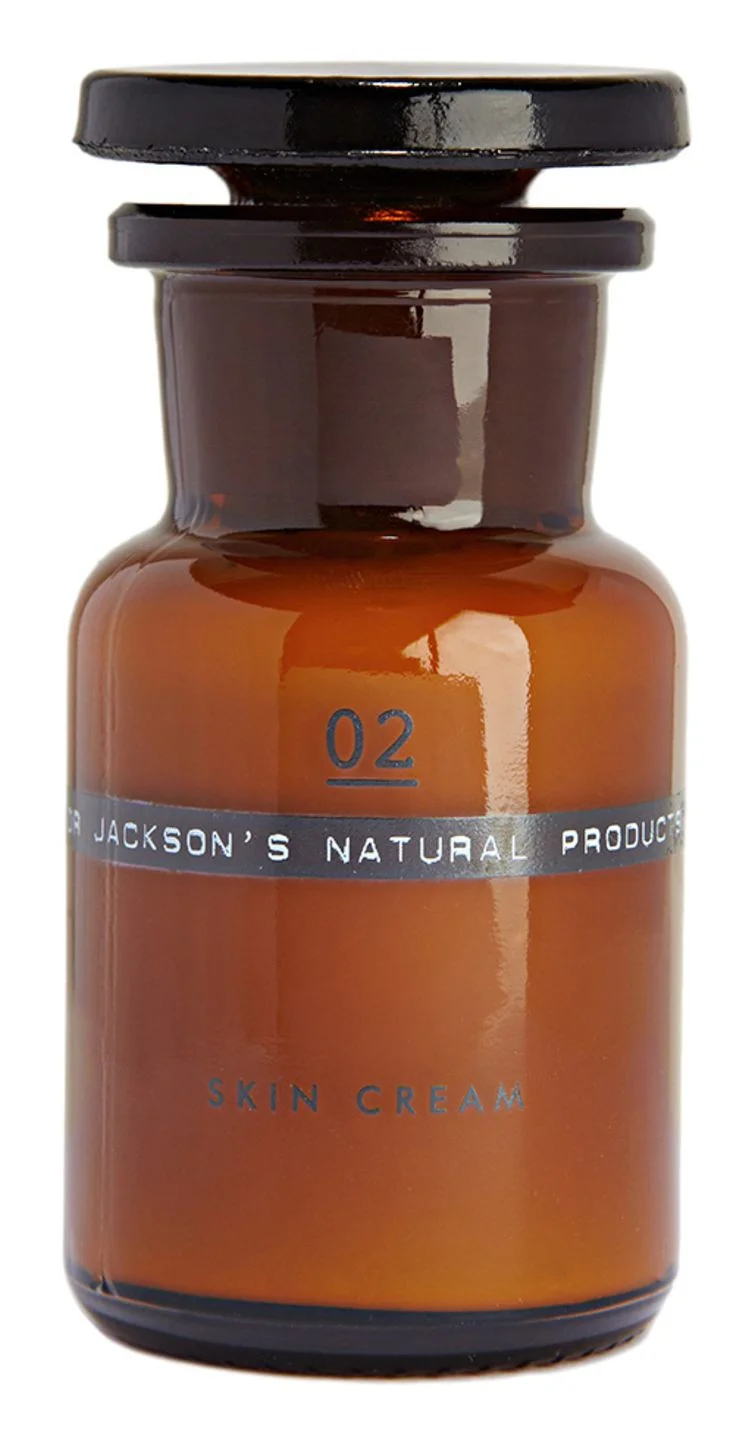
Analysis locked
How well does your skin match with Dr. Jackson's 02 Night Skin Cream?
Login to see detailsOr continue via
Quick 1-minute survey • Completely free
Ingredients
Analysis results of Ingredients


Ingredient List
| EWG | CIR | Ingredient Name & Cosmetic Function | Notes |
|---|---|---|---|
| 1 | - | (Solvent) | |
| 1 | A | (Skin Conditioning, Emollient) |   |
| 1 | A | (Skin Conditioning, Emollient, Hair Conditioning) | |
| 1 | A | (Humectant, Hair Conditioning) | |





Dr. Jackson's 02 Night Skin Cream - Ingredient Explanation
Water
1. Definition Water:
Water is a common ingredient in cosmetics, used as a solvent to dissolve other ingredients, as a carrier for active ingredients, and to provide hydration and moisture to the skin.2. Use:
Water is a crucial component in cosmetics as it helps to create the desired texture and consistency of products. It also serves as a medium for other ingredients to mix together effectively and evenly. Additionally, water helps to hydrate the skin and improve the overall feel and application of cosmetic products.3. Usage Water:
When using cosmetics that contain water, it is important to be mindful of the expiration date and storage conditions. Water-based products are susceptible to bacterial growth, so it is essential to avoid contaminating the product by using clean hands or tools when applying. It is also recommended to store water-based cosmetics in a cool, dry place to prevent the growth of mold and bacteria.4. References:
- Draelos, Z. D. (2010). Cosmetic dermatology: products and procedures. John Wiley & Sons.
- Winter, R. (2009). A consumer's dictionary of cosmetic ingredients: complete information about the harmful and desirable ingredients found in cosmetics and cosmeceuticals. Crown.
- Begoun, P. (2003). Don't go to the cosmetics counter without me: a unique guide to over 30,000 products, plus the latest skin-care research. Beginning Press.
Triticum Vulgare (Wheat) Germ Oil
1. Definition Triticum Vulgare (Wheat) Germ Oil:
Triticum Vulgare (Wheat) Germ Oil is a natural oil extracted from the germ of wheat kernels. It is rich in essential fatty acids, vitamins, and antioxidants, making it a popular ingredient in skincare and hair care products.2. Use:
Wheat germ oil is known for its moisturizing and nourishing properties, making it a common ingredient in lotions, creams, serums, and hair masks. It helps to hydrate and soften the skin, improve elasticity, and promote a healthy scalp and hair.3. Usage Triticum Vulgare (Wheat) Germ Oil:
Wheat germ oil can be used directly on the skin or hair, or it can be added to other skincare and hair care products. It is often used in small amounts due to its rich and heavy texture. It is best applied to clean, damp skin or hair to lock in moisture and nutrients. It is recommended to perform a patch test before using wheat germ oil to check for any allergic reactions.4. References:
- Goyal, A., Sharma, V., Upadhyay, N., Gill, S., & Sihag, M. (2014). Flax and flaxseed oil: an ancient medicine & modern functional food. Journal of Food Science and Technology, 51(9), 1633-1653.
- Reuter, J., Merfort, I., & Schempp, C. M. (2010). Botanicals in dermatology: an evidence-based review. American Journal of Clinical Dermatology, 11(4), 247-267.
- Choe, E., Min, D. B., & Chemistry, F. (2007). Mechanisms and factors for edible oil oxidation. Comprehensive Reviews in Food Science and Food Safety, 5(4), 169-186.
Adansonia Digitata Seed Oil
1. Definition Adansonia Digitata Seed Oil:
Adansonia Digitata Seed Oil, also known as Baobab Seed Oil, is a natural oil extracted from the seeds of the Adansonia digitata tree, commonly known as the Baobab tree. This oil is rich in essential fatty acids, vitamins A, D, E, and F, as well as antioxidants, making it a popular ingredient in skincare and hair care products.2. Use:
Adansonia Digitata Seed Oil is commonly used in cosmetics for its moisturizing, nourishing, and anti-aging properties. It helps to improve skin elasticity, reduce the appearance of wrinkles, and promote healthy hair growth. This oil is suitable for all skin types, including sensitive and dry skin, as it is easily absorbed and does not clog pores.3. Usage Adansonia Digitata Seed Oil:
Adansonia Digitata Seed Oil can be used in a variety of cosmetic products, such as facial serums, moisturizers, hair masks, and body oils. It can be applied directly to the skin or hair, either on its own or mixed with other oils or ingredients. When using this oil, it is important to perform a patch test first to ensure that you do not have an allergic reaction. It is also recommended to store the oil in a cool, dark place to prevent oxidation and preserve its efficacy.4. References:
- Maranz, S., & Wiesman, Z. (2003). Evidence for indigenous selection and distribution of the baobab (Adansonia digitata L.) in the Arabian Peninsula. Journal of Ethnobiology and Ethnomedicine, 1(1), 12.
- Verotta, L., Lovaglio, E., Vidari, G., Finzi, P. V., & Vita-Finzi, P. (2001). Saponins from Adansonia digitata. Phytochemistry, 58(2), 311-315.
- Chadare, F. J., Linnemann, A. R., Hounhouigan, J. D., Nout, M. J. R., & Van Boekel, M. A. J. S. (2009). Baobab food products: a review on their composition and nutritional value. Critical Reviews in Food Science and Nutrition, 49(3), 254-274.
Sclerocarya Birrea Seed Oil
1. Definition Sclerocarya Birrea Seed Oil:
Sclerocarya Birrea Seed Oil, also known as Marula oil, is a natural oil extracted from the kernels of the Marula fruit, which is native to Southern Africa. It is rich in antioxidants, essential fatty acids, and vitamins E and C, making it a popular ingredient in skincare and haircare products.2. Use:
Sclerocarya Birrea Seed Oil is commonly used in cosmetics for its moisturizing, nourishing, and anti-aging properties. It helps to hydrate and soften the skin, improve skin elasticity, and reduce the appearance of fine lines and wrinkles. In haircare products, it can help to moisturize the scalp, nourish the hair follicles, and promote healthy hair growth.3. Usage Sclerocarya Birrea Seed Oil:
Sclerocarya Birrea Seed Oil can be used in a variety of skincare and haircare products, including face creams, serums, body lotions, hair masks, and hair oils. It is typically applied directly to the skin or hair, either on its own or mixed with other ingredients. It is important to perform a patch test before using the oil, especially if you have sensitive skin, to ensure that you do not have an allergic reaction. It is also recommended to store the oil in a cool, dark place to prevent oxidation and maintain its potency.4. References:
- Maranz, S., & Wiesman, Z. (2003). Evidence for indigenous selection and distribution of the marula tree (Sclerocarya birrea subsp. caffra) in Southern Africa. Agroforestry Systems, 59(3), 217-228.
- Van Wyk, B. E., & Gericke, N. (2000). People's plants: A guide to useful plants of southern Africa. Briza Publications.
- Franz, C., & Novak, J. (2003). Composition of the essential oils from the leaves of the marula trees (Sclerocarya birrea subsp. caffra). Journal of Essential Oil Research, 15(5), 335-337.
Review
Didn't find
the information you need?










Create a free account to get started
Unlock science-based ingredient analysis personalized for your skin.
Already have an account? Log in
We protect your privacy. We never send spam.