


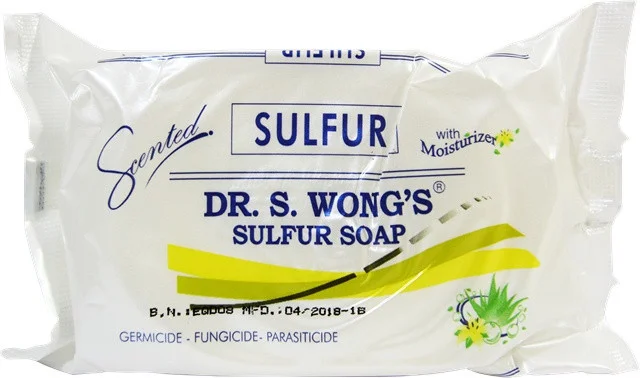
Analysis locked
How well does your skin match with Dr s wong Sulfur Soap?
Login to see detailsOr continue via
Quick 1-minute survey • Completely free
Ingredients
Analysis results of Ingredients


Ingredient List
| EWG | CIR | Ingredient Name & Cosmetic Function | Notes |
|---|---|---|---|
| 1 | - | (Hair Conditioning, Skin Conditioning, Antistatic Agent, Skin-Conditioning Agent -Miscellaneous, Antidandruff Agent, Antiacne Agent, Antiseborrhoeic) |  |
| 1 | - | |
Dr s wong Sulfur Soap - Ingredient Explanation
Sulfur
1. Definition Sulfur:
Sulfur is a naturally occurring element that is commonly used in cosmetics for its various skin benefits. It is known for its antibacterial and anti-inflammatory properties, making it a popular ingredient in products targeting acne and other skin conditions.2. Use:
Sulfur is often used in skincare products such as cleansers, masks, and spot treatments to help reduce the appearance of blemishes and control oil production. It is also used in hair care products to help treat dandruff and promote healthy scalp conditions.3. Usage Sulfur:
When using products containing sulfur, it is important to follow the instructions provided on the packaging. Sulfur can be drying to the skin, so it is recommended to start with a small amount and gradually increase the frequency of use as needed. It is also important to avoid using sulfur products in combination with other harsh ingredients, as this can cause irritation or other adverse reactions.4. References:
- Arora, M., & Yadav, A. (2016). Sulfur in dermatology: A brief review. Indian Journal of Dermatology, 61(6), 649-654.
- Kurokawa, I., Danby, F. W., Ju, Q., Wang, X., Xiang, L. F., Xia, L., ... & Zouboulis, C. C. (2009). New developments in our understanding of acne pathogenesis and treatment. Experimental Dermatology, 18(10), 821-832.
- Draelos, Z. D. (2001). The science behind sulfur. Journal of Cosmetic Dermatology, 14(2), 40-44.
Aloe Ferox (Cape Aloe) Extract
1. Definition Aloe Ferox (Cape Aloe) Extract:
Aloe Ferox, also known as Cape Aloe, is a species of aloe plant native to South Africa. It is known for its medicinal properties and has been used for centuries in traditional African medicine.2. Use:
Aloe Ferox extract is commonly used in cosmetics for its soothing and moisturizing properties. It is known to help hydrate the skin, reduce inflammation, and promote healing. Due to its antioxidant and antibacterial properties, it is often included in skincare products to help improve the overall health and appearance of the skin.3. Usage Aloe Ferox (Cape Aloe) Extract:
Aloe Ferox extract can be found in a variety of cosmetic products such as lotions, creams, serums, and masks. It is typically used in small concentrations to avoid any potential irritation, but it can be applied directly to the skin in its pure form for more targeted benefits. When using products containing Aloe Ferox extract, it is important to follow the instructions provided and perform a patch test to ensure compatibility with your skin.4. References:
- Dweck, A. C. (2002). Aloe Ferox: A Natural Resource for Cosmetics. International Journal of Cosmetic Science, 24(2), 85-94.
- Viljoen, A. M., & Gono-Bwalya, A. B. (2008). Aloe Ferox Leaf Gel Phytochemical Composition, Antioxidant Capacity, and Possible Health Benefits. Journal of Agricultural and Food Chemistry, 56(8), 2752-2757.
- Hamman, J. H. (2008). Composition and Applications of Aloe Ferox Leaf Gel. Molecules, 13(7), 1599-1616.
Review

Didn't find
the information you need?






Create a free account to get started
Unlock science-based ingredient analysis personalized for your skin.
Already have an account? Log in
We protect your privacy. We never send spam.