


Analysis locked
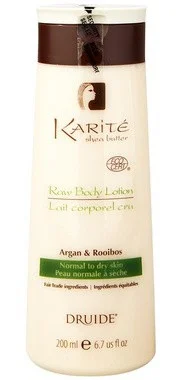
How well does your skin match with Druide Karite Raw Body Lotion Argan & Rooibos?
Login to see detailsOr continue via
Quick 1-minute survey • Completely free
Ingredients
Analysis results of Ingredients


Ingredient List
| EWG | CIR | Ingredient Name & Cosmetic Function | Notes |
|---|---|---|---|
| 1 | - | (Solvent) | |
| 1 | - | | |
| 2 | B | (Cosmetic Biocide) | |
| 1 | - | |


Druide Karite Raw Body Lotion Argan & Rooibos - Ingredient Explanation
Water
1. Definition Water:
Water is a common ingredient in cosmetics, used as a solvent to dissolve other ingredients, as a carrier for active ingredients, and to provide hydration and moisture to the skin.2. Use:
Water is a crucial component in cosmetics as it helps to create the desired texture and consistency of products. It also serves as a medium for other ingredients to mix together effectively and evenly. Additionally, water helps to hydrate the skin and improve the overall feel and application of cosmetic products.3. Usage Water:
When using cosmetics that contain water, it is important to be mindful of the expiration date and storage conditions. Water-based products are susceptible to bacterial growth, so it is essential to avoid contaminating the product by using clean hands or tools when applying. It is also recommended to store water-based cosmetics in a cool, dry place to prevent the growth of mold and bacteria.4. References:
- Draelos, Z. D. (2010). Cosmetic dermatology: products and procedures. John Wiley & Sons.
- Winter, R. (2009). A consumer's dictionary of cosmetic ingredients: complete information about the harmful and desirable ingredients found in cosmetics and cosmeceuticals. Crown.
- Begoun, P. (2003). Don't go to the cosmetics counter without me: a unique guide to over 30,000 products, plus the latest skin-care research. Beginning Press.
Aspalathus Linearis (Rooibos) Extract
1. Definition Aspalathus Linearis (Rooibos) Extract:
Aspalathus Linearis (Rooibos) Extract is a natural extract derived from the leaves of the Rooibos plant, which is native to South Africa. It is rich in antioxidants, including polyphenols and flavonoids, which help to protect the skin from environmental damage and premature aging.2. Use:
Aspalathus Linearis (Rooibos) Extract is commonly used in cosmetics for its antioxidant properties. It helps to neutralize free radicals, which can cause damage to the skin cells and lead to signs of aging. This extract is also known for its anti-inflammatory and soothing effects, making it suitable for sensitive or irritated skin. Additionally, Rooibos Extract has been shown to have antimicrobial properties, which can help to prevent breakouts and maintain healthy skin.3. Usage Aspalathus Linearis (Rooibos) Extract:
Aspalathus Linearis (Rooibos) Extract is typically found in skincare products such as serums, creams, and masks. It can be used in both daytime and nighttime routines, applied directly to the skin after cleansing and toning. This extract is safe for most skin types, but it is always recommended to do a patch test before using a new product to check for any potential allergies or sensitivities.4. References:
- Smit, A., & Lambert, J. (2011). Rooibos: The African health tea. CRC Press.
- Joubert, E., Gelderblom, W. C. A., & Louw, A. (2008). South African herbal teas: Aspalathus linearis, Cyclopia spp. and Athrixia phylicoides—a review. Journal of Ethnopharmacology, 119(3), 376-412.
- McKay, D. L., & Blumberg, J. B. (2007). A review of the bioactivity and potential health benefits of chamomile tea (Matricaria recutita L.). Phytotherapy Research, 21(1), 519-530.
Chamomilla Recutita (Matricaria) Extract
1. Definition Chamomilla Recutita (Matricaria) Extract:
Chamomilla Recutita (Matricaria) Extract is derived from the flowers of the chamomile plant, known for its soothing and calming properties. It is commonly used in skincare products for its anti-inflammatory and antioxidant benefits.2. Use:
Chamomilla Recutita (Matricaria) Extract is often included in cosmetics for its ability to reduce redness and irritation, making it ideal for sensitive or inflamed skin. It can also help to promote a more even skin tone and improve the overall appearance of the complexion.3. Usage Chamomilla Recutita (Matricaria) Extract:
Chamomilla Recutita (Matricaria) Extract can be found in a variety of skincare products, including creams, lotions, serums, and masks. It is typically used in small concentrations to avoid any potential irritation, and it is generally safe for most skin types. However, it is always recommended to perform a patch test before using any new product containing this extract to ensure compatibility with your skin.4. References:
- Srivastava, J. K., Shankar, E., & Gupta, S. (2010). Chamomile: A herbal medicine of the past with bright future. Molecular medicine reports, 3(6), 895-901.
- McKay, D. L., & Blumberg, J. B. (2006). A review of the bioactivity and potential health benefits of chamomile tea (Matricaria recutita L.). Phytotherapy Research, 20(7), 519-530.
- Reuter, J., Huyke, C., Casetti, F., Theek, C., Frank, U., Augustin, M., ... & Schempp, C. M. (2008). Anti-inflammatory potential of a lipolotion containing coriander oil in the ultraviolet erythema test. Journal of Dermal Science, 51(2), 90-96.
Carthamus Tinctorius Oleosomes
1. Definition Carthamus Tinctorius Oleosomes:
Carthamus Tinctorius Oleosomes are natural, plant-derived lipid droplets found in the seeds of the safflower plant. These oleosomes are rich in triglycerides, phospholipids, and proteins, making them an excellent source of moisture and nourishment for the skin.2. Use:
Carthamus Tinctorius Oleosomes are commonly used in cosmetics and skincare products for their moisturizing and emollient properties. They can help hydrate and soften the skin, improve skin barrier function, and enhance the delivery of active ingredients. Additionally, oleosomes have antioxidant properties that can help protect the skin from environmental stressors and premature aging.3. Usage Carthamus Tinctorius Oleosomes:
Carthamus Tinctorius Oleosomes can be found in a variety of skincare products, including moisturizers, serums, and sunscreens. When using products containing oleosomes, it is important to follow the manufacturer's instructions for application. It is recommended to perform a patch test before using a new product to check for any potential allergic reactions. As with any skincare ingredient, it is always best to consult with a dermatologist if you have any concerns about using products containing Carthamus Tinctorius Oleosomes.4. References:
- Paula Begoun. (2003). "Don't Go to the Cosmetics Counter Without Me." Beginning Press.
- L. Baumann. (2009). "Cosmeceuticals and Cosmetic Ingredients." McGraw-Hill Education.
- S. B. Singh et al. (2016). "Safflower (Carthamus tinctorius L.) Seed: A Potential Source of High-Quality Edible Oil and Biodiesel." Journal of the American Oil Chemists' Society.
Review

Didn't find
the information you need?






Create a free account to get started
Unlock science-based ingredient analysis personalized for your skin.
Already have an account? Log in
We protect your privacy. We never send spam.