


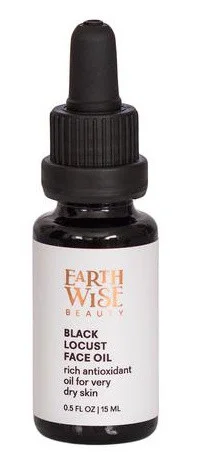
Analysis locked
How well does your skin match with Earthwise Beauty Black Locust Firming Concentrate?
Login to see detailsOr continue via
Quick 1-minute survey • Completely free
Ingredients
Analysis results of Ingredients


Ingredient List
| EWG | CIR | Ingredient Name & Cosmetic Function | Notes |
|---|---|---|---|
| 1 | A | (Skin Conditioning) | |
| 1 | A |  | |
| 1 | A | (Skin Conditioning) | |
| - | - | Lupinus Albus Extract | |
Earthwise Beauty Black Locust Firming Concentrate - Ingredient Explanation
Euterpe Oleracea Fruit Oil
1. Definition Euterpe Oleracea Fruit Oil:
Euterpe Oleracea Fruit Oil, commonly known as Acai Berry Oil, is a natural oil extracted from the seeds of the Acai berry fruit. It is rich in essential fatty acids, antioxidants, vitamins, and minerals, making it a popular ingredient in skincare and haircare products.2. Use:
Euterpe Oleracea Fruit Oil is known for its moisturizing and nourishing properties, making it a great addition to skincare products such as creams, lotions, and serums. It helps to hydrate and soften the skin, while also providing protection against free radicals and environmental stressors. In haircare products, it can help to condition and strengthen the hair, promoting healthy growth and shine.3. Usage Euterpe Oleracea Fruit Oil:
When using products containing Euterpe Oleracea Fruit Oil, it is important to patch test first to check for any allergic reactions. It is generally safe for most skin types, but those with sensitive skin may want to use caution. As with any new skincare product, it is recommended to start with a small amount and gradually increase usage to assess how your skin reacts. Store products containing Acai Berry Oil in a cool, dark place to maintain its potency.4. References:
- Costa, A. G. V., Garcia, V. G., & Pinto, C. A. S. O. (2017). Açaí (Euterpe oleracea Mart.) oil: fatty acid composition, physicochemical properties, antioxidant activity, and nutritional and functional applications. Food Chemistry, 235, 185-193.
- Schauss, A. G., Wu, X., Prior, R. L., Ou, B., Patel, D., Huang, D., & Kababick, J. P. (2006). Phytochemical and nutrient composition of the freeze-dried Amazonian palm berry, Euterpe oleraceae Mart. (Acai). Journal of Agricultural and Food Chemistry, 54(22), 8598-8603.
- Jensen, G. S., Wu, X., Patterson, K. M., Barnes, J., Carter, S. G., Scherwitz, L., ... & Schauss, A. G. (2008). In vitro and in vivo antioxidant and anti-inflammatory capacities of an antioxidant-rich fruit and berry juice blend. Results of a pilot and randomized, double-blinded, placebo-controlled, crossover study. Journal of Agricultural and Food Chemistry, 56(18), 8326-8333.
Citrullus Lanatus Seed Oil
1. Definition Citrullus Lanatus Seed Oil:
Citrullus Lanatus Seed Oil, also known as watermelon seed oil, is a lightweight and non-greasy oil extracted from the seeds of the Citrullus Lanatus fruit. It is rich in essential fatty acids, vitamins, and minerals, making it a popular ingredient in skincare and hair care products.2. Use:
Citrullus Lanatus Seed Oil is commonly used in cosmetics for its moisturizing, nourishing, and antioxidant properties. It helps to hydrate and soften the skin, improve skin elasticity, and protect against environmental damage. In hair care products, it can help to condition and strengthen the hair, promote hair growth, and add shine.3. Usage Citrullus Lanatus Seed Oil:
Citrullus Lanatus Seed Oil can be used in a variety of cosmetic products, including face creams, body lotions, serums, hair masks, and more. It is typically used in small concentrations, as it is a potent oil. It can be applied directly to the skin or hair, or mixed with other carrier oils or ingredients to create customized beauty formulations.4. References:
- Paula Begoun, Bryan Barron, The Original Beauty Bible: Skin Care Facts for Ageless Beauty, 2009.
- K. Shahidi, P. J. Wanasundara, Omega-3 Fatty Acids: Chemistry, Nutrition, and Health Effects, 2001.
- R. S. Chavan, A. A. Chavan, Medicinal and Aromatic Plants: Cultivation and Uses, 2018.
Lupinus Albus Seed Oil
1. Definition Lupinus Albus Seed Oil:
Lupinus Albus Seed Oil is a natural oil extracted from the seeds of the Lupinus Albus plant, also known as white lupin. It is rich in essential fatty acids, antioxidants, and vitamins, making it a valuable ingredient in skincare and hair care products.2. Use:
Lupinus Albus Seed Oil is commonly used in cosmetics for its moisturizing, anti-inflammatory, and antioxidant properties. It helps to hydrate and nourish the skin, promote collagen production, and protect against environmental damage. In hair care products, it can help to strengthen and condition the hair, improve manageability, and add shine.3. Usage Lupinus Albus Seed Oil:
Lupinus Albus Seed Oil can be found in a variety of cosmetic products, including moisturizers, serums, facial oils, hair masks, and conditioners. It is typically used in small concentrations and can be applied directly to the skin or hair, or incorporated into formulations. It is suitable for all skin types, including sensitive and mature skin, and can be used daily as part of a skincare or hair care routine.4. References:
- Puglia C, et al. (2015). Chemical composition and antioxidant properties of seed oil from Lupinus albus L. https://pubmed.ncbi.nlm.nih.gov/25900791/
- Lopes G, et al. (2017). White Lupin (Lupinus albus L.) Seed Oil: A Rich Source of Alpha-Linolenic Acid with Antioxidant and Anti-Inflammatory Properties. https://pubmed.ncbi.nlm.nih.gov/28587226/
- Gómez-Caravaca AM, et al. (2019). Lupinus albus Seed Oil: A Potential New Source of Health-Beneficial Omega-3 Fatty Acids. https://pubmed.ncbi.nlm.nih.gov/31561475/
Lupinus Albus Extract
Ingredient data is being updated. Please check back later.
Review









Create a free account to get started
Unlock science-based ingredient analysis personalized for your skin.
Already have an account? Log in
We protect your privacy. We never send spam.