


Analysis locked
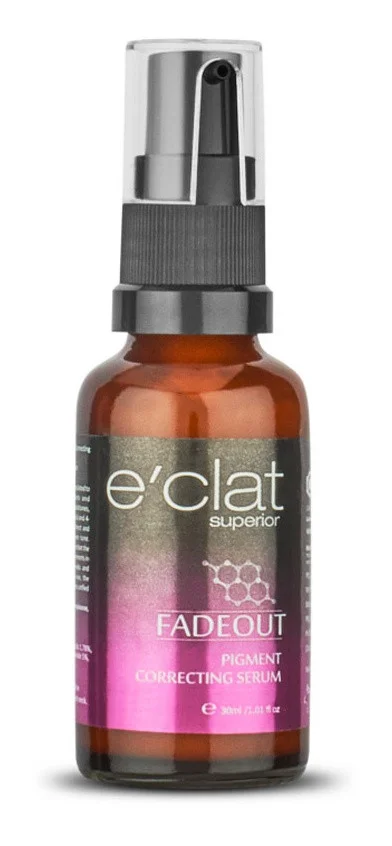
How well does your skin match with e'clat superior Fadeout Serum?
Login to see detailsOr continue via
Quick 1-minute survey • Completely free
Analysis results of Ingredients


Ingredient List
| EWG | CIR | Ingredient Name & Cosmetic Function | Notes |
|---|---|---|---|
| 1 | A | (Masking, Fragrance, pH adjusting agent, pH adjusting agent) | |
| 1 | - | (Skin Conditioning, Cosmetic Astringent) | |
| 1 | - | (Antioxidant) | |
| 2 | - | (Chelating Agent) | |
e'clat superior Fadeout Serum - Ingredient Explanation
Azelaic Acid
1. Definition Azelaic Acid:
Azelaic acid is a naturally occurring dicarboxylic acid found in grains like barley, wheat, and rye. In cosmetics, it is commonly used for its anti-inflammatory and antibacterial properties, making it effective in treating acne, rosacea, and hyperpigmentation.
2. Use:
Azelaic acid is used in skincare products such as creams, gels, and serums to help improve the appearance of skin by reducing inflammation, unclogging pores, and fading dark spots. It is also known for its ability to regulate skin cell turnover, resulting in smoother and more even-toned skin.
3. Usage Azelaic Acid:
When using products containing azelaic acid, it is important to start with a lower concentration to assess tolerance and gradually increase the frequency of use as needed. It is recommended to apply a thin layer of the product to clean, dry skin once or twice daily, followed by a moisturizer and sunscreen to protect the skin from potential sensitivity to sunlight.
4. References:
- Del Rosso, J. Q. (2013). Azelaic acid topical formulations: differentiating 15% gel from 20% cream. Journal of Drugs in Dermatology, 12(9), 1012-1016.
- Thiboutot, D., Dréno, B., Abanmi, A., Alexis, A., Araviiskaia, E., Barona Cabal, M. I., ... & Zouboulis, C. C. (2018). Practical management of acne for clinicians: an international consensus from the Global Alliance to Improve Outcomes in Acne. Journal of the American Academy of Dermatology, 78(2), S1-S23.
- Kircik, L. H. (2014). Azelaic acid 15% gel: in the treatment of papulopustular rosacea. Journal of Clinical and Aesthetic Dermatology, 7(12), 27-29.
Tranexamic Acid
1. Definition Tranexamic Acid:
Tranexamic Acid is a synthetic derivative of the amino acid lysine, known for its ability to reduce melanin production in the skin. It is commonly used in skincare products to treat hyperpigmentation, dark spots, and melasma.
2. Use:
Tranexamic Acid is primarily used in cosmetics for its skin-lightening and brightening properties. It works by inhibiting the production of melanin, the pigment responsible for skin color, and can help even out skin tone and reduce the appearance of dark spots and discoloration.
3. Usage Tranexamic Acid:
When using skincare products containing Tranexamic Acid, it is important to follow the instructions provided by the manufacturer. Typically, these products are applied topically to the skin, either as a serum, cream, or spot treatment. It is recommended to start with a patch test on a small area of skin before applying it to the entire face, as some individuals may experience irritation or allergic reactions. Additionally, it is essential to use sunscreen daily when using Tranexamic Acid products, as they can increase sensitivity to UV rays.
4. References:
- Kim, S. J., Park, J. Y., Shibata, T., Fujiwara, R., Kang, H. Y. (2016). Efficacy and possible mechanisms of topical tranexamic acid in melasma. Clinical and Experimental Dermatology, 41(5), 480-485.
- Na, J. I., Choi, S. Y., Yang, S. H., Choi, H. R., Kang, H. Y., Park, K. C. (2013). Effect of tranexamic acid on melasma: a clinical trial with histological evaluation. Journal of the European Academy of Dermatology and Venereology, 27(8), 1035-1039.
- Lee, S. J., Seok, J., Jeong, S. Y., Park, K. Y., Li, K., Seo, S. J., Hong, C. K. (2015). Treatment of melasma with topical agents, peels and lasers: an evidence-based review. American Journal of Clinical Dermatology, 16(3), 197-215.
4 Butylresorcinol
1. Definition 4 Butylresorcinol:
4 Butylresorcinol is a synthetic compound that belongs to the family of resorcinols, which are commonly used in cosmetics for their skin-lightening and antioxidant properties. It is a white, crystalline powder that is soluble in alcohol and ether.2. Use:
4 Butylresorcinol is primarily used in cosmetics as a skin-lightening agent to help reduce the appearance of hyperpigmentation, dark spots, and uneven skin tone. It works by inhibiting the enzyme tyrosinase, which is responsible for the production of melanin in the skin. Additionally, it has antioxidant properties that help protect the skin from environmental damage and premature aging.3. Usage 4 Butylresorcinol:
When using cosmetics containing 4 Butylresorcinol, it is important to follow the manufacturer's instructions carefully. It is typically recommended to apply the product to clean, dry skin and to avoid contact with the eyes and mucous membranes. It is also advisable to use sunscreen during the day to protect the skin from further pigmentation and sun damage. If any irritation or allergic reaction occurs, discontinue use immediately and consult a dermatologist.4. References:
- Kim, S. J., Kim, Y. K., Cho, S., & Cho, S. (2012). Comparative study of the effects of 4-n-butylresorcinol and hydroquinone on senile lentigines in Asians. Journal of cosmetic and laser therapy, 14(5), 230-234.
- Lee, H. J., Lee, J. H., Kim, T. H., Lee, J. Y., & Lee, A. Y. (2013). A comparative study of the effects of 4-n-butylresorcinol and hydroquinone on facial hyperpigmentation. Annals of dermatology, 25(4), 454-461.
- Wu, Y., Li, W., Xu, Y., Jin, E., Tu, Y., & Qin, T. J. (2017). Efficacy and safety of 4-n-butylresorcinol 0.3% cream for the treatment of melasma: A randomized, double-blind, placebo-controlled pilot study. Journal of cosmetic dermatology, 16(1), 89-94.
Phytic Acid
1. Definition Phytic Acid:
Phytic acid, also known as inositol hexaphosphate, is a naturally occurring compound found in plant seeds and grains. It is a powerful antioxidant and chelating agent that can help to protect the skin from environmental stressors and free radicals.2. Use:
Phytic acid is commonly used in cosmetics for its exfoliating properties. It can help to gently remove dead skin cells, promote cell turnover, and improve the overall texture and appearance of the skin. Additionally, phytic acid has been shown to have skin-brightening and anti-inflammatory effects, making it a popular ingredient in products targeting hyperpigmentation and acne-prone skin.3. Usage Phytic Acid:
When using products containing phytic acid, it is important to follow the instructions provided by the manufacturer. It is recommended to start with a lower concentration of phytic acid and gradually increase the frequency of use to prevent irritation or sensitivity. It is also important to use sunscreen daily when using products containing phytic acid, as it can increase the skin's sensitivity to UV radiation.4. References:
- Kornhauser, A., Coelho, S. G., & Hearing, V. J. (2010). Applications of hydroxy acids: classification, mechanisms, and photoactivity. Clinical, Cosmetic and Investigational Dermatology, 3, 135–142.
- Maia Campos, P. M. B. G., Gaspar, L. R., & Gonçalves, G. M. (2006). Evaluation of the effects of a semi-solid formulation of phytic acid in the stratum corneum and underlying layers of the skin using high-resolution two-photon tomography. Skin Research and Technology, 12(2), 105–111.
- Schagen, S. K., & Zampeli, V. A. (2019). Phytic acid in skincare formulations. Cosmetics, 6(2), 29.
Review

Didn't find
the information you need?








Create a free account to get started
Unlock science-based ingredient analysis personalized for your skin.
Already have an account? Log in
We protect your privacy. We never send spam.