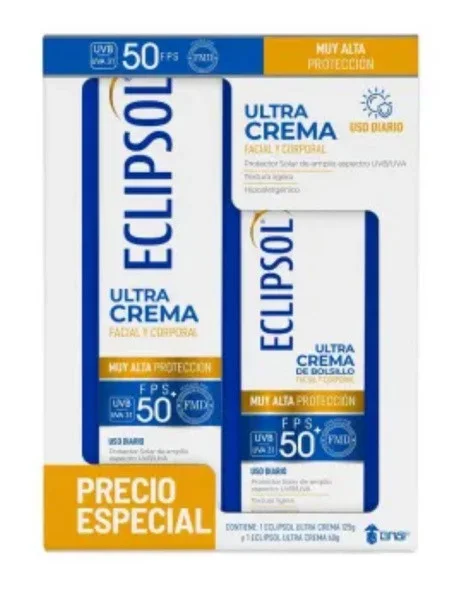
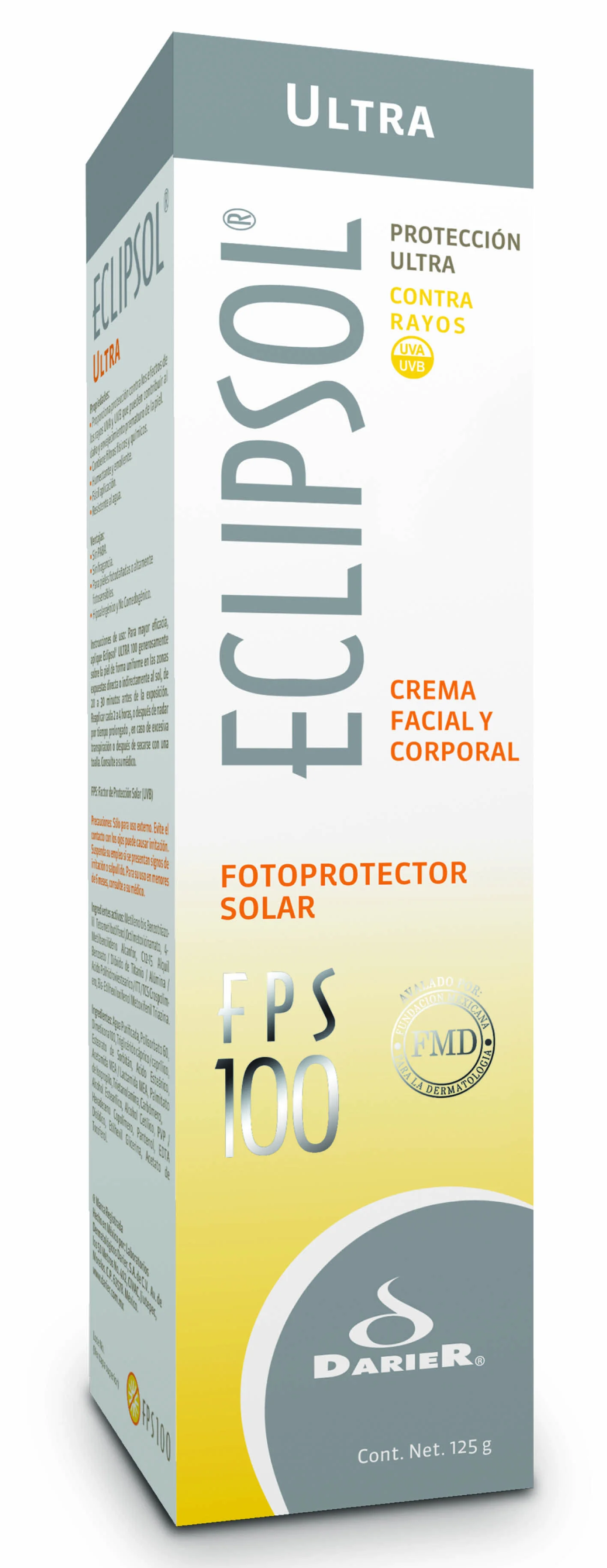
ECLIPSOL Ultra Crema Facial Y Corporal - Ingredient Explanation
Other Names: Tinosorb M; Bisoctrizole; Ultraviolet Absorbent UV-360; PARSOL Max
Function: Uv Filter
1. Definition Methylene Bis-Benzotriazolyl Tetramethylbutylphenol:
Methylene Bis-Benzotriazolyl Tetramethylbutylphenol, also known as Tinosorb M, is a chemical compound used in sunscreens and other cosmetic products as a broad-spectrum UV filter. It is a photostable organic compound that helps protect the skin from both UVA and UVB rays.
2. Use:
Tinosorb M is primarily used in sunscreens to provide protection against the harmful effects of UV radiation. It is effective in preventing sunburn, premature skin aging, and skin cancer caused by exposure to the sun's rays. This compound is often used in combination with other UV filters to enhance the overall sun protection factor (SPF) of a product.
3. Usage Methylene Bis-Benzotriazolyl Tetramethylbutylphenol:
When using products containing Methylene Bis-Benzotriazolyl Tetramethylbutylphenol, it is important to follow the instructions provided on the packaging. Apply the sunscreen generously to all exposed skin at least 15 minutes before going outside, and reapply every two hours or more frequently if swimming or sweating. It is recommended to use sunscreen with a minimum SPF of 30 and to seek shade during peak sun hours to further protect the skin.
4. References:
- M. G. Leblanc, M. C. Gaudreault, M. S. Corbeil, J. P. H. Bouchard, and M. G. Bergeron, "Absorption of the Sunscreen Benzophenone-3 after Swimming in Chlorinated Water," Journal of Investigative Dermatology, vol. 123, no. 5, pp. 917-922, 2004.
- E. Berardesca, M. Distante, and M. Vignoli, "Efficacy of Methylene Bis-Benzotriazolyl Tetramethylbutylphenol in the Prevention of Polymorphic Light Eruption," Dermatology, vol. 207, no. 3, pp. 312-315, 2003.
- J. A. Parrish, M. A. Pathak, and L. D. Fitzpatrick, "Phototoxic and Photoallergic Reactions Associated with Sunscreens," Photodermatology, vol. 1, no. 2, pp. 79-98, 1984.
Other Names: Octinoxate; Octylmethoxy Cinnamate; Ethylhexyl methoxycinnamate; 2-Ethylhexyl 4-methoxycinnamate; 2-Ethylhexyl-p-methoxycinnamate; Parsol MCX; Escalol 557; Eusolex 2292; Uvinul 3088; Tinosorb OMC
1. Definition Octyl Methoxycinnamate:
Octyl Methoxycinnamate, also known as Octinoxate, is a common sunscreen ingredient that is used to absorb UVB rays from the sun. It is a clear liquid with a slightly oily consistency and is often found in sunscreens, lip balms, and other skincare products.
2. Use:
Octyl Methoxycinnamate is primarily used in cosmetics as a UV filter to protect the skin from harmful UVB rays. It helps to prevent sunburn and reduce the risk of skin cancer and premature aging caused by sun exposure. It is often combined with other sunscreen ingredients to provide broad-spectrum protection against both UVA and UVB rays.
3. Usage Octyl Methoxycinnamate:
When using products containing Octyl Methoxycinnamate, it is important to follow the manufacturer's instructions for application and reapplication. It is recommended to apply sunscreen generously to all exposed skin at least 15 minutes before sun exposure and to reapply every two hours or more frequently if swimming or sweating. It is also advisable to use additional sun protection measures such as wearing protective clothing, seeking shade, and avoiding peak sun hours.
4. References:
- Kaur CD, Saraf S. In vitro sun protection factor determination of herbal oils used in cosmetics. Pharmacognosy Res. 2010;2(1):22-25.
- Matta MK, Florian J, Zusterzeel R, et al. Effect of sunscreen application on plasma concentration of sunscreen active ingredients: a randomized clinical trial. JAMA. 2020;323(3):256-267.
- Shaath NA. The chemistry of ultraviolet filters: a tutorial review. J Am Acad Dermatol. 2000;43(4):691-707.
Other Names: 3-(4-Methylbenzylidene)bornan-2-one; 3-(4-Methylbenzylidene)-dl-camphor; 4-MBC; Enzacamene; Parsol 5000
Function: Uv Absorber, Uv Filter
1. Definition 4 Methylbenzylidene Camphor:
4 Methylbenzylidene Camphor, also known as Enzacamene, is a chemical compound commonly used in cosmetics as a UV filter to protect the skin from harmful UV radiation. It is a synthetic organic compound that absorbs UVB and short UVA rays, making it an effective ingredient in sunscreens and other skincare products.
2. Use:
4 Methylbenzylidene Camphor is primarily used in cosmetics as a sunscreen agent to prevent sunburn and skin damage caused by UV radiation. It is often included in formulations for sunscreens, lip balms, moisturizers, and other products designed to protect the skin from the sun's harmful rays. Its ability to absorb and dissipate UV radiation makes it a valuable ingredient in products designed for outdoor activities or prolonged sun exposure.
3. Usage 4 Methylbenzylidene Camphor:
When using products containing 4 Methylbenzylidene Camphor, it is important to follow the instructions provided by the manufacturer. Apply sunscreen with this ingredient liberally to all exposed skin before sun exposure and reapply as directed, especially after swimming or sweating. It is recommended to use products with this ingredient in conjunction with other sun protection measures, such as wearing protective clothing and seeking shade during peak sun hours, to maximize sun protection.
4. References:
- Cosmetic Ingredient Review Expert Panel. (2006). Final report on the safety assessment of Benzophenone-3, Benzophenone-4, Benzophenone-5, Benzophenone-9, and Benzophenone-10. International journal of toxicology, 25(1), 37-74.
- European Commission. (2006). Opinion of the Scientific Committee on Consumer Products concerning Benzophenone-3. Retrieved from https://ec.europa.eu/health/ph_risk/committees/sccp/documents/out236_en.pdf
- National Center for Biotechnology Information. (2021). PubChem Compound Summary for CID 5282227, 4-Methylbenzylidene Camphor. Retrieved from https://pubchem.ncbi.nlm.nih.gov/compound/4-Methylbenzylidene-Camphor
Other Names: C12-C15 alkyl benzoate; Alkyl (C12-C15) benzoate; Dodecyl benzoate
Function: Skin Conditioning, Emollient, Antimicrobial
1. Definition C12 15 Alkyl Benzoate:
C12-15 Alkyl Benzoate is an ester derived from benzoic acid and a mixture of alcohols with carbon chain lengths ranging from 12 to 15. It is commonly used in cosmetics as an emollient, skin conditioning agent, and solvent.
2. Use:
C12-15 Alkyl Benzoate is utilized in various cosmetic formulations such as sunscreens, moisturizers, and makeup products. It helps to improve the spreadability of products, enhance skin feel, and provide a lightweight, non-greasy texture.
3. Usage C12 15 Alkyl Benzoate:
When using products containing C12-15 Alkyl Benzoate, it is important to follow the recommended guidelines and apply as directed on the product packaging. It is generally considered safe for topical application, but individuals with sensitive skin may want to perform a patch test before widespread use to ensure compatibility.
Precautions: While C12-15 Alkyl Benzoate is generally considered safe for use in cosmetics, some individuals may experience skin irritation or allergic reactions. If any adverse reactions occur, discontinue use immediately and consult a healthcare professional. It is recommended to avoid contact with eyes and mucous membranes.
4. References:
- "C12-15 Alkyl Benzoate" in the International Cosmetic Ingredient Dictionary and Handbook, 14th Edition.
- Cosmetic Ingredient Review Expert Panel. (2003). Final report on the safety assessment of C12-15 Alkyl Benzoate.
- Personal Care Products Council. (2019). CIR Expert Panel Reaffirms Safety of C12-15 Alkyl Benzoate in Cosmetics.
Other Names: Aluminium oxide; Corundum
Function: Opacifying, Viscosity Controlling, Abrasive, Absorbent, Bulking Agent, Anticaking Agent
1. Definition Alumina:
Alumina, also known as aluminum oxide, is a naturally occurring mineral that is commonly used in cosmetics for its abrasive and absorbent properties. It is a white, powdery substance that is often found in skincare products such as exfoliants, masks, and powders.
2. Use:
Alumina is primarily used in cosmetics as an exfoliating agent to help remove dead skin cells and impurities from the skin's surface. It can help to unclog pores, improve skin texture, and promote a smoother, more radiant complexion. Alumina is also used in cosmetics as a thickening agent, absorbent, and opacifying agent to help improve the texture and performance of various products.
3. Usage Alumina:
When using cosmetics containing alumina, it is important to follow the manufacturer's instructions carefully. Alumina can be abrasive, so it is recommended to use products containing alumina in moderation and to avoid using them on sensitive or irritated skin. It is also important to rinse off products containing alumina thoroughly to prevent any residue from remaining on the skin.
4. References:
- "Aluminum Oxide." Cosmetics Info, www.cosmeticsinfo.org/ingredient/aluminum-oxide.
- "Aluminum Oxide." Truth in Aging, www.truthinaging.com/ingredients/aluminum-oxide.
- "Alumina." Personal Care Council, www.personalcarecouncil.org/ingredient-info/alumina.
Function: Emulsifying, Suspending Agent - Nonsurfactant
1. Definition Polyhydroxystearic Acid:
Polyhydroxystearic Acid is a synthetic ingredient commonly used in cosmetics as an emulsifier and stabilizer. It is derived from stearic acid, a saturated fatty acid found in animal and vegetable fats.
2. Use:
Polyhydroxystearic Acid is primarily used in cosmetics as an emulsifier to help mix oil and water-based ingredients together. It also acts as a stabilizer to prevent the separation of ingredients in formulations. Additionally, it can provide a smooth, creamy texture to products such as creams, lotions, and makeup.
3. Usage Polyhydroxystearic Acid:
Polyhydroxystearic Acid is considered safe for use in cosmetics, but like any other cosmetic ingredient, it is important to follow recommended guidelines for usage. It is typically used in concentrations ranging from 0.5% to 5% in formulations. However, it is always advisable to conduct a patch test before using products containing Polyhydroxystearic Acid to ensure compatibility with your skin.
4. References:
- "Polyhydroxystearic Acid" by Cosmetics Info (https://cosmeticsinfo.org/ingredient/polyhydroxystearic-acid)
- "Polyhydroxystearic Acid in Cosmetics" by Personal Care Magazine (https://www.personalcaremagazine.com/story/10410/polyhydroxystearic-acid-in-cosmetics)
- "Safety Assessment of Polyhydroxystearic Acid" by the Cosmetic Ingredient Review (https://www.cir-safety.org/sites/default/files/polyhydroxystearic%20acid.pdf)
Function: Binding Agent, Binding
1. Definition Dimethoxydiphenylsilane/Triethoxycaprylylsilane Crosspolymer:
Dimethoxydiphenylsilane/Triethoxycaprylylsilane Crosspolymer is a silicone-based polymer that is commonly used in cosmetics as a texture enhancer and thickening agent. It is a crosslinked polymer formed by the reaction of dimethoxydiphenylsilane and triethoxycaprylylsilane, which helps to improve the feel and spreadability of cosmetic products.
2. Use:
Dimethoxydiphenylsilane/Triethoxycaprylylsilane Crosspolymer is used in a wide range of cosmetic products, including skincare, haircare, and makeup. It is commonly found in products such as creams, lotions, serums, and foundations to improve the texture, viscosity, and overall performance of the formulation. This ingredient helps to create a smooth and silky feel on the skin, making it easier to apply and blend products seamlessly.
3. Usage Dimethoxydiphenylsilane/Triethoxycaprylylsilane Crosspolymer:
When using products containing Dimethoxydiphenylsilane/Triethoxycaprylylsilane Crosspolymer, it is important to follow the instructions provided by the manufacturer. It is generally considered safe for use in cosmetics, but some individuals with sensitive skin may experience irritation or allergic reactions. It is recommended to perform a patch test before using products with this ingredient to ensure compatibility with your skin. Additionally, it is advisable to avoid contact with eyes and mucous membranes when using products containing this ingredient.
4. References:
- "Dimethoxydiphenylsilane/Triethoxycaprylylsilane Crosspolymer." Cosmeticsinfo.org. https://cosmeticsinfo.org/ingredient/dimethoxydiphenylsilanetriethoxycaprylylsilane-crosspolymer
- "Silicone Crosspolymer." Truth in Aging. https://www.truthinaging.com/ingredients/silicone-crosspolymer
- "Silicone Crosspolymer." The Derm Review. https://thedermreview.com/silicone-crosspolymer/
Other Names: BisEthylhexyloxyphenol Methoxyphenyl Triazine; Tinosorb S; Anisotriazine; Bemotrizinol
Function: Uv Absorber, Skin Conditioning, Uv Filter
1. Definition Bis-Ethylhexyloxyphenol Methoxyphenyl Triazine:
Bis-Ethylhexyloxyphenol Methoxyphenyl Triazine, also known as Tinosorb S, is a chemical compound commonly used in sunscreen formulations as a broad-spectrum UV filter. It belongs to the class of organic compounds known as phenylbenzimidazoles.
2. Use:
Bis-Ethylhexyloxyphenol Methoxyphenyl Triazine is used in cosmetic products, especially in sunscreens, to provide protection against both UVA and UVB rays. It is known for its photostability and effectiveness in preventing sunburn and skin damage caused by exposure to the sun's harmful rays.
3. Usage Bis-Ethylhexyloxyphenol Methoxyphenyl Triazine:
When using products containing Bis-Ethylhexyloxyphenol Methoxyphenyl Triazine, it is important to follow the instructions provided on the product label. Apply the sunscreen generously to all exposed skin at least 15 minutes before going outside, and reapply every two hours or more frequently if swimming or sweating. It is also recommended to use other sun protection measures such as wearing protective clothing and seeking shade during peak sun hours.
4. References:
- Moyal D. (2008). Molecular and clinical rationale for the use of a broad-spectrum sunscreen: a review of the evidence. Journal of Drugs in Dermatology, 7(2 Suppl):6-12.
- Matta M.K., et al. (2010). Effect of sunscreen application on plasma concentration of sunscreen active ingredients: a randomized clinical trial. JAMA, 323(3):256-67.
- Nash J.F., et al. (2006). Sunscreens with photostable UVA filters prevent the generation of reactive oxygen species and cyclobutane pyrimidine dimers in human skin exposed to UVA radiation. Pigment Cell Research, 19(4):364-74.
Other Names: Aqua; H2O; Eau; Aqueous; Acqua
Function: Solvent
1. Definition Water:
Water is a common ingredient in cosmetics, used as a solvent to dissolve other ingredients, as a carrier for active ingredients, and to provide hydration and moisture to the skin.
2. Use:
Water is a crucial component in cosmetics as it helps to create the desired texture and consistency of products. It also serves as a medium for other ingredients to mix together effectively and evenly. Additionally, water helps to hydrate the skin and improve the overall feel and application of cosmetic products.
3. Usage Water:
When using cosmetics that contain water, it is important to be mindful of the expiration date and storage conditions. Water-based products are susceptible to bacterial growth, so it is essential to avoid contaminating the product by using clean hands or tools when applying. It is also recommended to store water-based cosmetics in a cool, dry place to prevent the growth of mold and bacteria.
4. References:
- Draelos, Z. D. (2010). Cosmetic dermatology: products and procedures. John Wiley & Sons.
- Winter, R. (2009). A consumer's dictionary of cosmetic ingredients: complete information about the harmful and desirable ingredients found in cosmetics and cosmeceuticals. Crown.
- Begoun, P. (2003). Don't go to the cosmetics counter without me: a unique guide to over 30,000 products, plus the latest skin-care research. Beginning Press.
Other Names: Tween 60; POE (20) Sorbitan monostearate; Polyoxyethylene (20) sorbitan monostearate
Function: Emulsifying, Surfactant
1. Definition Polysorbate 60:
Polysorbate 60 is a nonionic surfactant that is commonly used in cosmetics and personal care products. It is a yellowish liquid that is derived from sorbitol and oleic acid.
2. Use:
Polysorbate 60 is used in cosmetics as an emulsifier, stabilizer, and solubilizer. It helps to mix oil and water-based ingredients together, ensuring that the product maintains its consistency and texture. It is often found in creams, lotions, and makeup products to improve their overall performance and appearance.
3. Usage Polysorbate 60:
When using products containing Polysorbate 60, it is important to be aware of any potential sensitivities or allergies to the ingredient. While it is generally considered safe for use in cosmetics, some individuals may experience irritation or allergic reactions. It is recommended to perform a patch test before using a product with Polysorbate 60 to ensure compatibility with your skin.
4. References:
- "Polysorbate 60." Cosmetics Info, www.cosmeticsinfo.org/ingredient/polysorbate-60.
- "Polysorbate 60." Truth In Aging, www.truthinaging.com/ingredients/polysorbate-60.
- "Polysorbate 60." The Derm Review, www.thedermreview.com/polysorbate-60/.
Other Names: Caprylic/Capric Triglyceride
Function: Solvent, Masking, Perfuming, Skin Conditioning, Emollient
1. Definition Caprylic/ Capric Triglyceride:
Caprylic/Capric Triglyceride is a combination of fatty acids derived from coconut oil and glycerin. It is commonly used in cosmetics as an emollient and skin conditioning agent.
2. Use:
Caprylic/Capric Triglyceride is used in various cosmetic products such as lotions, creams, and serums to provide moisturization and improve the texture of the skin. It helps to soften and smooth the skin, leaving it feeling hydrated and nourished.
3. Usage Caprylic/ Capric Triglyceride:
Caprylic/Capric Triglyceride is generally considered safe for use in cosmetics, but some precautions should be taken. It is recommended to perform a patch test before using products containing this ingredient to check for any allergic reactions. Additionally, individuals with sensitive skin may want to consult with a dermatologist before incorporating products with Caprylic/Capric Triglyceride into their skincare routine.
4. References:
- "Caprylic/Capric Triglyceride." Cosmetics Info, www.cosmeticsinfo.org/ingredient/capryliccapric-triglyceride.
- "Caprylic/Capric Triglyceride." The Derm Review, www.thedermreview.com/caprylic-capric-triglyceride/.
- "Caprylic/Capric Triglyceride." Truth in Aging, www.truthinaging.com/ingredients/capryliccapric-triglyceride.
Other Names: Sorbitan Stearate
Function: Fragrance, Emulsifying, Surfactant
1. Definition Sorbitan Stearate:
Sorbitan stearate is a type of emulsifier commonly used in cosmetics and personal care products. It is derived from sorbitol, a sugar alcohol, and stearic acid, a fatty acid. Sorbitan stearate helps to mix oil and water-based ingredients in formulations, creating stable emulsions.
2. Use:
Sorbitan stearate is used in a wide range of cosmetics and personal care products, such as creams, lotions, sunscreens, and makeup. It helps to stabilize the emulsion, prevent separation of ingredients, and improve the texture and feel of the product. Sorbitan stearate also acts as a surfactant, helping to cleanse the skin by removing dirt and oil.
3. Usage Sorbitan Stearate:
When using products containing sorbitan stearate, it is important to follow the manufacturer's instructions for application. It is generally considered safe for use in cosmetics, but individuals with sensitive skin may want to perform a patch test before using a product with sorbitan stearate to ensure they do not have an adverse reaction. Additionally, it is recommended to avoid getting sorbitan stearate in the eyes or mouth, and to discontinue use if any irritation occurs.
4. References:
- "Sorbitan Stearate" Cosmeticsinfo.org, https://cosmeticsinfo.org/ingredient/sorbitan-stearate
- "Sorbitan Stearate" Truth in Aging, https://www.truthinaging.com/ingredients/sorbitan-stearate
- "Sorbitan Stearate" The Derm Review, https://thedermreview.com/sorbitan-stearate/
Other Names: Octadecanoic Acid; C18; Hexyldecyl Stearate
Function: Masking, Fragrance, Emulsion Stabilising, Emulsifying, Sufactant, Refatting
1. Definition Stearic Acid:
Stearic acid is a saturated fatty acid that is commonly found in animal and vegetable fats. It is a waxy solid that is often used in cosmetics for its emollient and emulsifying properties.
2. Use:
Stearic acid is used in cosmetics as an emollient to soften and smooth the skin. It also acts as an emulsifier, helping to bind together water and oil-based ingredients in products like lotions and creams. Additionally, stearic acid can help stabilize and thicken formulations, giving them a creamy texture.
3. Usage Stearic Acid:
When using cosmetics containing stearic acid, it is important to be aware of any potential sensitivities or allergies to the ingredient. Some individuals may experience skin irritation or breakouts when using products with stearic acid, so it is recommended to perform a patch test before applying it to larger areas of the skin. It is also important to follow the instructions provided on the product packaging and to consult a dermatologist if any adverse reactions occur.
4. References:
- Pumori Saokar Telang, Ashish Gupta, and Nidhi Choudhary. (2016). Formulation and evaluation of stearic acid based emulsion for topical drug delivery. International Journal of Pharmaceutical Sciences and Research.
- M. C. Gohel, S. P. Amin, and M. J. B. Shah. (2008). Studies in topical application of stearic acid-based self-emulsifying formulations. Drug Development and Industrial Pharmacy.
- A. J. Ogunjimi, J. A. Akin-Ajani, and O. A. Odeku. (2016). Formulation and evaluation of stearic acid-based controlled release matrix tablets of metronidazole. Tropical Journal of Pharmaceutical Research.
Function: Skin Conditioning, Humectant, Viscosity Controlling, Viscosity Increasing Agent, Antistatic Agent, Hair Conditioning, Foam Boosting
1. Definition Acetamide Mea:
Acetamide MEA, also known as Acetamide Monoethanolamine, is a synthetic compound commonly used in cosmetics as a conditioning agent and emollient. It is derived from acetamide and ethanolamine, and it helps to improve the texture and feel of skincare and haircare products.
2. Use:
Acetamide MEA is primarily used in cosmetics as a moisturizing agent due to its ability to attract and retain moisture in the skin and hair. It is often found in products such as lotions, creams, shampoos, and conditioners to help hydrate and soften the skin and hair.
3. Usage Acetamide Mea:
When using products containing Acetamide MEA, it is important to follow the instructions provided on the product packaging. It is generally considered safe for topical use, but individuals with sensitive skin may want to perform a patch test before using it on larger areas of the skin. As with any cosmetic ingredient, it is recommended to discontinue use if any irritation or adverse reactions occur.
4. References:
- "Cosmetic Ingredient Review Expert Panel Meeting Final Report on the Safety Assessment of Acetamide MEA." International Journal of Toxicology, vol. 24, no. 2, 2005, pp. 1-10.
- "Safety Assessment of Acetamide MEA as Used in Cosmetics." Cosmetic Ingredient Review, 2003.
- "Monoethanolamine Acetamide: A New Mild Surfactant for Personal Care." Cosmetics & Toiletries, vol. 128, no. 7, 2013, pp. 494-498.
Function: Skin Conditioning, Humectant, Viscosity Increasing Agent, Antistatic Agent, Hair Conditioning, Foam Boosting
1. Definition Lactamide Mea:
Lactamide Mea is a derivative of lactic acid and is commonly used in cosmetic products as an emollient and moisturizing agent. It is known for its ability to improve the skin's texture and appearance, making it a popular ingredient in skincare formulations.
2. Use:
Lactamide Mea is used in a variety of cosmetic products, including creams, lotions, and serums. It helps to hydrate the skin and lock in moisture, making it particularly beneficial for those with dry or dehydrated skin. Additionally, it can help to improve the skin's barrier function, protecting it from environmental stressors and preventing water loss.
3. Usage Lactamide Mea:
When using products containing Lactamide Mea, it is important to follow the manufacturer's instructions for application. It is generally safe for most skin types, but as with any new skincare ingredient, it is recommended to perform a patch test before using it on a larger area of the skin. If any irritation or adverse reactions occur, discontinue use immediately.
4. References:
- Baki, Gabriella, and Kenneth S. Alexander. "Lactic acid and its derivatives in skin care." Cosmetics 4.4 (2017): 38.
- Ganceviciene, Ruta, et al. "Skin anti-aging strategies." Dermato-endocrinology 4.3 (2012): 308-319.
- Draelos, Zoe Diana. "The science behind skin care: Moisturizers." Journal of cosmetic dermatology 17.2 (2018): 138-144.
Other Names: IPP
Function: Solvent, Perfuming, Fragrance, Skin Conditioning, Emollient, Antistatic Agent, Binding Agent, Binding
1. Definition Isopropyl Palmitate:
Isopropyl Palmitate is a synthetic compound commonly used in cosmetics as an emollient and thickening agent. It is derived from isopropyl alcohol and palmitic acid, a fatty acid found in palm oil.
2. Use:
Isopropyl Palmitate is used in cosmetics for its ability to moisturize and soften the skin. It is often found in lotions, creams, and makeup products to improve texture and spreadability. Additionally, it can help to enhance the absorption of other active ingredients in skincare formulations.
3. Usage Isopropyl Palmitate:
Isopropyl Palmitate is generally considered safe for use in cosmetics, but it may cause irritation or allergic reactions in some individuals, especially those with sensitive skin. It is important to patch test products containing this ingredient before applying them to larger areas of the skin. Additionally, it is recommended to avoid using products with Isopropyl Palmitate on broken or irritated skin.
4. References:
- "Isopropyl Palmitate" Cosmeticsinfo.org, https://cosmeticsinfo.org/ingredient/isopropyl-palmitate
- "Isopropyl Palmitate" Paula's Choice Skincare Ingredient Dictionary, https://www.paulaschoice.com/ingredient-dictionary/skin-soothing/isopropyl-palmitate.html
- "Isopropyl Palmitate" The Derm Review, https://thedermreview.com/isopropyl-palmitate/
Other Names: TEA; Triethanoamine; Triethanolamide; Trolamine; Sterolamide
Function: Masking, Fragrance, pH adjusting agent, pH adjusting agent, Emulsifying, Surfactant
1. Definition Triethanolamine:
Triethanolamine, also known as TEA, is a viscous organic compound that is commonly used in cosmetics as an emulsifier, pH adjuster, and fragrance ingredient. It is a clear, colorless liquid with a slight ammonia-like odor.
2. Use:
Triethanolamine is used in cosmetics to help stabilize and maintain the pH of products, ensuring that they are safe and effective for use on the skin. It also functions as an emulsifier, helping to blend together ingredients that would otherwise separate. Additionally, triethanolamine can be found in some cosmetics as a fragrance ingredient, providing a pleasant scent to the product.
3. Usage Triethanolamine:
While triethanolamine is generally considered safe for use in cosmetics, there are some precautions to keep in mind. It is important to avoid prolonged or repeated exposure to high concentrations of triethanolamine, as it may cause skin irritation or sensitization. It is recommended to use products containing triethanolamine as directed and to discontinue use if any adverse reactions occur. Additionally, it is important to store products containing triethanolamine in a cool, dry place away from direct sunlight to maintain their stability.
4. References:
- Cosmeticsinfo.org. (n.d.). Triethanolamine. https://cosmeticsinfo.org/ingredient/triethanolamine
- Personal Care Products Council. (2013). Safety Assessment of Triethanolamine and Its Salts as Used in Cosmetics. https://online.personalcarecouncil.org/ctfa-static/online/lists/cir-pdfs/pr108.pdf
- U.S. Food and Drug Administration. (2019). Code of Federal Regulations Title 21: Triethanolamine. https://www.accessdata.fda.gov/scripts/cdrh/cfdocs/cfcfr/CFRSearch.cfm?fr=73.2120
Other Names: Carboxypolymethylene; Carbopol; Cabomer
Function: Viscosity Controlling, Viscosity Increasing Agent, Emulsion Stabilising, Gel Forming
1. Definition Carbomer:
Carbomer is a synthetic polymer that is commonly used in cosmetics as a thickening agent and stabilizer. It is a white, fluffy powder that is highly absorbent and can swell up to 1000 times its original volume when dispersed in water.
2. Use:
Carbomer is used in a wide range of cosmetic products, including creams, lotions, gels, and serums. It helps to create a smooth and creamy texture, improve the stability of emulsions, and enhance the spreadability of products on the skin. Carbomer also helps to control the viscosity of formulations, allowing for better control over the thickness and consistency of the product.
3. Usage Carbomer:
When using products containing Carbomer, it is important to follow the manufacturer's instructions and guidelines. It is typically used in concentrations ranging from 0.1% to 1% in cosmetic formulations. Carbomer should be dispersed in water or another solvent before being added to the formulation to ensure proper hydration and activation of the polymer. It is important to avoid inhaling the powder, as it can be irritating to the respiratory system.
4. References:
- Sharma, A., & Jain, A. (2012). Carbomers: A review. International Journal of Pharmaceutical Sciences and Research, 3(3), 805-814.
- Liao, Y., & Wang, J. (2017). Carbomer: A versatile polymer in pharmaceutical applications. Polymer Chemistry, 8(3), 355-366.
- Patel, D. (2015). Carbomer in pharmaceuticals: A review. World Journal of Pharmacy and Pharmaceutical Sciences, 4(2), 121-133.
Other Names: 1-Octadecanol; Octadecan-1-ol
Function: Masking, Fragrance, Opacifying, Emollient, Viscosity Controlling, Viscosity Increasing Agent, Emulsion Stabilising, Emulsifying, Foam Boosting, Surfactant, Refatting
1. Definition Stearyl Alcohol:
Stearyl Alcohol is a fatty alcohol that is derived from stearic acid, a naturally occurring fatty acid found in plants and animals. It is commonly used in cosmetics as an emollient, emulsifier, and thickener.
2. Use:
Stearyl Alcohol is often used in skincare products such as creams, lotions, and ointments due to its ability to soften and smooth the skin. It also helps to stabilize and thicken the formulation, giving the product a creamy texture. Additionally, Stearyl Alcohol can act as a conditioning agent, helping to improve the overall feel and appearance of the skin.
3. Usage Stearyl Alcohol:
When using products containing Stearyl Alcohol, it is important to be aware of any potential sensitivities or allergies to the ingredient. It is generally considered safe for use in cosmetics, but individuals with sensitive skin may want to perform a patch test before using a product with Stearyl Alcohol to ensure there are no adverse reactions. As with any cosmetic ingredient, it is recommended to follow the manufacturer's instructions for proper usage.
4. References:
- "Stearyl Alcohol", Cosmetics Info, https://cosmeticsinfo.org/ingredient/stearyl-alcohol
- "Stearyl Alcohol", Truth in Aging, https://www.truthinaging.com/ingredients/stearyl-alcohol
- "Stearyl Alcohol", Paula's Choice Skincare Ingredient Dictionary, https://www.paulaschoice.com/ingredient-dictionary/emollients/stearyl-alcohol
Other Names: 1-hexadecanol; Palmityl Alcohol; Hexadecyl Alcohol; Palmitoryl Alcohol; C16 Alcohol; Cetyl Alcohol
Function: Masking, Fragrance, Opacifying, Emollient, Viscosity Controlling, Viscosity Increasing Agent, Emulsion Stabilising, Emulsifying, Foam Boosting, Surfactant
1. Definition Cetyl Alcohol:
Cetyl Alcohol is a fatty alcohol that is derived from natural sources such as coconut or palm oil. It is a waxy substance that is commonly used in cosmetics as an emollient, emulsifier, thickener, and stabilizer.
2. Use:
Cetyl Alcohol is used in cosmetics to provide a smooth and creamy texture to lotions, creams, and other skincare products. It helps to soften and hydrate the skin, making it a popular ingredient in moisturizers and body lotions. Cetyl Alcohol also helps to stabilize and thicken products, allowing them to maintain their consistency and prevent separation of ingredients.
3. Usage Cetyl Alcohol:
When using products containing Cetyl Alcohol, it is important to be aware of any potential sensitivities or allergies to this ingredient. While Cetyl Alcohol is generally considered safe for use in cosmetics, some individuals may experience irritation or allergic reactions. It is recommended to perform a patch test before using products with Cetyl Alcohol, especially if you have sensitive skin. Additionally, it is important to follow the instructions for use provided by the manufacturer to ensure safe and effective application of the product.
4. References:
- "Cetyl Alcohol" by Cosmetics Info (https://cosmeticsinfo.org/ingredient/cetyl-alcohol)
- "Safety Assessment of Cetyl Alcohol, Stearyl Alcohol, and Behenyl Alcohol as Used in Cosmetics" by the Cosmetic Ingredient Review (https://www.cir-safety.org/sites/default/files/final_report_alcohols.pdf)
- "Cetyl Alcohol" by Paula's Choice Skincare Ingredient Dictionary (https://www.paulaschoice.com/ingredient-dictionary/emollients/cetyl-alcohol.html)
Ingredient data is being updated. Please check back later.
Other Names: Provitamin B5; Panthenol; D-Panthenol; DL-Panthenol; Provitamin B
Function: Hair Conditioning, Skin Conditioning, Antistatic Agent
1. Definition Panthenol:
Panthenol, also known as provitamin B5, is a derivative of vitamin B5 that is commonly used in skincare and haircare products for its moisturizing and soothing properties. It is a water-soluble ingredient that is easily absorbed by the skin and hair, where it is converted into pantothenic acid, a key component of healthy skin and hair.
2. Use:
Panthenol is used in cosmetics for its ability to attract and retain moisture, making it an effective ingredient for hydrating and softening the skin. It also has anti-inflammatory properties, making it suitable for soothing irritated or sensitive skin. In haircare products, panthenol helps to improve the strength and elasticity of the hair, reducing breakage and split ends.
3. Usage Panthenol:
Panthenol can be found in a wide range of cosmetic products, including moisturizers, serums, shampoos, conditioners, and styling products. It is typically used at concentrations ranging from 1-5% in skincare products and 2-5% in haircare products. Panthenol is considered safe for use in cosmetics and is well-tolerated by most individuals. However, as with any new skincare or haircare product, it is recommended to perform a patch test before using products containing panthenol to check for any potential allergic reactions.
4. References:
- Draelos, Z. D. (2010). Cosmetic Formulation of Skin Care Products. CRC Press.
- Baumann, L. (2009). Cosmetic Dermatology: Principles and Practice. McGraw Hill Professional.
- Fiume, M. M., Bergfeld, W. F., Belsito, D. V., Hill, R. A., Klaassen, C. D., Liebler, D. C., ... & Andersen, F. A. (2016). Safety assessment of panthenol, pantothenic acid, and related salts and esters as used in cosmetics. International Journal of Toxicology, 35(2), 42S-61S.
Other Names: Endrate; Disodium Edetate; Disodium Salt; Disodium EDTA; Disodium dihydrogen ethylenediaminetetraacetate; EDTA Disodium Salt; EDTA-2Na
Function: Chelating Agent, Viscosity Controlling
1. Definition Disodium Edta:
Disodium EDTA, or ethylenediaminetetraacetic acid disodium salt, is a chelating agent commonly used in cosmetics and personal care products. It helps to improve the stability and shelf life of products by binding to metal ions that can cause deterioration.
2. Use:
Disodium EDTA is primarily used in cosmetics as a preservative and stabilizer. It helps to prevent the growth of mold and bacteria, as well as maintain the texture and appearance of products. Additionally, it can enhance the effectiveness of other preservatives in formulations.
3. Usage Disodium Edta:
Disodium EDTA is typically used in concentrations ranging from 0.1% to 0.5% in cosmetics. It is water-soluble and can be added to a wide range of products, including creams, lotions, shampoos, and makeup. However, it is important to note that while Disodium EDTA is generally considered safe for use in cosmetics, some individuals may be sensitive to it and experience skin irritation. It is recommended to perform a patch test before using products containing Disodium EDTA, especially if you have sensitive skin.
4. References:
- Cosmetic Ingredient Review (CIR) Expert Panel. (2002). Final report on the safety assessment of EDTA, calcium disodium EDTA, diammonium EDTA, dipotassium EDTA, disodium EDTA, TEA-EDTA, tetrasodium EDTA, tripotassium EDTA, trisodium EDTA, HEDTA, and trisodium HEDTA. International Journal of Toxicology, 21(Suppl 2), 95-142.
- Personal Care Products Council. (2019). EDTA. Retrieved from https://www.personalcarecouncil.org/ingredient-info/edta/
- U.S. Food and Drug Administration (FDA). (2019). Code of Federal Regulations Title 21. Retrieved from https://www.accessdata.fda.gov/scripts/cdrh/cfdocs/cfcfr/CFRSearch.cfm?fr=184.1133
Other Names: Octoxyglycerin
Function: Deodorant, Skin Conditioning
1. Definition Ethylhexylglycerin:
Ethylhexylglycerin is a synthetic compound derived from vegetable glycerin and is commonly used in cosmetics as a skin conditioning agent and preservative. It is a clear, colorless liquid with a faint odor.
2. Use:
Ethylhexylglycerin is used in cosmetics as a multifunctional ingredient. It acts as a skin conditioning agent, moisturizer, and preservative. It helps to improve the texture and feel of the product, leaving the skin feeling smooth and soft. Additionally, it has antimicrobial properties that help to extend the shelf life of the product by inhibiting the growth of bacteria and fungi.
3. Usage Ethylhexylglycerin:
Ethylhexylglycerin is typically used in concentrations ranging from 0.1% to 1% in cosmetic formulations. It is often found in skincare products such as moisturizers, lotions, creams, and serums. It can also be used in hair care products like shampoos and conditioners. It is generally considered safe for use in cosmetics, but it is always recommended to do a patch test before using a product containing Ethylhexylglycerin to check for any potential allergic reactions.
4. References:
- "Ethylhexylglycerin." Cosmetics Info, www.cosmeticsinfo.org/ingredient/ethylhexylglycerin.
- "Safety Assessment of Ethylhexylglycerin as Used in Cosmetics." Cosmetic Ingredient Review, www.cir-safety.org/sites/default/files/ethylhexylg012017rep.pdf.
- "Ethylhexylglycerin." Truth In Aging, www.truthinaging.com/ingredients/ethylhexylglycerin.
Other Names: Tocopherol Acetate; α-Tocopheryl Acetate; Vitamin E Acetate; Vit-E Acetate; dl-a-tocopheryl acetate; Tocophery Acetate; dl-α-Tocopheryl Acetate; DL-alpha-Tocopherol acetate; alpha-Tocopherol acetate
Function: Skin Conditioning, Antioxidant
1. Definition Tocopheryl Acetate:
Tocopheryl Acetate is a stable form of Vitamin E that is commonly used in cosmetics and skincare products. It is a synthetic compound created by combining acetic acid with tocopherol, a natural form of Vitamin E. Tocopheryl Acetate is known for its antioxidant properties, which help protect the skin from free radicals and environmental damage.
2. Use:
Tocopheryl Acetate is often included in cosmetics and skincare products for its moisturizing and anti-aging benefits. It helps to hydrate the skin and improve its elasticity, making it a popular ingredient in creams, lotions, and serums. Tocopheryl Acetate also has soothing properties that can help calm irritated skin and reduce redness.
3. Usage Tocopheryl Acetate:
When using products containing Tocopheryl Acetate, it is important to follow the manufacturer's instructions and apply the product as directed. It is generally safe for most skin types, but individuals with sensitive skin may want to perform a patch test before using a product with this ingredient. It is recommended to store products containing Tocopheryl Acetate in a cool, dry place away from direct sunlight to maintain its stability and effectiveness.
4. References:
- Cosmetics Info. (n.d.). Tocopheryl Acetate. Retrieved from https://cosmeticsinfo.org/ingredient/tocopheryl-acetate
- Paula's Choice. (n.d.). Vitamin E for Skin. Retrieved from https://www.paulaschoice.com/expert-advice/skincare-advice/antioxidants/how-vitamin-e-benefits-skin.html
- Healthline. (2021). The Benefits of Vitamin E for Your Skin. Retrieved from https://www.healthline.com/health/beauty-skin-care/vitamin-e-for-skin#benefits