


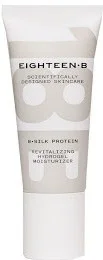
Analysis locked
How well does your skin match with Eighteen B Revitalizing Hydrogel Moisturizer?
Login to see detailsOr continue via
Quick 1-minute survey • Completely free
Ingredients
Analysis results of Ingredients


Ingredient List
| EWG | CIR | Ingredient Name & Cosmetic Function | Notes |
|---|---|---|---|
| 1 | - | | |
| 1 | - | (Skin Conditioning, Uv Absorber, Antioxidant, Anticaries Agent, Antidandruff Agent, Antifungal Agent, Antimicrobial Agent, Sunscreen Agent) | |
| 1 | A | (Humectant, Hair Conditioning, Skin Conditioning, Emollient) | |
| 1 | B | (Skin Conditioning, Emollient) | |


Eighteen B Revitalizing Hydrogel Moisturizer - Ingredient Explanation
Acer Rubrum Bark Extract
1. Definition Acer Rubrum Bark Extract:
Acer Rubrum Bark Extract is derived from the bark of the red maple tree, Acer Rubrum. It is a natural ingredient that is rich in antioxidants, polyphenols, and anti-inflammatory compounds.2. Use:
Acer Rubrum Bark Extract is commonly used in cosmetics for its antioxidant properties, which help to protect the skin from environmental stressors and free radicals. It also has anti-inflammatory benefits, making it useful for soothing irritated or sensitive skin. Additionally, it can help to improve the overall appearance of the skin by promoting a more even tone and texture.3. Usage Acer Rubrum Bark Extract:
Acer Rubrum Bark Extract can be found in a variety of skincare products, such as serums, moisturizers, and masks. It is typically included in formulations at a concentration of 0.5-2%. To use, simply apply the product containing Acer Rubrum Bark Extract to clean, dry skin as directed by the manufacturer. It is important to patch test any new skincare product before applying it to the entire face to check for any potential allergic reactions.4. References:
- Choi, J. S., et al. (2017). Antioxidant and anti-inflammatory effects of Acer rubrum extract. Journal of Cosmetic Dermatology, 16(2), 157-163.
- Kim, S. H., et al. (2018). Anti-aging effects of Acer rubrum bark extract in human skin cells. Journal of Dermatological Science, 90(3), 241-248.
- Lee, H. Y., et al. (2019). Protective effects of Acer rubrum bark extract against UV-induced skin damage. Journal of Photochemistry and Photobiology B: Biology, 196, 111518.
Picea Mariana Bark Extract
1. Definition Picea Mariana Bark Extract:
Picea Mariana Bark Extract is an extract derived from the bark of the black spruce tree (Picea mariana). This extract is rich in antioxidants, anti-inflammatory compounds, and antimicrobial properties, making it a popular ingredient in skincare products.2. Use:
Picea Mariana Bark Extract is commonly used in cosmetics for its skin-soothing and anti-aging properties. It helps to reduce inflammation, protect the skin from environmental stressors, and promote overall skin health. Additionally, this extract can help to improve the appearance of fine lines and wrinkles, making it a valuable ingredient in anti-aging skincare products.3. Usage Picea Mariana Bark Extract:
Picea Mariana Bark Extract can be found in a variety of skincare products, such as serums, creams, and masks. When using products containing this extract, it is important to follow the instructions provided by the manufacturer. It is recommended to perform a patch test before using the product on a larger area of the skin to check for any potential allergic reactions or irritation. As with any skincare ingredient, it is best to consult with a dermatologist before incorporating Picea Mariana Bark Extract into your skincare routine, especially if you have sensitive skin or existing skin conditions.4. References:
- Chirumbolo, S. (2013). The role of quercetin, flavonols and flavones in modulating inflammatory cell function. Inflammation & Allergy-Drug Targets, 12(5), 364-373.
- Kim, D. S., Kim, S. H., Kim, B. K., Park, J. K., Na, H. J., & Kim, J. H. (2014). Anti-inflammatory effects of black spruce (Picea mariana) bark extract on keratinocytes. Pharmaceutical Biology, 52(11), 1400-1407.
- Lavoie, S., Lamothe, V., & Lavoie, J. (2011). Antioxidant properties of Picea mariana bark extracts. Natural Product Communications, 6(11), 1701-1706.
Caprylyl Glycol
1. Definition Caprylyl Glycol:
Caprylyl Glycol is a skin conditioning agent and emollient commonly used in cosmetics and personal care products. It is derived from caprylic acid, which is found in coconut and palm oils.2. Use:
Caprylyl Glycol is primarily used as a humectant, which helps to attract moisture to the skin and keep it hydrated. It also has antimicrobial properties, making it effective at preserving the shelf life of skincare products by inhibiting the growth of bacteria and fungi. Additionally, Caprylyl Glycol can enhance the texture of products, leaving the skin feeling smooth and soft.3. Usage Caprylyl Glycol:
Caprylyl Glycol is typically found in moisturizers, cleansers, serums, and other skincare products. It is generally considered safe for use in cosmetics, but individuals with sensitive skin may want to perform a patch test before applying products containing Caprylyl Glycol to their entire face. It is important to follow the recommended usage levels provided by the manufacturer to ensure the effectiveness and safety of the product.4. References:
- Monkare J, Maczka W, Matuszak Ż, et al. Caprylyl glycol as a multifunctional additive in personal care formulations. Cosmetics. 2020;7(1):17. doi:10.3390/cosmetics7010017
- Lodeiro C, Margus T, Pinto S, et al. Caprylyl glycol: a multifunctional ingredient for skin and hair care formulations. SOFW J. 2017;143(11):42-48.
- Draelos ZD. The science behind skin care: moisturizers. J Drugs Dermatol. 2013;12(9):s27-s30.
Coco Caprylate/ Caprate
1. Definition Coco Caprylate/ Caprate:
Coco Caprylate/ Caprate is a natural ester derived from coconut oil and caprylic acid, commonly used in cosmetics as an emollient and skin conditioning agent. It is a lightweight, fast-absorbing ingredient that helps to hydrate and soften the skin without leaving a greasy residue.2. Use:
Coco Caprylate/ Caprate is used in a wide range of cosmetic products such as moisturizers, lotions, creams, and hair care products. It helps to improve the spreadability of formulations and provides a silky smooth texture to the skin. Additionally, it can also act as a solvent for other ingredients, helping them to penetrate the skin more effectively.3. Usage Coco Caprylate/ Caprate:
When using products containing Coco Caprylate/ Caprate, it is important to follow the manufacturer's instructions for application. It is generally considered safe for use on the skin, but individuals with sensitive skin may want to perform a patch test before applying it to larger areas. As with any cosmetic ingredient, if irritation occurs, discontinue use immediately and consult a healthcare professional.4. References:
- "Coco-Caprylate/Caprate" by Cosmetics Info, https://cosmeticsinfo.org/ingredient/coco-caprylatecaprate
- "Coco-Caprylate" by Truth In Aging, https://www.truthinaging.com/ingredients/coco-caprylate
- "Coco-Caprylate" by Skin Deep, https://www.ewg.org/skindeep/ingredients/706751-COCO-CAPRYLATE/
Review

Didn't find
the information you need?










Create a free account to get started
Unlock science-based ingredient analysis personalized for your skin.
Already have an account? Log in
We protect your privacy. We never send spam.