


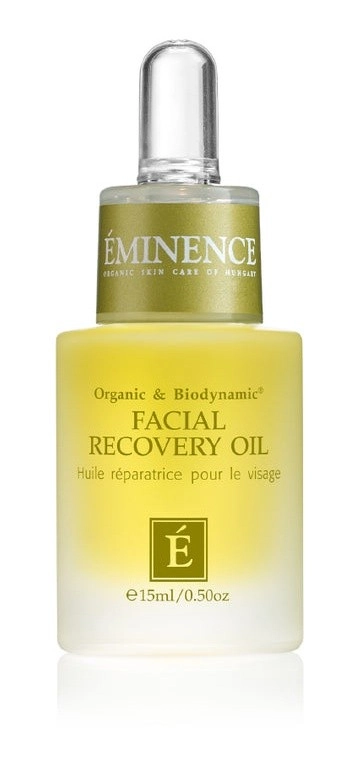
Analysis locked
How well does your skin match with Eminence Organic Facial Recovery Oil?
Login to see detailsOr continue via
Quick 1-minute survey • Completely free
Ingredients
Analysis results of Ingredients


Ingredient List
| EWG | CIR | Ingredient Name & Cosmetic Function | Notes |
|---|---|---|---|
| 1 | A |  | |
| - | - | *Sesame Oil | |
| 1 | - | | |
| 1 | - | |


Eminence Organic Facial Recovery Oil - Ingredient Explanation
Olive Oil
1. Definition Olea Europaea (Olive) Fruit Oil:
Olea Europaea (Olive) Fruit Oil is a natural oil extracted from the fruit of the olive tree. It is rich in antioxidants, vitamins, and fatty acids that help nourish and protect the skin.2. Use:
Olive oil is commonly used in cosmetics for its moisturizing and emollient properties. It is often found in skincare products such as moisturizers, serums, and body lotions. Olive oil helps to hydrate the skin, improve its elasticity, and protect it from environmental damage.3. Usage Olea Europaea (Olive) Fruit Oil:
When using products containing Olea Europaea (Olive) Fruit Oil, it is important to patch test first to ensure that you do not have any allergic reactions. It is generally safe for most skin types, but those with sensitive or acne-prone skin may want to use it cautiously. Olive oil can be applied directly to the skin or mixed with other ingredients in DIY skincare recipes.4. References:
- Paula Begoun. (2003). "Don't Go to the Cosmetics Counter Without Me." Beginning Press.
- P. Konstantinidou, et al. (2010). "In vivo nutrigenomic effects of virgin olive oil polyphenols within the frame of the Mediterranean diet: a randomized controlled trial." The FASEB Journal.
- A. Ghanbari, et al. (2012). "Olive oil and cancer." Journal of the American Oil Chemists' Society.
*Sesame Oil
Ingredient data is being updated. Please check back later.
Sage Extract
1. Definition Salvia Officinalis (Sage) Extract:
Salvia Officinalis (Sage) Extract is derived from the leaves of the sage plant through a process of extraction. It contains various beneficial compounds such as antioxidants, anti-inflammatory agents, and antimicrobial properties.2. Use:
Sage extract is commonly used in cosmetics for its skin-healing and anti-aging properties. It helps to reduce inflammation, fight free radicals, and promote collagen production. Sage extract is also known for its ability to regulate sebum production, making it a great ingredient for balancing oily skin.3. Usage Salvia Officinalis (Sage) Extract:
Sage extract can be found in a variety of skincare products such as serums, moisturizers, and masks. It is typically included in formulations at a concentration of 1-5%. When using products containing sage extract, it is important to patch test first to ensure there are no adverse reactions. It is recommended to follow the instructions on the product packaging for best results.4. References:
- Sánchez-Muniz, F. J., & Macho-González, A. (2017). Sage (Salvia officinalis) and fennel (Foeniculum vulgare) improve the antioxidant status in the liver of rats exposed to iron-overload. Food & Function, 8(2), 702-709.
- Tundis, R., Loizzo, M. R., Menichini, F., Statti, G. A., & Menichini, F. (2008). Biological and pharmacological activities of iridoids: recent developments. Mini reviews in medicinal chemistry, 8(4), 399-420.
- Baricevic, D., & Sosa, S. (2003). Comparative study of isotype content of sage (Salvia officinalis L.) essential oils. Journal of Essential Oil Research, 15(1), 59-62.
Coriander Extract
1. Definition Coriander Extract:
Coriander extract is derived from the seeds of the Coriandrum sativum plant, commonly known as coriander or cilantro. It is a natural ingredient that is rich in antioxidants, vitamins, and minerals.2. Use:
Coriander extract is commonly used in cosmetics for its skin-soothing and anti-inflammatory properties. It can help to calm irritation, reduce redness, and promote overall skin health. Additionally, coriander extract is known for its ability to help balance oil production, making it suitable for use in products designed for oily or combination skin types.3. Usage Coriander Extract:
Coriander extract can be found in a variety of cosmetic products, including moisturizers, serums, and masks. It is typically used in concentrations ranging from 0.5% to 2% in formulations. When using products containing coriander extract, it is important to patch test first to ensure that you do not have any adverse reactions. As with any new skincare ingredient, it is recommended to consult with a dermatologist before incorporating coriander extract into your routine.4. References:
- Sharma, V., & Thakur, M. (2019). Coriander: A promising medicinal plant. International Journal of Pharmaceutical Sciences and Research, 10(4), 1736-1744.
- Bhowmik, D., & Kumar, K. P. S. (2011). Coriander and its phytoconstituents: a review. Scholars Research Library, 3(2), 77-85.
- Patel, P. K., & Patel, M. A. (2012). Coriander (Coriandrum sativum L.): A potential source of high-value components for functional foods and nutraceuticals—a review. Pharma Nutrition, 1(1), 22-29.
Review

Didn't find
the information you need?






Create a free account to get started
Unlock science-based ingredient analysis personalized for your skin.
Already have an account? Log in
We protect your privacy. We never send spam.