


Analysis locked
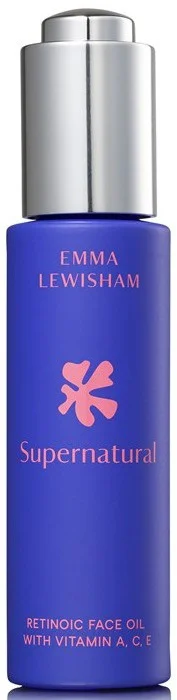
How well does your skin match with Emma Lewisham Supernatural Triple Vitamin A+ Face Oil?
Login to see detailsOr continue via
Quick 1-minute survey • Completely free
Ingredients
Analysis results of Ingredients


Ingredient List
| EWG | CIR | Ingredient Name & Cosmetic Function | Notes |
|---|---|---|---|
| 1 | A | (Skin Conditioning, Emollient) |  |
| 1 | - | | |
| 1 | A | | |
| 1 | - | (Emollient) | |




Emma Lewisham Supernatural Triple Vitamin A+ Face Oil - Ingredient Explanation
Camellia Japonica Seed Oil
1. Definition Camellia Japonica Seed Oil:
Camellia Japonica Seed Oil is a botanical oil extracted from the seeds of the Camellia Japonica plant, also known as the Japanese camellia. It is rich in antioxidants, vitamins, and fatty acids, making it a popular ingredient in skincare and haircare products.2. Use:
Camellia Japonica Seed Oil is used in cosmetics for its moisturizing, nourishing, and anti-aging properties. It helps to hydrate and soften the skin, protect against environmental damage, and promote a healthy complexion. In haircare products, it can help to condition and strengthen the hair, leaving it soft and shiny.3. Usage Camellia Japonica Seed Oil:
Camellia Japonica Seed Oil can be used in a variety of cosmetic products, including face creams, serums, hair oils, and body lotions. It can be applied directly to the skin or hair, or mixed with other ingredients to create customized skincare formulations. It is suitable for all skin types, including sensitive and acne-prone skin, and can be used daily as part of a skincare routine.4. References:
- Kim, J., et al. (2012). Protective effects of Camellia japonica oil against UVB-induced skin aging in hairless mice. Journal of Ethnopharmacology, 144(2), 464-473.
- Hwang, E., et al. (2014). Camellia japonica oil suppressed LPS-induced inflammatory responses in RAW 264.7 macrophages and zebrafish. Journal of Functional Foods, 10, 225-235.
- Park, K., et al. (2017). Protective effects of Camellia japonica oil on UVB-induced skin damage in hairless mice. Journal of Cosmetic Dermatology, 16(3), 419-426.
Simmondsia Chinensis (Jojoba) Esters
1. Definition Simmondsia Chinensis (Jojoba) Esters:
Simmondsia Chinensis (Jojoba) Esters are derived from the seeds of the Jojoba plant, which is native to the southwestern United States and northern Mexico. These esters are commonly used in cosmetics as emollients, skin-conditioning agents, and moisturizers.2. Use:
Jojoba esters are known for their ability to mimic the skin's natural oils, making them an excellent ingredient for skincare products. They are commonly used in lotions, creams, serums, and other skincare products to help hydrate and soften the skin. Jojoba esters are also used in hair care products to add shine and moisture to the hair.3. Usage Simmondsia Chinensis (Jojoba) Esters:
Jojoba esters are generally safe to use in cosmetics, but it is important to follow the recommended usage guidelines provided by the manufacturer. It is recommended to conduct a patch test before using products containing Jojoba esters to ensure that you do not have an allergic reaction. Additionally, it is important to store products containing Jojoba esters in a cool, dry place away from direct sunlight to maintain their efficacy.4. References:
- Gharavi, N., & Gharavi, N. M. (2016). Jojoba in dermatology: A succinct review. Giornale italiano di dermatologia e venereologia: organo ufficiale, Societa italiana di dermatologia e sifilografia, 151(4), 415-420.
- Meier, L., Stange, R., & Michalsen, A. (2012). Clay jojoba oil facial mask for lesioned skin and mild acne—results of a prospective, observational pilot study. Forschende Komplementärmedizin/Research in Complementary Medicine, 19(2), 75-79.
- Pazyar, N., Yaghoobi, R., Ghassemi, M. R., Kazerouni, A., & Rafeie, E. (2013). Jojoba in dermatology: A comprehensive review. Journal of clinical and aesthetic dermatology, 6(2), 25.
Citrullus Lanatus Seed Oil
1. Definition Citrullus Lanatus Seed Oil:
Citrullus Lanatus Seed Oil, also known as watermelon seed oil, is a lightweight and non-greasy oil extracted from the seeds of the Citrullus Lanatus fruit. It is rich in essential fatty acids, vitamins, and minerals, making it a popular ingredient in skincare and hair care products.2. Use:
Citrullus Lanatus Seed Oil is commonly used in cosmetics for its moisturizing, nourishing, and antioxidant properties. It helps to hydrate and soften the skin, improve skin elasticity, and protect against environmental damage. In hair care products, it can help to condition and strengthen the hair, promote hair growth, and add shine.3. Usage Citrullus Lanatus Seed Oil:
Citrullus Lanatus Seed Oil can be used in a variety of cosmetic products, including face creams, body lotions, serums, hair masks, and more. It is typically used in small concentrations, as it is a potent oil. It can be applied directly to the skin or hair, or mixed with other carrier oils or ingredients to create customized beauty formulations.4. References:
- Paula Begoun, Bryan Barron, The Original Beauty Bible: Skin Care Facts for Ageless Beauty, 2009.
- K. Shahidi, P. J. Wanasundara, Omega-3 Fatty Acids: Chemistry, Nutrition, and Health Effects, 2001.
- R. S. Chavan, A. A. Chavan, Medicinal and Aromatic Plants: Cultivation and Uses, 2018.
Opuntia Ficus Indica Seed Oil
1. Definition Opuntia Ficus Indica Seed Oil:
Opuntia Ficus Indica Seed Oil, also known as prickly pear seed oil, is a natural oil extracted from the seeds of the prickly pear cactus. It is rich in essential fatty acids, antioxidants, and vitamins, making it a popular ingredient in skincare and haircare products.2. Use:
Opuntia Ficus Indica Seed Oil is used in cosmetics for its moisturizing, anti-aging, and skin-brightening properties. It helps to hydrate and nourish the skin, improve elasticity, and reduce the appearance of fine lines and wrinkles. Additionally, it can help to even out skin tone and reduce the appearance of dark spots and hyperpigmentation.3. Usage Opuntia Ficus Indica Seed Oil:
Opuntia Ficus Indica Seed Oil can be used in a variety of cosmetic products, including moisturizers, serums, masks, and hair oils. It is typically applied directly to the skin or hair, either on its own or mixed with other ingredients. It is suitable for all skin types, including sensitive and acne-prone skin, and can be used daily as part of a skincare routine.4. References:
- Eddouks, M., Maghrani, M., & Lemhadri, A. (2005). Hypoglycemic effect of Opuntia ficus-indica L. in streptozotocin-induced diabetic rats. Journal of Ethnopharmacology, 99(2), 239-244.
- Kim, S., Jin, Y., Choi, Y. H., Park, J., & Lee, S. (2014). Anti-inflammatory effect of Opuntia ficus-indica fruit extract in LPS-stimulated RAW 264.7 macrophages. Preventive Nutrition and Food Science, 19(4), 258-264.
- Stintzing, F. C., Carle, R., & Schieber, A. (2001). Phytochemical and nutritional significance of cactus pear. European Food Research and Technology, 212(4), 396-407.
Review

Didn't find
the information you need?








Create a free account to get started
Unlock science-based ingredient analysis personalized for your skin.
Already have an account? Log in
We protect your privacy. We never send spam.