


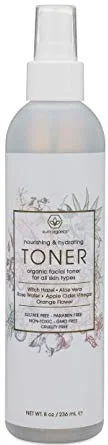
Analysis locked
How well does your skin match with Era Organics Nourishing And Hydrating Toner?
Login to see detailsOr continue via
Quick 1-minute survey • Completely free
Ingredients
Analysis results of Ingredients


Ingredient List
| EWG | CIR | Ingredient Name & Cosmetic Function | Notes |
|---|---|---|---|
| 1 3 | - | | |
| 1 | - | (Solvent, Masking, Viscosity Controlling, Antifoaming Agent, Antimicrobial, Astringent) |    |
| 1 2 | A | (Solvent, Perfuming, Fragrance, Humectant, Viscosity Decreasing Agent, Hair Conditioning, Skin Protecting, Denaturant ) |  |
| 1 | - | |
Era Organics Nourishing And Hydrating Toner - Ingredient Explanation
Aloe Barbadensis (Aloe Vera) Leaf Juice
1. Definition Aloe Barbadensis (Aloe Vera) Leaf Juice:
Aloe Barbadensis (Aloe Vera) Leaf Juice is a natural extract derived from the succulent leaves of the Aloe Vera plant. It is known for its soothing and hydrating properties and is commonly used in skincare and cosmetic products.2. Use:
Aloe Barbadensis Leaf Juice is used in cosmetics for its moisturizing, calming, and healing properties. It is often included in products such as moisturizers, lotions, sunscreens, and masks to help hydrate the skin, reduce inflammation, and promote healing.3. Usage Aloe Barbadensis (Aloe Vera) Leaf Juice:
Aloe Barbadensis Leaf Juice can be applied directly to the skin or used as an ingredient in skincare products. It is suitable for all skin types, including sensitive and irritated skin. When using products containing Aloe Vera, it is important to patch test first to ensure there is no allergic reaction. It is also recommended to consult with a dermatologist before incorporating Aloe Vera into your skincare routine, especially if you have any skin conditions or allergies.4. References:
- Surjushe, A., Vasani, R., & Saple, D. G. (2008). Aloe vera: A short review. Indian Journal of Dermatology, 53(4), 163–166.
- Radha, M. H., & Laxmipriya, N. P. (2015). Evaluation of biological properties and clinical effectiveness of Aloe vera: A systematic review. Journal of Traditional and Complementary Medicine, 5(1), 21–26.
- Choi, S., Chung, M. H., & Aeschbach, R. (2001). Antioxidant activity of Aloe vera in vitro study. Journal of Agricultural and Food Chemistry, 50(16), 3718–3722.
Alcohol Denatured
1. Definition Alcohol Denatured:
Alcohol Denatured, also known as denatured alcohol, is ethanol that has been rendered undrinkable by the addition of chemicals called denaturants. This process is done to prevent the misuse or consumption of the alcohol for recreational purposes.2. Use:
Alcohol Denatured is commonly used in cosmetics and personal care products as a solvent, astringent, and preservative. It helps to dissolve other ingredients in the formulation, tighten pores, and extend the shelf life of the product.3. Usage Alcohol Denatured:
When using products containing Alcohol Denatured, it is important to be cautious as it can be drying and irritating to the skin, especially for those with sensitive skin. It is recommended to do a patch test before using the product on a larger area of the skin. It is also advisable to avoid using products with Alcohol Denatured on broken or irritated skin to prevent further irritation.4. References:
- "Denatured Alcohol in Cosmetics." Cosmetics Info, www.cosmeticsinfo.org/ingredient/denatured-alcohol.
- "Alcohol Denat." Paula's Choice Skincare, www.paulaschoice.com/ingredient-dictionary/solvents/alcohol-denat.html.
- "Denatured Alcohol." The Dermatology Review, www.thedermreview.com/denatured-alcohol/.
Glycerin
1. Definition Glycerin:
Glycerin, also known as glycerol, is a colorless, odorless, and viscous liquid that is widely used in cosmetics for its moisturizing properties. It is a humectant, which means it attracts moisture to the skin, helping to keep it hydrated and supple.
2. Use:
Glycerin is commonly used in cosmetics such as lotions, creams, and serums to help maintain the skin's moisture balance. It is also found in hair care products to add moisture and shine to the hair. Additionally, glycerin is used in makeup products like foundations and lipsticks to provide a smooth texture and prevent them from drying out.
3. Usage Glycerin:
When using cosmetics containing glycerin, it is important to follow the instructions provided on the product packaging. Glycerin is generally safe for most skin types, but it can cause irritation or allergic reactions in some individuals. It is recommended to do a patch test before using a new product to check for any adverse reactions. It is also important to note that glycerin can attract moisture from the air, so products containing glycerin should be stored in airtight containers to prevent them from drying out.
4. References:
- Draelos, Z. D. (2010). Cosmetic Formulation of Skin Care Products. John Wiley & Sons.
- Loden, M., & Maibach, H. I. (2006). Dry Skin and Moisturizers: Chemistry and Function. CRC Press.
- Winter, R. (2009). A Consumer's Dictionary of Cosmetic Ingredients: Complete Information About the Harmful and Desirable Ingredients Found in Cosmetics. Harmony.
Witch Hazel
1. Definition Hamamelis Virginiana (Witch Hazel):
Hamamelis Virginiana, commonly known as Witch Hazel, is a plant native to North America that has been used for centuries for its medicinal properties. Witch Hazel extract is derived from the leaves and bark of the plant and is known for its astringent, anti-inflammatory, and antioxidant properties.2. Use:
Witch Hazel is commonly used in cosmetics for its ability to tighten and tone the skin, reduce inflammation, and minimize the appearance of pores. It is often found in toners, cleansers, and moisturizers for its soothing and clarifying effects on the skin. Witch Hazel is also used in hair care products to help balance oil production and promote a healthy scalp.3. Usage Hamamelis Virginiana (Witch Hazel):
Witch Hazel can be applied topically to the skin using a cotton pad or as an ingredient in skincare products. It is generally safe for most skin types, but it is recommended to do a patch test before using it on the face or body to check for any allergic reactions. Witch Hazel should not be ingested and should be kept out of reach of children.4. References:
- Chevallier, Andrew. Encyclopedia of Herbal Medicine: The Definitive Home Reference Guide to 550 Key Herbs with all their Uses as Remedies for Common Ailments. DK Publishing, 2016.
- Duke, James A., and Mary Jo Bogenschutz-Godwin. Handbook of Medicinal Herbs, Second Edition. CRC Press, 2002.
- Reuter, J., et al. "Investigations on the anti-inflammatory activity of a herbal drug combination of stinging nettle herb, couch grass root and witch hazel leaves." Phytomedicine 10.8 (2003): 700-708.
Review

Didn't find
the information you need?






Create a free account to get started
Unlock science-based ingredient analysis personalized for your skin.
Already have an account? Log in
We protect your privacy. We never send spam.