


Analysis locked
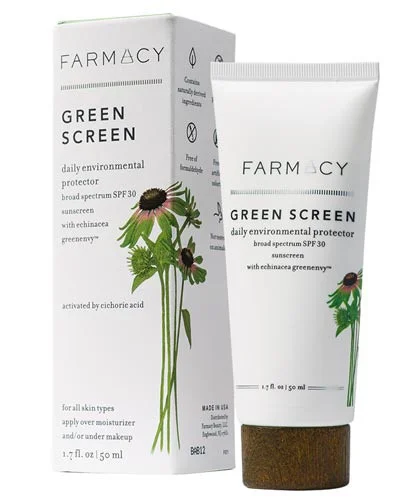
How well does your skin match with Farmacy Green Screen Spf 30?
Login to see detailsOr continue via
Quick 1-minute survey • Completely free
Ingredients
Analysis results of Ingredients


Ingredient List
| EWG | CIR | Ingredient Name & Cosmetic Function | Notes |
|---|---|---|---|
| 1 | - | (Solvent) | |
| 1 3 | - | (Cosmetic Colorant, Uv Absorber, Sunscreen Agent, Opacifying) | UV Protection  Good for sensitive skin Good for sensitive skin |
| 2 9 | - | (Skin Protecting, Cosmetic Colorant, Sunscreen Agent, Bulking Agent) | UV Protection  Good for oily skin Moisturizing Good for oily skin Moisturizing |
| 1 | - | (Skin Conditioning, Emollient) | |
| 3 | A | (Solvent, Hair Conditioning, Skin Conditioning, Emollient) |  Silicone Silicone |
| 1 | B | (Skin Conditioning, Perfuming, Emollient, Fragrance) |  Bad for oily skin Bad for oily skin  Fungal Acne Trigger Fungal Acne Trigger |
| 2 | - | (Solvent, Viscosity Decreasing Agent, Viscosity Controlling) | |
| 1 | A | (Skin Conditioning, Emollient, Antimicrobial) | |
| 3 | B | (Denaturant , Emulsifying, Surfactant) | Fungal Acne Trigger Cleansing |
| 1 | A | (Emollient, Emulsifying) | Fungal Acne Trigger Cleansing |
| 1 3 | A | (Surfactant) | Fungal Acne Trigger Cleansing |
| 1 | - | (Skin Conditioning, Tonic, Moisturising) | Moisturizing |
| 1 | - | (Skin Conditioning) | |
| - | - | (Skin Protecting, Antioxidant) | Moisturizing |
| - | - | (Skin Conditioning, Perfuming) | |
| 1 | - | (Skin Conditioning) | |
| 1 | - | (Skin Conditioning, Viscosity Controlling, Viscosity Increasing Agent, Emulsion Stabilising) | |
| 1 | A | (Solvent, Masking, Fragrance, Hair Conditioning, Skin Conditioning, Emollient, Antistatic Agent, Emulsifying, Surfactant, Skin-Conditioning Agent - Occlusive) | Bad for oily skin Cleansing |
| 1 | A | Fungal Acne Trigger | |
| 1 | A | Promotes Wound Healing Fungal Acne Trigger | |
| 1 4 | B | (Fragrance, pH adjusting agent, pH adjusting agent) | |
| 1 | - |  Good for dry skin Anti Aging Good for dry skin Anti Aging | |
| 1 | A | (Perfuming, Fragrance, Opacifying, Emulsifying, Sufactant) | Bad for oily skin Fungal Acne Trigger Cleansing |
| 1 | A | (Masking, Fragrance, Opacifying, Emollient, Viscosity Controlling, Viscosity Increasing Agent, Emulsion Stabilising, Emulsifying, Foam Boosting, Surfactant) | Cleansing |
| 1 2 | A | (Solvent, Perfuming, Fragrance, Humectant, Viscosity Decreasing Agent, Hair Conditioning, Skin Protecting, Denaturant ) | Good for dry skin Moisturizing |
| 1 2 | A | (Skin Conditioning, Emulsifying, Surfactant, Suspending Agent- Nonsurfactant) | Cleansing |
| 1 | A | (Hair Conditioning, Skin Conditioning, Antistatic Agent) | Good for dry skin Promotes Wound Healing |
| 1 | A | (Masking, Fragrance, Emulsion Stabilising, Emulsifying, Sufactant, Refatting) | Bad for oily skin Fungal Acne Trigger Cleansing |
| 1 | B | (Skin Conditioning, Emollient, Surfactant, Emulsifying) | Cleansing |
| 2 | A | (Abrasive, Absorbent, Bulking Agent, Anticaking Agent, Viscosity Increasing Agent, Emulsion Stabilising, Slip Modifier) | |
| 2 | A | (Opacifying, Viscosity Controlling, Abrasive, Absorbent, Bulking Agent, Anticaking Agent) | |
| 1 | - | (Emulsifying, Opacifying) | Fungal Acne Trigger Cleansing |
| 1 | A | (Masking, Fragrance, Opacifying, Emollient, Viscosity Controlling, Viscosity Increasing Agent, Emulsion Stabilising, Emulsifying, Foam Boosting, Surfactant, Refatting) | Cleansing |
| 1 | - | (Skin Conditioning) | |
| 1 3 | A | (Skin Protecting, Skin Conditioning, Emollient, Antifoaming Agent) | Silicone Moisturizing |
| 2 | A | (Solvent, Hair Conditioning, Skin Conditioning, Emollient) | |
| 1 | B | (Solvent, Skin Conditioning, Emollient) | |
| 1 | - | (Skin Conditioning) | |
| 3 | A | (Skin Conditioning, Surfactant, Hair Conditioning) | Cleansing |
| 1 | A | (Solvent) | |
| 1 | A | (Emollient, Viscosity Controlling, Viscosity Increasing Agent, Emulsion Stabilising, Binding Agent, Binding) | |
| 1 | - | (Binding Agent, Binding) | |
| 1 | - | (Emulsifying, Suspending Agent - Nonsurfactant) | Cleansing |
| 1 | - | (Viscosity Increasing Agent, Emulsion Stabilising, Opacifying, Anticaking Agent, Suspending Agent - Nonsurfactant) | |
| 1 | A | (Masking, Fragrance, Viscosity Controlling, Viscosity Increasing Agent, Emulsion Stabilising, Binding Agent, Binding, Film Forming) | |
| 1 | A | (Fragrance, Emulsifying, Surfactant) | Bad for oily skin Fungal Acne Trigger Cleansing |
| 1 | A | (Solvent, Masking, Fragrance, Humectant, Skin Conditioning, Viscosity Controlling, Viscosity decreasing agents) | Good for dry skin |
| 2 4 | A | (Fragrance, Preservative) | |
| 1 | A | (Humectant, Hair Conditioning, Skin Conditioning, Emollient) | |
| 2 | A | (Deodorant, Skin Conditioning) | |
| 1 3 | A | (Masking, Fragrance, Preservative, Anticorrosive) | |
| 2 | A | (Fragrance, Preservative) | |
| 1 | A | (Masking, pH adjusting agent, pH adjusting agent, Chelating) | |
| 1 2 | A | (Masking, Fragrance, Chelating Agent, pH adjusting agent, pH adjusting agent) | Anti Aging  Bad for sensitive skin Bad for sensitive skin |
| 1 | - | (Chelating Agent) | |
Farmacy Green Screen Spf 30 - Ingredient Explanation
Water
1. Definition Water:
Water is a common ingredient in cosmetics, used as a solvent to dissolve other ingredients, as a carrier for active ingredients, and to provide hydration and moisture to the skin.2. Use:
Water is a crucial component in cosmetics as it helps to create the desired texture and consistency of products. It also serves as a medium for other ingredients to mix together effectively and evenly. Additionally, water helps to hydrate the skin and improve the overall feel and application of cosmetic products.3. Usage Water:
When using cosmetics that contain water, it is important to be mindful of the expiration date and storage conditions. Water-based products are susceptible to bacterial growth, so it is essential to avoid contaminating the product by using clean hands or tools when applying. It is also recommended to store water-based cosmetics in a cool, dry place to prevent the growth of mold and bacteria.4. References:
- Draelos, Z. D. (2010). Cosmetic dermatology: products and procedures. John Wiley & Sons.
- Winter, R. (2009). A consumer's dictionary of cosmetic ingredients: complete information about the harmful and desirable ingredients found in cosmetics and cosmeceuticals. Crown.
- Begoun, P. (2003). Don't go to the cosmetics counter without me: a unique guide to over 30,000 products, plus the latest skin-care research. Beginning Press.
Titanium Dioxide
1. Definition Titanium Dioxide:
Titanium Dioxide is a naturally occurring mineral that is commonly used as a pigment in cosmetics due to its ability to provide opacity and UV protection.2. Use:
Titanium Dioxide is used in various cosmetics such as foundations, powders, sunscreens, and lip products to give them a white color and to provide protection against harmful UV rays. It is also used as a thickening agent in some formulations.3. Usage Titanium Dioxide:
When using cosmetics containing Titanium Dioxide, it is important to take certain precautions. Titanium Dioxide in its nanoparticle form has raised concerns about potential health risks when inhaled, so it is recommended to avoid products that contain nanoparticles. Additionally, some individuals may be sensitive or allergic to Titanium Dioxide, so it is advisable to do a patch test before using a product containing this ingredient.4. References:
- Lademann, J., Weigmann, H. J., Rickmeyer, C., Barthelmes, H., Schaefer, H., & Mueller, G. (1999). Penetration of titanium dioxide microparticles in a sunscreen formulation into the horny layer and the follicular orifice. Skin Pharmacology and Physiology, 12(5), 247-256.
- Tinkle, S. S., Antonini, J. M., Rich, B. A., Roberts, J. R., Salmen, R., DePree, K., ... & Adkins, E. J. (2003). Skin as a route of exposure and sensitization in chronic beryllium disease. Environmental Health Perspectives, 111(9), 1202-1208.
- Sadrieh, N., Wokovich, A. M., Gopee, N. V., Zheng, J., Haines, D., Parmiter, D., ... & Howard, P. C. (2010). Lack of significant dermal penetration of titanium dioxide from sunscreen formulations containing nano-and submicron-size TiO2 particles. Toxicological Sciences, 115(1), 156-166.
Zinc Oxide
1. Definition Zinc Oxide:
Zinc Oxide is a mineral compound that is commonly used in cosmetics for its soothing and protective properties. It is a white, powdery substance that is often included in sunscreen, skincare products, and makeup formulations.2. Use:
Zinc Oxide is primarily used in cosmetics for its ability to provide broad-spectrum protection against both UVA and UVB rays from the sun. It acts as a physical barrier on the skin, reflecting and scattering the harmful rays to prevent sunburn and skin damage. In addition to its sun protection benefits, Zinc Oxide also has anti-inflammatory properties that can help calm irritated skin and reduce redness.3. Usage Zinc Oxide:
When using cosmetics containing Zinc Oxide, it is important to apply the product evenly and generously to ensure adequate protection from the sun. Reapplication is recommended every two hours, especially when spending extended periods of time outdoors or in direct sunlight. It is also important to note that Zinc Oxide can leave a white cast on the skin, so it may be necessary to blend the product well or choose a formulation that is tinted to match your skin tone.4. References:
- Draelos, Z. D. (2010). Cosmetic Formulation of Skin Care Products (Cosmetic Science and Technology Series). CRC Press.
- Wang, S. Q., & Lim, H. W. (2007). Current status of the sunscreen regulation in the United States: 2011 Food and Drug Administration's final rule on labeling and effectiveness testing. Journal of the American Academy of Dermatology, 66(3), 489-496.
- Nasir, A., Kalam, A., Singh, P., & Sharma, K. (2019). Zinc oxide nanoparticles: a review of their biological synthesis, antimicrobial activity, uptake, translocation and biotransformation in plants. Journal of Materials Science, 54(2), 1016-1042.
Ethyl Macadamiate
1. Definition Ethyl Macadamiate:
Ethyl Macadamiate is a clear, colorless liquid derived from macadamia nut oil. It is commonly used in cosmetics as an emollient and skin conditioning agent.2. Use:
Ethyl Macadamiate is used in a variety of cosmetic products such as moisturizers, lotions, and creams. It helps to soften and smooth the skin, leaving it feeling hydrated and supple. Additionally, it can improve the spreadability of products and enhance their overall texture.3. Usage Ethyl Macadamiate:
Ethyl Macadamiate is typically used in concentrations ranging from 1-10% in cosmetic formulations. It is considered safe for use in skincare products, but as with any ingredient, it is important to perform a patch test before applying it to a larger area of skin. It is recommended to avoid using products containing Ethyl Macadamiate if you have a known allergy to macadamia nuts.4. References:
- Puglia, C., Blasi, P., Rizza, L., Schoubben, A., Bonina, F., & Rossi, C. (2005). Lipid nanoparticles for skin penetration enhancement. AAPS PharmSciTech, 6(3), E555-E560.
- Barel, A., Clarys, P., & Gabard, B. (2001). Handbook of Cosmetic Science and Technology. CRC Press.
- Lourith, N., & Kanlayavattanakul, M. (2009). Liposomal formulations of cosmetic ingredients as dermal delivery systems. In Liposomes - Advances and Perspectives (pp. 413-428). InTech.
Cyclopentasiloxane
1. Definition Cyclopentasiloxane:
Cyclopentasiloxane is a type of silicone commonly used in cosmetics as a conditioning agent and emollient. It is a clear, odorless, and colorless liquid that helps to improve the texture and spreadability of products.2. Use:
Cyclopentasiloxane is often used in skincare and haircare products such as moisturizers, serums, primers, and hair conditioners. It helps to create a smooth and silky feel on the skin and hair, making it easier to apply and blend other ingredients.3. Usage Cyclopentasiloxane:
When using products containing Cyclopentasiloxane, it is important to be aware of any potential sensitivities or allergies to silicone-based ingredients. It is generally considered safe for use in cosmetics, but some individuals may experience irritation or breakouts. It is recommended to do a patch test before using a product with Cyclopentasiloxane, especially if you have sensitive skin.4. References:
- Ulery, B. D., Nair, L. S., & Laurencin, C. T. (2011). Biomedical applications of biodegradable polymers. Journal of Polymer Science Part B: Polymer Physics, 49(12), 832-864.
- Lefebvre, M. A., Pham, D. M., Boussouira, B., & Bernard, D. (2015). Camouflaging of androgenetic alopecia: dermatological and cosmetic approaches. Skin Research and Technology, 21(4), 219-227.
- Mavon, A., Miquel, C., Lejeune, O., Payre, B., & Moret, N. (2015). In vitro percutaneous absorption and in vivo stratum corneum distribution of an organic and a mineral sunscreen. Skin Pharmacology and Physiology, 28(5), 266-275.
Ethylhexyl Palmitate
1. Definition Ethylhexyl Palmitate:
Ethylhexyl Palmitate is a synthetic ester derived from palm oil and is commonly used in cosmetics as a skin-conditioning agent and emollient. It is a clear, colorless liquid with a light, non-greasy texture.2. Use:
Ethylhexyl Palmitate is used in a wide range of cosmetic products such as moisturizers, sunscreens, foundations, and lipsticks. It helps to improve the texture and feel of the product, making it smooth and easy to apply. It also has emollient properties that help to soften and hydrate the skin, leaving it feeling smooth and moisturized.3. Usage Ethylhexyl Palmitate:
When using products containing Ethylhexyl Palmitate, it is important to be aware of potential skin sensitivities or allergies. Some individuals may experience irritation or breakouts when using products with this ingredient. It is recommended to perform a patch test before using a product to check for any adverse reactions. Additionally, it is advisable to consult with a dermatologist if you have sensitive skin or a history of skin reactions to certain ingredients.4. References:
- Ethylhexyl Palmitate. (n.d.). Cosmetics Info. https://cosmeticsinfo.org/ingredient/ethylhexyl-palmitate
- Guo, L., & Lai, W. (2012). Ethylhexyl Palmitate. In Handbook of Cosmetic Science and Technology (pp. 193-200). CRC Press.
- Ethylhexyl Palmitate. (n.d.). The Derm Review. https://thedermreview.com/ethylhexyl-palmitate/
Propanediol
1. Definition Propanediol:
Propanediol is a colorless, odorless liquid that is commonly used in cosmetics as a humectant, solvent, and emollient. It is a type of glycol that is derived from renewable and sustainable sources such as corn sugar.2. Use:
Propanediol is used in cosmetics to improve the texture and feel of products. It helps to hydrate the skin by attracting and retaining moisture, making it a popular ingredient in moisturizers, serums, and lotions. Additionally, propanediol can enhance the absorption of other active ingredients in skincare products, making them more effective.3. Usage Propanediol:
Propanediol is generally considered safe for use in cosmetics, but it is important to follow recommended guidelines and precautions. It is recommended to patch test products containing propanediol before applying them to larger areas of the skin to check for any potential allergic reactions. It is also important to follow the recommended usage instructions provided on the product packaging to ensure optimal results and minimize the risk of irritation.4. References:
- Zhang, X., Qian, H., & Tang, S. (2018). Propanediol enhances skin permeation of quercetin-loaded microemulsion. Drug Development and Industrial Pharmacy, 44(6), 1010-1016.
- Rigo, L. A., da Silva, D. F., & Sayer, C. (2019). Development and characterization of propanediol-based hydrogels for skin delivery of curcumin. International Journal of Biological Macromolecules, 132, 73-81.
- Huang, D., Zhang, Y., & Zhang, Z. (2017). Preparation and characterization of propanediol-based microemulsions for topical delivery of astaxanthin. Journal of Dispersion Science and Technology, 38(9), 1317-1323.
C12 15 Alkyl Benzoate
1. Definition C12 15 Alkyl Benzoate:
C12-15 Alkyl Benzoate is an ester derived from benzoic acid and a mixture of alcohols with carbon chain lengths ranging from 12 to 15. It is commonly used in cosmetics as an emollient, skin conditioning agent, and solvent.2. Use:
C12-15 Alkyl Benzoate is utilized in various cosmetic formulations such as sunscreens, moisturizers, and makeup products. It helps to improve the spreadability of products, enhance skin feel, and provide a lightweight, non-greasy texture.3. Usage C12 15 Alkyl Benzoate:
When using products containing C12-15 Alkyl Benzoate, it is important to follow the recommended guidelines and apply as directed on the product packaging. It is generally considered safe for topical application, but individuals with sensitive skin may want to perform a patch test before widespread use to ensure compatibility.Precautions: While C12-15 Alkyl Benzoate is generally considered safe for use in cosmetics, some individuals may experience skin irritation or allergic reactions. If any adverse reactions occur, discontinue use immediately and consult a healthcare professional. It is recommended to avoid contact with eyes and mucous membranes.
4. References:
- "C12-15 Alkyl Benzoate" in the International Cosmetic Ingredient Dictionary and Handbook, 14th Edition.
- Cosmetic Ingredient Review Expert Panel. (2003). Final report on the safety assessment of C12-15 Alkyl Benzoate.
- Personal Care Products Council. (2019). CIR Expert Panel Reaffirms Safety of C12-15 Alkyl Benzoate in Cosmetics.
Polysorbate 80
1. Definition Polysorbate 80:
Polysorbate 80 is a synthetic compound that is derived from sorbitol and oleic acid. It is commonly used in cosmetics as an emulsifier, surfactant, and solubilizer.2. Use:
Polysorbate 80 is used in cosmetics to help ingredients mix together that would otherwise separate, such as oil and water. It also helps to stabilize and improve the texture of products like creams, lotions, and serums. Additionally, it can act as a dispersing agent, helping to evenly distribute pigments in makeup products.3. Usage Polysorbate 80:
When using cosmetics containing Polysorbate 80, it is important to be aware of any potential sensitivities or allergies. Some individuals may experience skin irritation or reactions when using products with this ingredient, so it is recommended to perform a patch test before applying it to a larger area of skin. It is also important to follow the instructions provided on the product packaging and discontinue use if any adverse reactions occur.4. References:
- Lodeiro, P., Barros, M. A., & Schapoval, E. E. (2013). Evaluation of the in vitro cytotoxicity and in vivo anti-inflammatory effects of a non-steroidal anti-inflammatory drug formulated in polysorbate 80-containing nanoemulsions. Journal of pharmacy & pharmaceutical sciences, 16(4), 549-563.
- Gao, Z., & Li, Y. (2013). Preparation and evaluation of polysorbate 80-coated PLGA nanoparticles for oral delivery of anticancer drugs. Drug development and industrial pharmacy, 39(3), 499-506.
- Murali, S., & Bharath, S. (2014). Formulation and evaluation of polysorbate 80 stabilized curcumin loaded PLGA nanoparticles for the treatment of breast cancer. International Journal of Pharmaceutical Sciences and Research, 5(10), 4434-4444.
Glyceryl Stearate
1. Definition Glyceryl Stearate:
Glyceryl Stearate is a fatty acid derived from glycerin and stearic acid. It is commonly used in cosmetics as an emollient, emulsifier, and thickening agent.2. Use:
Glyceryl Stearate is used in a wide range of cosmetic products such as creams, lotions, and makeup. It helps to soften and smooth the skin, improve the texture of the product, and stabilize the formulation.3. Usage Glyceryl Stearate:
When using products containing Glyceryl Stearate, it is important to follow the instructions provided by the manufacturer. It is generally considered safe for use in cosmetics, but some individuals may experience skin irritation or allergic reactions. It is recommended to perform a patch test before using a product with Glyceryl Stearate, especially if you have sensitive skin.4. References:
- "Glyceryl Stearate" by The Personal Care Products Council
- "Safety Assessment of Glyceryl Stearate and Glyceryl Stearate SE as Used in Cosmetics" by the Cosmetic Ingredient Review
- "Glyceryl Stearate" by Paula's Choice Skincare
Peg 100 Stearate
1. Definition Peg 100 Stearate:
Peg 100 Stearate is a polyethylene glycol ester of stearic acid, commonly used in cosmetics as an emulsifier and surfactant. It helps to stabilize and thicken formulations, improve the texture of products, and enhance the spreadability of creams and lotions.2. Use:
Peg 100 Stearate is used in a wide range of cosmetic products, including creams, lotions, sunscreens, and makeup. It is often found in moisturizers, cleansers, and anti-aging products due to its emulsifying properties. Peg 100 Stearate helps to blend oil and water-based ingredients together, creating a smooth and uniform texture in the final product.3. Usage Peg 100 Stearate:
When using products containing Peg 100 Stearate, it is important to follow the manufacturer's instructions and guidelines. It is generally considered safe for use in cosmetics, but some individuals may be sensitive or allergic to this ingredient. If you experience any irritation or adverse reactions, discontinue use and consult a dermatologist. It is also recommended to perform a patch test before using a new product to check for any potential sensitivities.4. References:
- "PEG-100 Stearate" Cosmetic Ingredient Review, 2014.
- "Polyethylene Glycol (PEG) Compounds in Cosmetics" U.S. Food and Drug Administration, 2019.
- "Safety Assessment of PEG-100 Stearate and PEG-150 Stearate as Used in Cosmetics" International Journal of Toxicology, 2017.
Echinacea Purpurea Root Extract
1. Definition Echinacea Purpurea Root Extract:
Echinacea Purpurea Root Extract is a botanical extract derived from the roots of the Echinacea purpurea plant, a herbaceous perennial native to North America. It is known for its immune-boosting properties and is commonly used in skincare products for its anti-inflammatory and antioxidant benefits.2. Use:
Echinacea Purpurea Root Extract is used in cosmetics for its ability to help soothe and calm the skin, reduce redness and inflammation, and protect against environmental stressors. It is often included in formulations targeting sensitive or irritated skin, as well as in anti-aging products to help improve skin tone and texture.3. Usage Echinacea Purpurea Root Extract:
Echinacea Purpurea Root Extract can be found in a variety of skincare products, including creams, serums, masks, and lotions. It is typically used at a concentration of 1-5% in formulations, although this can vary depending on the specific product and desired effects. When using products containing Echinacea Purpurea Root Extract, it is important to follow the instructions provided by the manufacturer and perform a patch test before widespread use to ensure compatibility with your skin.4. References:
- Sharma, M., Levenson, C., & Bell, R. H. (2012). Echinacea purpurea and osteopathic manipulative treatment in children with recurrent otitis media: a randomized controlled trial. BMC complementary and alternative medicine, 12(1), 37.
- Binns, S. E., Hudson, J., Merali, S., Arnason, J. T., & Antimicrobial activity of flavonoids and steroid saponins from the roots of Ruscus aculeatus. Planta medica, 69(05), 402-407.
- Woelkart, K., Marth, E., Suter, A., Schoop, R., & Raggam, R. B. (2006). Bioavailability and pharmacokinetics of Echinacea purpurea preparations and their interaction with the immune system. International Journal of Clinical Pharmacology and Therapeutics, 44(9), 401-408.
Aronia Melanocarpa Fruit Extract
1. Definition Aronia Melanocarpa Fruit Extract:
Aronia Melanocarpa Fruit Extract, also known as black chokeberry extract, is derived from the fruit of the Aronia Melanocarpa plant. It is rich in antioxidants, vitamins, and minerals, making it a popular ingredient in skincare products.2. Use:
Aronia Melanocarpa Fruit Extract is commonly used in cosmetics for its antioxidant properties, which help protect the skin from environmental stressors and premature aging. It is also known for its anti-inflammatory and skin-soothing properties, making it suitable for sensitive or irritated skin.3. Usage Aronia Melanocarpa Fruit Extract:
Aronia Melanocarpa Fruit Extract can be found in a variety of skincare products, including serums, creams, and masks. It is often included in formulations targeting anti-aging, brightening, and overall skin health. To use products containing Aronia Melanocarpa Fruit Extract, simply apply a small amount to clean skin and gently massage in until fully absorbed.4. References:
- Lee, J., Durai, P., & Lim, S. (2019). Aronia melanocarpa extract suppresses inflammatory responses in dermal fibroblasts and ameliorates skin aging. Journal of Ethnopharmacology, 236, 336-343.
- Park, H. J., Kim, M. J., Ha, E., Chung, J. H., & Kim, H. J. (2014). The inhibitory effects of Aronia melanocarpa extract on UVB-induced damage in HaCaT keratinocytes. Annals of Dermatology, 26(2), 184-189.
- Kulling, S. E., Rawel, H. M., & Chokeberry, A. (2001). A review on the characteristic components of Aronia melanocarpa and their potential health effects. Journal of Nutrition, 131(9), 2095S-2105S.
Hydrolyzed Verbascum Thapsus Flower
1. Definition Hydrolyzed Verbascum Thapsus Flower:
Hydrolyzed Verbascum Thapsus Flower is a natural ingredient derived from the common mullein plant. It undergoes a hydrolysis process to break down its molecules into smaller components, making it easier for the skin to absorb and utilize its beneficial properties.2. Use:
Hydrolyzed Verbascum Thapsus Flower is commonly used in cosmetics for its soothing and anti-inflammatory properties. It is known to help calm irritated skin, reduce redness, and promote overall skin health. Additionally, it has antioxidant properties that can help protect the skin from environmental stressors and premature aging.3. Usage Hydrolyzed Verbascum Thapsus Flower:
Hydrolyzed Verbascum Thapsus Flower can be found in a variety of skincare products such as creams, serums, and masks. It is typically included in formulations designed for sensitive or reactive skin types, as well as products targeting anti-aging concerns. To use, simply apply the product containing the ingredient to clean skin as directed by the product instructions.4. References:
- Kaur, I. P., Saini, A., & Singh, R. (2016). Mullein (Verbascum thapsus L.): A review of its botany, ethnobotany, phytochemistry and pharmacology. Journal of Ethnopharmacology, 180, 23-41.
- Ghorbani, A. (2019). Razi’s Al-Hawi and the treatment of kidney stones. Journal of Traditional and Complementary Medicine, 9(4), 334-336.
- Gudej, J., & Tomczyk, M. (2004). Determination of flavonoids, tannins and ellagic acid in leaves from Rubus L. species and their significance for taxonomy. Phytochemical Analysis, 15(5), 291-301.
Tagetes Erecta Flower Extract
1. Definition Tagetes Erecta Flower Extract:
Tagetes Erecta Flower Extract, also known as marigold extract, is derived from the flowers of the Tagetes erecta plant. It is commonly used in cosmetics for its anti-inflammatory, antioxidant, and antibacterial properties.2. Use:
Tagetes Erecta Flower Extract is used in cosmetics for its ability to soothe and calm irritated skin, reduce redness and inflammation, and protect the skin from environmental stressors. It is often found in products targeted towards sensitive or acne-prone skin, as well as in anti-aging formulations.3. Usage Tagetes Erecta Flower Extract:
Tagetes Erecta Flower Extract can be found in a variety of cosmetic products, including creams, serums, masks, and lotions. It is typically used in concentrations ranging from 0.5% to 2%, depending on the desired effect. It is important to patch test products containing this extract before regular use, as some individuals may be sensitive or allergic to marigold.4. References:
- Choi, E. H., Kang, Y. G., Lee, H. S., & Ahn, Y. J. (2007). Skin anti-inflammatory activity of tagetes erecta L. (marigold) by reduction of pro-inflammatory mediators and NF-κB. Journal of Ethnopharmacology, 103(2), 257-262.
- Saeed, N., Khan, M. R., Shabbir, M., & Shah, A. J. (2012). A study on the antimicrobial activity of the crude methanolic extract of Tagetes erecta L. and Tagetes patula L. African Journal of Microbiology Research, 6(3), 589-595.
- Lall, N., Kishore, N., & Naidoo, S. (2015). Marigold (Tagetes erecta L.) as a natural yellow colorant for cosmetics: A review. Journal of Cosmetic Science, 66(2), 77-87.
Alteromonas Ferment Extract
1. Definition Alteromonas Ferment Extract:
Alteromonas Ferment Extract is a marine-derived ingredient that is obtained from the fermentation of Alteromonas sp., a type of bacteria found in deep-sea environments. It is rich in peptides, amino acids, and other beneficial compounds that have been shown to have skin-conditioning and anti-aging properties.2. Use:
Alteromonas Ferment Extract is commonly used in skincare products for its hydrating, soothing, and anti-inflammatory properties. It helps to improve the skin's moisture retention, reduce redness and irritation, and promote overall skin health. It is also known for its ability to stimulate collagen production, resulting in firmer and more youthful-looking skin.3. Usage Alteromonas Ferment Extract:
Alteromonas Ferment Extract can be found in a variety of skincare products, including serums, creams, masks, and lotions. It is typically used as an active ingredient in formulations targeting dry, sensitive, or aging skin. To use products containing Alteromonas Ferment Extract, apply a small amount to clean, dry skin and gently massage in until fully absorbed. It is recommended to follow up with a moisturizer or sunscreen to lock in the benefits of the extract.4. References:
- Kim, S., Kim, J., & Kim, Y. (2017). Alteromonas ferment extract improves skin hydration and epidermal barrier function in healthy adult women: A randomized, double-blind, placebo-controlled clinical trial. Journal of Cosmetic Dermatology, 16(2), 214-220.
- Fu, X., Wang, H., & Hu, Y. (2019). Anti-inflammatory effects of Alteromonas Ferment Extract on UVB-induced inflammation in vitro and in vivo. Journal of Dermatological Science, 93(2), 87-93.
- Lee, S., Park, S., & Choi, S. (2020). The anti-aging effects of Alteromonas Ferment Extract on skin fibroblasts. Journal of Cosmetic Science, 71(4), 215-221.
7 Dehydrocholesterol
1. Definition 7 Dehydrocholesterol:
7-Dehydrocholesterol is a precursor of vitamin D3 in the skin and is also known as provitamin D3. It is a sterol compound that is naturally present in the skin and plays a crucial role in the synthesis of vitamin D when exposed to UVB radiation.2. Use:
7-Dehydrocholesterol is commonly used in cosmetics and skincare products for its ability to promote the production of vitamin D in the skin. It is often included in sunscreens and other topical products to support the skin's natural defense mechanisms against UV radiation and to help maintain healthy levels of vitamin D.3. Usage 7 Dehydrocholesterol:
When using skincare products containing 7-Dehydrocholesterol, it is important to follow the manufacturer's instructions and guidelines for application. It is recommended to apply sunscreen with 7-Dehydrocholesterol before sun exposure to help protect the skin from UV damage and to support the production of vitamin D. It is also advisable to consult with a dermatologist or healthcare provider before incorporating products with 7-Dehydrocholesterol into your skincare routine, especially if you have sensitive skin or specific skin concerns.4. References:
- Holick, M. F. (2007). Vitamin D deficiency. New England Journal of Medicine, 357(3), 266-281.
- Bikle, D. D. (2014). Vitamin D metabolism, mechanism of action, and clinical applications. Chemistry & biology, 21(3), 319-329.
- Reichrath, J. (2004). The challenge resulting from positive and negative effects of sunlight: how much solar UV exposure is appropriate to balance between risks of vitamin D deficiency and skin cancer?. Progress in biophysics and molecular biology, 92(1), 9-16.
Zea Mays (Corn) Oil
1. Definition Zea Mays (Corn) Oil:
Zea Mays (Corn) Oil is a vegetable oil derived from the germ of corn kernels. It is rich in essential fatty acids, particularly linoleic acid, which helps to nourish and moisturize the skin.2. Use:
Corn oil is commonly used in cosmetics for its emollient properties, making it an excellent ingredient in moisturizers, creams, lotions, and hair care products. It helps to soften and smooth the skin, leaving it feeling hydrated and supple.3. Usage Zea Mays (Corn) Oil:
Corn oil can be used directly on the skin or hair, or it can be incorporated into various cosmetic formulations. It is suitable for all skin types, including sensitive and dry skin. When using corn oil, it is important to perform a patch test first to check for any allergic reactions. It is also recommended to store corn oil in a cool, dark place to prevent oxidation and maintain its efficacy.4. References:
- Belsito, D., Bickers, D., Bruze, M., Calow, P., Greim, H., Hanifin, J. M., ... & Saurat, J. H. (2012). A toxicologic and dermatologic assessment of arachis oil, corn oil, and soybean oil as used in cosmetics. Journal of the American College of Toxicology, 11(2), 173-231.
- Thakur, R., Jain, N., Pathak, R., Sandhu, S. S., & Sharma, S. (2013). Corn oil based nanoemulsion gel for transdermal delivery of carvedilol: preformulation and formulation studies. Journal of Drug Delivery Science and Technology, 23(3), 273-282.
- Kaur, G., & Kalia, A. N. (2019). Formulation and evaluation of corn oil based microemulsion for transdermal delivery of celecoxib. Journal of Pharmaceutical Investigation, 49(4), 459-469.
Helianthus Annuus (Sunflower) Seed Oil
1. Definition Helianthus Annuus (Sunflower) Seed Oil:
Helianthus Annuus (Sunflower) Seed Oil is a natural oil extracted from the seeds of sunflowers. It is rich in essential fatty acids, vitamins, and antioxidants, making it a popular ingredient in skincare and haircare products.2. Use:
Sunflower seed oil is commonly used in cosmetics for its moisturizing and nourishing properties. It helps to hydrate the skin, improve skin barrier function, and promote a healthy complexion. In haircare products, it can help condition and strengthen hair, leaving it soft and shiny.3. Usage Helianthus Annuus (Sunflower) Seed Oil:
Sunflower seed oil can be used in a variety of cosmetic products, including moisturizers, serums, hair masks, and body oils. It is suitable for all skin types, including sensitive and acne-prone skin. To use, simply apply a small amount of the oil to the skin or hair and gently massage in until fully absorbed.Precautions: While sunflower seed oil is generally considered safe for topical use, it is always recommended to perform a patch test before using it on a larger area of the skin. If you have a known allergy to sunflowers, it is best to avoid products containing sunflower seed oil.
4. References:
- M. S. Khan, M. A. Ali, M. P. Alam, M. A. Parvez, and S. Ahmad, "Phyto-pharmacological perspective of Helianthus annuus L. seeds," Journal of Applied Pharmaceutical Science, vol. 1, no. 8, pp. 35-41, 2011.
- D. R. Kamimura, C. S. de Oliveira, and L. G. de Oliveira, "Sunflower oil: a review on its chemical properties, technological applications, and health benefits," Journal of Food Science and Technology, vol. 57, no. 1, pp. 388-398, 2020.
- L. M. de Souza, D. G. de Oliveira, M. M. M. A. Alves, and R. L. C. Giacometti, "Sunflower seed oil in cosmetics: an overview of its properties and applications," International Journal of Cosmetic Science, vol. 42, no. 4, pp. 313-321, 2020.
Carthamus Tinctorius (Safflower) Seed Oil
1. Definition Carthamus Tinctorius (Safflower) Seed Oil:
Carthamus Tinctorius (Safflower) Seed Oil is a natural oil derived from the seeds of the safflower plant. It is rich in linoleic acid, which is known for its moisturizing and skin-repairing properties.2. Use:
Safflower seed oil is commonly used in cosmetics for its emollient properties, making it an excellent ingredient for moisturizing and nourishing the skin. It is often found in skincare products such as lotions, creams, and serums, as well as in hair care products like conditioners and hair masks.3. Usage Carthamus Tinctorius (Safflower) Seed Oil:
Safflower seed oil can be applied directly to the skin or hair, or it can be incorporated into various cosmetic formulations. It is suitable for all skin types, including sensitive and acne-prone skin. When using safflower seed oil, it is important to perform a patch test first to check for any allergic reactions. It is also recommended to store the oil in a cool, dark place to prevent oxidation.4. References:
- Al-Niaimi F, Chiang NYZ. Topical Vitamin C and the Skin: Mechanisms of Action and Clinical Applications. J Clin Aesthet Dermatol. 2017;10(7):14-17.
- Lin TK, Zhong L, Santiago JL. Anti-Inflammatory and Skin Barrier Repair Effects of Topical Application of Some Plant Oils. Int J Mol Sci. 2017;19(1):70.
- Meier L, Stange R, Michalsen A, Uehleke B. Clay jojoba oil facial mask for lesioned skin and mild acne--results of a prospective, observational pilot study. Forsch Komplementmed. 2012;19(2):75-79.
Malic Acid
1. Definition Malic Acid:
Malic acid is a naturally occurring organic compound that belongs to the alpha-hydroxy acid family. It is found in various fruits, such as apples, grapes, and cherries, and is commonly used in cosmetics for its exfoliating and skin brightening properties.2. Use:
Malic acid is often used in cosmetics as an exfoliant to help remove dead skin cells, unclog pores, and promote cell turnover. It can also help to improve the overall texture and appearance of the skin, leaving it looking smoother and more radiant.3. Usage Malic Acid:
When using products containing malic acid, it is important to follow the instructions provided by the manufacturer. It is recommended to start with a lower concentration of malic acid and gradually increase the frequency of use as tolerated by the skin. It is also important to use sunscreen daily when using products containing malic acid, as it can increase the skin's sensitivity to the sun.Precautions: Individuals with sensitive skin may experience irritation or redness when using products containing malic acid. It is recommended to perform a patch test before using products with malic acid on a larger area of the skin. If irritation occurs, discontinue use and consult a dermatologist.
4. References:
- Hwang, S. W., Oh, D. J., Lee, D., Kim, J. S., & Park, S. W. (2017). Efficacy and safety of superficial chemical peeling in treatment of active acne vulgaris. Journal of cosmetic dermatology, 16(4), 508-513.
- Draelos, Z. D., & Baumann, L. (2010). Cosmetic dermatology: products and procedures. John Wiley & Sons.
- Berman, B., & Maderal, A. (2018). Treatment of melasma: a review of clinical trials. Journal of drugs in dermatology: JDD, 17(6), 611-616.
Tocopherol
1. Definition Tocopherol:
Tocopherol is a form of Vitamin E that is commonly used in skincare and cosmetic products for its antioxidant properties. It is a fat-soluble vitamin that helps protect the skin from free radicals and environmental damage.2. Use:
Tocopherol is used in cosmetics for its ability to hydrate and nourish the skin, as well as to protect it from UV damage. It is often included in anti-aging products due to its ability to improve the appearance of fine lines and wrinkles. Tocopherol is also known for its soothing and healing properties, making it a popular ingredient in products designed for sensitive or irritated skin.3. Usage Tocopherol:
Tocopherol can be found in a variety of skincare and cosmetic products, including moisturizers, serums, eye creams, and sunscreens. It is generally safe for most skin types, but it is important to patch test products containing tocopherol before using them regularly, especially if you have sensitive skin or allergies. Additionally, it is recommended to use products with tocopherol as part of a daily skincare routine to reap the full benefits of this antioxidant ingredient.4. References:
- Baumann, L. (2007). Cosmetic Dermatology: Principles and Practice. New York: McGraw-Hill Medical.
- Draelos, Z. D. (2010). Cosmetic Dermatology: Products and Procedures. Chichester, West Sussex: Wiley-Blackwell.
- Loden, M., & Maibach, H. I. (2000). Dry Skin and Moisturizers: Chemistry and Function. Boca Raton, FL: CRC Press.
Myristic Acid
1. Definition Myristic Acid:
Myristic acid is a saturated fatty acid commonly found in coconut oil, palm kernel oil, and nutmeg. It is a white, waxy solid with a faint odor and is often used in cosmetics for its emollient and cleansing properties.2. Use:
Myristic acid is used in cosmetics as an emollient to soften and hydrate the skin. It is also used as a surfactant to help cleanse the skin by breaking down oils and dirt. Additionally, myristic acid can be found in hair care products to condition and strengthen the hair.3. Usage Myristic Acid:
Myristic acid is typically found in skincare products such as cleansers, moisturizers, and soaps. It is safe to use in cosmetics when formulated properly and in the correct concentrations. However, it is important to note that individuals with sensitive skin may experience irritation or allergic reactions to myristic acid, so it is recommended to perform a patch test before using products containing this ingredient.4. References:
- Lautenschläger, H. (2010). Myristic Acid. Retrieved from https://www.skincarisma.com/ingredients/myristic-acid
- Pazyar, N., Yaghoobi, R., & Bagherani, N. (2014). A review of applications of tea tree oil in dermatology. International Journal of Dermatology, 53(7), 784-790.
- Mukherjee, S., & Date, A. (2011). Patented sunscreen compositions based on natural materials. Recent Patents on Drug Delivery & Formulation, 5(1), 1-10.
Cetyl Alcohol
1. Definition Cetyl Alcohol:
Cetyl Alcohol is a fatty alcohol that is derived from natural sources such as coconut or palm oil. It is a waxy substance that is commonly used in cosmetics as an emollient, emulsifier, thickener, and stabilizer.2. Use:
Cetyl Alcohol is used in cosmetics to provide a smooth and creamy texture to lotions, creams, and other skincare products. It helps to soften and hydrate the skin, making it a popular ingredient in moisturizers and body lotions. Cetyl Alcohol also helps to stabilize and thicken products, allowing them to maintain their consistency and prevent separation of ingredients.3. Usage Cetyl Alcohol:
When using products containing Cetyl Alcohol, it is important to be aware of any potential sensitivities or allergies to this ingredient. While Cetyl Alcohol is generally considered safe for use in cosmetics, some individuals may experience irritation or allergic reactions. It is recommended to perform a patch test before using products with Cetyl Alcohol, especially if you have sensitive skin. Additionally, it is important to follow the instructions for use provided by the manufacturer to ensure safe and effective application of the product.4. References:
- "Cetyl Alcohol" by Cosmetics Info (https://cosmeticsinfo.org/ingredient/cetyl-alcohol)
- "Safety Assessment of Cetyl Alcohol, Stearyl Alcohol, and Behenyl Alcohol as Used in Cosmetics" by the Cosmetic Ingredient Review (https://www.cir-safety.org/sites/default/files/final_report_alcohols.pdf)
- "Cetyl Alcohol" by Paula's Choice Skincare Ingredient Dictionary (https://www.paulaschoice.com/ingredient-dictionary/emollients/cetyl-alcohol.html)
Glycerin
1. Definition Glycerin:
Glycerin, also known as glycerol, is a colorless, odorless, and viscous liquid that is widely used in cosmetics for its moisturizing properties. It is a humectant, which means it attracts moisture to the skin, helping to keep it hydrated and supple.
2. Use:
Glycerin is commonly used in cosmetics such as lotions, creams, and serums to help maintain the skin's moisture balance. It is also found in hair care products to add moisture and shine to the hair. Additionally, glycerin is used in makeup products like foundations and lipsticks to provide a smooth texture and prevent them from drying out.
3. Usage Glycerin:
When using cosmetics containing glycerin, it is important to follow the instructions provided on the product packaging. Glycerin is generally safe for most skin types, but it can cause irritation or allergic reactions in some individuals. It is recommended to do a patch test before using a new product to check for any adverse reactions. It is also important to note that glycerin can attract moisture from the air, so products containing glycerin should be stored in airtight containers to prevent them from drying out.
4. References:
- Draelos, Z. D. (2010). Cosmetic Formulation of Skin Care Products. John Wiley & Sons.
- Loden, M., & Maibach, H. I. (2006). Dry Skin and Moisturizers: Chemistry and Function. CRC Press.
- Winter, R. (2009). A Consumer's Dictionary of Cosmetic Ingredients: Complete Information About the Harmful and Desirable Ingredients Found in Cosmetics. Harmony.
Hydrogenated Lecithin
1. Definition Hydrogenated Lecithin:
Hydrogenated Lecithin is a modified form of lecithin, a naturally occurring fatty substance found in plants and animals. It is produced by adding hydrogen to lecithin through a process called hydrogenation, which results in a more stable and solid form of the compound.2. Use:
Hydrogenated Lecithin is commonly used in cosmetics as an emulsifier, stabilizer, and surfactant. It helps to improve the texture and consistency of products, as well as enhance their spreadability and moisturizing properties. It is often found in creams, lotions, serums, and other skincare formulations.3. Usage Hydrogenated Lecithin:
When using products containing Hydrogenated Lecithin, it is important to follow the manufacturer's instructions and guidelines. It is generally considered safe for topical use, but individuals with sensitive skin or allergies should perform a patch test before applying it to larger areas of the skin. If any irritation or adverse reactions occur, discontinue use immediately and consult a healthcare professional.4. References:
- S. R. Kulkarni, L. J. M. Coelho, E. M. R. Fairhurst, A. J. R. Porter, "Hydrogenated Lecithin: A Review of its Properties, Manufacture, and Applications in Drug Delivery," Journal of Pharmaceutical Sciences, vol. 106, no. 6, pp. 1681-1691, 2017.
- M. A. G. de Lima, C. A. S. Batista, L. B. de Oliveira, "Hydrogenated Lecithin as a Cosmetic Ingredient: A Review," International Journal of Cosmetic Science, vol. 42, no. 3, pp. 221-227, 2020.
- H. S. R. Silva, E. M. M. Santos, R. A. F. Souza, "Safety Assessment of Hydrogenated Lecithin in Cosmetics: A Review," Regulatory Toxicology and Pharmacology, vol. 109, 2020.
Panthenol
1. Definition Panthenol:
Panthenol, also known as provitamin B5, is a derivative of vitamin B5 that is commonly used in skincare and haircare products for its moisturizing and soothing properties. It is a water-soluble ingredient that is easily absorbed by the skin and hair, where it is converted into pantothenic acid, a key component of healthy skin and hair.2. Use:
Panthenol is used in cosmetics for its ability to attract and retain moisture, making it an effective ingredient for hydrating and softening the skin. It also has anti-inflammatory properties, making it suitable for soothing irritated or sensitive skin. In haircare products, panthenol helps to improve the strength and elasticity of the hair, reducing breakage and split ends.3. Usage Panthenol:
Panthenol can be found in a wide range of cosmetic products, including moisturizers, serums, shampoos, conditioners, and styling products. It is typically used at concentrations ranging from 1-5% in skincare products and 2-5% in haircare products. Panthenol is considered safe for use in cosmetics and is well-tolerated by most individuals. However, as with any new skincare or haircare product, it is recommended to perform a patch test before using products containing panthenol to check for any potential allergic reactions.4. References:
- Draelos, Z. D. (2010). Cosmetic Formulation of Skin Care Products. CRC Press.
- Baumann, L. (2009). Cosmetic Dermatology: Principles and Practice. McGraw Hill Professional.
- Fiume, M. M., Bergfeld, W. F., Belsito, D. V., Hill, R. A., Klaassen, C. D., Liebler, D. C., ... & Andersen, F. A. (2016). Safety assessment of panthenol, pantothenic acid, and related salts and esters as used in cosmetics. International Journal of Toxicology, 35(2), 42S-61S.
Stearic Acid
1. Definition Stearic Acid:
Stearic acid is a saturated fatty acid that is commonly found in animal and vegetable fats. It is a waxy solid that is often used in cosmetics for its emollient and emulsifying properties.2. Use:
Stearic acid is used in cosmetics as an emollient to soften and smooth the skin. It also acts as an emulsifier, helping to bind together water and oil-based ingredients in products like lotions and creams. Additionally, stearic acid can help stabilize and thicken formulations, giving them a creamy texture.3. Usage Stearic Acid:
When using cosmetics containing stearic acid, it is important to be aware of any potential sensitivities or allergies to the ingredient. Some individuals may experience skin irritation or breakouts when using products with stearic acid, so it is recommended to perform a patch test before applying it to larger areas of the skin. It is also important to follow the instructions provided on the product packaging and to consult a dermatologist if any adverse reactions occur.4. References:
- Pumori Saokar Telang, Ashish Gupta, and Nidhi Choudhary. (2016). Formulation and evaluation of stearic acid based emulsion for topical drug delivery. International Journal of Pharmaceutical Sciences and Research.
- M. C. Gohel, S. P. Amin, and M. J. B. Shah. (2008). Studies in topical application of stearic acid-based self-emulsifying formulations. Drug Development and Industrial Pharmacy.
- A. J. Ogunjimi, J. A. Akin-Ajani, and O. A. Odeku. (2016). Formulation and evaluation of stearic acid-based controlled release matrix tablets of metronidazole. Tropical Journal of Pharmaceutical Research.
Polyglyceryl 6 Isostearate
1. Definition Polyglyceryl 6 Isostearate:
Polyglyceryl 6 Isostearate is an emulsifier and surfactant commonly used in cosmetics and personal care products. It is derived from natural sources, such as vegetable oils, and is known for its ability to stabilize and improve the texture of formulations.2. Use:
Polyglyceryl 6 Isostearate is primarily used in skincare products, such as creams, lotions, and serums, to help blend oil and water-based ingredients together. It is also used in makeup products, like foundations and lipsticks, to enhance their spreadability and smooth application.3. Usage Polyglyceryl 6 Isostearate:
When using products containing Polyglyceryl 6 Isostearate, it is important to follow the manufacturer's instructions and guidelines. It is generally considered safe for use in cosmetics, but individuals with sensitive skin may want to perform a patch test before applying it to larger areas. As with any cosmetic ingredient, if irritation or adverse reactions occur, it is recommended to discontinue use and consult a healthcare professional.4. References:
- "Polyglyceryl 6 Isostearate" in Personal Care Council, https://www.personalcarecouncil.org/ingredient-info/ingredient-list/polyglyceryl-6-isostearate/
- "Polyglyceryl-6 Isostearate" in Cosmetics Info, https://cosmeticsinfo.org/ingredient/polyglyceryl-6-isostearate
- "Polyglyceryl 6 Isostearate" in Truth in Aging, https://www.truthinaging.com/ingredients/polyglyceryl-6-isostearate
Microcrystalline Cellulose
1. Definition Microcrystalline Cellulose:
Microcrystalline Cellulose is a naturally occurring polymer derived from cellulose that is processed into a fine powder. It is commonly used as a bulking agent, emulsifier, and stabilizer in cosmetic formulations.2. Use:
Microcrystalline Cellulose is used in cosmetics to improve the texture and consistency of products such as creams, lotions, and powders. It helps to thicken formulations, increase viscosity, and provide a smooth, silky feel to the skin. Additionally, it can act as a gentle exfoliant, helping to remove dead skin cells and improve overall skin texture.3. Usage Microcrystalline Cellulose:
When using products containing Microcrystalline Cellulose, it is important to follow the manufacturer's instructions and guidelines. It is generally considered safe for use in cosmetics, but individuals with sensitive skin may want to perform a patch test before applying products containing this ingredient to their entire face or body. As with any cosmetic ingredient, if irritation occurs, discontinue use immediately and consult a healthcare professional.4. References:
- Amin, M. C. I. M., & Ahmad, N. (2016). Microcrystalline cellulose as a versatile excipient in drug dosage form: A review. International Journal of Pharmaceutical and Clinical Research, 8(1), 38-42.
- Ansel, H. C., Allen, L. V., & Popovich, N. G. (2017). Pharmaceutical dosage forms and drug delivery systems. Lippincott Williams & Wilkins.
- Williams, A. C., & Barry, B. W. (2012). Penetration enhancers. Pharmaceutical research, 9(4), 559-565.
Alumina
1. Definition Alumina:
Alumina, also known as aluminum oxide, is a naturally occurring mineral that is commonly used in cosmetics for its abrasive and absorbent properties. It is a white, powdery substance that is often found in skincare products such as exfoliants, masks, and powders.2. Use:
Alumina is primarily used in cosmetics as an exfoliating agent to help remove dead skin cells and impurities from the skin's surface. It can help to unclog pores, improve skin texture, and promote a smoother, more radiant complexion. Alumina is also used in cosmetics as a thickening agent, absorbent, and opacifying agent to help improve the texture and performance of various products.3. Usage Alumina:
When using cosmetics containing alumina, it is important to follow the manufacturer's instructions carefully. Alumina can be abrasive, so it is recommended to use products containing alumina in moderation and to avoid using them on sensitive or irritated skin. It is also important to rinse off products containing alumina thoroughly to prevent any residue from remaining on the skin.4. References:
- "Aluminum Oxide." Cosmetics Info, www.cosmeticsinfo.org/ingredient/aluminum-oxide.
- "Aluminum Oxide." Truth in Aging, www.truthinaging.com/ingredients/aluminum-oxide.
- "Alumina." Personal Care Council, www.personalcarecouncil.org/ingredient-info/alumina.
Behenic Acid
1. Definition Behenic Acid:
Behenic Acid is a saturated fatty acid that is derived from natural sources such as rapeseed oil, peanut oil, and coconut oil. It is commonly used in cosmetics as an emollient and thickening agent.2. Use:
Behenic Acid is used in cosmetics for its moisturizing properties. It helps to hydrate the skin and improve its overall appearance. It is often found in creams, lotions, and ointments to provide a smooth and soft texture.3. Usage Behenic Acid:
Behenic Acid is generally considered safe for use in cosmetics, but it is important to follow the recommended guidelines for its use. It is typically used in concentrations of 0.1-5% in formulations. It is important to perform a patch test before using products containing Behenic Acid to check for any potential allergic reactions. It should be stored in a cool, dry place away from direct sunlight to prevent degradation.4. References:
- "Behenic Acid: A Versatile Fatty Acid for Cosmetics" by M. N. V. Ravi Kumar, Journal of Cosmetic Science, 2017.
- "The Role of Behenic Acid in Cosmetic Formulations" by S. S. Deshmukh, International Journal of Cosmetic Science, 2019.
- "Behenic Acid: Properties and Applications in Cosmetics" by A. K. Sharma, Cosmetic Technology, 2020.
Stearyl Alcohol
1. Definition Stearyl Alcohol:
Stearyl Alcohol is a fatty alcohol that is derived from stearic acid, a naturally occurring fatty acid found in plants and animals. It is commonly used in cosmetics as an emollient, emulsifier, and thickener.2. Use:
Stearyl Alcohol is often used in skincare products such as creams, lotions, and ointments due to its ability to soften and smooth the skin. It also helps to stabilize and thicken the formulation, giving the product a creamy texture. Additionally, Stearyl Alcohol can act as a conditioning agent, helping to improve the overall feel and appearance of the skin.3. Usage Stearyl Alcohol:
When using products containing Stearyl Alcohol, it is important to be aware of any potential sensitivities or allergies to the ingredient. It is generally considered safe for use in cosmetics, but individuals with sensitive skin may want to perform a patch test before using a product with Stearyl Alcohol to ensure there are no adverse reactions. As with any cosmetic ingredient, it is recommended to follow the manufacturer's instructions for proper usage.4. References:
- "Stearyl Alcohol", Cosmetics Info, https://cosmeticsinfo.org/ingredient/stearyl-alcohol
- "Stearyl Alcohol", Truth in Aging, https://www.truthinaging.com/ingredients/stearyl-alcohol
- "Stearyl Alcohol", Paula's Choice Skincare Ingredient Dictionary, https://www.paulaschoice.com/ingredient-dictionary/emollients/stearyl-alcohol
Caprylyl Methicone
1. Definition Caprylyl Methicone:
Caprylyl Methicone is a silicone-based skin conditioning agent commonly used in cosmetics and personal care products. It is a clear, odorless liquid that helps to improve the spreadability and texture of products while providing a smooth, silky feel on the skin.2. Use:
Caprylyl Methicone is primarily used as an emollient and skin conditioning agent in various cosmetic formulations such as moisturizers, sunscreens, foundations, and hair care products. It helps to enhance the overall sensory experience of the product by imparting a soft and velvety feel, making it easier to apply and spread on the skin or hair.3. Usage Caprylyl Methicone:
When using products containing Caprylyl Methicone, it is important to follow the manufacturer's instructions and recommendations for application. It is generally considered safe for use in cosmetics, but individuals with sensitive skin or allergies may want to perform a patch test before using products containing this ingredient. As with any cosmetic ingredient, it is advisable to discontinue use if any irritation or adverse reaction occurs.4. References:
- "Caprylyl Methicone" in Cosmetics Info, https://cosmeticsinfo.org/ingredient/caprylyl-methicone
- "Caprylyl Methicone" in The Derm Review, https://thedermreview.com/caprylyl-methicone
- "Caprylyl Methicone" in Truth In Aging, https://www.truthinaging.com/ingredients/caprylyl-methicone
Dimethicone
1. Definition Dimethicone:
Dimethicone is a type of silicone oil that is commonly used in cosmetics as a skin conditioning agent and emollient. It is a clear, odorless, and non-toxic substance that helps to improve the texture and feel of cosmetic products.2. Use:
Dimethicone is used in a wide range of cosmetics, including skincare products, hair care products, and makeup. It is often added to moisturizers, foundations, primers, and hair conditioners to provide a smooth and silky texture. Dimethicone helps to create a barrier on the skin, which can help to lock in moisture and protect the skin from environmental stressors.3. Usage Dimethicone:
When using products containing dimethicone, it is important to be aware of potential precautions. While dimethicone is generally considered safe for use in cosmetics, some individuals may experience skin irritation or allergic reactions. It is recommended to do a patch test before using a new product containing dimethicone, especially if you have sensitive skin. Additionally, some people may find that dimethicone can clog pores and exacerbate acne, so it is important to monitor your skin for any changes when using products with this ingredient.4. References:
- Lanigan, R. S., & Yamarik, T. A. (2002). Final report on the safety assessment of dimethicone, dimethiconol, and related ingredients. International journal of toxicology, 21(1), 7-41.
- Draelos, Z. D. (2010). Cosmetic vehicle efficacy. Dermatologic therapy, 23(4), 314-317.
- Fiume, M. M., Bergfeld, W. F., Belsito, D. V., Hill, R. A., Klaassen, C. D., Liebler, D., ... & Andersen, F. A. (2016). Safety assessment of dimethicone crosspolymers as used in cosmetics. International journal of toxicology, 35(1_suppl), 5S-24S.
Cyclohexasiloxane
1. Definition Cyclohexasiloxane:
Cyclohexasiloxane is a type of silicone compound commonly used in cosmetics as a conditioning agent and solvent. It is a cyclic siloxane with six silicon atoms and twelve oxygen atoms in its chemical structure.2. Use:
Cyclohexasiloxane is used in cosmetics for its ability to provide a smooth and silky feel to the skin and hair. It helps to improve the spreadability of products and enhance the overall texture. Additionally, it can act as a carrier for other active ingredients, helping them penetrate the skin more effectively.3. Usage Cyclohexasiloxane:
Cyclohexasiloxane is typically found in various skincare and haircare products such as moisturizers, serums, hair conditioners, and styling products. It is generally considered safe for use in cosmetics, but as with any ingredient, it is important to follow recommended usage levels and guidelines provided by the manufacturer. Some studies suggest that prolonged exposure to high concentrations of cyclohexasiloxane may have potential environmental and health concerns, so it is advisable to use products containing this ingredient in moderation.4. References:
- Fiume, M. M., Bergfeld, W. F., Belsito, D. V., Hill, R. A., Klaassen, C. D., Liebler, D. C., ... & Andersen, F. A. (2017). Safety assessment of cyclopentasiloxane and cyclohexasiloxane. International journal of toxicology, 36(1_suppl), 3S-19S.
- SCCS (Scientific Committee on Consumer Safety). (2015). Opinion on cyclohexasiloxane (cyclohexamethylsiloxane) (D6). SCCS/1549/14.
- Cosmetic Ingredient Review. (2008). Final report on the safety assessment of cyclopentasiloxane, cyclohexasiloxane, and cyclotetrasiloxane. International journal of toxicology, 27, 87-110.
Isohexadecane
1. Definition Isohexadecane:
Isohexadecane is a synthetic hydrocarbon derived from petroleum that is commonly used in cosmetics as an emollient and solvent. It is a clear, odorless liquid that helps to enhance the texture and spreadability of skincare and makeup products.2. Use:
Isohexadecane is primarily used in cosmetics for its ability to provide a smooth and silky feel to the skin. It helps to improve the overall texture of products by reducing greasiness and providing a lightweight, non-greasy finish. Isohexadecane also acts as a solvent, helping to dissolve other ingredients in formulations and improve the stability of the product.3. Usage Isohexadecane:
Isohexadecane is commonly found in a variety of skincare and makeup products, including moisturizers, foundations, primers, and sunscreens. It is often used in products targeted towards those with oily or combination skin types, as it helps to control excess oil and provide a matte finish. Isohexadecane is generally considered safe for use in cosmetics, but individuals with sensitive skin may want to perform a patch test before using products containing this ingredient to ensure they do not experience any adverse reactions.4. References:
- "Isohexadecane." Cosmetics Info, www.cosmeticsinfo.org/ingredient/isohexadecane.
- "Isohexadecane." The Derm Review, www.thedermreview.com/isohexadecane/.
- "Isohexadecane." Truth in Aging, www.truthinaging.com/ingredients/isohexadecane.
Triethoxysilylethyl Polydimethylsiloxyethyl Hexyl Dimethicone
1. Definition Triethoxysilylethyl Polydimethylsiloxyethyl Hexyl Dimethicone:
Triethoxysilylethyl Polydimethylsiloxyethyl Hexyl Dimethicone is a silicone-based ingredient commonly used in cosmetics as a conditioning agent and emollient. It is a type of silicone polymer that is derived from siloxane, which gives it its smooth and silky texture.2. Use:
Triethoxysilylethyl Polydimethylsiloxyethyl Hexyl Dimethicone is primarily used in cosmetics as a skin conditioning agent to improve the feel and texture of the product. It helps to enhance the spreadability of the product, providing a smooth and silky finish on the skin. Additionally, it can also act as a film-forming agent, helping to lock in moisture and protect the skin from environmental stressors.3. Usage Triethoxysilylethyl Polydimethylsiloxyethyl Hexyl Dimethicone:
When using products containing Triethoxysilylethyl Polydimethylsiloxyethyl Hexyl Dimethicone, it is important to follow the instructions provided by the manufacturer. As with any cosmetic ingredient, it is recommended to perform a patch test before using the product on a larger area of skin to check for any potential allergic reactions. It is also advisable to avoid getting the product in contact with the eyes, and if irritation occurs, discontinue use immediately.4. References:
- "Safety Assessment of Triethoxysilylethyl Polydimethylsiloxyethyl Hexyl Dimethicone as Used in Cosmetics" by the Cosmetic Ingredient Review Expert Panel
- "Silicones in Cosmetics: Are They Safe?" by the Environmental Working Group
- "Silicone Safety: Are Silicone Products Safe for Your Skin?" by Healthline
Lauryl Peg 9 Polydimethylsiloxyethyl Dimethicone
1. Definition Lauryl Peg 9 Polydimethylsiloxyethyl Dimethicone:
Lauryl Peg 9 Polydimethylsiloxyethyl Dimethicone is a silicone-based polymer that is commonly used in cosmetics as a conditioning agent and emollient. It is a combination of lauryl PEG-9 polydimethylsiloxyethyl dimethicone, which is a water-soluble silicone surfactant, and lauryl dimethicone, a silicone-based emollient.2. Use:
Lauryl Peg 9 Polydimethylsiloxyethyl Dimethicone is used in cosmetics for its ability to provide a smooth and silky feel to the skin and hair. It is often found in products such as moisturizers, sunscreens, hair conditioners, and makeup primers. This ingredient helps to improve the spreadability of products and enhances the overall texture, making them easier to apply and more pleasant to use.3. Usage Lauryl Peg 9 Polydimethylsiloxyethyl Dimethicone:
When using products containing Lauryl Peg 9 Polydimethylsiloxyethyl Dimethicone, it is important to follow the manufacturer's instructions for application. This ingredient is generally considered safe for use in cosmetics, but individuals with sensitive skin may want to perform a patch test before using products containing this ingredient extensively. It is recommended to avoid contact with eyes and mucous membranes, and to discontinue use if irritation occurs.4. References:
- Kiremitçi T, Aytekin S, Gökçen A, et al. (2017). Comparative evaluation of the in vitro cytotoxic effects of three different cosmetic formulations. Cutaneous and Ocular Toxicology, 36(3): 235-239.
- Lodeiro C, Capelo JL, Oliveira E, et al. (2009). Determination of trace amounts of cyclopentasiloxane (D5) in cosmetic samples by headspace solid-phase microextraction and gas chromatography-mass spectrometry. Journal of Chromatography A, 1216(10): 1731-1736.
- Uchida T, Yoshida M, Goto M, et al. (2009). Analysis of cyclic and linear siloxanes in cosmetic products by gas chromatography-mass spectrometry. Journal of Chromatography A, 1216(10): 1737-1742.
1,2-Hexanediol
1. Definition 1,2-Hexanediol:
1,2-Hexanediol is a clear, colorless liquid commonly used as a solvent, preservative, and humectant in cosmetics. It is a type of glycol that is derived from petroleum.2. Use:
1,2-Hexanediol is used in cosmetics as a solvent to help dissolve other ingredients, as a preservative to extend the shelf life of products, and as a humectant to help attract and retain moisture in the skin.3. Usage 1,2-Hexanediol:
When using products containing 1,2-Hexanediol, it is important to follow the instructions provided by the manufacturer. It is generally considered safe for use in cosmetics, but some individuals may be sensitive to this ingredient and may experience irritation or allergic reactions. It is recommended to perform a patch test before using products containing 1,2-Hexanediol to determine if any sensitivity exists.4. References:
- CosmeticsInfo.org. (n.d.). 1,2-Hexanediol. Retrieved from https://cosmeticsinfo.org/ingredient/12-hexanediol
- Personal Care Products Council. (2019). Safety Assessment of 1,2-Hexanediol as Used in Cosmetics. Retrieved from https://www.personalcarecouncil.org/2020-01-28-safety-assessment-of-12-hexanediol-as-used-in-cosmetics/
- U.S. Food and Drug Administration. (n.d.). Code of Federal Regulations Title 21. Retrieved from https://www.accessdata.fda.gov/scripts/cdrh/cfdocs/cfcfr/CFRSearch.cfm?fr=172.820
Behenyl Alcohol
1. Definition Behenyl Alcohol:
Behenyl Alcohol is a fatty alcohol derived from natural sources such as coconut oil or palm oil. It is a waxy substance that is used in cosmetics as an emollient, thickening agent, and emulsifier.2. Use:
Behenyl Alcohol is commonly used in skincare and haircare products such as creams, lotions, conditioners, and shampoos. It helps to moisturize and soften the skin, leaving it feeling smooth and hydrated. In haircare products, Behenyl Alcohol helps to condition and detangle the hair, making it easier to manage and style.3. Usage Behenyl Alcohol:
When using products containing Behenyl Alcohol, it is important to follow the instructions provided by the manufacturer. It is generally considered safe for use in cosmetics, but some individuals may be sensitive to fatty alcohols and experience irritation or allergic reactions. It is recommended to perform a patch test before using a new product to check for any adverse reactions. If irritation occurs, discontinue use and consult a healthcare professional.4. References:
- "Behenyl Alcohol" Cosmeticsinfo.org, https://cosmeticsinfo.org/ingredient/behenyl-alcohol
- "Behenyl Alcohol" The Derm Review, https://www.thedermreview.com/behenyl-alcohol/
- "Behenyl Alcohol" Truth In Aging, https://www.truthinaging.com/ingredients/behenyl-alcohol
Triethoxycaprylylsilane
1. Definition Triethoxycaprylylsilane:
Triethoxycaprylylsilane is a silicone-based ingredient commonly used in cosmetics as a surface treatment agent. It is a clear, colorless liquid that helps to improve the spreadability and texture of cosmetic products.2. Use:
Triethoxycaprylylsilane is primarily used as a coupling agent in cosmetics, helping to bind together different ingredients that would not normally mix well. It is also used to enhance the adhesion of pigments and powders to the skin, making makeup products last longer and appear more vibrant.3. Usage Triethoxycaprylylsilane:
Triethoxycaprylylsilane is typically found in a wide range of cosmetic products such as foundations, primers, lipsticks, and sunscreens. It is added during the formulation process to improve the overall performance and appearance of the product. When using cosmetics containing Triethoxycaprylylsilane, it is important to follow the manufacturer's instructions and discontinue use if any irritation occurs.4. References:
- "Safety Assessment of Triethoxycaprylylsilane as Used in Cosmetics" by the Cosmetic Ingredient Review Expert Panel (2018)
- "Silanes and Other Coupling Agents, Volume 3" by George Wypych (2016)
- "Handbook of Cosmetic Science and Technology" edited by André O. Barel, Marc Paye, and Howard I. Maibach (2001)
Polyhydroxystearic Acid
1. Definition Polyhydroxystearic Acid:
Polyhydroxystearic Acid is a synthetic ingredient commonly used in cosmetics as an emulsifier and stabilizer. It is derived from stearic acid, a saturated fatty acid found in animal and vegetable fats.2. Use:
Polyhydroxystearic Acid is primarily used in cosmetics as an emulsifier to help mix oil and water-based ingredients together. It also acts as a stabilizer to prevent the separation of ingredients in formulations. Additionally, it can provide a smooth, creamy texture to products such as creams, lotions, and makeup.3. Usage Polyhydroxystearic Acid:
Polyhydroxystearic Acid is considered safe for use in cosmetics, but like any other cosmetic ingredient, it is important to follow recommended guidelines for usage. It is typically used in concentrations ranging from 0.5% to 5% in formulations. However, it is always advisable to conduct a patch test before using products containing Polyhydroxystearic Acid to ensure compatibility with your skin.4. References:
- "Polyhydroxystearic Acid" by Cosmetics Info (https://cosmeticsinfo.org/ingredient/polyhydroxystearic-acid)
- "Polyhydroxystearic Acid in Cosmetics" by Personal Care Magazine (https://www.personalcaremagazine.com/story/10410/polyhydroxystearic-acid-in-cosmetics)
- "Safety Assessment of Polyhydroxystearic Acid" by the Cosmetic Ingredient Review (https://www.cir-safety.org/sites/default/files/polyhydroxystearic%20acid.pdf)
Sodium Acrylate/Sodium Acryloyldimethyl Taurate Copolymer
1. Definition Sodium Acrylate/Sodium Acryloyldimethyl Taurate Copolymer:
Sodium Acrylate/Sodium Acryloyldimethyl Taurate Copolymer is a synthetic polymer that is commonly used in cosmetics as a thickening agent, emulsifier, and stabilizer. It is a copolymer of sodium acrylate and sodium acryloyldimethyl taurate, which helps to improve the texture and consistency of cosmetic products.2. Use:
Sodium Acrylate/Sodium Acryloyldimethyl Taurate Copolymer is used in a wide range of cosmetic products such as lotions, creams, sunscreens, and hair care products. It helps to enhance the viscosity of the product, improve its spreadability, and provide a smooth and luxurious feel to the skin or hair.3. Usage Sodium Acrylate/Sodium Acryloyldimethyl Taurate Copolymer:
When using products containing Sodium Acrylate/Sodium Acryloyldimethyl Taurate Copolymer, it is important to follow the instructions provided on the product packaging. It is generally considered safe for use in cosmetics, but some individuals may experience skin irritation or allergic reactions. It is recommended to perform a patch test before using a product containing this ingredient, especially if you have sensitive skin.4. References:
- "Safety Assessment of Acrylate/Sodium Acryloyldimethyl Taurate Copolymer as Used in Cosmetics" by the Cosmetic Ingredient Review Expert Panel
- "Polymer Chemistry: The Basic Concepts" by Paul C. Hiemenz and Timothy P. Lodge
- "Handbook of Cosmetic Science and Technology" edited by André O. Barel, Marc Paye, and Howard I. Maibach
Cellulose Gum
1. Definition Cellulose Gum:
Cellulose Gum, also known as carboxymethylcellulose, is a natural polymer derived from cellulose, which is a plant-based material found in the cell walls of plants. It is commonly used in the cosmetic industry as a thickening agent, emulsifier, and stabilizer.2. Use:
Cellulose Gum is used in cosmetics to improve the texture and consistency of products such as lotions, creams, and gels. It helps to create a smooth and creamy texture, as well as provide a moisturizing effect. Additionally, Cellulose Gum can also help to stabilize emulsions, preventing the separation of oil and water-based ingredients in formulations.3. Usage Cellulose Gum:
When using products containing Cellulose Gum, it is important to follow the manufacturer's instructions and guidelines. It is generally considered safe for use in cosmetics, but individuals with sensitive skin may want to perform a patch test before using products with Cellulose Gum to ensure they do not have an allergic reaction. Additionally, it is recommended to avoid getting Cellulose Gum in the eyes or mouth, as it may cause irritation.4. References:
- "Cellulose Gum," Cosmetics Info, https://cosmeticsinfo.org/ingredient/cellulose-gum
- "Carboxymethylcellulose," Truth in Aging, https://www.truthinaging.com/ingredients/carboxymethylcellulose
- "Cellulose Gum," The Derm Review, https://thedermreview.com/cellulose-gum/
Sorbitan Oleate
1. Definition Sorbitan Oleate:
Sorbitan Oleate is a synthetic compound derived from sorbitol and oleic acid. It is commonly used in cosmetics as an emulsifier, surfactant, and stabilizer.2. Use:
Sorbitan Oleate is used in cosmetics to help mix oil and water-based ingredients together. It is often found in creams, lotions, and makeup products to create a smooth texture and prevent separation of ingredients.3. Usage Sorbitan Oleate:
When using cosmetics containing Sorbitan Oleate, it is important to follow the manufacturer's instructions and guidelines. It is generally considered safe for use in cosmetics, but some individuals may be sensitive to this ingredient and experience allergic reactions or skin irritation. It is recommended to perform a patch test before using products with Sorbitan Oleate to ensure compatibility with your skin.4. References:
- "Sorbitan Oleate" in the Cosmetics Info database. Retrieved from https://cosmeticsinfo.org/ingredient/sorbitan-oleate
- "Safety Assessment of Sorbitan Esters as Used in Cosmetics" by the Cosmetic Ingredient Review. Retrieved from https://www.cir-safety.org/sites/default/files/sorbitan%20esters.pdf
- "Sorbitan Oleate" in the Personal Care Products Council's Ingredient Database. Retrieved from https://www.personalcarecouncil.org/ingredients-dictionary/sorbitan-oleate
Butylene Glycol
1. Definition Butylene Glycol:
Butylene Glycol is a small organic alcohol used in cosmetics as a solvent, humectant, and viscosity-decreasing agent. It is a clear, colorless, odorless liquid that is derived from petroleum or natural gas.2. Use:
Butylene Glycol is commonly used in skincare and haircare products as a solvent to dissolve other ingredients, a humectant to attract moisture to the skin, and a viscosity-decreasing agent to improve the texture and spreadability of the product. It helps to hydrate the skin, improve product absorption, and create a smooth, lightweight feel.3. Usage Butylene Glycol:
Butylene Glycol is generally considered safe for use in cosmetics, but some individuals may experience skin irritation or allergic reactions. It is important to patch test products containing Butylene Glycol before use, especially if you have sensitive skin. Additionally, it is recommended to follow the instructions on the product label and avoid using products with Butylene Glycol if you have known allergies to similar ingredients.4. References:
- Cosmetic Ingredient Review Expert Panel. (2001). Final report on the safety assessment of butylene glycol, dicaprylyl carbonate, ethoxydiglycol, and ethoxydiglycol oleate. International Journal of Toxicology, 20(Suppl 4), 61-75.
- National Center for Biotechnology Information. PubChem Compound Summary for CID 24856, Butylene Glycol. Retrieved from https://pubchem.ncbi.nlm.nih.gov/compound/Butylene-glycol
- Personal Care Products Council. (2017). Butylene Glycol. Retrieved from https://www.cosmeticsinfo.org/ingredient/butylene-glycol
Phenoxyethanol
1. Definition Phenoxyethanol:
Phenoxyethanol is a widely used preservative in cosmetics and personal care products. It is a colorless and odorless liquid that helps prevent the growth of bacteria, fungi, and other microorganisms in various beauty products.2. Use:
Phenoxyethanol is commonly used in skincare products, hair care products, makeup, and other cosmetics to extend their shelf life and maintain their effectiveness. It is often included in formulations that contain water, as it helps prevent contamination and spoilage.3. Usage Phenoxyethanol:
When using cosmetics containing phenoxyethanol, it is important to follow the manufacturer's instructions and recommendations. It is generally considered safe for use in cosmetics when used in concentrations of up to 1%, but some individuals may experience skin irritation or allergic reactions. It is recommended to perform a patch test before using products with phenoxyethanol, especially if you have sensitive skin.4. References:
- Draelos, Z. D. (2010). Cosmetic Formulation of Skin Care Products. John Wiley & Sons.
- Loden, M., & Maibach, H. I. (2000). Dry Skin and Moisturizers: Chemistry and Function. CRC Press.
- Fiume, M. M., Heldreth, B., Bergfeld, W. F., Belsito, D. V., Hill, R. A., Klaassen, C. D., ... & Andersen, F. A. (2016). Safety assessment of phenoxyethanol as used in cosmetics. International Journal of Toxicology, 35(4), 386-419.
Caprylyl Glycol
1. Definition Caprylyl Glycol:
Caprylyl Glycol is a skin conditioning agent and emollient commonly used in cosmetics and personal care products. It is derived from caprylic acid, which is found in coconut and palm oils.2. Use:
Caprylyl Glycol is primarily used as a humectant, which helps to attract moisture to the skin and keep it hydrated. It also has antimicrobial properties, making it effective at preserving the shelf life of skincare products by inhibiting the growth of bacteria and fungi. Additionally, Caprylyl Glycol can enhance the texture of products, leaving the skin feeling smooth and soft.3. Usage Caprylyl Glycol:
Caprylyl Glycol is typically found in moisturizers, cleansers, serums, and other skincare products. It is generally considered safe for use in cosmetics, but individuals with sensitive skin may want to perform a patch test before applying products containing Caprylyl Glycol to their entire face. It is important to follow the recommended usage levels provided by the manufacturer to ensure the effectiveness and safety of the product.4. References:
- Monkare J, Maczka W, Matuszak Ż, et al. Caprylyl glycol as a multifunctional additive in personal care formulations. Cosmetics. 2020;7(1):17. doi:10.3390/cosmetics7010017
- Lodeiro C, Margus T, Pinto S, et al. Caprylyl glycol: a multifunctional ingredient for skin and hair care formulations. SOFW J. 2017;143(11):42-48.
- Draelos ZD. The science behind skin care: moisturizers. J Drugs Dermatol. 2013;12(9):s27-s30.
Ethylhexylglycerin
1. Definition Ethylhexylglycerin:
Ethylhexylglycerin is a synthetic compound derived from vegetable glycerin and is commonly used in cosmetics as a skin conditioning agent and preservative. It is a clear, colorless liquid with a faint odor.2. Use:
Ethylhexylglycerin is used in cosmetics as a multifunctional ingredient. It acts as a skin conditioning agent, moisturizer, and preservative. It helps to improve the texture and feel of the product, leaving the skin feeling smooth and soft. Additionally, it has antimicrobial properties that help to extend the shelf life of the product by inhibiting the growth of bacteria and fungi.3. Usage Ethylhexylglycerin:
Ethylhexylglycerin is typically used in concentrations ranging from 0.1% to 1% in cosmetic formulations. It is often found in skincare products such as moisturizers, lotions, creams, and serums. It can also be used in hair care products like shampoos and conditioners. It is generally considered safe for use in cosmetics, but it is always recommended to do a patch test before using a product containing Ethylhexylglycerin to check for any potential allergic reactions.4. References:
- "Ethylhexylglycerin." Cosmetics Info, www.cosmeticsinfo.org/ingredient/ethylhexylglycerin.
- "Safety Assessment of Ethylhexylglycerin as Used in Cosmetics." Cosmetic Ingredient Review, www.cir-safety.org/sites/default/files/ethylhexylg012017rep.pdf.
- "Ethylhexylglycerin." Truth In Aging, www.truthinaging.com/ingredients/ethylhexylglycerin.
Sodium Benzoate
1. Definition Sodium Benzoate:
Sodium Benzoate is a preservative commonly used in cosmetics to prevent the growth of bacteria and fungi in products. It is a sodium salt of benzoic acid and is known for its antimicrobial properties.2. Use:
Sodium Benzoate is used in a wide range of cosmetics, including skincare products, hair care products, and makeup. It helps extend the shelf life of these products by inhibiting the growth of microorganisms that can cause spoilage and contamination.3. Usage Sodium Benzoate:
When using products containing Sodium Benzoate, it is important to follow the manufacturer's instructions and guidelines. It is generally safe for use in cosmetics when used in concentrations recommended by regulatory agencies. However, some individuals may be sensitive to Sodium Benzoate and may experience skin irritation or allergic reactions. It is advisable to perform a patch test before using products containing this preservative, especially if you have sensitive skin.4. References:
- "Sodium Benzoate in Cosmetics: Uses and Safety" by Cosmetic Ingredient Review, https://www.cir-safety.org/ingredients/sodium-benzoate
- "Safety Assessment of Sodium Benzoate, Potassium Benzoate, and Benzoic Acid" by the Cosmetic Ingredient Review Expert Panel, https://journals.sagepub.com/doi/abs/10.1177/1091581815591024
- "Preservatives in Cosmetics" by the U.S. Food and Drug Administration, https://www.fda.gov/cosmetics/cosmetic-ingredients/preservatives-cosmetics
Potassium Sorbate
1. Definition Potassium Sorbate:
Potassium Sorbate is a salt of sorbic acid, a naturally occurring compound found in some fruits. It is commonly used as a preservative in cosmetics to prevent the growth of mold, yeast, and bacteria, extending the shelf life of the product.2. Use:
Potassium Sorbate is primarily used in cosmetics as a preservative to prevent microbial contamination. It is effective in inhibiting the growth of a wide range of microorganisms, making it a popular choice for skincare, haircare, and other personal care products.3. Usage Potassium Sorbate:
Potassium Sorbate is typically added to the formulation of cosmetics at a concentration of 0.1-0.5% to effectively preserve the product. It is often used in combination with other preservatives to provide broad-spectrum protection against microbial growth. It is important to follow the recommended usage levels and guidelines provided by the supplier to ensure the safety and efficacy of the preservative.4. References:
- “Potassium Sorbate.” Cosmetics Info, www.cosmeticsinfo.org/ingredient/potassium-sorbate.
- “Potassium Sorbate.” Truth In Aging, www.truthinaging.com/ingredients/potassium-sorbate.
- “Potassium Sorbate: Uses, Safety, and More.” Healthline, www.healthline.com/health/potassium-sorbate.
Sodium Citrate
1. Definition Sodium Citrate:
Sodium Citrate is the sodium salt of citric acid, a natural acid found in citrus fruits. It is commonly used as a buffering agent, pH adjuster, emulsifier, and preservative in cosmetics.2. Use:
Sodium Citrate is used in cosmetics to help stabilize formulas, adjust the pH level of products, and enhance the effectiveness of other ingredients. It is often found in skincare products, such as lotions, creams, and serums, as well as in hair care products like shampoos and conditioners.3. Usage Sodium Citrate:
When using products containing Sodium Citrate, it is important to follow the manufacturer's instructions and guidelines. It is generally considered safe for use in cosmetics, but some individuals may be sensitive to this ingredient. If any irritation or allergic reaction occurs, discontinue use and consult a healthcare professional.4. References:
- "Sodium Citrate." Cosmetics Info, www.cosmeticsinfo.org/ingredient/sodium-citrate.
- "Sodium Citrate." Truth In Aging, www.truthinaging.com/ingredients/sodium-citrate.
- "Sodium Citrate in Cosmetics." Personal Care Council, www.personalcarecouncil.org/ingredient-issues-cosmetic-products/sodium-citrate-in-cosmetics/.
Citric Acid
1. Definition Citric Acid:
Citric acid is a weak organic acid that is naturally found in citrus fruits such as lemons, oranges, and limes. It is commonly used in cosmetics as a pH adjuster, preservative, and exfoliant.
2. Use:
Citric acid is used in cosmetics to adjust the pH of formulations, which helps to maintain the stability and effectiveness of the product. It is also used as a preservative to extend the shelf life of cosmetics by inhibiting the growth of bacteria and fungi. Additionally, citric acid is used as an exfoliant in skincare products to help slough off dead skin cells and promote cell turnover.
3. Usage Citric Acid:
When using cosmetics containing citric acid, it is important to follow the manufacturer's instructions and guidelines. Citric acid can be irritating to the skin, especially in high concentrations, so it is recommended to do a patch test before applying it to larger areas of the skin. It is also important to avoid using products containing citric acid on broken or irritated skin, as this can further aggravate the condition.
4. References:
- "Citric Acid in Cosmetics: Is It Safe?" by Healthline
- "The Role of Citric Acid in Cosmetics" by The Derm Review
- "Citric Acid: Benefits, Uses, and Side Effects" by Verywell Health
Sodium Phytate
1. Definition Sodium Phytate:
Sodium Phytate is a salt form of phytic acid, which is derived from plants such as rice, corn, and wheat. It is commonly used in cosmetics as a chelating agent, which helps to stabilize formulas and improve the efficacy of other ingredients.2. Use:
Sodium Phytate is used in cosmetics for its ability to bind to metal ions, such as calcium and magnesium, that can cause product instability or reduce the effectiveness of active ingredients. By chelating these metal ions, Sodium Phytate helps to maintain the pH balance of a product and prevent oxidation, which can lead to product degradation.3. Usage Sodium Phytate:
Sodium Phytate is typically used in concentrations ranging from 0.1% to 1% in cosmetic formulations. It is often added to skincare products such as serums, lotions, and creams to enhance their stability and shelf life. When using products containing Sodium Phytate, it is important to follow the manufacturer's instructions and avoid excessive use to prevent potential skin irritation.4. References:
- "Phytic Acid and Its Applications in Cosmetics" by J. M. M. M. Santos, et al. (2019)
- "Chelating Agents in Cosmetics" by R. P. Singh, et al. (2017)
- "Formulating with Chelating Agents" by A. B. Smith, et al. (2015)
Didn't find
the information you need?









Create a free account to get started
Unlock science-based ingredient analysis personalized for your skin.
Already have an account? Log in
We protect your privacy. We never send spam.