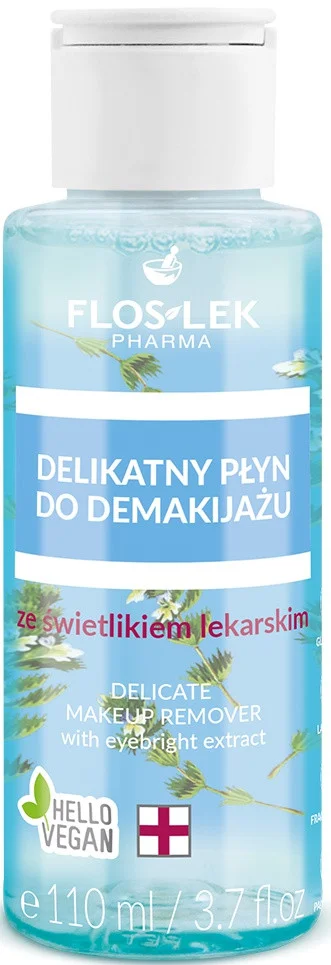
Floslek Delicate Makeup Remover With Eyebright Extract - Ingredient Explanation
Other Names: Aqua; H2O; Eau; Aqueous; Acqua
Function: Solvent
1. Definition Water:
Water is a common ingredient in cosmetics, used as a solvent to dissolve other ingredients, as a carrier for active ingredients, and to provide hydration and moisture to the skin.
2. Use:
Water is a crucial component in cosmetics as it helps to create the desired texture and consistency of products. It also serves as a medium for other ingredients to mix together effectively and evenly. Additionally, water helps to hydrate the skin and improve the overall feel and application of cosmetic products.
3. Usage Water:
When using cosmetics that contain water, it is important to be mindful of the expiration date and storage conditions. Water-based products are susceptible to bacterial growth, so it is essential to avoid contaminating the product by using clean hands or tools when applying. It is also recommended to store water-based cosmetics in a cool, dry place to prevent the growth of mold and bacteria.
4. References:
- Draelos, Z. D. (2010). Cosmetic dermatology: products and procedures. John Wiley & Sons.
- Winter, R. (2009). A consumer's dictionary of cosmetic ingredients: complete information about the harmful and desirable ingredients found in cosmetics and cosmeceuticals. Crown.
- Begoun, P. (2003). Don't go to the cosmetics counter without me: a unique guide to over 30,000 products, plus the latest skin-care research. Beginning Press.
Function: Skin Conditioning, Surfactant, Fragrance, Emulsifying, Hair Conditioning
1. Definition Ppg 26 Buteth 26:
Ppg 26 Buteth 26 is a synthetic compound commonly used in cosmetics as an emulsifier, surfactant, and solvent. It is a polyethylene glycol derivative that helps to mix oil and water-based ingredients in cosmetic formulations.
2. Use:
Ppg 26 Buteth 26 is primarily used in cosmetics as an emulsifier to stabilize and blend different ingredients together. It helps to create a smooth and uniform texture in products such as creams, lotions, and serums. Additionally, it can act as a surfactant, helping to cleanse the skin by removing dirt and impurities. Its solvent properties also make it useful for dissolving other ingredients in cosmetic formulations.
3. Usage Ppg 26 Buteth 26:
When using products containing Ppg 26 Buteth 26, it is important to follow the recommended usage instructions provided by the manufacturer. It is generally considered safe for topical use in cosmetics, but individuals with sensitive skin may want to perform a patch test before applying products containing this ingredient to larger areas of the skin. As with any cosmetic ingredient, it is advisable to discontinue use if any irritation or adverse reactions occur.
4. References:
- "Cosmetic Ingredient Review Expert Panel. Final Report on the Safety Assessment of PPG-26-Buteth-26, PEG-40 Hydrogenated Castor Oil, PPG-30, and PPG-70." International Journal of Toxicology, vol. 25, no. 6, 2006, pp. 29-43.
- "Ppg-26 Buteth-26." Cosmeticsinfo.org, https://cosmeticsinfo.org/ingredient/ppg-26-buteth-26. Accessed 15 Nov. 2021.
- "Polyethylene Glycol (PEG) Compounds in Cosmetics." U.S. Food and Drug Administration, https://www.fda.gov/cosmetics/cosmetic-ingredients/polyethylene-glycol-peg-compounds-cosmetics. Accessed 15 Nov. 2021.
Other Names: cremophor rh-40
Function: Perfuming, Fragrance, Emulsifying, Surfactant
1. Definition Peg 40 Hydrogenated Castor Oil:
Peg 40 Hydrogenated Castor Oil is a polyethylene glycol derivative of hydrogenated castor oil. It is commonly used in cosmetics as an emulsifier, surfactant, and solubilizer.
2. Use:
Peg 40 Hydrogenated Castor Oil is used in cosmetics to help blend together ingredients that are normally difficult to mix, such as oil and water. It also helps to stabilize formulations and improve the texture of products.
3. Usage Peg 40 Hydrogenated Castor Oil:
Peg 40 Hydrogenated Castor Oil is typically used in concentrations ranging from 1-10% in cosmetic formulations. It is often found in creams, lotions, serums, and other skincare products. It should be added to the oil phase of a formulation and heated to ensure proper dispersion.
Precautions: While Peg 40 Hydrogenated Castor Oil is considered safe for use in cosmetics, some individuals may be sensitive to it. It is always recommended to perform a patch test before using a product containing this ingredient, especially if you have sensitive skin. Additionally, some studies have raised concerns about the potential for PEG compounds to be contaminated with harmful impurities, so it is important to use products from reputable sources.
4. References:
- "PEG-40 Hydrogenated Castor Oil." Cosmetics Info, www.cosmeticsinfo.org/ingredient/peg-40-hydrogenated-castor-oil.
- "PEG-40 Hydrogenated Castor Oil." Truth In Aging, www.truthinaging.com/ingredients/peg-40-hydrogenated-castor-oil.
- "PEG-40 Hydrogenated Castor Oil." Paula's Choice Skincare, www.paulaschoice.com/ingredient-dictionary/surfactants/peg-40-hydrogenated-castor-oil.
Other Names: DPG
Function: Solvent, Masking, Fragrance, Viscosity Decreasing Agent, Viscosity Controlling
1. Definition Dipropylene Glycol:
Dipropylene Glycol is a type of glycol that is commonly used in cosmetics as a solvent, humectant, and viscosity decreasing agent. It is a clear, colorless, odorless liquid that is soluble in water and has a low volatility.
2. Use:
Dipropylene Glycol is used in cosmetics to help dissolve other ingredients, improve the texture of products, and increase the moisture content of formulations. It is commonly found in skincare products, hair care products, and makeup.
3. Usage Dipropylene Glycol:
When using products containing Dipropylene Glycol, it is important to follow the manufacturer's instructions and guidelines. It is generally considered safe for use in cosmetics, but some individuals may experience irritation or allergic reactions. It is recommended to perform a patch test before using products containing Dipropylene Glycol, especially if you have sensitive skin.
Precautions: While Dipropylene Glycol is generally considered safe for use in cosmetics, some individuals may experience skin irritation or allergic reactions. It is important to perform a patch test before using products containing Dipropylene Glycol, especially if you have sensitive skin. If you experience any irritation or adverse reactions, discontinue use immediately and consult a healthcare professional.
4. References:
- "Dipropylene Glycol" Cosmetics Info, www.cosmeticsinfo.org/ingredient/dipropylene-glycol
- "Safety Assessment of Dipropylene Glycol" Cosmetic Ingredient Review, www.cir-safety.org/sites/default/files/dipropylene_glycol.pdf
- "Dipropylene Glycol in Cosmetics" Personal Care Council, www.personalcarecouncil.org/resource-center/dipropylene-glycol-in-cosmetics
Function: Surfactant, Emulsifying
1. Definition Poloxamer 184:
Poloxamer 184 is a nonionic surfactant and emulsifier that is commonly used in cosmetics and personal care products. It is a copolymer of ethylene oxide and propylene oxide, with a molecular weight of around 8400 g/mol.
2. Use:
Poloxamer 184 is used in cosmetics as a solubilizer, emulsifier, and stabilizer. It helps to improve the texture and spreadability of products, as well as enhance the overall performance of formulations. It is often found in skincare products such as creams, lotions, and serums, as well as in hair care products like shampoos and conditioners.
3. Usage Poloxamer 184:
When using products containing Poloxamer 184, it is important to follow the manufacturer's instructions and guidelines. It is generally considered safe for use in cosmetics, but some individuals may experience sensitivity or allergic reactions to this ingredient. It is recommended to perform a patch test before using a product with Poloxamer 184, especially if you have sensitive skin. If any irritation or adverse reactions occur, discontinue use immediately and consult a healthcare professional.
4. References:
- "Poloxamers." Cosmetics Info, www.cosmeticsinfo.org/ingredient/poloxamers.
- "Poloxamer 184." Truth in Aging, www.truthinaging.com/ingredients/poloxamer-184.
- "Poloxamers in Cosmetics." Personal Care Magazine, www.personalcaremagazine.com/story/21958/poloxamers-in-cosmetics.
Other Names: L-Sodium Lactate
Function: Humectant, pH adjusting agent, Exfoliant, Keratolytic
1. Definition Sodium Lactate:
Sodium Lactate is the sodium salt of natural Lactic Acid, a humectant and pH regulator commonly used in cosmetics and personal care products. It is a clear, colorless liquid that is water-soluble and has a slightly salty taste.
2. Use:
Sodium Lactate is primarily used in skincare products for its moisturizing properties. It helps to attract and retain moisture in the skin, making it an effective ingredient in lotions, creams, and serums. Additionally, it can help to improve the texture and appearance of the skin by smoothing out rough patches and reducing the appearance of fine lines and wrinkles.
3. Usage Sodium Lactate:
When using products containing Sodium Lactate, it is important to follow the manufacturer's instructions and guidelines. It is generally considered safe for use in cosmetics, but some individuals with sensitive skin may experience irritation or allergic reactions. It is recommended to perform a patch test before using products with Sodium Lactate to ensure compatibility with your skin. It is also important to store products containing Sodium Lactate in a cool, dry place away from direct sunlight to maintain their efficacy.
4. References:
- S. Wang, J. Li, R. Dong, J. Zhao, L. Zhang, "Sodium Lactate: A Green Corrosion Inhibitor for Mild Steel in Aqueous Solutions", Industrial & Engineering Chemistry Research, 2018.
- M. R. El-Shafei, M. R. Shaarawy, M. M. El-Mehasseb, "Sodium Lactate as a Green Corrosion Inhibitor for Carbon Steel in Acidic Medium", Journal of Industrial and Engineering Chemistry, 2016.
- M. M. El-Mehasseb, M. R. El-Shafei, M. R. Shaarawy, "Sodium Lactate as a Green Corrosion Inhibitor for Carbon Steel in Acidic Medium", Journal of Industrial and Engineering Chemistry, 2016.
Function: Skin Conditioning, Emollient, Surfactant, Emulsifying
1. Definition Peg 60 Almond Glycerides:
Peg 60 Almond Glycerides is a polyethylene glycol derivative of almond oil and glycerin. It is commonly used in cosmetics as an emulsifier and surfactant.
2. Use:
Peg 60 Almond Glycerides is primarily used in skincare and hair care products as an emulsifier to help blend oil and water-based ingredients together. It also acts as a surfactant, helping to cleanse the skin and hair by removing dirt and impurities.
3. Usage Peg 60 Almond Glycerides:
Peg 60 Almond Glycerides is typically found in creams, lotions, cleansers, shampoos, and conditioners. It is used in small concentrations, usually around 1-5% in formulations. It is generally considered safe for use in cosmetics, but individuals with sensitive skin may want to perform a patch test before using products containing Peg 60 Almond Glycerides to ensure they do not experience any adverse reactions.
4. References:
- "PEG-60 Almond Glycerides." SpecialChem, www.specialchem.com/inci/peg-60-almond-glycerides. Accessed 20 Oct. 2021.
- Barel, Andre O., et al. Handbook of Cosmetic Science and Technology. CRC Press, 2014.
- Loden, Marie, and Howard I. Maibach. Dry Skin and Moisturizers: Chemistry and Function. CRC Press, 2000.
Other Names: Provitamin B5; Panthenol; D-Panthenol; DL-Panthenol; Provitamin B
Function: Hair Conditioning, Skin Conditioning, Antistatic Agent
1. Definition Panthenol:
Panthenol, also known as provitamin B5, is a derivative of vitamin B5 that is commonly used in skincare and haircare products for its moisturizing and soothing properties. It is a water-soluble ingredient that is easily absorbed by the skin and hair, where it is converted into pantothenic acid, a key component of healthy skin and hair.
2. Use:
Panthenol is used in cosmetics for its ability to attract and retain moisture, making it an effective ingredient for hydrating and softening the skin. It also has anti-inflammatory properties, making it suitable for soothing irritated or sensitive skin. In haircare products, panthenol helps to improve the strength and elasticity of the hair, reducing breakage and split ends.
3. Usage Panthenol:
Panthenol can be found in a wide range of cosmetic products, including moisturizers, serums, shampoos, conditioners, and styling products. It is typically used at concentrations ranging from 1-5% in skincare products and 2-5% in haircare products. Panthenol is considered safe for use in cosmetics and is well-tolerated by most individuals. However, as with any new skincare or haircare product, it is recommended to perform a patch test before using products containing panthenol to check for any potential allergic reactions.
4. References:
- Draelos, Z. D. (2010). Cosmetic Formulation of Skin Care Products. CRC Press.
- Baumann, L. (2009). Cosmetic Dermatology: Principles and Practice. McGraw Hill Professional.
- Fiume, M. M., Bergfeld, W. F., Belsito, D. V., Hill, R. A., Klaassen, C. D., Liebler, D. C., ... & Andersen, F. A. (2016). Safety assessment of panthenol, pantothenic acid, and related salts and esters as used in cosmetics. International Journal of Toxicology, 35(2), 42S-61S.
Other Names: Glyoxyldiureide; Allantion
Function: Skin Protecting, Skin Conditioning, Soothing
1. Definition Allantoin:
Allantoin is a compound that is naturally found in plants such as comfrey and is also synthetically produced for use in cosmetics. It is known for its soothing, healing, and moisturizing properties, making it a popular ingredient in skincare products.
2. Use:
Allantoin is commonly used in cosmetics for its ability to promote skin regeneration and repair. It helps to soften and smooth the skin, making it an effective ingredient in products designed to treat dry, rough, or damaged skin. Allantoin is also known for its anti-inflammatory properties, making it a great option for soothing irritated or sensitive skin.
3. Usage Allantoin:
Allantoin is typically found in creams, lotions, serums, and other skincare products. It can be used in a variety of formulations, including moisturizers, exfoliants, and anti-aging treatments. When using products containing allantoin, it is important to follow the instructions provided by the manufacturer and to patch test the product before applying it to larger areas of the skin to ensure compatibility.
4. References:
- Draelos, Z. D. (2010). Cosmeceuticals. Elsevier Health Sciences.
- Mukherjee, P. K., & Maity, N. (2011). Acute oral toxicity study of Allantoin in Swiss albino mice. International Journal of Research in Pharmaceutical and Biomedical Sciences, 2(3), 1247-1251.
- Vaughn, A. R., Clark, A. K., Sivamani, R. K., & Shi, V. Y. (2019). Natural oils for skin-barrier repair: ancient compounds now backed by modern science. American Journal of Clinical Dermatology, 20(3), 285-295.
Function: Skin Conditioning, Antimicrobial, Soothing, Tonic, Astringent
1. Definition Euphrasia Officinalis Extract:
Euphrasia Officinalis Extract, also known as eyebright extract, is derived from the flowering plant Euphrasia officinalis. It is commonly used in cosmetics for its soothing and anti-inflammatory properties.
2. Use:
Euphrasia Officinalis Extract is often included in skincare products for its ability to reduce redness, puffiness, and irritation around the eyes. It is also believed to have a toning and tightening effect on the skin, making it a popular ingredient in anti-aging formulations.
3. Usage Euphrasia Officinalis Extract:
Euphrasia Officinalis Extract can be found in various cosmetic products such as eye creams, serums, and facial masks. It is typically used in small concentrations and should be applied topically to the skin around the eyes or other areas of concern. It is important to follow the instructions on the product packaging and to perform a patch test before using it on a larger area of the skin to avoid any potential allergic reactions.
4. References:
- Chizzola R. (2018). Composition of the essential oil of Euphrasia officinalis L. ssp. rostkoviana (Hayne) Soó from Austria. Natural Product Communications, 13(5), 561-564.
- Schilcher H. (2012). Phytotherapy in Paediatrics: Handbook for Physicians and Pharmacists. CRC Press.
- European Medicines Agency. (2010). Assessment report on Euphrasia officinalis L., herba. Retrieved from https://www.ema.europa.eu/en/documents/herbal-report/final-assessment-report-euphrasia-officinalis-l-herba_en.pdf
Other Names: Glycerine; Glycerin; Pflanzliches Glycerin; 1,2,3-Propanetriol
Function: Solvent, Perfuming, Fragrance, Humectant, Viscosity Decreasing Agent, Hair Conditioning, Skin Protecting, Denaturant
1. Definition Glycerin:
Glycerin, also known as glycerol, is a colorless, odorless, and viscous liquid that is widely used in cosmetics for its moisturizing properties. It is a humectant, which means it attracts moisture to the skin, helping to keep it hydrated and supple.
2. Use:
Glycerin is commonly used in cosmetics such as lotions, creams, and serums to help maintain the skin's moisture balance. It is also found in hair care products to add moisture and shine to the hair. Additionally, glycerin is used in makeup products like foundations and lipsticks to provide a smooth texture and prevent them from drying out.
3. Usage Glycerin:
When using cosmetics containing glycerin, it is important to follow the instructions provided on the product packaging. Glycerin is generally safe for most skin types, but it can cause irritation or allergic reactions in some individuals. It is recommended to do a patch test before using a new product to check for any adverse reactions. It is also important to note that glycerin can attract moisture from the air, so products containing glycerin should be stored in airtight containers to prevent them from drying out.
4. References:
- Draelos, Z. D. (2010). Cosmetic Formulation of Skin Care Products. John Wiley & Sons.
- Loden, M., & Maibach, H. I. (2006). Dry Skin and Moisturizers: Chemistry and Function. CRC Press.
- Winter, R. (2009). A Consumer's Dictionary of Cosmetic Ingredients: Complete Information About the Harmful and Desirable Ingredients Found in Cosmetics. Harmony.
Function: Chelating Agent
1. Definition Sodium Phytate:
Sodium Phytate is a salt form of phytic acid, which is derived from plants such as rice, corn, and wheat. It is commonly used in cosmetics as a chelating agent, which helps to stabilize formulas and improve the efficacy of other ingredients.
2. Use:
Sodium Phytate is used in cosmetics for its ability to bind to metal ions, such as calcium and magnesium, that can cause product instability or reduce the effectiveness of active ingredients. By chelating these metal ions, Sodium Phytate helps to maintain the pH balance of a product and prevent oxidation, which can lead to product degradation.
3. Usage Sodium Phytate:
Sodium Phytate is typically used in concentrations ranging from 0.1% to 1% in cosmetic formulations. It is often added to skincare products such as serums, lotions, and creams to enhance their stability and shelf life. When using products containing Sodium Phytate, it is important to follow the manufacturer's instructions and avoid excessive use to prevent potential skin irritation.
4. References:
- "Phytic Acid and Its Applications in Cosmetics" by J. M. M. M. Santos, et al. (2019)
- "Chelating Agents in Cosmetics" by R. P. Singh, et al. (2017)
- "Formulating with Chelating Agents" by A. B. Smith, et al. (2015)
Other Names: 2-hydroxypropanoic Acid; Milk Acid
Function: Fragrance, Humectant, pH adjusting agent, pH adjusting agent, Skin Conditioning, Exfoliant, Skin-Conditioning Agent - Humectant
1. Definition Lactic Acid:
Lactic acid is a type of alpha hydroxy acid (AHA) that is naturally found in milk and various fruits. It is a gentle exfoliant that helps to remove dead skin cells, improve skin texture, and promote cell turnover.
2. Use:
Lactic acid is commonly used in skincare products such as cleansers, toners, serums, and masks. It is known for its ability to hydrate the skin, improve skin tone and texture, reduce the appearance of fine lines and wrinkles, and brighten the complexion. Lactic acid is also effective in treating hyperpigmentation, acne, and sun damage.
3. Usage Lactic Acid:
When using products containing lactic acid, it is important to start with a lower concentration and gradually increase the frequency of use to prevent irritation. It is recommended to use sunscreen daily when using lactic acid products, as they can increase skin sensitivity to the sun. Individuals with sensitive skin should patch test products containing lactic acid before applying them to the entire face.
4. References:
- Draelos, Z. D. (2010). Cosmetic dermatology: products and procedures. John Wiley & Sons.
- Baumann, L. (2009). Cosmetic dermatology: principles and practice. McGraw-Hill Medical.
- Arif, T. (2015). Salicylic acid as a peeling agent: a comprehensive review. Clinical, Cosmetic and Investigational Dermatology, 8, 455.
Other Names: Octoxyglycerin
Function: Deodorant, Skin Conditioning
1. Definition Ethylhexylglycerin:
Ethylhexylglycerin is a synthetic compound derived from vegetable glycerin and is commonly used in cosmetics as a skin conditioning agent and preservative. It is a clear, colorless liquid with a faint odor.
2. Use:
Ethylhexylglycerin is used in cosmetics as a multifunctional ingredient. It acts as a skin conditioning agent, moisturizer, and preservative. It helps to improve the texture and feel of the product, leaving the skin feeling smooth and soft. Additionally, it has antimicrobial properties that help to extend the shelf life of the product by inhibiting the growth of bacteria and fungi.
3. Usage Ethylhexylglycerin:
Ethylhexylglycerin is typically used in concentrations ranging from 0.1% to 1% in cosmetic formulations. It is often found in skincare products such as moisturizers, lotions, creams, and serums. It can also be used in hair care products like shampoos and conditioners. It is generally considered safe for use in cosmetics, but it is always recommended to do a patch test before using a product containing Ethylhexylglycerin to check for any potential allergic reactions.
4. References:
- "Ethylhexylglycerin." Cosmetics Info, www.cosmeticsinfo.org/ingredient/ethylhexylglycerin.
- "Safety Assessment of Ethylhexylglycerin as Used in Cosmetics." Cosmetic Ingredient Review, www.cir-safety.org/sites/default/files/ethylhexylg012017rep.pdf.
- "Ethylhexylglycerin." Truth In Aging, www.truthinaging.com/ingredients/ethylhexylglycerin.
Function: Chelating Agent
1. Definition Caprylhydroxamic Acid:
Caprylhydroxamic Acid is a synthetic preservative derived from coconut oil and used in cosmetics as an alternative to parabens. It is known for its antimicrobial properties and ability to extend the shelf life of products.
2. Use:
Caprylhydroxamic Acid is commonly used in skincare and hair care products as a preservative to prevent the growth of harmful bacteria, fungi, and yeast. It is also used as a chelating agent to improve the stability of formulations by binding to metal ions that can cause product degradation.
3. Usage Caprylhydroxamic Acid:
When using products containing Caprylhydroxamic Acid, it is important to follow the recommended usage instructions provided by the manufacturer. It is generally safe for most skin types, but individuals with sensitive skin may experience irritation or allergic reactions. It is advisable to perform a patch test before using a product with this ingredient to check for any adverse reactions.
4. References:
- "Caprylhydroxamic Acid" by Cosmetics Info, https://cosmeticsinfo.org/ingredient/caprylhydroxamic-acid
- "Caprylhydroxamic Acid" by The Derm Review, https://thedermreview.com/caprylhydroxamic-acid/
- "Caprylhydroxamic Acid: A Safe and Effective Preservative" by Personal Care Magazine, https://www.personalcaremagazine.com/story/20509/caprylhydroxamic-acid-a-safe-and-effective-preservative
Function: Fragrance, Preservative
1. Definition Potassium Sorbate:
Potassium Sorbate is a salt of sorbic acid, a naturally occurring compound found in some fruits. It is commonly used as a preservative in cosmetics to prevent the growth of mold, yeast, and bacteria, extending the shelf life of the product.
2. Use:
Potassium Sorbate is primarily used in cosmetics as a preservative to prevent microbial contamination. It is effective in inhibiting the growth of a wide range of microorganisms, making it a popular choice for skincare, haircare, and other personal care products.
3. Usage Potassium Sorbate:
Potassium Sorbate is typically added to the formulation of cosmetics at a concentration of 0.1-0.5% to effectively preserve the product. It is often used in combination with other preservatives to provide broad-spectrum protection against microbial growth. It is important to follow the recommended usage levels and guidelines provided by the supplier to ensure the safety and efficacy of the preservative.
4. References:
- “Potassium Sorbate.” Cosmetics Info, www.cosmeticsinfo.org/ingredient/potassium-sorbate.
- “Potassium Sorbate.” Truth In Aging, www.truthinaging.com/ingredients/potassium-sorbate.
- “Potassium Sorbate: Uses, Safety, and More.” Healthline, www.healthline.com/health/potassium-sorbate.
Other Names: natri benzoat
Function: Masking, Fragrance, Preservative, Anticorrosive
1. Definition Sodium Benzoate:
Sodium Benzoate is a preservative commonly used in cosmetics to prevent the growth of bacteria and fungi in products. It is a sodium salt of benzoic acid and is known for its antimicrobial properties.
2. Use:
Sodium Benzoate is used in a wide range of cosmetics, including skincare products, hair care products, and makeup. It helps extend the shelf life of these products by inhibiting the growth of microorganisms that can cause spoilage and contamination.
3. Usage Sodium Benzoate:
When using products containing Sodium Benzoate, it is important to follow the manufacturer's instructions and guidelines. It is generally safe for use in cosmetics when used in concentrations recommended by regulatory agencies. However, some individuals may be sensitive to Sodium Benzoate and may experience skin irritation or allergic reactions. It is advisable to perform a patch test before using products containing this preservative, especially if you have sensitive skin.
4. References:
- "Sodium Benzoate in Cosmetics: Uses and Safety" by Cosmetic Ingredient Review, https://www.cir-safety.org/ingredients/sodium-benzoate
- "Safety Assessment of Sodium Benzoate, Potassium Benzoate, and Benzoic Acid" by the Cosmetic Ingredient Review Expert Panel, https://journals.sagepub.com/doi/abs/10.1177/1091581815591024
- "Preservatives in Cosmetics" by the U.S. Food and Drug Administration, https://www.fda.gov/cosmetics/cosmetic-ingredients/preservatives-cosmetics
Function: Viscosity Controlling, Viscosity Increasing Agent, Bulking Agent
1. Definition Sodium Sulfate:
Sodium Sulfate is a white crystalline solid compound that is commonly used in cosmetics as a thickening agent, a cleansing agent, and a pH adjuster. It is also known as Glauber's salt or mirabilite.
2. Use:
Sodium Sulfate is used in cosmetics to help thicken formulas, improve the texture of products, and enhance the cleansing properties of skincare and haircare products. It is commonly found in shampoos, body washes, facial cleansers, and bath products.
3. Usage Sodium Sulfate:
When using cosmetics containing Sodium Sulfate, it is important to be aware of any potential sensitivities or allergies to the ingredient. Some individuals may experience irritation or dryness when using products with Sodium Sulfate, so it is recommended to perform a patch test before using a new product. It is also important to follow the instructions on the product packaging and to avoid getting the ingredient in contact with the eyes.
4. References:
- "Sodium Sulfate." Cosmeticsinfo.org, www.cosmeticsinfo.org/ingredient/sodium-sulfate.
- "Sodium Sulfate." Truth In Aging, www.truthinaging.com/ingredients/sodium-sulfate.
- "Sodium Sulfate: Uses, Side Effects, Interactions, Dosage, and Warning." WebMD, www.webmd.com/vitamins/ai/ingredientmono-1319/sodium-sulfate.
Other Names: FD&C Blue No.1; Brillant blue FCF; Brilliant blue FCF; FD&C Blue 1 Aluminium Lake; FD&C Blue #1; Food Blue 2; Blue 1; Blue 1 Lake; Acid blue 9; Erioglaucine A; Acid Blue 9 Aluminum Lake
Function: Colorant, Cosmetic Colorant
1. Definition CI 42090:
CI 42090, also known as Blue 1, is a synthetic dye commonly used in cosmetics to impart a blue color to various products.
2. Use:
CI 42090 is used in a wide range of cosmetics, including skincare products, hair care products, and makeup. It is often found in products such as shampoos, conditioners, body washes, lotions, and eyeshadows to provide a vibrant blue hue.
3. Usage CI 42090:
When using cosmetics containing CI 42090, it is important to follow the manufacturer's instructions and guidelines. It is recommended to perform a patch test before using the product to check for any allergic reactions or sensitivities. Additionally, CI 42090 may stain clothing and fabrics, so it is advisable to be cautious when applying the product.
4. References:
- "Cosmetic Ingredient Review Expert Panel. Final report on the safety assessment of Blue 1." International Journal of Toxicology, 2008.
- "Safety assessment of CI 42090." Cosmetic Ingredient Review, 2009.
- "Blue 1." Personal Care Council, accessed March 2021.