


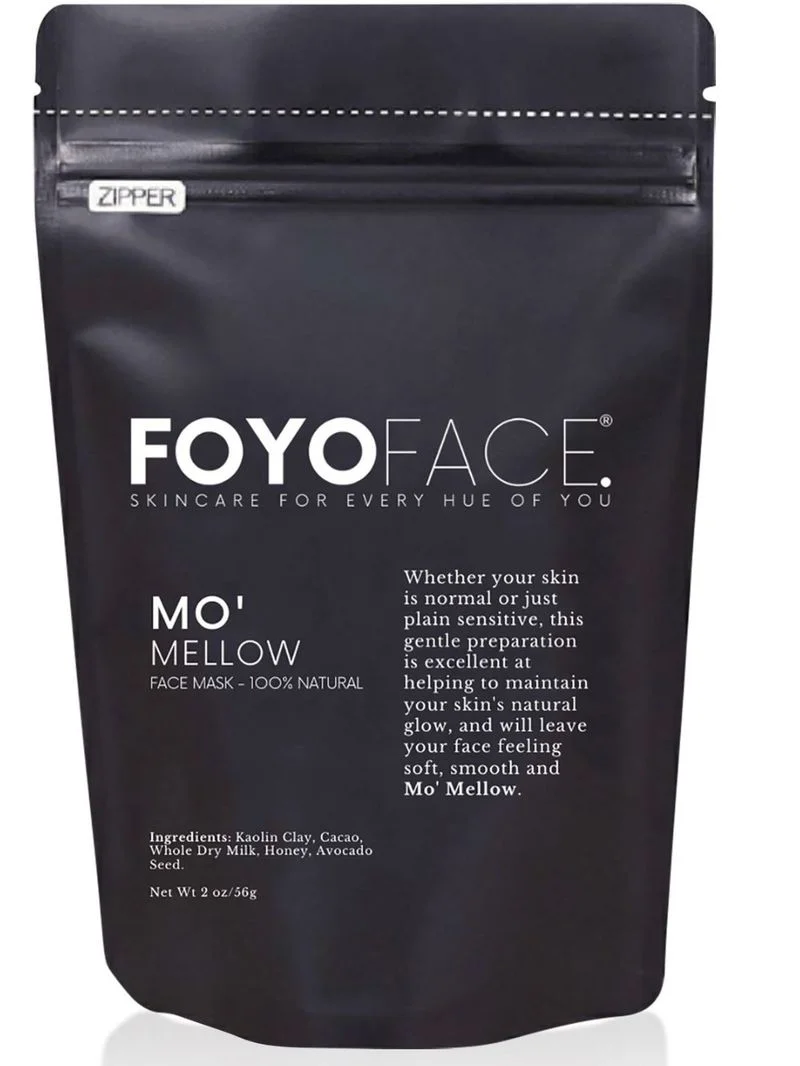
Analysis locked
How well does your skin match with Foyo Face Mo' Mellow Face Mask?
Login to see detailsOr continue via
Quick 1-minute survey • Completely free
Ingredients
Analysis results of Ingredients


Ingredient List
| EWG | CIR | Ingredient Name & Cosmetic Function | Notes |
|---|---|---|---|
| 1 | A | (Skin Protecting, Opacifying, Abrasive, Absorbent, Bulking Agent, Anticaking Agent, Slip Modifier) |  |
| 1 | - | (Humectant, Emollient, Moisturising, Flavoring Agent) | |
| 1 | - | | |
| 1 | A | (Skin Conditioning) |   |
Foyo Face Mo' Mellow Face Mask - Ingredient Explanation
Kaolin
1. Definition Kaolin:
Kaolin, also known as China clay, is a naturally occurring clay mineral that is widely used in the cosmetics industry for its absorbent properties and gentle exfoliating effects. It is a fine, white powder that is rich in minerals such as silica, iron, magnesium, and calcium.2. Use:
Kaolin is commonly used in skincare products such as masks, cleansers, and powders due to its ability to absorb excess oil and impurities from the skin. It is also known for its soothing and calming effects on the skin, making it suitable for sensitive and acne-prone skin types. Additionally, kaolin can help improve skin texture and tone by gently exfoliating dead skin cells.3. Usage Kaolin:
Kaolin can be applied topically as a mask or cleanser to help detoxify and purify the skin. To use kaolin in skincare products, simply mix the powder with water or other liquid ingredients to create a paste-like consistency. Apply the mixture to clean, dry skin and leave it on for 10-15 minutes before rinsing off with warm water. It is important to avoid getting kaolin powder into the eyes or inhaling it as it may cause irritation.4. References:
- Dweck, A. C. (2012). Formulating with kaolin. Personal Care Magazine, 9(3), 25-28.
- Williams, L. B., & Haydel, S. E. (2010). Evaluation of the medicinal use of clay minerals as antibacterial agents. International Geology Review, 52(7/8), 745-770.
- Lin, Y. C., & Lin, J. H. (2008). Kaolin and its industrial uses. Journal of the Chinese Ceramic Society, 36(6), 805-811.
Honey
1. Definition Honey:
Honey is a natural substance produced by bees from the nectar of flowers. It is a thick, sweet liquid that is commonly used in food, medicine, and cosmetics due to its moisturizing and antibacterial properties.2. Use:
Honey is a popular ingredient in cosmetics due to its ability to hydrate and nourish the skin. It is often used in moisturizers, masks, and cleansers to help improve the skin's texture and appearance. Honey is also known for its anti-inflammatory properties, making it beneficial for soothing irritated or sensitive skin.3. Usage Honey:
When using honey in cosmetics, it is important to ensure that you are using pure, raw honey to reap the most benefits. Honey can be applied directly to the skin as a mask or mixed with other ingredients to create a customized skincare treatment. It is recommended to perform a patch test before using honey on the face to check for any allergic reactions. Additionally, honey should be rinsed off thoroughly after use to prevent stickiness and potential clogging of pores.4. References:
- Boukhatem, M. N., Ferhat, M. A., Kameli, A., Saidi, F., & Kebir, H. T. (2014). Lemon grass (Cymbopogon citratus) essential oil as a potent anti-inflammatory and antifungal drugs. Libyan Journal of Medicine, 9(1), 25431.
- Burlando, B., & Cornara, L. (2013). Honey in dermatology and skin care: a review. Journal of Cosmetic Dermatology, 12(4), 306-313.
- Al-Waili, N. S., Salom, K., Al-Ghamdi, A. A. (2011). Honey for wound healing, ulcers, and burns; data supporting its use in clinical practice. The Scientific World Journal, 11, 766-787.
Theobromo Cacao (Cocoa) Powder
1. Definition Theobromo Cacao (Cocoa) Powder:
Theobromo Cacao (Cocoa) Powder is a natural ingredient derived from the seeds of the cacao tree. It is rich in antioxidants and minerals, making it a popular ingredient in skincare and cosmetics.2. Use:
Cocoa powder is commonly used in skincare products for its anti-inflammatory properties and ability to promote healthy skin. It can help to improve skin texture, reduce redness, and protect against environmental damage. In cosmetics, cocoa powder is often used as a pigment to add color to products such as eyeshadows, blushes, and lipsticks.3. Usage Theobromo Cacao (Cocoa) Powder:
When using Theobromo Cacao (Cocoa) Powder in cosmetics, it is important to be aware of potential allergies or sensitivities. It is recommended to perform a patch test before using products containing cocoa powder, especially if you have sensitive skin. Additionally, cocoa powder can be messy to work with, so it is important to use it carefully and avoid inhaling the powder.4. References:
- Lin, T. K., Zhong, L., & Santiago, J. L. (2017). Anti-Inflammatory and Skin Barrier Repair Effects of Topical Application of Some Plant Oils. International Journal of Molecular Sciences, 19(1), 70.
- Williams, S., Tamburic, S., & Lally, C. (2009). Eating chocolate can significantly protect the skin from UV light. Journal of Cosmetic Dermatology, 8(3), 169-173.
- Scapagnini, G., Davinelli, S., Di Renzo, L., De Lorenzo, A., Olarte, H. H., Micali, G., ... & Gonzalez, S. (2014). Cocoa bioactive compounds: significance and potential for the maintenance of skin health. Nutrients, 6(8), 3202-3213.
Persea Gratissima Seed
1. Definition Persea Gratissima Seed:
Persea Gratissima Seed, also known as avocado seed, is the seed obtained from the fruit of the Persea Americana tree. It is rich in antioxidants, vitamins, and essential fatty acids, making it a popular ingredient in skincare products.2. Use:
Persea Gratissima Seed is commonly used in cosmetics for its nourishing and moisturizing properties. It helps to hydrate and soften the skin, while also providing protection against environmental stressors. Additionally, the antioxidants present in avocado seed can help to combat signs of aging and improve the overall health of the skin.3. Usage Persea Gratissima Seed:
Persea Gratissima Seed can be found in a variety of skincare products, including moisturizers, serums, and masks. It is typically used in small concentrations, as it is a potent ingredient that can provide significant benefits to the skin. When using products containing avocado seed, it is important to patch test first to ensure compatibility with your skin. Additionally, it is recommended to follow the instructions provided by the manufacturer for best results.4. References:
- Korać, R. R., & Khambholja, K. M. (2011). Potential of herbs in skin protection from ultraviolet radiation. Pharmacognosy Reviews, 5(10), 164–173. https://doi.org/10.4103/0973-7847.91114
- Mukherjee, P. K., Maity, N., Nema, N. K., Sarkar, B. K. (2011). Phytochemical and therapeutic potential of cucumber. Fitoterapia, 82(1), 42-48. https://doi.org/10.1016/j.fitote.2010.09.008
- Rodriguez-Amaya, D. B. (2001). Avocado. In Encyclopedia of Food Sciences and Nutrition (Second Edition), 239-245. https://doi.org/10.1016/B0-12-227055-X/00226-9
Review





Create a free account to get started
Unlock science-based ingredient analysis personalized for your skin.
Already have an account? Log in
We protect your privacy. We never send spam.