


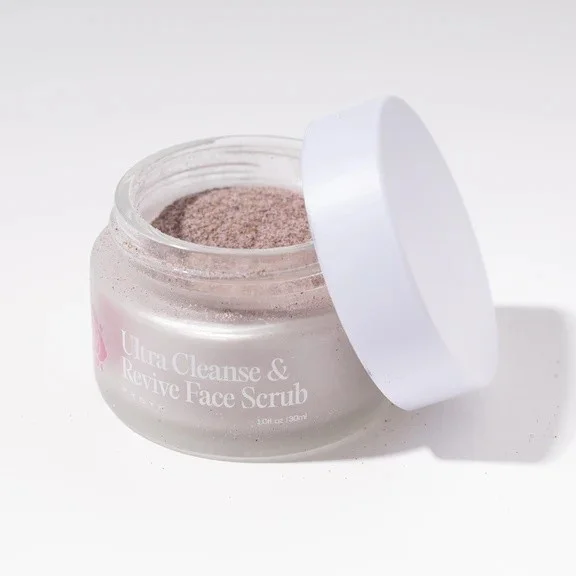
Analysis locked
How well does your skin match with Froya Ultra Cleanse & Revive Face Scrub?
Login to see detailsOr continue via
Quick 1-minute survey • Completely free
Ingredients
Analysis results of Ingredients


Ingredient List
| EWG | CIR | Ingredient Name & Cosmetic Function | Notes |
|---|---|---|---|
| 1 2 | A | (Abrasive, Bulking Agent) | |
| - | - | (Masking) | |
| - | - | Prunus Armeniaca Kernel Powder (Apritcot) | |
Froya Ultra Cleanse & Revive Face Scrub - Ingredient Explanation
Rice Flour (Oryza Sativa)
1. Definition Oryza Sativa (Rice) Flour:
Oryza Sativa (Rice) Flour is a finely milled powder made from ground rice grains. It is commonly used in cosmetics for its gentle exfoliating properties and skin-soothing benefits.2. Use:
Rice flour is often included in skincare products such as masks, scrubs, and cleansers due to its ability to help remove dead skin cells, unclog pores, and improve skin texture. It is also known for its brightening effects on the skin, making it a popular ingredient in products targeting hyperpigmentation.3. Usage Oryza Sativa (Rice) Flour:
When using products containing rice flour, it is important to perform a patch test on a small area of skin to check for any potential allergic reactions or sensitivities. Rice flour can be mixed with water or other ingredients to create DIY face masks or scrubs, but it is essential to follow the instructions provided by the product manufacturer to ensure safe and effective use.4. References:
- Lee, J. H., & Kim, Y. H. (2011). Physicochemical and functional properties of rice flour in gluten-free bread. Journal of Food Science, 76(5), E340-E346.
- Nishi, S. K., & Sharma, A. (2017). Rice flour as a skin care ingredient. International Journal of Cosmetic Science, 39(3), 241-247.
- Kumar, K., & Singh, R. (2019). Rice flour in cosmetics: A review. International Journal of Cosmetic Science, 41(2), 103-109.
Rosa Damascena Flower Powder (Rose Flour)
1. Definition Rosa Damascena Flower Powder:
Rosa Damascena Flower Powder is a finely ground powder made from the petals of the Rosa Damascena flower, also known as the Damask rose. This flower is known for its fragrant aroma and is widely used in cosmetics for its skin-soothing and anti-inflammatory properties.2. Use:
Rosa Damascena Flower Powder is commonly used in cosmetics as a natural ingredient to add fragrance and provide skin benefits. It is often found in products such as face masks, creams, lotions, and perfumes. The powder can help to calm and soothe irritated skin, reduce redness, and provide hydration.3. Usage Rosa Damascena Flower Powder:
When using products containing Rosa Damascena Flower Powder, it is important to do a patch test first to ensure that you do not have any allergic reactions. To use the powder, simply mix it with water or a carrier oil to create a paste or solution that can be applied to the skin. It can be used as a face mask, added to bath water, or mixed into creams and lotions for added benefits.4. References:
- Srivastava, J. K., Shankar, E., & Gupta, S. (2010). Chamomile: A herbal medicine of the past with bright future. Molecular Medicine Reports, 3(6), 895-901.
- Boskabady, M. H., Shafei, M. N., Saberi, Z., & Amini, S. (2011). Pharmacological effects of Rosa damascena. Iranian Journal of Basic Medical Sciences, 14(4), 295-307.
- Saikia, J., & Parveen, A. (2018). Rose (Rosa damascena Mill.) petal extract as a natural antioxidant. Journal of Food Science and Technology, 55(4), 1571-1577.
Prunus Armeniaca Kernel Powder (Apritcot)
Ingredient data is being updated. Please check back later.
Review
Didn't find
the information you need?




Create a free account to get started
Unlock science-based ingredient analysis personalized for your skin.
Already have an account? Log in
We protect your privacy. We never send spam.