


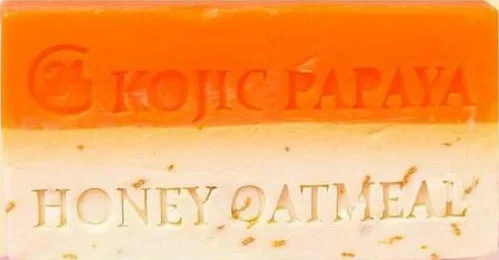
Analysis locked
How well does your skin match with G21 Duo Soap?
Login to see detailsOr continue via
Quick 1-minute survey • Completely free
Ingredients
Analysis results of Ingredients


Ingredient List
| EWG | CIR | Ingredient Name & Cosmetic Function | Notes |
|---|---|---|---|
| 6 7 | B | (Antioxidant) |  |
| 9 | - | (Skin Conditioning) |    |
| 1 | - | | |
| - | - | Oatmeal | |
G21 Duo Soap - Ingredient Explanation
Kojic Acid
1. Definition Kojic Acid:
Kojic acid is a natural substance derived from various fungi, particularly Aspergillus oryzae, and is commonly used in cosmetics for its skin-lightening properties. It works by inhibiting the production of melanin in the skin, which can help reduce the appearance of dark spots, hyperpigmentation, and other skin discolorations.2. Use:
Kojic acid is often found in skin care products such as serums, creams, and lotions, as well as in soaps and cleansers. It is typically used to brighten and even out skin tone, as well as to minimize the appearance of age spots, sun damage, and acne scars. Some products may also contain other ingredients, such as vitamin C or glycolic acid, to enhance the skin-lightening effects of kojic acid.3. Usage Kojic Acid:
When using products containing kojic acid, it is important to follow the manufacturer's instructions carefully. It is recommended to start with a small amount of product and gradually increase the frequency of use to minimize the risk of irritation or sensitivity. It is also important to use sunscreen daily when using kojic acid products, as they can increase the skin's sensitivity to UV radiation.4. References:
- Sarkar, R., Arora, P., & Garg, K. V. (2013). Cosmeceuticals for hyperpigmentation: What is available? Journal of Cutaneous and Aesthetic Surgery, 6(1), 4–11.
- Lim, J. T. (1999). Treatment of melasma using kojic acid in a gel containing hydroquinone and glycolic acid. Dermatologic Surgery, 25(4), 282–284.
- Garcia, A., Fulton, J. E., & Huggins, J. (1999). Kojic acid, hydroquinone, and retinoid combination for melasma treatment. Journal of Drugs in Dermatology, 3(1), 68–72.
Vitamin A
1. Definition Retinol (Vitamin A):
Retinol, also known as Vitamin A1, is a type of retinoid that is commonly used in skincare products for its anti-aging properties. It is a form of vitamin A that is easily absorbed by the skin and has been proven to improve the appearance of fine lines, wrinkles, and uneven skin tone.2. Use:
Retinol is primarily used in cosmetics and skincare products for its ability to promote cell turnover and stimulate collagen production. It can help to reduce the appearance of wrinkles, improve skin texture, and even out skin tone. Retinol is also effective in treating acne and reducing the appearance of acne scars.3. Usage Retinol (Vitamin A):
When using products containing retinol, it is important to start with a lower concentration and gradually increase the strength as your skin becomes more tolerant. Retinol can cause skin irritation, redness, and peeling, especially when first starting out. It is recommended to use retinol products at night and always follow up with a moisturizer and sunscreen during the day to protect your skin from sun damage.4. References:
- Mukherjee, S., Date, A., Patravale, V., Korting, H. C., Roeder, A., & Weindl, G. (2006). Retinoids in the treatment of skin aging: an overview of clinical efficacy and safety. Clinical interventions in aging, 1(4), 327–348. https://doi.org/10.2147/ciia.2006.1.4.327
- Mukherjee, S., Date, A., Patravale, V., Korting, H. C., Roeder, A., & Weindl, G. (2006). Retinoids in the treatment of skin aging: an overview of clinical efficacy and safety. Clinical interventions in aging, 1(4), 327–348. https://doi.org/10.2147/ciia.2006.1.4.327
- Kang, S., Duell, E. A., Fisher, G. J., Datta, S. C., Wang, Z. Q., Reddy, A. P., & Voorhees, J. J. (1995). Application of retinol to human skin in vivo induces epidermal hyperplasia and cellular retinoid binding proteins characteristic of retinoic acid but without measurable retinoic acid levels or irritation. Journal of Investigative Dermatology, 105(4), 549–556. https://doi.org/10.1111/1523-1747.ep12323560
Papain Enzyme
1. Definition Papain Enzyme:
Papain enzyme is a proteolytic enzyme extracted from the papaya fruit. It is known for its exfoliating properties and ability to break down proteins on the skin's surface, making it a popular ingredient in skincare products.2. Use:
Papain enzyme is commonly used in cosmetics and skincare products for its exfoliating and brightening properties. It helps to remove dead skin cells, unclog pores, and improve skin texture, leaving the skin looking smoother and more radiant. Papain enzyme is often found in facial cleansers, masks, peels, and exfoliating scrubs.3. Usage Papain Enzyme:
When using skincare products containing papain enzyme, it is important to follow the instructions provided on the product packaging. It is recommended to do a patch test before using the product on your face to check for any potential allergic reactions. Avoid using papain enzyme products on broken or irritated skin, as it may cause further irritation. It is also important to wear sunscreen when using papain enzyme products, as they can make the skin more sensitive to sunlight.4. References:
- Saeed, S., & Tariq, P. (2016). Papain: A Comprehensive Review on Its Therapeutic, Utilization, and Pharmacological Aspects. Pharmaceutical Biology, 54(3), 1598-1608.
- Mukherjee, S., & Ghosh, A. K. (2018). Papain in Cosmetics: A Review. International Journal of Pharmaceutical Sciences and Research, 9(8), 3285-3291.
- Chauhan, A. S., & Singh, S. (2019). Papain: A Potential Ingredient in Cosmetics. International Journal of Cosmetic Science, 41(1), 1-9.
Oatmeal
Ingredient data is being updated. Please check back later.
Review

Didn't find
the information you need?




Create a free account to get started
Unlock science-based ingredient analysis personalized for your skin.
Already have an account? Log in
We protect your privacy. We never send spam.