


Analysis locked
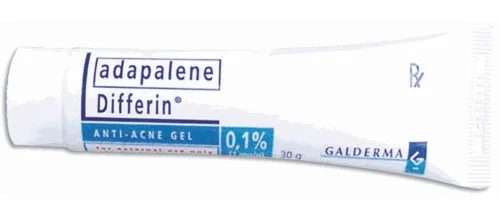
How well does your skin match with Galderma Differin Adapalene Gel?
Login to see detailsOr continue via
Quick 1-minute survey • Completely free
Ingredients
Analysis results of Ingredients


Ingredient List
| EWG | CIR | Ingredient Name & Cosmetic Function | Notes |
|---|---|---|---|
| - | - | (Antiacne Agent) | |
| 1 | A | (Viscosity Controlling, Viscosity Increasing Agent, Emulsion Stabilising, Gel Forming) | |
| 3 | B | (Solvent, Fragrance, Humectant, Viscosity Decreasing Agent, Skin Conditioning, Viscosity Controlling, Skin-Conditioningagent - Miscellaneous) |  |
| 2 | - | (Surfactant, Emulsifying) | |

Galderma Differin Adapalene Gel - Ingredient Explanation
Adapalene
1. Definition Adapalene:
Adapalene is a synthetic compound that belongs to the class of medications known as retinoids. It is commonly used in the treatment of acne, as it helps to unclog pores, reduce inflammation, and promote skin cell turnover.2. Use:
Adapalene is primarily used in the formulation of topical treatments for acne, such as gels, creams, and lotions. It is known for its ability to target multiple factors that contribute to acne formation, making it a popular choice among dermatologists and skincare professionals.3. Usage Adapalene:
When using products containing Adapalene, it is important to follow the instructions provided by a healthcare professional or included on the product packaging. Typically, Adapalene should be applied to clean, dry skin once daily, preferably in the evening. It is important to avoid excessive sun exposure while using Adapalene, as it can increase the skin's sensitivity to UV radiation. Additionally, some individuals may experience mild irritation or dryness when first using Adapalene, but these side effects usually subside with continued use.4. References:
- Dreno, B., Thiboutot, D., Gollnick, H., Finlay, A.Y., Layton, A., Leyden, J.J., & Kang, S. (2009). Large-scale worldwide observational study of adherence with acne therapy. International Journal of Dermatology, 48(7), 749-756.
- Thielitz, A., Gollnick, H., & Reinhold, D. (2008). Adapalene as a treatment for acne vulgaris: a retrospective analysis of data from the German Acne Registry. Journal of the European Academy of Dermatology and Venereology, 22(6), 787-794.
- Leyden, J.J., Wortzman, M., & Baldwin, E.K. (2011). A single-center, randomized double-blind, parallel-group study to examine the safety and efficacy of 0.1% Adapalene gel compared to vehicle in the treatment of acne vulgaris in adult females. Journal of Drugs in Dermatology, 10(6), 582-587.
Carbomer
1. Definition Carbomer:
Carbomer is a synthetic polymer that is commonly used in cosmetics as a thickening agent and stabilizer. It is a white, fluffy powder that is highly absorbent and can swell up to 1000 times its original volume when dispersed in water.2. Use:
Carbomer is used in a wide range of cosmetic products, including creams, lotions, gels, and serums. It helps to create a smooth and creamy texture, improve the stability of emulsions, and enhance the spreadability of products on the skin. Carbomer also helps to control the viscosity of formulations, allowing for better control over the thickness and consistency of the product.3. Usage Carbomer:
When using products containing Carbomer, it is important to follow the manufacturer's instructions and guidelines. It is typically used in concentrations ranging from 0.1% to 1% in cosmetic formulations. Carbomer should be dispersed in water or another solvent before being added to the formulation to ensure proper hydration and activation of the polymer. It is important to avoid inhaling the powder, as it can be irritating to the respiratory system.4. References:
- Sharma, A., & Jain, A. (2012). Carbomers: A review. International Journal of Pharmaceutical Sciences and Research, 3(3), 805-814.
- Liao, Y., & Wang, J. (2017). Carbomer: A versatile polymer in pharmaceutical applications. Polymer Chemistry, 8(3), 355-366.
- Patel, D. (2015). Carbomer in pharmaceuticals: A review. World Journal of Pharmacy and Pharmaceutical Sciences, 4(2), 121-133.
Propylene Glycol
1. Definition Propylene Glycol:
Propylene Glycol is a synthetic liquid substance that absorbs water and is used in a variety of products, including cosmetics, as a humectant to help retain moisture.2. Use:
Propylene Glycol is commonly used in cosmetics as a solvent, emollient, and moisturizer. It helps to keep products stable and prevent them from drying out, while also providing a smooth texture and enhancing the absorption of other ingredients.3. Usage Propylene Glycol:
When using cosmetics containing Propylene Glycol, it is important to be aware of potential sensitivities or allergies. Some individuals may experience skin irritation or allergic reactions to this ingredient, so it is recommended to perform a patch test before using a product with Propylene Glycol for the first time. Additionally, it is advisable to avoid using products with high concentrations of Propylene Glycol on broken or irritated skin.4. References:
- "Safety Assessment of Propylene Glycol, Tripropylene Glycol, and PPGs as Used in Cosmetics" by the Cosmetic Ingredient Review Expert Panel
- "Propylene Glycol" by the Environmental Working Group
- "Propylene Glycol in Cosmetics" by the Personal Care Products Council
Poloxamer 182
1. Definition Poloxamer 182:
Poloxamer 182 is a nonionic surfactant that belongs to the family of block copolymers, specifically composed of poly(ethylene oxide) and poly(propylene oxide) blocks. It is commonly used in cosmetics as an emulsifier, solubilizer, and stabilizer due to its ability to improve the texture and consistency of products.2. Use:
Poloxamer 182 is utilized in cosmetics to create stable emulsions, enhance the solubility of ingredients, and improve the overall performance of formulations. It is often found in creams, lotions, and makeup products to ensure a smooth application and even distribution of active ingredients.3. Usage Poloxamer 182:
When using products containing Poloxamer 182, it is important to follow the recommended guidelines provided by the manufacturer. It is generally considered safe for topical application, but individuals with sensitive skin may want to perform a patch test before using products with this ingredient extensively. Additionally, avoid contact with eyes and mucous membranes to prevent irritation.4. References:
- A. Sharma, S. K. Sharma, R. Kumar, "Poloxamers: A pharmaceutical excipients with therapeutic behaviors," International Journal of Pharmaceutical Sciences and Research, vol. 4, no. 1, pp. 249-260, 2013.
- M. M. Bhise, A. S. Patil, S. R. Mahajan, "Poloxamers in pharmaceutical formulations," International Journal of Pharmaceutical Sciences Review and Research, vol. 6, no. 1, pp. 115-122, 2011.
- A. S. Sawant, S. S. Pandit, S. S. Kulkarni, "Poloxamers: A versatile pharmaceutical excipient," World Journal of Pharmacy and Pharmaceutical Sciences, vol. 6, no. 6, pp. 1576-1593, 2017.
Review








![Galderma [BR] Dermotivin Original Sabonete Líquido Facial](https://cdn.chanhtuoi.com/galderma-br-dermotivin-original-sabonete-liquido-facial-front-photo-original.jpeg.webp)


Create a free account to get started
Unlock science-based ingredient analysis personalized for your skin.
Already have an account? Log in
We protect your privacy. We never send spam.