


Analysis locked
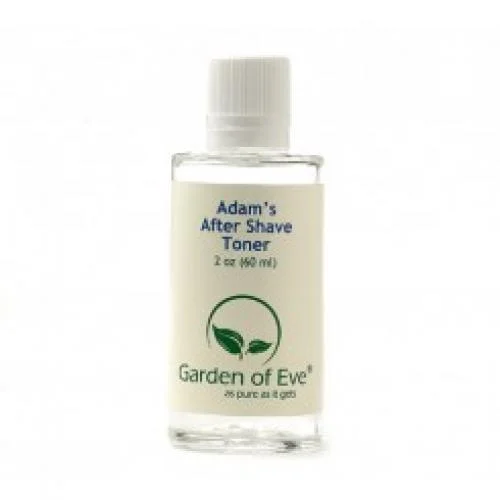
How well does your skin match with Garden of Eve Skin Care Garden of Eve Adam's After Shave Toner?
Login to see detailsOr continue via
Quick 1-minute survey • Completely free
Ingredients
Analysis results of Ingredients


Ingredient List
| EWG | CIR | Ingredient Name & Cosmetic Function | Notes |
|---|---|---|---|
| 2 | - | (Fragrance, Skin Conditioning) |   |
| 1 | A | (Skin Conditioning) |  |
| 1 | - | (Fragrance, Hair Conditioning, Cosmetic Astringent, Deodorant) | |
Garden of Eve Skin Care Garden of Eve Adam's After Shave Toner - Ingredient Explanation
Lavandula Angustifolia (Lavender) Oil
1. Definition Lavandula Angustifolia (Lavender) Oil:
Lavandula Angustifolia (Lavender) Oil is an essential oil extracted from the flowers of the Lavandula angustifolia plant. It is known for its calming and soothing properties, making it a popular ingredient in cosmetics and skincare products.2. Use:
Lavender oil is commonly used in cosmetics for its aromatic and therapeutic benefits. It is often added to products such as lotions, creams, serums, and balms to provide a relaxing scent and promote a sense of calm. Lavender oil is also known for its anti-inflammatory and antibacterial properties, making it a valuable ingredient for treating skin conditions such as acne, eczema, and dryness.3. Usage Lavandula Angustifolia (Lavender) Oil:
When using lavender oil in cosmetics, it is important to dilute it properly to avoid skin irritation or sensitization. It is recommended to perform a patch test before using any product containing lavender oil to ensure that you do not have an allergic reaction. Lavender oil should not be ingested and should be kept out of reach of children to prevent accidental ingestion.4. References:
- Ali, B., Al-Wabel, N. A., Shams, S., Ahamad, A., Khan, S. A., & Anwar, F. (2015). Essential oils used in aromatherapy: A systemic review. Asian Pacific Journal of Tropical Biomedicine, 5(8), 601-611.
- Cavanagh, H. M., & Wilkinson, J. M. (2002). Biological activities of lavender essential oil. Phytotherapy Research, 16(4), 301-308.
- Koulivand, P. H., Khaleghi Ghadiri, M., & Gorji, A. (2013). Lavender and the nervous system. Evidence-Based Complementary and Alternative Medicine, 2013, 681304.
Cucumis Sativus (Cucumber) Fruit Water
1. Definition Cucumis Sativus (Cucumber) Fruit Water:
Cucumis Sativus (Cucumber) Fruit Water is a natural ingredient derived from the juice of cucumber fruit. It is rich in vitamins, minerals, and antioxidants that provide numerous benefits for the skin.2. Use:
Cucumber fruit water is commonly used in cosmetics for its soothing and hydrating properties. It helps to calm irritated skin, reduce inflammation, and provide a cooling effect. It is often included in skincare products such as toners, mists, serums, and creams to help refresh and revitalize the skin.3. Usage Cucumis Sativus (Cucumber) Fruit Water:
Cucumber fruit water can be applied directly to the skin as a toner or mist, or it can be incorporated into various skincare products. It is suitable for all skin types, including sensitive and acne-prone skin. To use cucumber fruit water, simply spray it onto the skin or apply it with a cotton pad after cleansing. It can also be used throughout the day to refresh and hydrate the skin.4. References:
- Choudhary, S., & Kumar, V. (2019). Cucumis sativus: Review on Nutritional and Medicinal Aspects. Journal of Pharmacognosy and Phytochemistry, 8(1), 155-159.
- Mukherjee, P. K., & Maity, N. (2017). Cucumis sativus: A comprehensive review on its nutritional, medicinal and cosmetic potential. Natural Product Research, 31(4), 385-395.
- Gupta, S., & Sharma, S. (2018). Cucumis sativus: A potential source for skin care and cosmetic applications. International Journal of Pharmaceutical Sciences and Research, 9(12), 5007-5014.
Pelargonium Graveolens Water
1. Definition Pelargonium Graveolens Water:
Pelargonium Graveolens Water, also known as Geranium Water, is a hydrosol produced through the steam distillation of the leaves and flowers of the Pelargonium Graveolens plant. It is commonly used in cosmetics for its skin-balancing and soothing properties.2. Use:
Pelargonium Graveolens Water is used in cosmetics for its astringent, anti-inflammatory, and antiseptic properties. It helps to tone and tighten the skin, reduce inflammation, and promote healing. It is often found in skincare products such as toners, facial mists, and moisturizers.3. Usage Pelargonium Graveolens Water:
Pelargonium Graveolens Water can be used directly on the skin as a toner or facial mist. It can also be added to homemade skincare products such as face masks, creams, and serums. It is gentle enough for daily use and is suitable for all skin types, including sensitive skin. However, it is always recommended to do a patch test before using any new skincare product to ensure compatibility with your skin.4. References:
- Raut, J. S., & Karuppayil, S. M. (2014). A status review on the medicinal properties of essential oils. Industrial Crops and Products, 62, 250-264.
- Bakkali, F., Averbeck, S., Averbeck, D., & Idaomar, M. (2008). Biological effects of essential oils – A review. Food and Chemical Toxicology, 46(2), 446-475.
- Buchbauer, G., Jirovetz, L., Jäger, W., Plank, C., & Dietrich, H. (1993). Fragrance compounds and essential oils with sedative effects upon inhalation. Journal of Pharmaceutical Sciences, 82(6), 660-664.
Review

Didn't find
the information you need?






Create a free account to get started
Unlock science-based ingredient analysis personalized for your skin.
Already have an account? Log in
We protect your privacy. We never send spam.