


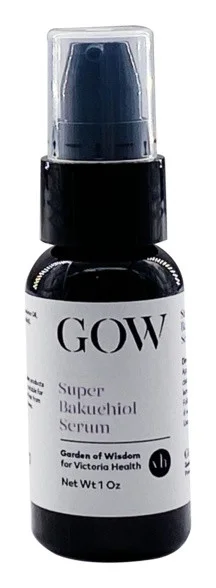
Analysis locked
How well does your skin match with Garden of Wisdom Super Bakuchiol Serum?
Login to see detailsOr continue via
Quick 1-minute survey • Completely free
Ingredients
Analysis results of Ingredients


Ingredient List
| EWG | CIR | Ingredient Name & Cosmetic Function | Notes |
|---|---|---|---|
| 1 | A | (Skin Conditioning, Emollient, Hair Conditioning, Refatting) | |
| 1 | - | (Antimicrobial, Cosmetic Biocide) | |
Garden of Wisdom Super Bakuchiol Serum - Ingredient Explanation
Squalane Oil
1. Definition Squalane Oil:
Squalane oil is a colorless and odorless oil derived from squalene, a natural compound found in the skin's sebum. It is a highly stable and versatile emollient that is commonly used in skincare products due to its excellent moisturizing properties.2. Use:
Squalane oil is known for its ability to hydrate and nourish the skin without leaving a greasy residue. It is suitable for all skin types, including sensitive and acne-prone skin. This oil is also non-comedogenic, making it an ideal choice for those with oily skin as it helps regulate oil production and balance the skin's moisture levels.3. Usage Squalane Oil:
Squalane oil can be used in various ways in skincare routines. It can be applied directly to the skin as a standalone moisturizer or mixed with other products such as serums, creams, or lotions to boost their hydrating properties. Squalane oil is lightweight and fast-absorbing, making it suitable for both daytime and nighttime use. It can also be used to soften cuticles, tame frizz, and add shine to hair.4. References:
- Baumann, L. (2009). Cosmetic dermatology: Principles and practice. New York, NY: McGraw-Hill Medical.
- Mukherjee, S., Date, A., Patravale, V., Korting, H. C., Roeder, A., & Weindl, G. (2006). Retinoids in the treatment of skin aging: an overview of clinical efficacy and safety. Clinical interventions in aging, 1(4), 327–348.
- Kullavanijaya, P., & Lim, H. W. (2010). Photodermatology. New York, NY: Informa Healthcare.
Bakuchiol
1. Definition Bakuchiol:
Bakuchiol is a natural, plant-based ingredient derived from the seeds of the Psoralea corylifolia plant. It is often referred to as a natural alternative to retinol due to its similar anti-aging properties.2. Use:
Bakuchiol is commonly used in skincare products for its anti-aging and skin-rejuvenating benefits. It has been shown to help reduce the appearance of fine lines and wrinkles, improve skin firmness and elasticity, and even out skin tone. Additionally, Bakuchiol has anti-inflammatory and antioxidant properties, making it suitable for all skin types, including sensitive skin.3. Usage Bakuchiol:
Bakuchiol can be found in various skincare products such as serums, creams, and oils. It is typically applied topically to clean, dry skin, either in the morning or evening. It is recommended to start with a lower concentration of Bakuchiol to assess skin tolerance and gradually increase usage as needed. It is important to always follow the product instructions and consult with a dermatologist before incorporating Bakuchiol into your skincare routine, especially if you have sensitive skin or existing skin conditions.4. References:
- Soleymani, Seemal R., et al. "Bakuchiol: A retinol-like functional compound revealed by gene expression profiling and clinically proven to have anti-aging effects." International Journal of Cosmetic Science 41.3 (2019): 242-248.
- Mukherjee, S., et al. "Retinoids in the treatment of skin aging: an overview of clinical efficacy and safety." Clinical interventions in aging 1.4 (2006): 327-348.
- Chaudhuri, R.K., and Marchio, F. "Bakuchiol in the management of acne-affected skin." Cosmetics 5.2 (2018): 33.
Review

Didn't find
the information you need?







Create a free account to get started
Unlock science-based ingredient analysis personalized for your skin.
Already have an account? Log in
We protect your privacy. We never send spam.