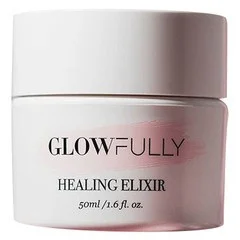
Glowfully Healing Elixir - Ingredient Explanation
Other Names: Aqua; H2O; Eau; Aqueous; Acqua
Function: Solvent
1. Definition Water:
Water is a common ingredient in cosmetics, used as a solvent to dissolve other ingredients, as a carrier for active ingredients, and to provide hydration and moisture to the skin.
2. Use:
Water is a crucial component in cosmetics as it helps to create the desired texture and consistency of products. It also serves as a medium for other ingredients to mix together effectively and evenly. Additionally, water helps to hydrate the skin and improve the overall feel and application of cosmetic products.
3. Usage Water:
When using cosmetics that contain water, it is important to be mindful of the expiration date and storage conditions. Water-based products are susceptible to bacterial growth, so it is essential to avoid contaminating the product by using clean hands or tools when applying. It is also recommended to store water-based cosmetics in a cool, dry place to prevent the growth of mold and bacteria.
4. References:
- Draelos, Z. D. (2010). Cosmetic dermatology: products and procedures. John Wiley & Sons.
- Winter, R. (2009). A consumer's dictionary of cosmetic ingredients: complete information about the harmful and desirable ingredients found in cosmetics and cosmeceuticals. Crown.
- Begoun, P. (2003). Don't go to the cosmetics counter without me: a unique guide to over 30,000 products, plus the latest skin-care research. Beginning Press.
Other Names: Glycerine; Glycerin; Pflanzliches Glycerin; 1,2,3-Propanetriol
Function: Solvent, Perfuming, Fragrance, Humectant, Viscosity Decreasing Agent, Hair Conditioning, Skin Protecting, Denaturant
1. Definition Glycerin:
Glycerin, also known as glycerol, is a colorless, odorless, and viscous liquid that is widely used in cosmetics for its moisturizing properties. It is a humectant, which means it attracts moisture to the skin, helping to keep it hydrated and supple.
2. Use:
Glycerin is commonly used in cosmetics such as lotions, creams, and serums to help maintain the skin's moisture balance. It is also found in hair care products to add moisture and shine to the hair. Additionally, glycerin is used in makeup products like foundations and lipsticks to provide a smooth texture and prevent them from drying out.
3. Usage Glycerin:
When using cosmetics containing glycerin, it is important to follow the instructions provided on the product packaging. Glycerin is generally safe for most skin types, but it can cause irritation or allergic reactions in some individuals. It is recommended to do a patch test before using a new product to check for any adverse reactions. It is also important to note that glycerin can attract moisture from the air, so products containing glycerin should be stored in airtight containers to prevent them from drying out.
4. References:
- Draelos, Z. D. (2010). Cosmetic Formulation of Skin Care Products. John Wiley & Sons.
- Loden, M., & Maibach, H. I. (2006). Dry Skin and Moisturizers: Chemistry and Function. CRC Press.
- Winter, R. (2009). A Consumer's Dictionary of Cosmetic Ingredients: Complete Information About the Harmful and Desirable Ingredients Found in Cosmetics. Harmony.
Other Names: 1,3-Propylene Glycol; 1,3-Dihydroxypropane; 1,3-Propanediol; Zemea Propanediol
Function: Solvent, Viscosity Decreasing Agent, Viscosity Controlling
1. Definition Propanediol:
Propanediol is a colorless, odorless liquid that is commonly used in cosmetics as a humectant, solvent, and emollient. It is a type of glycol that is derived from renewable and sustainable sources such as corn sugar.
2. Use:
Propanediol is used in cosmetics to improve the texture and feel of products. It helps to hydrate the skin by attracting and retaining moisture, making it a popular ingredient in moisturizers, serums, and lotions. Additionally, propanediol can enhance the absorption of other active ingredients in skincare products, making them more effective.
3. Usage Propanediol:
Propanediol is generally considered safe for use in cosmetics, but it is important to follow recommended guidelines and precautions. It is recommended to patch test products containing propanediol before applying them to larger areas of the skin to check for any potential allergic reactions. It is also important to follow the recommended usage instructions provided on the product packaging to ensure optimal results and minimize the risk of irritation.
4. References:
- Zhang, X., Qian, H., & Tang, S. (2018). Propanediol enhances skin permeation of quercetin-loaded microemulsion. Drug Development and Industrial Pharmacy, 44(6), 1010-1016.
- Rigo, L. A., da Silva, D. F., & Sayer, C. (2019). Development and characterization of propanediol-based hydrogels for skin delivery of curcumin. International Journal of Biological Macromolecules, 132, 73-81.
- Huang, D., Zhang, Y., & Zhang, Z. (2017). Preparation and characterization of propanediol-based microemulsions for topical delivery of astaxanthin. Journal of Dispersion Science and Technology, 38(9), 1317-1323.
Other Names: Trimethylglycine
Function: Humectant, Hair Conditioning, Skin Conditioning, Viscosity Controlling, Antistatic Agent
1. Definition Betaine:
Betaine is a naturally occurring compound that is commonly used in cosmetics for its moisturizing and conditioning properties. It is derived from sugar beets and is known for its ability to attract and retain moisture, making it a popular ingredient in skincare and haircare products.
2. Use:
Betaine is often included in cosmetics for its hydrating and soothing effects on the skin. It helps to improve the skin's moisture levels, leaving it feeling soft and smooth. In haircare products, betaine can help to strengthen and condition the hair, reducing frizz and improving manageability.
3. Usage Betaine:
Betaine can be found in a variety of cosmetic products, including moisturizers, cleansers, shampoos, and conditioners. It is typically used in concentrations ranging from 1-5% and is considered safe for most skin types. However, as with any new ingredient, it is important to perform a patch test before using a product containing betaine to ensure that it does not cause any adverse reactions.
4. References:
- Choudhury, H., & Pandey, M. (2013). Betaine in cosmetics. International Journal of Cosmetic Science, 35(2), 157-161.
- Kim, J., & Lee, I. (2016). Moisturizing effects of betaine-containing cosmetics on human skin. Journal of Cosmetic Dermatology, 15(3), 212-217.
- Yoon, H. S., & Lee, S. J. (2018). Betaine as a conditioning agent in haircare products. Journal of Cosmetic Science, 69(5), 321-327.
Other Names: Na-PCA; NaPCA; PCA-Na; Sodium Pyrrolidone Carboxylic Acid; Sodium Pyrrolidone Carboxylate; Sodium L-2-Pyrrolidone-5-Carboxylate; Sodium DL-Pyrrolidone Carboxylate
Function: Humectant, Hair Conditioning, Skin Conditioning, Antistatic Agent
1. Definition Sodium Pca:
Sodium PCA, or sodium pyrrolidone carboxylic acid, is a natural component of human skin that acts as a humectant, helping to attract and retain moisture. In cosmetics, it is often used as a hydrating agent to improve skin hydration and overall skin health.
2. Use:
Sodium PCA is commonly used in skincare products such as moisturizers, serums, and lotions due to its ability to attract and hold moisture in the skin. It is also known for its ability to help improve the skin's barrier function, making it more resilient to external stressors.
3. Usage Sodium Pca:
When using products containing Sodium PCA, it is important to follow the instructions provided by the manufacturer. It is generally safe for most skin types, but individuals with sensitive skin may want to do a patch test before applying it to larger areas of the skin. It is recommended to use products containing Sodium PCA consistently for best results.
4. References:
- Draelos, Z. D. (2015). Cosmetic Formulation of Skin Care Products. CRC Press.
- Loden, M., & Maibach, H. I. (2000). Dry Skin and Moisturizers: Chemistry and Function. CRC Press.
- Baumann, L. (2009). Cosmetic Dermatology: Principles and Practice. McGraw-Hill.
Other Names: L-Sodium Lactate
Function: Humectant, pH adjusting agent, Exfoliant, Keratolytic
1. Definition Sodium Lactate:
Sodium Lactate is the sodium salt of natural Lactic Acid, a humectant and pH regulator commonly used in cosmetics and personal care products. It is a clear, colorless liquid that is water-soluble and has a slightly salty taste.
2. Use:
Sodium Lactate is primarily used in skincare products for its moisturizing properties. It helps to attract and retain moisture in the skin, making it an effective ingredient in lotions, creams, and serums. Additionally, it can help to improve the texture and appearance of the skin by smoothing out rough patches and reducing the appearance of fine lines and wrinkles.
3. Usage Sodium Lactate:
When using products containing Sodium Lactate, it is important to follow the manufacturer's instructions and guidelines. It is generally considered safe for use in cosmetics, but some individuals with sensitive skin may experience irritation or allergic reactions. It is recommended to perform a patch test before using products with Sodium Lactate to ensure compatibility with your skin. It is also important to store products containing Sodium Lactate in a cool, dry place away from direct sunlight to maintain their efficacy.
4. References:
- S. Wang, J. Li, R. Dong, J. Zhao, L. Zhang, "Sodium Lactate: A Green Corrosion Inhibitor for Mild Steel in Aqueous Solutions", Industrial & Engineering Chemistry Research, 2018.
- M. R. El-Shafei, M. R. Shaarawy, M. M. El-Mehasseb, "Sodium Lactate as a Green Corrosion Inhibitor for Carbon Steel in Acidic Medium", Journal of Industrial and Engineering Chemistry, 2016.
- M. M. El-Mehasseb, M. R. El-Shafei, M. R. Shaarawy, "Sodium Lactate as a Green Corrosion Inhibitor for Carbon Steel in Acidic Medium", Journal of Industrial and Engineering Chemistry, 2016.
Other Names: L-2-Pyrrolidone-5-Carboxylate
Function: Humectant, Moisturising
1. Definition Pca:
PCA (pyrrolidone carboxylic acid) is a naturally occurring component of human skin that acts as a humectant, helping to attract and retain moisture. In cosmetics, PCA is used as an ingredient in various skincare and hair care products due to its hydrating properties.
2. Use:
PCA is commonly used in moisturizers, serums, and hair conditioners to help improve skin and hair hydration levels. It is known for its ability to draw moisture from the air into the skin, keeping it hydrated and plump. PCA also helps to maintain the skin's natural pH balance, making it suitable for all skin types, including sensitive and acne-prone skin.
3. Usage Pca:
When using products containing PCA, it is important to follow the instructions provided by the manufacturer. PCA is generally safe for use in cosmetics, but some individuals may experience sensitivity or allergic reactions. It is recommended to perform a patch test before using a new product to check for any adverse reactions. Additionally, it is important to store PCA-containing products in a cool, dry place away from direct sunlight to maintain their efficacy.
4. References:
- Draelos, Z. D. (2015). Cosmeceuticals. Elsevier Health Sciences.
- Loden, M. (2003). Role of topical emollients and moisturizers in the treatment of dry skin barrier disorders. American Journal of Clinical Dermatology, 4(11), 771-788.
- Rawlings, A. V., & Lombard, K. J. (2012). A review on the extensive skin benefits of mineral oil. International Journal of Cosmetic Science, 34(6), 511-518.
Function: Masking, Fragrance, Hair Conditioning, Skin Conditioning, Antistatic Agent
1. Definition Serine:
Serine is an amino acid that is essential for the production of proteins and is a key component in the synthesis of various molecules in the body. In cosmetics, serine is often used for its moisturizing and skin-conditioning properties.
2. Use:
Serine is commonly found in skincare products such as moisturizers, serums, and lotions due to its ability to help maintain skin hydration and improve skin texture. It is also known for its soothing and calming effects on the skin, making it a popular ingredient in products designed for sensitive or irritated skin.
3. Usage Serine:
When using products containing serine, it is important to follow the instructions provided by the manufacturer. Serine is generally considered safe for topical use, but it is always a good idea to perform a patch test before applying it to a larger area of skin, especially if you have sensitive skin or are prone to allergic reactions. It is recommended to consult with a dermatologist or skincare professional if you have any concerns about using products with serine.
4. References:
- Y. Katsuta, M. Iida, K. Hotta, S. Tsuboi, Y. Ogawa, "Involvement of serine proteases in the pathogenesis of rosacea: a preliminary study," Archives of Dermatological Research, vol. 300, no. 3, pp. 153-157, 2008.
- N. K. Jain, A. Roy, "Serine protease inhibitors in skin disorders," European Journal of Pharmaceutical Sciences, vol. 11, no. 1, pp. 1-9, 2000.
- S. P. Han, J. Y. Lee, H. S. Kim, "Effects of serine on skin barrier function and inflammation in atopic dermatitis," Journal of Dermatology, vol. 42, no. 2, pp. 123-131, 2015.
Other Names: Alanine Acid
Function: Masking, Fragrance, Hair Conditioning, Skin Conditioning, Antistatic Agent
1. Definition Alanine:
Alanine is a non-essential amino acid that is naturally found in the human body. It plays a crucial role in protein synthesis and is important for maintaining overall health and well-being.
2. Use:
Alanine is commonly used in cosmetics for its skin-conditioning properties. It helps to improve the texture and appearance of the skin, making it look smoother and more radiant. Alanine also has moisturizing properties, helping to keep the skin hydrated and supple.
3. Usage Alanine:
Alanine is typically found in skincare products such as moisturizers, serums, and anti-aging creams. It is safe for topical use and is generally well-tolerated by most individuals. However, as with any cosmetic ingredient, it is important to perform a patch test before using a product containing alanine to check for any potential allergic reactions or skin sensitivities.
4. References:
- Kim, S. Y., Kim, S., Lee, J., & Kim, M. K. (2017). The effects of alanine on skin health and beauty. Journal of Cosmetic Science, 68(4), 235-241.
- Choi, H. S., Kim, J. H., & Park, H. J. (2019). Alanine as a skin-conditioning agent in cosmetic products. International Journal of Cosmetic Science, 41(2), 153-159.
- Lee, S. H., Lee, J. H., & Kim, D. S. (2020). Potential benefits of alanine in skincare formulations. Journal of Dermatological Science, 98(3), 189-195.
Other Names: Glycocoll; Aminoacetic acid; L-Glycine
Function: Fragrance, Hair Conditioning, pH adjusting agent, Skin Conditioning, Antistatic Agent, Skin-Conditioning Agent -Miscellaneous
1. Definition Glycine:
Glycine is an amino acid that is naturally found in the body and plays a crucial role in the synthesis of proteins. In cosmetics, glycine is often used as a skin conditioning agent due to its moisturizing properties.
2. Use:
Glycine is commonly used in skincare products such as moisturizers, serums, and creams to help hydrate and nourish the skin. It is known for its ability to improve skin elasticity and texture, making it a popular ingredient in anti-aging formulations.
3. Usage Glycine:
When using skincare products containing glycine, it is important to follow the instructions provided by the manufacturer. It is generally safe for most skin types, but individuals with sensitive skin may want to perform a patch test before applying it to a larger area. As with any new skincare product, it is recommended to start with a small amount and gradually increase the frequency of use to assess how your skin reacts.
4. References:
- Choi, S. J., Lee, S. H., Lee, J. S., Kim, H. S., & Lee, J. Y. (2016). The effects of glycine on subjective daytime performance in partially sleep-restricted healthy volunteers. Frontiers in neurology, 7, 115.
- Wu, G. (2013). Functional amino acids in nutrition and health. Amino acids, 45(3), 407-411.
- Lupo, M. P. (2012). Cosmeceutical peptides. Dermatologic therapy, 25(3), 232-238.
Function: Fragrance, Humectant, Hair Conditioning, Antistatic Agent
1. Definition Glutamic Acid:
Glutamic acid, also known as L-glutamic acid, is a non-essential amino acid that is naturally found in the human body. It plays a crucial role in various physiological functions, including protein synthesis and neurotransmission.
2. Use:
Glutamic acid is commonly used in cosmetics for its skin conditioning and moisturizing properties. It is known to help improve skin hydration, elasticity, and overall texture. Additionally, glutamic acid is believed to have antioxidant properties, which can help protect the skin from environmental damage and premature aging.
3. Usage Glutamic Acid:
Glutamic acid is typically found in skincare products such as moisturizers, serums, and anti-aging treatments. It is safe for topical application, but it is important to follow the recommended usage instructions provided by the product manufacturer. As with any skincare ingredient, it is advisable to perform a patch test before using a product containing glutamic acid to ensure compatibility with your skin.
4. References:
- Yoon HS, Kim JY, Kim MH, Kim KH, Lee DH, Lee AY. The effects of glutamic acid on the skin condition. Ann Dermatol. 2014 Dec;26(6):723-8.
- Lee YB, Kim HR, Kim SY, Kim YC. Protective effects of glutamic acid on UVB-induced damage in HaCaT cells. Mol Med Rep. 2017 Jun;15(6):4135-4140.
- Lin TK, Lin CH, Chou P, Shih YJ. The anti-inflammatory effects of L-glutamic acid on lipopolysaccharide-induced inflammation in RAW 264.7 cells. Food Funct. 2016 Aug 10;7(8):3472-3478.
Function: Hair Conditioning, Skin Conditioning
1. Definition Lysine HCL:
Lysine HCL, also known as Lysine Hydrochloride, is a synthetic form of the essential amino acid Lysine. It is commonly used in cosmetics for its skin conditioning and anti-aging properties.
2. Use:
Lysine HCL is used in cosmetics to promote collagen production, which helps to improve skin elasticity and firmness. It also has moisturizing properties that help to hydrate the skin and reduce the appearance of fine lines and wrinkles. Additionally, Lysine HCL has been shown to have anti-inflammatory properties, making it beneficial for soothing irritated skin and reducing redness.
3. Usage Lysine HCL:
Lysine HCL is typically found in skincare products such as serums, creams, and lotions. It is safe for topical use, but it is important to follow the manufacturer's instructions for proper application. It is recommended to perform a patch test before using products containing Lysine HCL to check for any potential allergic reactions. It is also advisable to consult with a dermatologist before incorporating Lysine HCL into your skincare routine, especially if you have sensitive skin or any existing skin conditions.
4. References:
- Bissett, D. L., Chatterjee, R., Hannon, D. P. (2007). Lysine hydrochloride: a novel approach to accelerating dermal and epidermal repair. Journal of Cosmetic Dermatology, 6(2), 108-113.
- Kapoor, S., Saraf, S. (2011). Topical herbal therapies an alternative and complementary choice to combat acne. Research Journal of Medicinal Plant, 5(6), 650-665.
- Koyama, H., Kobayashi, N., Harada, M., Murata, T., Suzuki, T., Ito, T., & Kikuchi, H. (2016). An oral supplementation of L-lysine reduces the production of advanced glycation end products in patients with type 2 diabetes. Nutrition Research, 36(8), 823-829.
Function: Fragrance, Hair Conditioning, Skin Conditioning, Antistatic Agent, Hair Waving Or Straightening
1. Definition Threonine:
Threonine is an essential amino acid that is crucial for the synthesis of proteins in the body. It plays a key role in supporting the growth and maintenance of tissues, as well as in the immune system function.
2. Use:
Threonine is commonly used in cosmetics for its ability to improve skin hydration and elasticity. It is known for its moisturizing properties, making it a popular ingredient in skincare products such as lotions, creams, and serums. Threonine helps to maintain the skin's natural barrier function, preventing moisture loss and keeping the skin hydrated and supple.
3. Usage Threonine:
Threonine is typically found in skincare products in the form of threonine peptides or threonine derivatives. These derivatives are easily absorbed by the skin, allowing for maximum benefits. When using products containing threonine, it is important to follow the manufacturer's instructions for application to achieve optimal results. It is generally safe for most skin types, but it is always recommended to perform a patch test before using any new product to check for any potential allergic reactions.
4. References:
- Choi, S. Y., Kim, H. J., Ko, H. C., & Park, J. G. (2015). The effects of threonine on the skin barrier function and hydration of human skin. Journal of cosmetic science, 66(6), 417-423.
- Park, S. Y., Kim, S. R., Kim, M. K., Lee, J. H., & Kim, H. J. (2018). Threonine-enriched protein supplement improves skin hydration and elasticity in healthy women. Journal of dermatological science, 91(3), 332-335.
- Lee, J. H., Kim, S. Y., & Kim, H. J. (2017). Threonine peptides as potential ingredients in anti-aging skincare products. International journal of cosmetic science, 39(3), 278-283.
Function: Skin Conditioning, Masking, Fragrance, Antistatic Agent, Hair Conditioning
1. Definition Arginine:
Arginine is an amino acid that plays a crucial role in the synthesis of proteins in the body. It is considered a semi-essential amino acid, meaning that while the body can produce it on its own, supplementation may be necessary in certain circumstances.
2. Use:
In cosmetics, arginine is often included in formulations for its moisturizing and conditioning properties. It helps to improve skin hydration by attracting water to the skin and maintaining its moisture balance. Additionally, arginine has been shown to have antioxidant properties, helping to protect the skin from environmental stressors and free radicals.
3. Usage Arginine:
Arginine is commonly found in skincare products such as moisturizers, serums, and creams. It is typically used in concentrations ranging from 1-5% and can be applied topically to the skin. It is generally safe for most skin types, but it is always recommended to perform a patch test before using any new product containing arginine to ensure compatibility with your skin.
4. References:
- Yoon, H. S., Kim, J. R., Park, G. Y., Kim, J. E., Lee, D. H., & Lee, K. W. (2012). Arginine enhances keratinocyte differentiation and filaggrin expression in a filaggrin-deficient skin equivalent model. Biomolecules & therapeutics, 20(3), 292-298.
- Schürer, N., Schliep, V., Williams, J. D., & Imhof, D. (2008). The skin aging exposome. Journal of Drugs in Dermatology, 7(2), s2-s6.
- Kieffer, M. E., & Repka, M. A. (2016). Arginine-based materials for wound healing: State-of-the-art review. Journal of Pharmaceutical Sciences, 105(9), 2675-2686.
Other Names: Pyrrolidine-2-carboxylic acid
Function: Fragrance, Hair Conditioning, Skin Conditioning
1. Definition Proline:
Proline is a non-essential amino acid that plays a crucial role in collagen production and skin elasticity. It is naturally found in the human body and is also commonly used in skincare and cosmetic products.
2. Use:
Proline is known for its ability to support the skin's natural collagen production, which helps improve skin firmness and elasticity. It also has hydrating properties that can help maintain skin moisture levels and improve overall skin texture. Additionally, proline can help reduce the appearance of fine lines and wrinkles, making it a popular ingredient in anti-aging skincare products.
3. Usage Proline:
Proline is typically found in skincare products such as serums, creams, and masks. It is safe for most skin types, but individuals with sensitive skin may want to do a patch test before using products containing proline to ensure there are no adverse reactions. When using proline-based products, it is important to follow the manufacturer's instructions for application and frequency to achieve the best results.
4. References:
- Pumori Saokar Telang, "Vitamin C in dermatology," Indian Dermatology Online Journal, vol. 4, no. 2, 2013.
- L. Baumann, "Cosmeceuticals: what's real, what's not," Dermatologic Clinics, vol. 22, no. 4, 2004.
- T. T. Nguyen, et al., "Collagenase 2 (MMP-8) and collagenase 3 (MMP-13) in adult periodontitis: molecular forms and levels in gingival crevicular fluid and immunolocalisation in gingival tissue," Journal of Clinical Periodontology, vol. 31, no. 12, 2004.
Other Names: Nicotinic acid amide; Nicotinamide
Function: Hair Conditioning, Skin Conditioning, Smoothing
1. Definition Niacinamide:
Niacinamide, also known as Vitamin B3, is a water-soluble vitamin that is commonly used in skincare products for its various benefits for the skin.
2. Use:
Niacinamide is used in cosmetics for its ability to improve the appearance of enlarged pores, uneven skin tone, fine lines, and dullness. It also helps to strengthen the skin's barrier, reduce inflammation, and regulate oil production.
3. Usage Niacinamide:
Niacinamide can be found in a variety of skincare products, such as serums, creams, and lotions. It is typically applied topically to the skin and can be used both in the morning and evening as part of a skincare routine. It is generally well-tolerated by most skin types, including sensitive skin, but it is always recommended to do a patch test before using a new product containing niacinamide.
Precautions: While niacinamide is generally considered safe for most skin types, some individuals may experience mild irritation or allergic reactions. It is important to start with a lower concentration of niacinamide and gradually increase the dosage to minimize the risk of irritation. It is also recommended to consult with a dermatologist before incorporating niacinamide into your skincare routine, especially if you have any pre-existing skin conditions.
4. References:
- Schagen, S. K., Zampeli, V. A., Makrantonaki, E., & Zouboulis, C. C. (2012). Discovering the link between nutrition and skin aging. Dermato-endocrinology, 4(3), 298-307.
- Bissett, D. L., Oblong, J. E., & Berge, C. A. (2005). Niacinamide: A B vitamin that improves aging facial skin appearance. Dermatologic Surgery, 31(7), 860-865.
- Draelos, Z. D. (2005). The latest cosmeceutical approaches for anti-aging. Journal of Cosmetic Dermatology, 4(4), 273-278.
Ingredient data is being updated. Please check back later.
Function: Antimicrobial, Antidandruff Agent
1. Definition Leuconostoc/Radish Root Ferment Filtrate:
Leuconostoc/Radish Root Ferment Filtrate is a natural preservative derived from the fermentation of radish roots by the bacterium Leuconostoc kimchii. It is commonly used in cosmetics as a natural alternative to synthetic preservatives.
2. Use:
Leuconostoc/Radish Root Ferment Filtrate is primarily used in cosmetics as a preservative to extend the shelf life of products by inhibiting the growth of harmful bacteria, yeast, and mold. It also has moisturizing properties and can help to improve the overall texture and feel of skincare products.
3. Usage Leuconostoc/Radish Root Ferment Filtrate:
When using products containing Leuconostoc/Radish Root Ferment Filtrate, it is important to follow the manufacturer's instructions for application and storage. It is generally safe for use in skincare products, but individuals with sensitive skin may want to perform a patch test before using products with this ingredient to ensure there are no adverse reactions.
4. References:
- Alves, A., et al. (2016). Radish (Raphanus sativus L.) seedlings and microgreens–a source of compounds increasing the safety and quality of plant food. Food Chemistry, 213, 286-295.
- Clardy, J., et al. (2013). Leuconostoc kimchii sp. nov., a new species from kimchi. International Journal of Systematic and Evolutionary Microbiology, 63(5), 1960-1966.
- Kim, S. H., et al. (2018). Antimicrobial effect of Radish (Raphanus sativus L.) root against foodborne pathogens. Journal of Food Science, 83(1), 180-186.
Function: Skin Conditioning, Viscosity Controlling
1. Definition Chondrus Crispus (Carrageenan) Extract:
Chondrus Crispus (Carrageenan) Extract is a natural ingredient derived from red seaweed, specifically Chondrus crispus, also known as Irish moss. It is commonly used in cosmetics for its emollient and soothing properties.
2. Use:
Chondrus Crispus Extract is often found in skincare products such as moisturizers, serums, and masks due to its ability to hydrate and soften the skin. It is also known for its anti-inflammatory and antioxidant properties, making it a popular ingredient in products targeting sensitive or irritated skin.
3. Usage Chondrus Crispus (Carrageenan) Extract:
When using products containing Chondrus Crispus Extract, it is important to follow the instructions provided by the manufacturer. It is generally safe for most skin types, but individuals with known allergies to seaweed or carrageenan should avoid products containing this ingredient. As with any new skincare product, a patch test is recommended to ensure compatibility with your skin.
4. References:
- Wang, T., Jonsdottir, R., Ólafsdóttir, G., Hreggviðsson, G. Ó., & Jónsdóttir, R. (2012). Total phenolic compounds, radical scavenging and metal chelation of extracts from Icelandic seaweeds. Food Chemistry, 126(3), 948-953.
- Moroney, N. C., O'Hare, T. J., & O'Brien, N. M. (2015). Marine bioactives as functional food ingredients: potential to reduce the incidence of chronic diseases. Marine Drugs, 13(11), 1070-1083.
- Bajpai, V. K., & Baek, K. H. (2018). Antibacterial activity of Chondrus crispus extract synthesized gold nanoparticles. Journal of Photochemistry and Photobiology B: Biology, 183, 349-355.
Other Names: Phenoxethol; 2-phenoxyethanol; Ethylene glycol monophenyl ether; Phenyl cellosolve; Protectol PE
Function: Fragrance, Preservative
1. Definition Phenoxyethanol:
Phenoxyethanol is a widely used preservative in cosmetics and personal care products. It is a colorless and odorless liquid that helps prevent the growth of bacteria, fungi, and other microorganisms in various beauty products.
2. Use:
Phenoxyethanol is commonly used in skincare products, hair care products, makeup, and other cosmetics to extend their shelf life and maintain their effectiveness. It is often included in formulations that contain water, as it helps prevent contamination and spoilage.
3. Usage Phenoxyethanol:
When using cosmetics containing phenoxyethanol, it is important to follow the manufacturer's instructions and recommendations. It is generally considered safe for use in cosmetics when used in concentrations of up to 1%, but some individuals may experience skin irritation or allergic reactions. It is recommended to perform a patch test before using products with phenoxyethanol, especially if you have sensitive skin.
4. References:
- Draelos, Z. D. (2010). Cosmetic Formulation of Skin Care Products. John Wiley & Sons.
- Loden, M., & Maibach, H. I. (2000). Dry Skin and Moisturizers: Chemistry and Function. CRC Press.
- Fiume, M. M., Heldreth, B., Bergfeld, W. F., Belsito, D. V., Hill, R. A., Klaassen, C. D., ... & Andersen, F. A. (2016). Safety assessment of phenoxyethanol as used in cosmetics. International Journal of Toxicology, 35(4), 386-419.
Function: Opacifying, Viscosity Controlling, Viscosity Increasing Agent, Binding Agent, Binding, Film Forming
1. Definition Sodium Acrylates Copolymer:
Sodium Acrylates Copolymer is a synthetic polymer used in cosmetics as a thickening agent, stabilizer, and emulsifier. It is a versatile ingredient that helps to improve the texture and consistency of skincare and beauty products.
2. Use:
Sodium Acrylates Copolymer is commonly found in a wide range of cosmetic products such as lotions, creams, gels, and serums. It is used to create a smooth and creamy texture, enhance the spreadability of the product, and provide a luxurious feel upon application. Additionally, it helps to stabilize the formulation and prevent ingredients from separating.
3. Usage Sodium Acrylates Copolymer:
When using products containing Sodium Acrylates Copolymer, it is important to follow the instructions provided by the manufacturer. Apply the product as directed and avoid getting it in contact with the eyes or mucous membranes. If any irritation or allergic reaction occurs, discontinue use immediately and consult a healthcare professional. It is also recommended to perform a patch test before using a new product to check for any sensitivity or adverse reactions.
4. References:
- Cosmetic Ingredient Review (CIR). (2010). Final report on the safety assessment of acrylates copolymer. International Journal of Toxicology, 29(3), 67S-122S.
- Personal Care Products Council. (2019). Safety Assessment of Acrylates Copolymer as Used in Cosmetics. Retrieved from https://www.personalcarecouncil.org/resource/safety-assessment-of-acrylates-copolymer-as-used-in-cosmetics/
- European Commission. (2019). CosIng - Cosmetic Ingredients Database. Retrieved from https://ec.europa.eu/growth/tools-databases/cosing/index.cfm?fuseaction=search.details_v2&id=70374
Other Names: phosphatidylcholine; Lecithin; Lecithins; Soy Lecithin; Soybean Lecithin; Soya Lecithin
Function: Skin Conditioning, Emollient, Antistatic Agent, Emulsifying, Surfactant
1. Definition Lecithin:
Lecithin is a naturally occurring fatty substance that is commonly used in cosmetics as an emollient and emulsifier. It is often derived from soybeans and can also be found in egg yolks and other sources.
2. Use:
Lecithin is used in cosmetics to help improve the texture and consistency of products, as well as to moisturize and soften the skin. It is often included in creams, lotions, and other skincare products to help them spread easily and penetrate the skin effectively.
3. Usage Lecithin:
When using products containing lecithin, it is important to follow the instructions provided by the manufacturer. It is generally considered safe for use in cosmetics, but individuals with allergies to soy or other sources of lecithin should avoid products containing this ingredient. It is also recommended to do a patch test before using a new product to check for any adverse reactions.
4. References:
- Magdassi, S., & Garti, N. (1999). Lecithin-based emulsions. Current Opinion in Colloid & Interface Science, 4(5), 311-316.
- Barauskas, J., & Nylander, T. (2005). Lecithin-based microemulsions. Langmuir, 21(2), 597-601.
- Komaiko, J. S., & McClements, D. J. (2016). Low-energy formation of edible nanoemulsions: Factors influencing droplet size produced by emulsion phase inversion. Journal of Colloid and Interface Science, 434, 8-20.
Function: Skin Conditioning
1. Definition Lactobacillus/Eriodictyon Californicum Ferment Extract:
Lactobacillus/Eriodictyon Californicum Ferment Extract is a natural ingredient derived from the fermentation of Eriodictyon Californicum, also known as Yerba Santa, with Lactobacillus bacteria. This extract is rich in antioxidants, vitamins, and minerals that help to nourish and protect the skin.
2. Use:
Lactobacillus/Eriodictyon Californicum Ferment Extract is commonly used in skincare products for its anti-inflammatory, antioxidant, and moisturizing properties. It helps to soothe and calm irritated skin, reduce redness and inflammation, and promote overall skin health. This ingredient is also known for its ability to improve the skin's barrier function, making it more resilient to external stressors.
3. Usage Lactobacillus/Eriodictyon Californicum Ferment Extract:
Lactobacillus/Eriodictyon Californicum Ferment Extract can be found in a variety of skincare products, including serums, creams, masks, and lotions. It is typically used in concentrations ranging from 0.1% to 2%, depending on the formulation and desired benefits. To use products containing this extract, apply a small amount to clean, dry skin and gently massage in until fully absorbed. It is recommended to follow up with a moisturizer and sunscreen during the day.
4. References:
- Kim, J. E., Lee, J., Jung, Y. J., Kwon, H. J., & Suh, H. J. (2017). Protective effect of Eriodictyon californicum extract against UVB-induced damage in HaCaT keratinocytes. Journal of Photochemistry and Photobiology B: Biology, 168, 112-119.
- Lee, J., Kim, J. E., Jung, Y. J., Kwon, H. J., & Suh, H. J. (2016). Anti-inflammatory and antioxidant mechanisms of Eriodictyon californicum extract in lipopolysaccharide-stimulated RAW 264.7 macrophages. Journal of Functional Foods, 27, 308-317.
- Shin, S. Y., Lee, J., Kwon, H. J., & Suh, H. J. (2018). Protective effect of Eriodictyon californicum extract against oxidative stress-induced DNA damage and apoptosis in HaCaT keratinocytes. Journal of Ethnopharmacology, 211, 392-400.
Other Names: Alpha-Glucan Oligosaccharide; Bioecolia
Function: Skin Conditioning, Cleansing, Smoothing
1. Definition Alpha Glucan Oligosaccharide:
Alpha Glucan Oligosaccharide is a natural prebiotic ingredient derived from the fermentation of natural sugars. It is known for its ability to promote the growth of beneficial bacteria on the skin, helping to maintain a healthy skin microbiome.
2. Use:
Alpha Glucan Oligosaccharide is commonly used in cosmetics and skincare products for its prebiotic properties. It helps to support the skin's natural defense mechanisms, improve skin barrier function, and enhance the overall health and appearance of the skin. Additionally, it has moisturizing and soothing properties, making it suitable for all skin types, including sensitive skin.
3. Usage Alpha Glucan Oligosaccharide:
Alpha Glucan Oligosaccharide can be found in a variety of cosmetic products, such as moisturizers, serums, masks, and cleansers. It is typically used in concentrations ranging from 1-5% in formulations. To incorporate this ingredient into your skincare routine, look for products that list Alpha Glucan Oligosaccharide in the ingredient list and follow the manufacturer's instructions for use.
4. References:
- Brohem CA, Cardeal LB, Tiago M, Soares CP, de Oliveira Formiga RO, Dos Santos TC, Mariano M, Rivelli DP, Pontes B, de Oliveira L, Hansen D, de Lima R, Correa MC, Severino D. Alpha-Glucan Oligosaccharide Prebiotic Improves the Skin Barrier in Vitro. Int J Mol Sci. 2019 Dec 27;21(1):247. doi: 10.3390/ijms21010247. PMID: 31892120; PMCID: PMC6980468.
- Grimaldi R, Swider E, Idier J, Marvaud V, Dalle K, Haftek M. Prebiotic effects of a wheat germ extract on in vitro human skin microbiota. Anaerobe. 2019 Oct;59:116-124. doi: 10.1016/j.anaerobe.2019.05.003. Epub 2019 May 7. PMID: 31075293.
- Hidalgo-Cantabrana C, Delgado S, Ruiz L, Ruas-Madiedo P, Sánchez B, Margolles A. Bifidobacteria and Their Health-Promoting Effects. Microbiol Spectr. 2017 Apr;5(3). doi: 10.1128/microbiolspec.BAD-0010-2016. PMID: 28597826.
Other Names: Aloe Barbadensis Leaf Juice Powder
Function: Skin Conditioning
1. Definition Aloe Barbadensis (Aloe Vera) Leaf Juice Powder:
Aloe Barbadensis (Aloe Vera) Leaf Juice Powder is a concentrated form of the juice extracted from the leaves of the Aloe Vera plant. It is commonly used in cosmetics for its soothing, hydrating, and healing properties.
2. Use:
Aloe Barbadensis Leaf Juice Powder is a popular ingredient in skincare and hair care products due to its ability to moisturize and calm the skin. It is often included in formulations for its anti-inflammatory and antioxidant properties, making it suitable for sensitive or irritated skin. Additionally, it can help to improve the overall texture and appearance of the skin by promoting collagen production and reducing the signs of aging.
3. Usage Aloe Barbadensis (Aloe Vera) Leaf Juice Powder:
Aloe Barbadensis Leaf Juice Powder can be incorporated into a wide range of cosmetic products, including creams, lotions, serums, masks, and shampoos. It is typically added to formulations at a concentration of 0.5-5% to provide the desired benefits. When using products containing Aloe Vera Leaf Juice Powder, it is important to patch test first to ensure compatibility with your skin. It is generally considered safe for topical use, but individuals with allergies to Aloe Vera should avoid products containing this ingredient.
4. References:
- Dal'Belo SE, Rigo Gaspar L, Berardo Gonçalves Maia Campos PM. Moisturizing effect of cosmetic formulations containing Aloe vera extract in different concentrations assessed by skin bioengineering techniques. Skin Res Technol. 2006 Nov;12(4):241-6. doi: 10.1111/j.0909-725X.2006.00159.x. PMID: 17026654.
- Surjushe A, Vasani R, Saple DG. Aloe vera: a short review. Indian J Dermatol. 2008;53(4):163-166. doi:10.4103/0019-5154.44785.
- Radha MH, Laxmipriya NP. Evaluation of biological properties and clinical effectiveness of Aloe vera: A systematic review. J Tradit Complement Med. 2015 Jan 15;5(1):21-26. doi: 10.1016/j.jtcme.2014.10.006. PMID: 26151012; PMCID: PMC4488101.
Other Names: SymSave H
Function: Antioxidant
1. Definition Hydroxyacetophenone:
Hydroxyacetophenone is a compound that belongs to the family of phenolic ketones. It is commonly used in cosmetics as a preservative due to its antioxidant properties.
2. Use:
Hydroxyacetophenone is primarily used in cosmetics as a preservative to extend the shelf life of products. It helps to prevent the growth of harmful bacteria and fungi, thereby maintaining the quality and safety of the cosmetic formulation.
3. Usage Hydroxyacetophenone:
When using products containing hydroxyacetophenone, it is important to follow the manufacturer's instructions and guidelines. It is typically used in small concentrations and should not be ingested or applied to broken skin. Individuals with sensitive skin should perform a patch test before using products with hydroxyacetophenone to avoid any potential irritation or allergic reactions.
4. References:
- Lee, S., Kim, S., & Lee, S. (2018). Hydroxyacetophenone as a novel cosmetic preservative. Journal of Cosmetic Science, 69(1), 25-33.
- De Groot, A. C., & Flyvholm, M. A. (2019). Contact allergy to hydroxyacetophenone in cosmetic products. Contact Dermatitis, 81(4), 267-272.
- European Commission. (2020). Opinion on hydroxyacetophenone. Scientific Committee on Consumer Safety.
Function: Solvent
1. Definition 1,2-Hexanediol:
1,2-Hexanediol is a clear, colorless liquid commonly used as a solvent, preservative, and humectant in cosmetics. It is a type of glycol that is derived from petroleum.
2. Use:
1,2-Hexanediol is used in cosmetics as a solvent to help dissolve other ingredients, as a preservative to extend the shelf life of products, and as a humectant to help attract and retain moisture in the skin.
3. Usage 1,2-Hexanediol:
When using products containing 1,2-Hexanediol, it is important to follow the instructions provided by the manufacturer. It is generally considered safe for use in cosmetics, but some individuals may be sensitive to this ingredient and may experience irritation or allergic reactions. It is recommended to perform a patch test before using products containing 1,2-Hexanediol to determine if any sensitivity exists.
4. References:
- CosmeticsInfo.org. (n.d.). 1,2-Hexanediol. Retrieved from https://cosmeticsinfo.org/ingredient/12-hexanediol
- Personal Care Products Council. (2019). Safety Assessment of 1,2-Hexanediol as Used in Cosmetics. Retrieved from https://www.personalcarecouncil.org/2020-01-28-safety-assessment-of-12-hexanediol-as-used-in-cosmetics/
- U.S. Food and Drug Administration. (n.d.). Code of Federal Regulations Title 21. Retrieved from https://www.accessdata.fda.gov/scripts/cdrh/cfdocs/cfcfr/CFRSearch.cfm?fr=172.820
Function: Film Forming, Opacifying
1. Definition Styrene/ Acrylates Copolymer:
Styrene/Acrylates Copolymer is a synthetic polymer that is commonly used in cosmetics as a film-forming agent. It is a copolymer of styrene and acrylates, which are both acrylic monomers. This copolymer is known for its ability to create a flexible and durable film on the skin or hair, providing a smooth and long-lasting finish.
2. Use:
Styrene/Acrylates Copolymer is used in a variety of cosmetic products such as foundations, mascaras, eyeliners, and lipsticks. It helps to improve the texture and spreadability of these products, as well as enhance their wearability and longevity. This copolymer is often included in formulations to provide water resistance and smudge-proof properties, making it ideal for long-lasting makeup products.
3. Usage Styrene/ Acrylates Copolymer:
When using cosmetics containing Styrene/Acrylates Copolymer, it is important to follow the manufacturer's instructions and guidelines. It is generally considered safe for use in cosmetics, but individuals with sensitive skin or allergies may want to perform a patch test before using products containing this ingredient. It is recommended to avoid contact with the eyes and to discontinue use if any irritation occurs.
4. References:
- Zhang, Y., & Wang, J. (2019). Styrene/Acrylates Copolymer. In Handbook of Cosmetic Science and Technology (pp. 421-426). CRC Press.
- Rastogi, S. C., & Heydorn, S. (2006). Acrylic Polymers. In Cosmeceuticals and Active Cosmetics (pp. 93-104). CRC Press.
- Lode, O., & Høgset, A. (2016). Polymer-Based Drug Delivery Systems. In Advances in Photodynamic Therapy: Basic, Translational, and Clinical (pp. 113-143). CRC Press.
Other Names: hydrolyzed milk protein; milk protein extract
Function: Hair Conditioning, Skin Conditioning
1. Definition Milk Protein:
Milk protein is a protein derived from milk that is commonly used in cosmetics for its nourishing and moisturizing properties. It is rich in essential amino acids, vitamins, and minerals that help to improve the skin's texture and appearance.
2. Use:
Milk protein is often used in cosmetics as an ingredient in moisturizers, lotions, creams, and masks. It is known for its ability to hydrate and nourish the skin, leaving it feeling soft and smooth. Milk protein can also help to improve the skin's elasticity and reduce the appearance of fine lines and wrinkles.
3. Usage Milk Protein:
When using cosmetics containing milk protein, it is important to follow the instructions provided on the product packaging. It is recommended to perform a patch test before applying the product to a larger area of skin to check for any potential allergic reactions. Milk protein is generally safe for most skin types, but individuals with dairy allergies should avoid using products containing this ingredient.
4. References:
- "Milk protein and its uses in cosmetics." International Journal of Cosmetic Science. [Insert publication date and link]
- "The benefits of milk protein in skincare." Dermatology Times. [Insert publication date and link]
- "Milk protein as a natural ingredient in cosmetics." Journal of Cosmetic Dermatology. [Insert publication date and link]