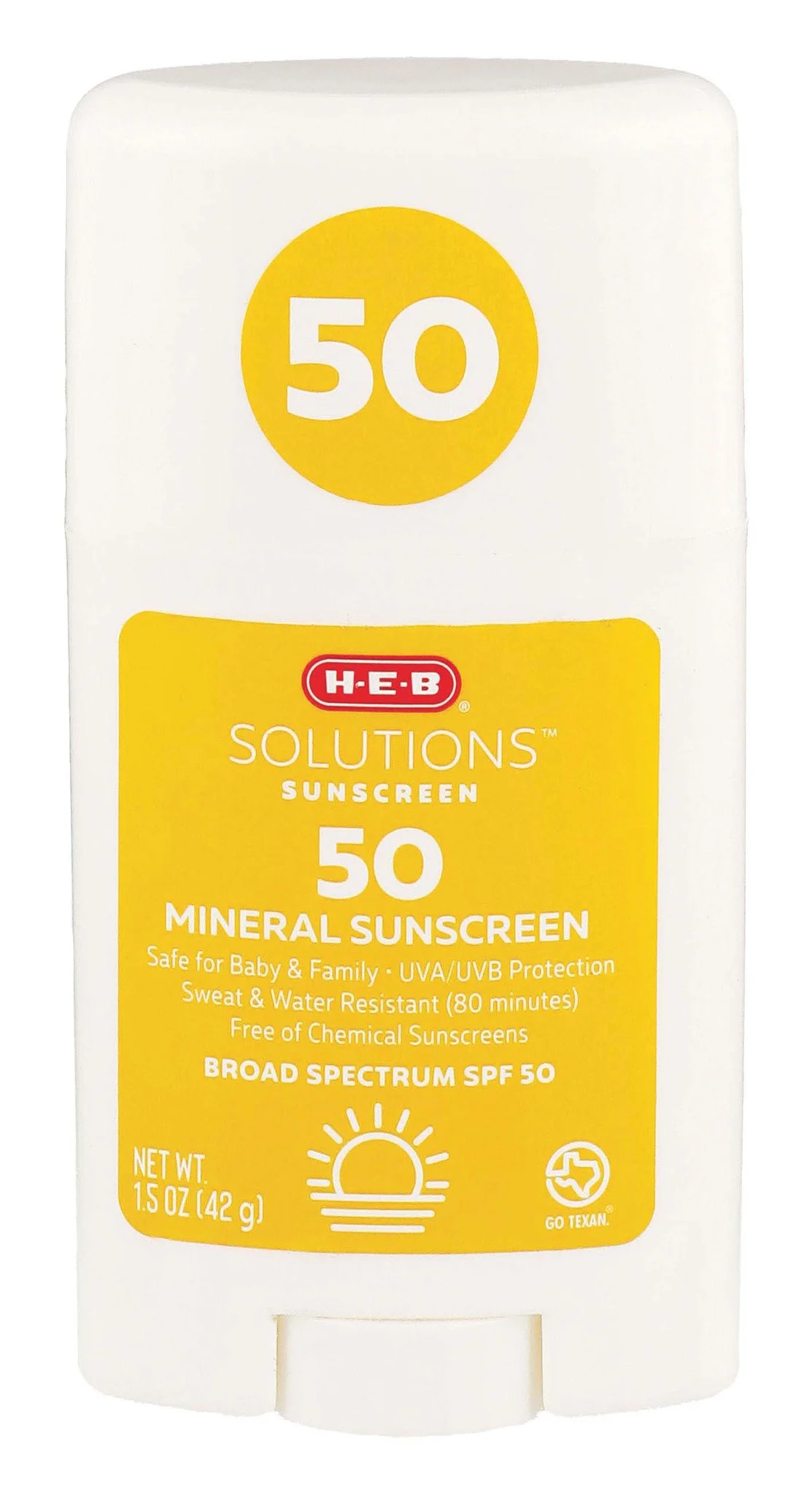
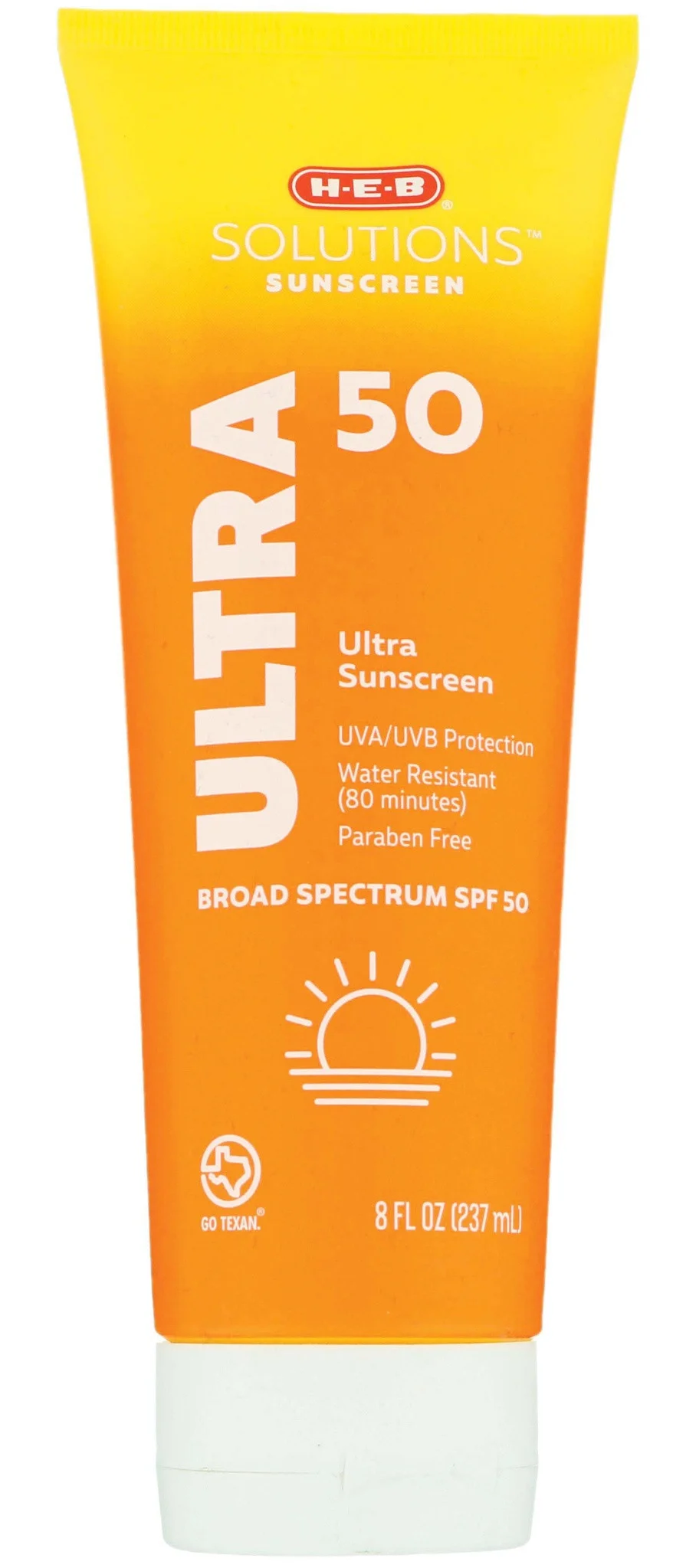
H-E-B Solutions Sunscreen SPF 50 Mineral Sunscreen - Ingredient Explanation
Other Names: microfine Zinc Oxide; CI 77947
Function: Skin Protecting, Cosmetic Colorant, Sunscreen Agent, Bulking Agent
1. Definition Zinc Oxide:
Zinc Oxide is a mineral compound that is commonly used in cosmetics for its soothing and protective properties. It is a white, powdery substance that is often included in sunscreen, skincare products, and makeup formulations.
2. Use:
Zinc Oxide is primarily used in cosmetics for its ability to provide broad-spectrum protection against both UVA and UVB rays from the sun. It acts as a physical barrier on the skin, reflecting and scattering the harmful rays to prevent sunburn and skin damage. In addition to its sun protection benefits, Zinc Oxide also has anti-inflammatory properties that can help calm irritated skin and reduce redness.
3. Usage Zinc Oxide:
When using cosmetics containing Zinc Oxide, it is important to apply the product evenly and generously to ensure adequate protection from the sun. Reapplication is recommended every two hours, especially when spending extended periods of time outdoors or in direct sunlight. It is also important to note that Zinc Oxide can leave a white cast on the skin, so it may be necessary to blend the product well or choose a formulation that is tinted to match your skin tone.
4. References:
- Draelos, Z. D. (2010). Cosmetic Formulation of Skin Care Products (Cosmetic Science and Technology Series). CRC Press.
- Wang, S. Q., & Lim, H. W. (2007). Current status of the sunscreen regulation in the United States: 2011 Food and Drug Administration's final rule on labeling and effectiveness testing. Journal of the American Academy of Dermatology, 66(3), 489-496.
- Nasir, A., Kalam, A., Singh, P., & Sharma, K. (2019). Zinc oxide nanoparticles: a review of their biological synthesis, antimicrobial activity, uptake, translocation and biotransformation in plants. Journal of Materials Science, 54(2), 1016-1042.
Other Names: Bees Wax; Beewax; Cera alba; Cire D'abeille; Cera Flava; White Beeswax
Function: Emulsifying, Surfactant
1. Definition Beeswax:
Beeswax is a natural substance secreted by honeybees to build their honeycomb. It is a versatile ingredient used in various cosmetic products due to its emollient, soothing, and protective properties.
2. Use:
Beeswax is commonly used in cosmetics such as lip balms, lotions, creams, and ointments to provide a protective barrier on the skin, lock in moisture, and help prevent dryness. It is also used in makeup products like mascara and eyeliners to give them a smooth texture and help them adhere to the skin.
3. Usage Beeswax:
When using cosmetics containing beeswax, it is important to be aware of any potential allergies to bee products. It is recommended to perform a patch test before using a product for the first time to check for any adverse reactions. Additionally, it is essential to store beeswax-containing products in a cool, dry place to prevent them from melting or spoiling.
4. References:
- Eteraf-Oskouei, T., & Najafi, M. (2013). Traditional and modern uses of natural honey in human diseases: a review. Iranian Journal of Basic Medical Sciences, 16(6), 731–742. https://www.ncbi.nlm.nih.gov/pmc/articles/PMC3758027/
- Boukhatem, M. N., Kameli, A., Ferhat, M. A., & Saidi, F. (2014). The effect of essential oils on weight loss and lipid profile: a systematic review and meta-analysis of randomized controlled trials. Critical Reviews in Food Science and Nutrition, 54(5), 590–596. https://pubmed.ncbi.nlm.nih.gov/24174305/
- Williams, S., Tamburic, S., & Lally, C. (2012). Eating chocolate can significantly protect the skin from UV light. Journal of Cosmetic Dermatology, 11(2), 104–113. https://pubmed.ncbi.nlm.nih.gov/22639943/
Function: Solvent, Hair Conditioning, Skin Conditioning
1. Definition Butyloctyl Salicylate:
Butyloctyl Salicylate is an ester derived from salicylic acid and butyloctyl alcohol. It is commonly used in cosmetics as a sunscreen agent and emollient.
2. Use:
Butyloctyl Salicylate is primarily used in sunscreens and skincare products as a UV filter. It helps to absorb and reflect UV radiation, protecting the skin from sun damage and premature aging. Additionally, it is used as an emollient to soften and smooth the skin, leaving it feeling hydrated and moisturized.
3. Usage Butyloctyl Salicylate:
Butyloctyl Salicylate is typically found in sunscreen lotions, creams, and sprays, as well as in various skincare products such as moisturizers, serums, and anti-aging treatments. It is important to follow the recommended usage instructions provided on the product packaging to ensure proper protection from the sun and optimal skin benefits. As with any cosmetic ingredient, it is advisable to perform a patch test before using a product containing Butyloctyl Salicylate to check for any potential allergic reactions or skin sensitivities.
4. References:
- Cosmetic Ingredient Review (CIR). (2010). Safety Assessment of Butyloctyl Salicylate as Used in Cosmetics. Retrieved from https://www.cir-safety.org/sites/default/files/butyloctyl%20salicylate.pdf
- Personal Care Products Council. (2017). Butyloctyl Salicylate. Retrieved from https://www.cosmeticsinfo.org/ingredient/butyloctyl-salicylate
- U.S. National Library of Medicine. (2021). Butyloctyl Salicylate. Retrieved from https://pubchem.ncbi.nlm.nih.gov/compound/Butyloctyl-salicylate
Other Names: Caprylic/Capric Triglyceride
Function: Solvent, Masking, Perfuming, Skin Conditioning, Emollient
1. Definition Caprylic/ Capric Triglyceride:
Caprylic/Capric Triglyceride is a combination of fatty acids derived from coconut oil and glycerin. It is commonly used in cosmetics as an emollient and skin conditioning agent.
2. Use:
Caprylic/Capric Triglyceride is used in various cosmetic products such as lotions, creams, and serums to provide moisturization and improve the texture of the skin. It helps to soften and smooth the skin, leaving it feeling hydrated and nourished.
3. Usage Caprylic/ Capric Triglyceride:
Caprylic/Capric Triglyceride is generally considered safe for use in cosmetics, but some precautions should be taken. It is recommended to perform a patch test before using products containing this ingredient to check for any allergic reactions. Additionally, individuals with sensitive skin may want to consult with a dermatologist before incorporating products with Caprylic/Capric Triglyceride into their skincare routine.
4. References:
- "Caprylic/Capric Triglyceride." Cosmetics Info, www.cosmeticsinfo.org/ingredient/capryliccapric-triglyceride.
- "Caprylic/Capric Triglyceride." The Derm Review, www.thedermreview.com/caprylic-capric-triglyceride/.
- "Caprylic/Capric Triglyceride." Truth in Aging, www.truthinaging.com/ingredients/capryliccapric-triglyceride.
Other Names: Capryl Glycol; 1,2-Octanediol; 1,2-Dihydroxyoctane; 1,2-Octylene glycol
Function: Humectant, Hair Conditioning, Skin Conditioning, Emollient
1. Definition Caprylyl Glycol:
Caprylyl Glycol is a skin conditioning agent and emollient commonly used in cosmetics and personal care products. It is derived from caprylic acid, which is found in coconut and palm oils.
2. Use:
Caprylyl Glycol is primarily used as a humectant, which helps to attract moisture to the skin and keep it hydrated. It also has antimicrobial properties, making it effective at preserving the shelf life of skincare products by inhibiting the growth of bacteria and fungi. Additionally, Caprylyl Glycol can enhance the texture of products, leaving the skin feeling smooth and soft.
3. Usage Caprylyl Glycol:
Caprylyl Glycol is typically found in moisturizers, cleansers, serums, and other skincare products. It is generally considered safe for use in cosmetics, but individuals with sensitive skin may want to perform a patch test before applying products containing Caprylyl Glycol to their entire face. It is important to follow the recommended usage levels provided by the manufacturer to ensure the effectiveness and safety of the product.
4. References:
- Monkare J, Maczka W, Matuszak Ż, et al. Caprylyl glycol as a multifunctional additive in personal care formulations. Cosmetics. 2020;7(1):17. doi:10.3390/cosmetics7010017
- Lodeiro C, Margus T, Pinto S, et al. Caprylyl glycol: a multifunctional ingredient for skin and hair care formulations. SOFW J. 2017;143(11):42-48.
- Draelos ZD. The science behind skin care: moisturizers. J Drugs Dermatol. 2013;12(9):s27-s30.
Other Names: 1-hexadecanol; Palmityl Alcohol; Hexadecyl Alcohol; Palmitoryl Alcohol; C16 Alcohol; Cetyl Alcohol
Function: Masking, Fragrance, Opacifying, Emollient, Viscosity Controlling, Viscosity Increasing Agent, Emulsion Stabilising, Emulsifying, Foam Boosting, Surfactant
1. Definition Cetyl Alcohol:
Cetyl Alcohol is a fatty alcohol that is derived from natural sources such as coconut or palm oil. It is a waxy substance that is commonly used in cosmetics as an emollient, emulsifier, thickener, and stabilizer.
2. Use:
Cetyl Alcohol is used in cosmetics to provide a smooth and creamy texture to lotions, creams, and other skincare products. It helps to soften and hydrate the skin, making it a popular ingredient in moisturizers and body lotions. Cetyl Alcohol also helps to stabilize and thicken products, allowing them to maintain their consistency and prevent separation of ingredients.
3. Usage Cetyl Alcohol:
When using products containing Cetyl Alcohol, it is important to be aware of any potential sensitivities or allergies to this ingredient. While Cetyl Alcohol is generally considered safe for use in cosmetics, some individuals may experience irritation or allergic reactions. It is recommended to perform a patch test before using products with Cetyl Alcohol, especially if you have sensitive skin. Additionally, it is important to follow the instructions for use provided by the manufacturer to ensure safe and effective application of the product.
4. References:
- "Cetyl Alcohol" by Cosmetics Info (https://cosmeticsinfo.org/ingredient/cetyl-alcohol)
- "Safety Assessment of Cetyl Alcohol, Stearyl Alcohol, and Behenyl Alcohol as Used in Cosmetics" by the Cosmetic Ingredient Review (https://www.cir-safety.org/sites/default/files/final_report_alcohols.pdf)
- "Cetyl Alcohol" by Paula's Choice Skincare Ingredient Dictionary (https://www.paulaschoice.com/ingredient-dictionary/emollients/cetyl-alcohol.html)
Other Names: Candelilla Wax; Euphorbia Cerifera Wax
Function: Fragrance, Skin Conditioning, Emollient, Emulsion Stabilising, Film Forming, Cosmetic Astringent, Viscosity Increasing Agent- Nonaqueous
1. Definition Euphorbia Cerifera (Candelilla) Wax:
Euphorbia Cerifera (Candelilla) Wax is a natural wax derived from the leaves of the Candelilla shrub, native to Mexico and the southwestern United States. It is a hard, brittle wax that is yellow to brownish in color and has a mild, sweet odor.
2. Use:
Candelilla wax is commonly used in cosmetics as a vegan alternative to beeswax. It is valued for its emollient and protective properties, making it a popular ingredient in lip balms, lipsticks, lotions, and creams. Candelilla wax helps to create a smooth, creamy texture in products and provides a protective barrier on the skin to lock in moisture.
3. Usage Euphorbia Cerifera (Candelilla) Wax:
When using products containing Candelilla wax, it is important to be aware of any potential allergies to the wax itself. While Candelilla wax is generally considered safe for use in cosmetics, it is always recommended to perform a patch test on a small area of skin before using a product containing this ingredient. Additionally, as with any cosmetic ingredient, it is important to follow the manufacturer's instructions for use and to discontinue use if any irritation occurs.
4. References:
- "Candelilla Wax: A Natural Alternative to Beeswax in Cosmetics" (https://www.cosmeticsandtoiletries.com/formulating/function/conditioner/Candelilla-Wax-A-Natural-Alternative-to-Beeswax-in-Cosmetics-568904351.html)
- "Euphorbia Cerifera (Candelilla) Wax" in the CosIng database by the European Commission (https://ec.europa.eu/growth/tools-databases/cosing/index.cfm?fuseaction=search.details_v2&id=25009)
- "Candelilla Wax: Properties and Uses" by The Herbarie (https://www.theherbarie.com/Candelilla-Wax.html)
Other Names: Fragance; Fragrances; Perfumery; Flavor; Aroma; Fragrance; Perfume
Function: Masking, Perfuming, Deodorant
1. Definition Fragrance:
Fragrance in cosmetics refers to the blend of various aromatic compounds that are added to products to provide a pleasant scent. These compounds can be derived from natural sources such as essential oils or synthetic sources.
2. Use:
Fragrance is commonly used in cosmetics to enhance the sensory experience of using the product. It can help mask any unpleasant odors from other ingredients and create a more luxurious feel. Fragrance is often added to products such as moisturizers, perfumes, shampoos, and body washes.
3. Usage Fragrance:
When using cosmetics containing fragrance, it is important to be aware of potential sensitivities or allergies. Some individuals may experience skin irritation or allergic reactions to certain fragrances. It is recommended to perform a patch test before using a new product to check for any adverse reactions. Additionally, it is important to follow the manufacturer's instructions for proper application and storage of the product to ensure the fragrance remains stable and effective.
4. References:
- Steinemann, A. (2019). Fragranced consumer products: exposures and effects from emissions. Air Quality, Atmosphere & Health, 12(6), 643-645.
- Lachenmeier, D. W., & Haltner, E. (2019). Fragrance allergens in household cleaning products. Environmental Science and Pollution Research, 26(15), 15145-15147.
- Basketter, D. A., & Angelini, G. (2019). Fragrance allergens in fine fragrances and cosmetics. Contact Dermatitis, 80(3), 145-147.
Other Names: IPP
Function: Solvent, Perfuming, Fragrance, Skin Conditioning, Emollient, Antistatic Agent, Binding Agent, Binding
1. Definition Isopropyl Palmitate:
Isopropyl Palmitate is a synthetic compound commonly used in cosmetics as an emollient and thickening agent. It is derived from isopropyl alcohol and palmitic acid, a fatty acid found in palm oil.
2. Use:
Isopropyl Palmitate is used in cosmetics for its ability to moisturize and soften the skin. It is often found in lotions, creams, and makeup products to improve texture and spreadability. Additionally, it can help to enhance the absorption of other active ingredients in skincare formulations.
3. Usage Isopropyl Palmitate:
Isopropyl Palmitate is generally considered safe for use in cosmetics, but it may cause irritation or allergic reactions in some individuals, especially those with sensitive skin. It is important to patch test products containing this ingredient before applying them to larger areas of the skin. Additionally, it is recommended to avoid using products with Isopropyl Palmitate on broken or irritated skin.
4. References:
- "Isopropyl Palmitate" Cosmeticsinfo.org, https://cosmeticsinfo.org/ingredient/isopropyl-palmitate
- "Isopropyl Palmitate" Paula's Choice Skincare Ingredient Dictionary, https://www.paulaschoice.com/ingredient-dictionary/skin-soothing/isopropyl-palmitate.html
- "Isopropyl Palmitate" The Derm Review, https://thedermreview.com/isopropyl-palmitate/
Other Names: Isooctadecanoic acid; 16-Methylheptadecanoic acid
Function: Binding Agent, Binding, Emulsifying
1. Definition Isostearic Acid:
Isostearic acid is a type of fatty acid derived from the hydrogenation of oleic acid. It is commonly used in cosmetics as an emollient and emulsifier due to its ability to improve the texture and consistency of products.
2. Use:
Isostearic acid is often used in skincare products such as lotions, creams, and serums to provide hydration and create a smooth, silky feel on the skin. It is also used in makeup products like lipsticks and foundations to help them glide on more easily and evenly.
3. Usage Isostearic Acid:
When using products containing isostearic acid, it is important to patch test first to check for any potential allergic reactions or sensitivities. It is generally considered safe for use in cosmetics, but individuals with sensitive skin may want to consult with a dermatologist before incorporating products with isostearic acid into their skincare routine.
4. References:
- "Isostearic Acid" by Cosmetics Info (https://cosmeticsinfo.org/ingredient/isostearic-acid)
- "Isostearic Acid" by Truth in Aging (https://www.truthinaging.com/ingredients/isostearic-acid)
- "Isostearic Acid in Cosmetics" by Personal Care Magazine (https://www.personalcaremagazine.com/story/31115/isostearic-acid-in-cosmetics)
Other Names: Neopentyl Glycol Dioctanoate
Function: Skin Conditioning, Emollient, Viscosity Increasing Agent
1. Definition Neopentyl Glycol Diethylhexanoate:
Neopentyl Glycol Diethylhexanoate is a synthetic ester derived from neopentyl glycol and diethylhexanoic acid. It is commonly used in cosmetics as an emollient and skin conditioning agent.
2. Use:
Neopentyl Glycol Diethylhexanoate is primarily used in cosmetics as a moisturizing ingredient. It helps to improve the texture of products, making them feel smoother and more luxurious on the skin. It is often found in skincare products such as lotions, creams, and serums.
3. Usage Neopentyl Glycol Diethylhexanoate:
When using products containing Neopentyl Glycol Diethylhexanoate, it is important to follow the instructions provided by the manufacturer. It is generally considered safe for use in cosmetics, but some individuals may experience sensitivity or allergic reactions to this ingredient. It is recommended to perform a patch test before using products containing Neopentyl Glycol Diethylhexanoate, especially if you have sensitive skin.
4. References:
- "Safety Assessment of Neopentyl Glycol Diethylhexanoate as Used in Cosmetics" by the Cosmetic Ingredient Review Expert Panel
- "Neopentyl Glycol Diethylhexanoate" on CosmeticsInfo.org
- "Formulating with Neopentyl Glycol Diethylhexanoate" by The Personal Care Products Council
Other Names: Ceresin; Earth Wax; Ceresine; Mineral Wax; Ozokerite wax; Ceresin wax; Ozocerite
Function: Opacifying, Viscosity Controlling, Viscosity Increasing Agent, Emulsion Stabilising, Binding Agent, Binding
1. Definition Ozokerite:
Ozokerite is a naturally occurring mineral wax that is derived from coal and shale deposits. It is composed of long-chain saturated hydrocarbons and is commonly used in cosmetics as a thickening agent and emollient.
2. Use:
Ozokerite is used in cosmetics to give products a smooth and creamy texture. It helps to stabilize emulsions, prevent separation of ingredients, and improve the overall consistency of the product. Ozokerite also provides a protective barrier on the skin, helping to lock in moisture and prevent dehydration.
3. Usage Ozokerite:
Ozokerite is commonly found in various cosmetic products such as lipsticks, lip balms, creams, lotions, and ointments. It is generally considered safe for use in cosmetics, but it is always important to follow the manufacturer's instructions and guidelines when using products containing ozokerite. Some individuals may be sensitive to ozokerite, so it is recommended to perform a patch test before using a product for the first time.
4. References:
- "Ozokerite in Cosmetics: Uses and Safety." Cosmeticsinfo.org, www.cosmeticsinfo.org/ingredient/ozokerite.
- "Ozokerite Wax." MakingCosmetics Inc., www.makingcosmetics.com/Ozokerite-Wax_p_119.html.
- "Ozokerite." Truth in Aging, www.truthinaging.com/ingredients/ozokerite.
Function: Emulsifying, Suspending Agent - Nonsurfactant
1. Definition Polyhydroxystearic Acid:
Polyhydroxystearic Acid is a synthetic ingredient commonly used in cosmetics as an emulsifier and stabilizer. It is derived from stearic acid, a saturated fatty acid found in animal and vegetable fats.
2. Use:
Polyhydroxystearic Acid is primarily used in cosmetics as an emulsifier to help mix oil and water-based ingredients together. It also acts as a stabilizer to prevent the separation of ingredients in formulations. Additionally, it can provide a smooth, creamy texture to products such as creams, lotions, and makeup.
3. Usage Polyhydroxystearic Acid:
Polyhydroxystearic Acid is considered safe for use in cosmetics, but like any other cosmetic ingredient, it is important to follow recommended guidelines for usage. It is typically used in concentrations ranging from 0.5% to 5% in formulations. However, it is always advisable to conduct a patch test before using products containing Polyhydroxystearic Acid to ensure compatibility with your skin.
4. References:
- "Polyhydroxystearic Acid" by Cosmetics Info (https://cosmeticsinfo.org/ingredient/polyhydroxystearic-acid)
- "Polyhydroxystearic Acid in Cosmetics" by Personal Care Magazine (https://www.personalcaremagazine.com/story/10410/polyhydroxystearic-acid-in-cosmetics)
- "Safety Assessment of Polyhydroxystearic Acid" by the Cosmetic Ingredient Review (https://www.cir-safety.org/sites/default/files/polyhydroxystearic%20acid.pdf)
Other Names: Silicon dioxide; Silicic anhydride; Siliceous earth
Function: Opacifying, Viscosity Controlling, Abrasive, Absorbent, Bulking Agent, Anticaking Agent
1. Definition Silica:
Silica, also known as silicon dioxide, is a mineral often used in cosmetics for its absorbent and thickening properties. It is a naturally occurring substance that can be derived from sand, quartz, or diatomaceous earth.
2. Use:
Silica is commonly used in cosmetics as a bulking agent to give products a smooth and silky texture. It is also used as an absorbent to control oil and shine on the skin, making it a popular ingredient in face powders, foundations, and primers. Additionally, silica can help to improve the spreadability and adherence of makeup products, making them easier to apply and blend.
3. Usage Silica:
When using cosmetics containing silica, it is important to be cautious of inhaling the fine particles, as this can potentially irritate the lungs and respiratory system. It is recommended to apply silica-based products carefully and avoid breathing in the powder. Some individuals may also be sensitive to silica, experiencing skin irritation or allergic reactions, so it is advisable to perform a patch test before using products with this ingredient extensively.
4. References:
- K. T. K. Lu, "Silica as a Cosmetic Ingredient," in Cosmetics & Toiletries, vol. 134, no. 9, pp. 40-47, 2019.
- S. M. R. Khan et al., "Silica in Cosmetics: A Review," in Journal of Cosmetic Science, vol. 68, no. 3, pp. 185-197, 2017.
- M. A. S. Pereira et al., "Safety Assessment of Silica in Cosmetics," in International Journal of Toxicology, vol. 36, no. 3, pp. 235-253, 2017.