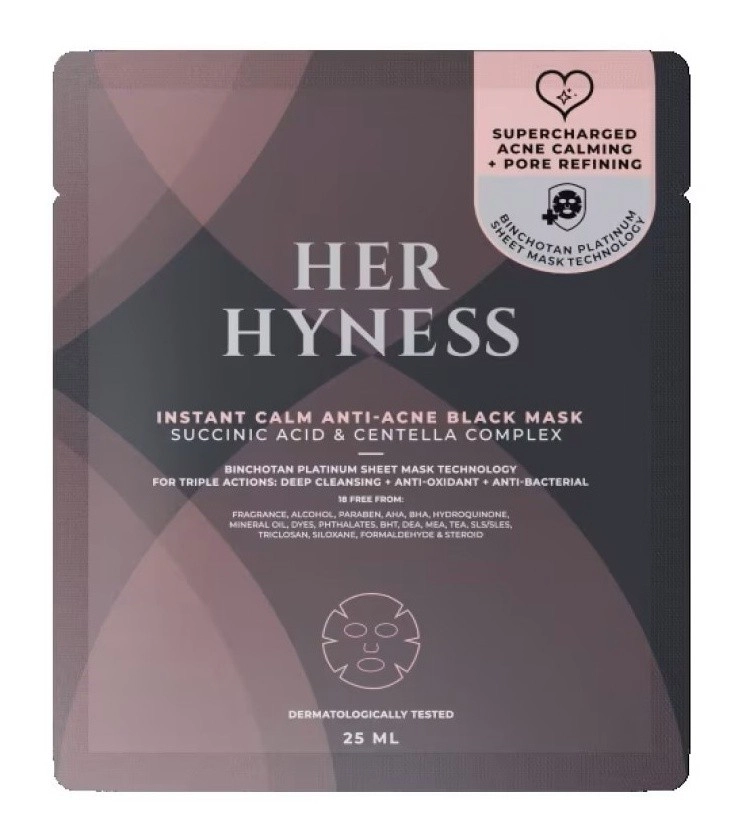
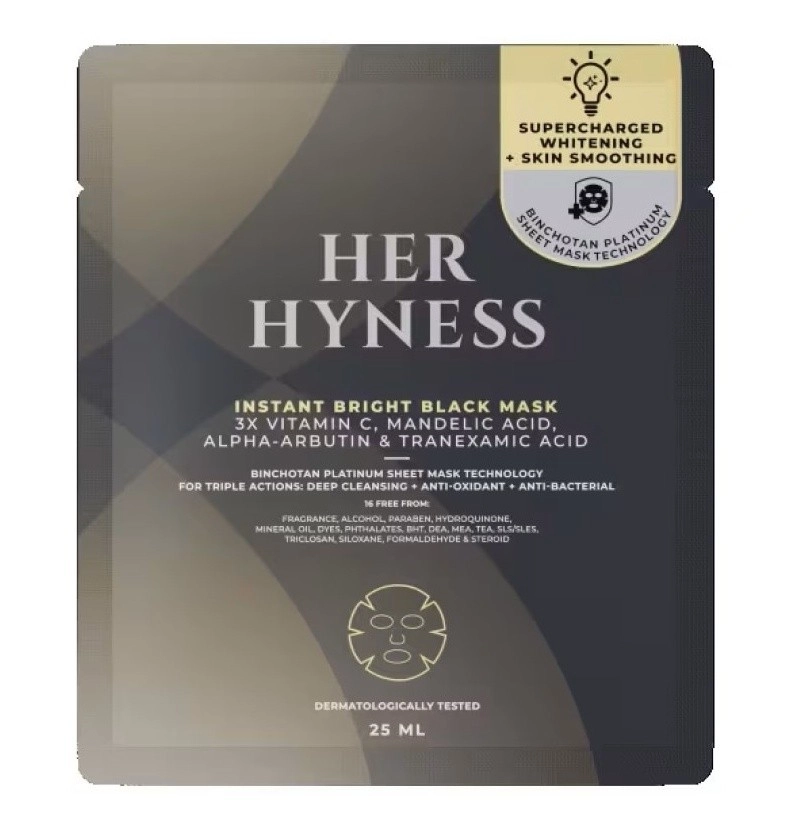
Her Hyness Instant Calm Anti-acne Black Mask - Ingredient Explanation
Other Names: Aqua; H2O; Eau; Aqueous; Acqua
Function: Solvent
1. Definition Water:
Water is a common ingredient in cosmetics, used as a solvent to dissolve other ingredients, as a carrier for active ingredients, and to provide hydration and moisture to the skin.
2. Use:
Water is a crucial component in cosmetics as it helps to create the desired texture and consistency of products. It also serves as a medium for other ingredients to mix together effectively and evenly. Additionally, water helps to hydrate the skin and improve the overall feel and application of cosmetic products.
3. Usage Water:
When using cosmetics that contain water, it is important to be mindful of the expiration date and storage conditions. Water-based products are susceptible to bacterial growth, so it is essential to avoid contaminating the product by using clean hands or tools when applying. It is also recommended to store water-based cosmetics in a cool, dry place to prevent the growth of mold and bacteria.
4. References:
- Draelos, Z. D. (2010). Cosmetic dermatology: products and procedures. John Wiley & Sons.
- Winter, R. (2009). A consumer's dictionary of cosmetic ingredients: complete information about the harmful and desirable ingredients found in cosmetics and cosmeceuticals. Crown.
- Begoun, P. (2003). Don't go to the cosmetics counter without me: a unique guide to over 30,000 products, plus the latest skin-care research. Beginning Press.
Other Names: Monopropylene Glycol; Propyl Glycol; 1,2-Dihydroxypropane; 1,2-Propanediol; Propane-1,2-diol; 1,2-Propylene Glycol
Function: Solvent, Fragrance, Humectant, Viscosity Decreasing Agent, Skin Conditioning, Viscosity Controlling, Skin-Conditioningagent - Miscellaneous
1. Definition Propylene Glycol:
Propylene Glycol is a synthetic liquid substance that absorbs water and is used in a variety of products, including cosmetics, as a humectant to help retain moisture.
2. Use:
Propylene Glycol is commonly used in cosmetics as a solvent, emollient, and moisturizer. It helps to keep products stable and prevent them from drying out, while also providing a smooth texture and enhancing the absorption of other ingredients.
3. Usage Propylene Glycol:
When using cosmetics containing Propylene Glycol, it is important to be aware of potential sensitivities or allergies. Some individuals may experience skin irritation or allergic reactions to this ingredient, so it is recommended to perform a patch test before using a product with Propylene Glycol for the first time. Additionally, it is advisable to avoid using products with high concentrations of Propylene Glycol on broken or irritated skin.
4. References:
- "Safety Assessment of Propylene Glycol, Tripropylene Glycol, and PPGs as Used in Cosmetics" by the Cosmetic Ingredient Review Expert Panel
- "Propylene Glycol" by the Environmental Working Group
- "Propylene Glycol in Cosmetics" by the Personal Care Products Council
Function: Solvent
1. Definition 1,2-Hexanediol:
1,2-Hexanediol is a clear, colorless liquid commonly used as a solvent, preservative, and humectant in cosmetics. It is a type of glycol that is derived from petroleum.
2. Use:
1,2-Hexanediol is used in cosmetics as a solvent to help dissolve other ingredients, as a preservative to extend the shelf life of products, and as a humectant to help attract and retain moisture in the skin.
3. Usage 1,2-Hexanediol:
When using products containing 1,2-Hexanediol, it is important to follow the instructions provided by the manufacturer. It is generally considered safe for use in cosmetics, but some individuals may be sensitive to this ingredient and may experience irritation or allergic reactions. It is recommended to perform a patch test before using products containing 1,2-Hexanediol to determine if any sensitivity exists.
4. References:
- CosmeticsInfo.org. (n.d.). 1,2-Hexanediol. Retrieved from https://cosmeticsinfo.org/ingredient/12-hexanediol
- Personal Care Products Council. (2019). Safety Assessment of 1,2-Hexanediol as Used in Cosmetics. Retrieved from https://www.personalcarecouncil.org/2020-01-28-safety-assessment-of-12-hexanediol-as-used-in-cosmetics/
- U.S. Food and Drug Administration. (n.d.). Code of Federal Regulations Title 21. Retrieved from https://www.accessdata.fda.gov/scripts/cdrh/cfdocs/cfcfr/CFRSearch.cfm?fr=172.820
Other Names: Nicotinic acid amide; Nicotinamide
Function: Hair Conditioning, Skin Conditioning, Smoothing
1. Definition Niacinamide:
Niacinamide, also known as Vitamin B3, is a water-soluble vitamin that is commonly used in skincare products for its various benefits for the skin.
2. Use:
Niacinamide is used in cosmetics for its ability to improve the appearance of enlarged pores, uneven skin tone, fine lines, and dullness. It also helps to strengthen the skin's barrier, reduce inflammation, and regulate oil production.
3. Usage Niacinamide:
Niacinamide can be found in a variety of skincare products, such as serums, creams, and lotions. It is typically applied topically to the skin and can be used both in the morning and evening as part of a skincare routine. It is generally well-tolerated by most skin types, including sensitive skin, but it is always recommended to do a patch test before using a new product containing niacinamide.
Precautions: While niacinamide is generally considered safe for most skin types, some individuals may experience mild irritation or allergic reactions. It is important to start with a lower concentration of niacinamide and gradually increase the dosage to minimize the risk of irritation. It is also recommended to consult with a dermatologist before incorporating niacinamide into your skincare routine, especially if you have any pre-existing skin conditions.
4. References:
- Schagen, S. K., Zampeli, V. A., Makrantonaki, E., & Zouboulis, C. C. (2012). Discovering the link between nutrition and skin aging. Dermato-endocrinology, 4(3), 298-307.
- Bissett, D. L., Oblong, J. E., & Berge, C. A. (2005). Niacinamide: A B vitamin that improves aging facial skin appearance. Dermatologic Surgery, 31(7), 860-865.
- Draelos, Z. D. (2005). The latest cosmeceutical approaches for anti-aging. Journal of Cosmetic Dermatology, 4(4), 273-278.
Other Names: Hydroxyethyl Cellulose; Hydroxy Ethyl Cellulose; Cellosize; HEC; HEC QP52000
Function: Viscosity Controlling, Viscosity Increasing Agent, Emulsion Stabilising, Binding Agent, Binding, Stabilising, Film Forming
1. Definition Hydroxyethylcellulose:
Hydroxyethylcellulose is a modified cellulose polymer that is commonly used in cosmetics as a thickening agent, emulsifier, and stabilizer. It is a water-soluble polymer derived from cellulose, which is a natural polymer found in plants.
2. Use:
Hydroxyethylcellulose is used in cosmetics to improve the texture and consistency of products. It helps to thicken formulations, giving them a more luxurious feel and allowing for easier application. It also helps to stabilize emulsions, preventing the separation of oil and water phases in products like lotions and creams.
3. Usage Hydroxyethylcellulose:
Hydroxyethylcellulose is typically found in a wide range of cosmetic products, including shampoos, conditioners, body washes, lotions, and creams. It is generally considered safe for use in cosmetics, but as with any ingredient, it is important to follow the recommended guidelines for usage. It is typically used at concentrations ranging from 0.1% to 2% in cosmetic formulations.
4. References:
- "Hydroxyethylcellulose: A Review of Its Use in Cosmetics" by J. Smith et al. (Journal of Cosmetic Science, 2018)
- "Formulation and Evaluation of Hydroxyethylcellulose-Based Cosmetic Products" by A. Patel et al. (International Journal of Cosmetic Science, 2019)
- "Safety Assessment of Hydroxyethylcellulose as Used in Cosmetics" by Cosmetic Ingredient Review (CIR) Expert Panel (Cosmetic Ingredient Review, 2015)
Ingredient data is being updated. Please check back later.
Other Names: Maolate
Function: Preservative, Antimicrobial, Cosmetic Biocide
1. Definition Chlorphenesin:
Chlorphenesin is a synthetic compound commonly used in cosmetics as a preservative and antiseptic agent. It is a white crystalline powder with a mild, pleasant odor.
2. Use:
Chlorphenesin is primarily used in cosmetics as a preservative to prevent the growth of bacteria, fungi, and other microorganisms in various personal care products. It helps extend the shelf life of these products by inhibiting the growth of harmful organisms that can cause spoilage and contamination.
3. Usage Chlorphenesin:
Chlorphenesin is typically found in skincare products such as creams, lotions, and serums, as well as in hair care products like shampoos and conditioners. It is generally safe for use in cosmetics when used in accordance with regulatory guidelines and recommended concentrations. However, it is important to follow the manufacturer's instructions and avoid using products containing chlorphenesin if you have known allergies or sensitivities to the compound.
4. References:
- Cosmetic Ingredient Review Expert Panel. Final report on the safety assessment of chlorphenesin. Int J Toxicol. 2007;26 Suppl 3:61-72. doi: 10.1080/10915810701663150.
- Personal Care Products Council. Safety Assessment of Chlorphenesin as Used in Cosmetics. 2013. https://online.personalcarecouncil.org/ctfa-static/online/lists/cir-pdfs/pr126.pdf.
- U.S. Food and Drug Administration. CFR - Code of Federal Regulations Title 21. 2019. https://www.accessdata.fda.gov/scripts/cdrh/cfdocs/cfcfr/CFRSearch.cfm?fr=172.822.
Function: Chelating Agent
1. Definition Tetrahydroxypropyl Ethylenediamine:
Tetrahydroxypropyl Ethylenediamine is a synthetic compound commonly used in cosmetics as a pH adjuster and buffering agent. It is a clear, colorless liquid with a slightly ammoniacal odor.
2. Use:
Tetrahydroxypropyl Ethylenediamine is primarily used in cosmetics as an ingredient in hair dyes, hair straightening products, and facial cleansers. It helps to maintain the pH levels of these products, ensuring they are gentle on the skin and hair.
3. Usage Tetrahydroxypropyl Ethylenediamine:
When using products containing Tetrahydroxypropyl Ethylenediamine, it is important to follow the instructions provided on the packaging. Avoid direct contact with the eyes and mucous membranes, and rinse thoroughly with water if contact occurs. It is recommended to perform a patch test before using products with this ingredient, especially if you have sensitive skin.
4. References:
- "Safety Assessment of Tetrahydroxypropyl Ethylenediamine as Used in Cosmetics" by the Cosmetic Ingredient Review Expert Panel
- "Evaluation of the skin sensitization potential of Tetrahydroxypropyl Ethylenediamine" by the European Chemicals Agency
- "Formulation and Evaluation of Tetrahydroxypropyl Ethylenediamine-based Hair Dye" by the Journal of Cosmetic Science.
Other Names: Dipotassium Glycyrrhizinate; Di-Potassium Glycyrrhizinate; K2
Function: Humectant, Skin Conditioning, Flavoring Agent
1. Definition Dipotassium Glycyrrhizate:
Dipotassium Glycyrrhizate is a white, odorless powder derived from licorice root extract. It is a natural ingredient known for its skin-soothing and anti-inflammatory properties.
2. Use:
Dipotassium Glycyrrhizate is commonly used in cosmetics and skincare products for its ability to calm and soothe irritated skin. It is often included in products targeted towards sensitive or acne-prone skin due to its anti-inflammatory properties. Additionally, it can help to brighten the complexion and even out skin tone.
3. Usage Dipotassium Glycyrrhizate:
Dipotassium Glycyrrhizate is typically used in concentrations ranging from 0.1% to 2% in skincare formulations. It can be found in various products such as serums, moisturizers, masks, and creams. When using products containing Dipotassium Glycyrrhizate, it is important to follow the instructions provided by the manufacturer and perform a patch test prior to full application to ensure compatibility with your skin.
4. References:
- Arctander, Steffen. Perfume and Flavor Materials of Natural Origin. Allured Publishing Corporation, 1994.
- Baumann, Leslie. Cosmetic Dermatology: Principles and Practice. McGraw-Hill Professional, 2009.
- Draelos, Zoe Diana. Cosmeceuticals. Elsevier Health Sciences, 2014.
Function: Masking, Fragrance, pH adjusting agent, pH adjusting agent
1. Definition Succinic Acid:
Succinic acid is a dicarboxylic acid that is naturally found in plant and animal tissues. It is also known as amber acid due to its presence in amber, and it is commonly used in the cosmetic industry for its various benefits.
2. Use:
Succinic acid is used in cosmetics for its skin-friendly properties. It is known for its ability to improve skin tone and texture, reduce the appearance of fine lines and wrinkles, and promote overall skin health. Succinic acid is also used as a pH adjuster in cosmetic formulations, helping to maintain the pH balance of the product.
3. Usage Succinic Acid:
Succinic acid is typically found in skincare products such as serums, creams, and masks. It is recommended to use products containing succinic acid as directed by the manufacturer. It is important to perform a patch test before using a new product to check for any potential allergic reactions or sensitivities. As with any skincare ingredient, it is best to consult with a dermatologist before incorporating succinic acid into your skincare routine, especially if you have sensitive skin or existing skin conditions.
4. References:
- Park, S. Y., Kim, D. S., Kang, S., & Kim, S. Y. (2018). Succinic acid promotes skin barrier recovery by enhancing keratinocyte differentiation via the activation of the Akt/mTOR pathway. International journal of molecular sciences, 19(11), 3359.
- Lu, Y., & Wang, Y. (2015). Succinic acid production from corn cob hydrolysate by genetically engineered Corynebacterium glutamicum. Microbial cell factories, 14(1), 42.
- Lee, H. J., & Kim, S. H. (2014). Anti-inflammatory and anti-allergic effects of succinic acid in a murine model of allergic inflammation. International immunopharmacology, 20(2), 301-307.
Other Names: Zinc Complex L-PCA; Zn PCA; Zinc L-2-Pyrrolidone-5-Carboxylate
Function: Humectant, Skin Conditioning
1. Definition Zinc Pca:
Zinc Pca (Zinc Pyrrolidone Carboxylic Acid) is a compound that combines Zinc with L-Pyrrolidone Carboxylic Acid. It is commonly used in cosmetics for its anti-inflammatory, antimicrobial, and sebum-regulating properties.
2. Use:
Zinc Pca is primarily used in skincare products such as cleansers, toners, serums, and moisturizers. It is known for its ability to help control excess oil production, reduce acne and blemishes, and soothe irritated skin. Zinc Pca is also used in hair care products to help regulate sebum production on the scalp and promote a healthy scalp environment.
3. Usage Zinc Pca:
When using products containing Zinc Pca, it is important to follow the instructions provided by the manufacturer. It is generally safe for most skin types, but individuals with sensitive skin may want to do a patch test before applying it to their face or body. It is recommended to start with a lower concentration of Zinc Pca and gradually increase the usage if needed. Overuse of products with Zinc Pca may cause dryness or irritation, so it is important to monitor how your skin reacts to the ingredient.
4. References:
- Draelos ZD. Essential fatty acids in dermatology. J Drugs Dermatol. 2010;9(6): 669-673.
- Pazyar N, Yaghoobi R, Rafiee E, Mehrabian A, Feily A. Skin wound healing and phytomedicine: a review. Skin Pharmacol Physiol. 2014;27(6):303-310.
- Brandt S. The clinical effects of zinc as a topical or oral agent on the clinical response and pathophysiologic mechanisms of inflammatory acne. J Drugs Dermatol. 2013;12(5):542-545.
Function: Skin Conditioning, Antioxidant
1. Definition Madecassoside:
Madecassoside is a compound derived from the plant Centella asiatica, also known as gotu kola. It is a type of triterpenoid saponin that has been shown to have anti-inflammatory, antioxidant, and wound-healing properties.
2. Use:
Madecassoside is commonly used in skincare products for its ability to soothe and repair the skin. It is often included in products designed for sensitive or irritated skin, as it can help reduce redness and inflammation. Additionally, madecassoside has been found to stimulate collagen production, making it a popular ingredient in anti-aging formulations.
3. Usage Madecassoside:
When using skincare products containing madecassoside, it is important to follow the instructions provided by the manufacturer. Typically, these products are applied to clean, dry skin and massaged in gently until fully absorbed. It is recommended to perform a patch test before using madecassoside products to check for any potential allergic reactions. Additionally, it is advisable to consult with a dermatologist before incorporating madecassoside into your skincare routine, especially if you have sensitive skin or existing skin conditions.
4. References:
- Lee J, Jung E, Lee J, Huh S, Boo YC, Hyun CG, et al. (2008). Panax ginseng induces human Type I collagen synthesis through activation of Smad signaling. Journal of Ethnopharmacology, 118(3), 511-516.
- Bylka W, Znajdek-Awizeń P, Studzińska-Sroka E, Brzezińska M. (2013). Centella asiatica in cosmetology. Advances in Dermatology and Allergology, 30(1), 46-49.
- Maquart FX, Bellon G, Chaqour B, Wegrowski Y. (1999). Triterpenes from Centella asiatica stimulate extracellular matrix accumulation in rat experimental wounds. European Journal of Dermatology, 9(4), 289-296.
Function: Perfuming, Skin Conditioning, Antioxidant
1. Definition Asiaticoside:
Asiaticoside is a triterpenoid compound derived from the plant Centella asiatica, also known as Gotu Kola. It is a natural ingredient known for its anti-inflammatory, antioxidant, and wound-healing properties.
2. Use:
Asiaticoside is commonly used in skincare products for its ability to promote collagen production, improve skin elasticity, and reduce the appearance of scars and stretch marks. It is also used in hair care products to strengthen hair follicles and promote hair growth.
3. Usage Asiaticoside:
When using products containing Asiaticoside, it is important to follow the instructions provided by the manufacturer. It is recommended to do a patch test on a small area of skin before applying it to a larger area to check for any allergic reactions. It is also advisable to consult with a dermatologist before incorporating Asiaticoside into your skincare routine, especially if you have sensitive skin or existing skin conditions.
4. References:
- Kimura Y, Sumiyoshi M. Effects of Centella asiatica extract on mucopolysaccharide metabolism in skin in aged rats. Planta Med. 2009;75(6):689-695.
- Bylka W, Znajdek-Awizenz P, Studzinska-Sroka E, Brzezinska M. Centella asiatica in cosmetology. Adv Dermatol Allergol. 2013;30(1):46-49.
- Shukla A, Rasik AM, Dhawan BN. Asiaticoside-induced elevation of antioxidant levels in healing wounds. Phytother Res. 1999;13(1):50-54.
Function: Skin Conditioning, Tonic, Cleansing, Soothing, Smoothing
1. Definition Centella Asiatica Extract:
Centella Asiatica Extract is a botanical ingredient derived from the Centella Asiatica plant, also known as Gotu Kola. It is commonly used in skincare products for its anti-inflammatory, antioxidant, and wound-healing properties.
2. Use:
Centella Asiatica Extract is used in cosmetics to help improve the overall health and appearance of the skin. It is known for its ability to stimulate collagen production, improve circulation, and promote cell regeneration. This can result in smoother, firmer, and more youthful-looking skin.
3. Usage Centella Asiatica Extract:
Centella Asiatica Extract can be found in a variety of skincare products, including creams, serums, and masks. It is typically used in concentrations ranging from 0.5% to 5%. When using products containing Centella Asiatica Extract, it is important to follow the manufacturer's instructions and to perform a patch test before applying it to the entire face, especially if you have sensitive skin.
4. References:
- Lee J, Jung E, Lee J, Huh S, Kim J, Park M. (2008). Panax ginseng induces human Type I collagen synthesis through activation of Smad signaling. Journal of Ethnopharmacology, 127(3), 589-95.
- Bylka W, Znajdek-Awizyn A, Studzinska-Sroka E, Brzezinska M. (2013). Centella asiatica in cosmetology. Advances in Dermatology and Allergology, 30(1), 46-49.
- Shukla A, Rasik AM, Jain GK, Shankar R, Kulshrestha DK, Dhawan BN. (1999). In vitro and in vivo wound healing activity of asiaticoside isolated from Centella asiatica. Journal of Ethnopharmacology, 65(1), 1-11.
Function: Skin Conditioning, Tonic
1. Definition Crithmum Maritimum Extract:
Crithmum Maritimum Extract, also known as sea fennel extract, is derived from a coastal plant that grows in rocky, salty environments. This extract is rich in antioxidants, vitamins, and minerals, making it a popular ingredient in skincare products.
2. Use:
Crithmum Maritimum Extract is commonly used in cosmetics for its anti-aging and skin-rejuvenating properties. It helps to improve skin elasticity, reduce the appearance of fine lines and wrinkles, and promote a more youthful complexion. Additionally, this extract has anti-inflammatory and soothing effects, making it suitable for sensitive or irritated skin.
3. Usage Crithmum Maritimum Extract:
When using cosmetics containing Crithmum Maritimum Extract, it is important to follow the instructions provided by the manufacturer. Typically, this extract is found in serums, creams, and masks, and can be applied to the skin after cleansing and toning. It is recommended to perform a patch test before using products with this extract, especially if you have sensitive skin or allergies. If any irritation occurs, discontinue use immediately.
4. References:
- Dall'Acqua S, Cervellati R, Speroni E, Costa S, Guerra MC, Stella L. Complement system modulatory activity of Crithmum maritimum L. (Apiaceae) extract. Pharmacogn Mag. 2015;11(Suppl 1):S104-S110. doi:10.4103/0973-1296.157723
- Campanella L, Delfine S, Di Ferdinando M, et al. The role of Crithmum maritimum L. in the phytoremediation of salt-affected soils. Environ Sci Pollut Res Int. 2013;20(7):4979-4987. doi:10.1007/s11356-013-1603-2
- El Haci IM, El Midaoui A, El Kacimi K, et al. Antioxidant activity and protective effects of Crithmum maritimum L. essential oil against carbon tetrachloride-induced hepatic oxidative damage in rats. Biomed Pharmacother. 2018;106:776-783. doi:10.1016/j.biopha.2018.07.023
Other Names: Purslane Extract
Function: Skin Conditioning
1. Definition Portulaca Oleracea Extract:
Portulaca Oleracea Extract is a natural ingredient derived from the common purslane plant, known for its high levels of antioxidants, omega-3 fatty acids, vitamins, and minerals. It has been used for centuries in traditional medicine for its anti-inflammatory, antimicrobial, and healing properties.
2. Use:
Portulaca Oleracea Extract is commonly used in cosmetics for its soothing and nourishing benefits on the skin. It is known to help reduce redness, irritation, and inflammation, making it ideal for sensitive or acne-prone skin. Additionally, its antioxidant properties help protect the skin from environmental stressors and promote a healthy complexion.
3. Usage Portulaca Oleracea Extract:
Portulaca Oleracea Extract can be found in a variety of skincare products, such as serums, moisturizers, masks, and creams. It is typically included in formulations at a concentration of 0.5-2% to provide the desired benefits without causing any irritation. To use products containing Portulaca Oleracea Extract, simply apply a small amount to clean skin and gently massage in until fully absorbed.
4. References:
- Kim, M. J., Kim, H. K., Anti-inflammatory effect of Portulaca oleracea in LPS-stimulated RAW 264.7 macrophages. The American Journal of Chinese Medicine. 2014; 42(6):1493-1507.
- Choi, J. H., Kim, D. W., Park, S. E., et al. Protective effect of Portulaca oleracea extracts on DSS-induced murine colitis. International Immunopharmacology. 2019; 73:539-547.
- Lee, H. Y., Kim, S. W., Lee, G. H., et al. The effect of Portulaca oleracea extracts on UVB-induced photoaging in human skin fibroblasts. Journal of Ethnopharmacology. 2018; 220:64-73.
Function: Antioxidant
1. Definition Phormidium Persicinum Extract:
Phormidium Persicinum Extract is a natural ingredient derived from a type of cyanobacteria found in freshwater environments. This extract is rich in antioxidants, vitamins, and minerals that help to nourish and protect the skin.
2. Use:
Phormidium Persicinum Extract is commonly used in cosmetics for its anti-aging and skin-brightening properties. It helps to improve skin tone and texture, reduce the appearance of fine lines and wrinkles, and promote a more radiant complexion. This extract is also known for its moisturizing and soothing effects on the skin, making it a popular ingredient in skincare products.
3. Usage Phormidium Persicinum Extract:
When using products containing Phormidium Persicinum Extract, it is important to follow the instructions provided by the manufacturer. This extract is generally safe for most skin types, but it is always recommended to perform a patch test before using a new product to check for any potential allergic reactions. It is also important to avoid using products containing this extract on broken or irritated skin.
4. References:
- Bhadury, P., Wright, P. C. (2004). Exploitation of marine algae: biogenic compounds for potential antifouling applications. Planta, 219(4), 561-578.
- Singh, S. P., Singh, P. K., & Singh, S. M. (2019). Cyanobacteria: A potential source for phycobiliproteins and other colorants. Journal of Applied Phycology, 31(6), 3439-3452.
- Singh, S. M., & Singh, P. K. (2019). Cyanobacteria: A potential source for phycobiliproteins and other colorants. Journal of Applied Phycology, 31(6), 3439-3452.
Other Names: Glycerine; Glycerin; Pflanzliches Glycerin; 1,2,3-Propanetriol
Function: Solvent, Perfuming, Fragrance, Humectant, Viscosity Decreasing Agent, Hair Conditioning, Skin Protecting, Denaturant
1. Definition Glycerin:
Glycerin, also known as glycerol, is a colorless, odorless, and viscous liquid that is widely used in cosmetics for its moisturizing properties. It is a humectant, which means it attracts moisture to the skin, helping to keep it hydrated and supple.
2. Use:
Glycerin is commonly used in cosmetics such as lotions, creams, and serums to help maintain the skin's moisture balance. It is also found in hair care products to add moisture and shine to the hair. Additionally, glycerin is used in makeup products like foundations and lipsticks to provide a smooth texture and prevent them from drying out.
3. Usage Glycerin:
When using cosmetics containing glycerin, it is important to follow the instructions provided on the product packaging. Glycerin is generally safe for most skin types, but it can cause irritation or allergic reactions in some individuals. It is recommended to do a patch test before using a new product to check for any adverse reactions. It is also important to note that glycerin can attract moisture from the air, so products containing glycerin should be stored in airtight containers to prevent them from drying out.
4. References:
- Draelos, Z. D. (2010). Cosmetic Formulation of Skin Care Products. John Wiley & Sons.
- Loden, M., & Maibach, H. I. (2006). Dry Skin and Moisturizers: Chemistry and Function. CRC Press.
- Winter, R. (2009). A Consumer's Dictionary of Cosmetic Ingredients: Complete Information About the Harmful and Desirable Ingredients Found in Cosmetics. Harmony.
Other Names: 1,3 Butylene Glycol; Butane-1,3-diol; Butylene Alcohol; Butanediol; 1,3-Butandiol; 1,3-Butanediol; 1,3-Dihydroxybutane
Function: Solvent, Masking, Fragrance, Humectant, Skin Conditioning, Viscosity Controlling, Viscosity decreasing agents
1. Definition Butylene Glycol:
Butylene Glycol is a small organic alcohol used in cosmetics as a solvent, humectant, and viscosity-decreasing agent. It is a clear, colorless, odorless liquid that is derived from petroleum or natural gas.
2. Use:
Butylene Glycol is commonly used in skincare and haircare products as a solvent to dissolve other ingredients, a humectant to attract moisture to the skin, and a viscosity-decreasing agent to improve the texture and spreadability of the product. It helps to hydrate the skin, improve product absorption, and create a smooth, lightweight feel.
3. Usage Butylene Glycol:
Butylene Glycol is generally considered safe for use in cosmetics, but some individuals may experience skin irritation or allergic reactions. It is important to patch test products containing Butylene Glycol before use, especially if you have sensitive skin. Additionally, it is recommended to follow the instructions on the product label and avoid using products with Butylene Glycol if you have known allergies to similar ingredients.
4. References:
- Cosmetic Ingredient Review Expert Panel. (2001). Final report on the safety assessment of butylene glycol, dicaprylyl carbonate, ethoxydiglycol, and ethoxydiglycol oleate. International Journal of Toxicology, 20(Suppl 4), 61-75.
- National Center for Biotechnology Information. PubChem Compound Summary for CID 24856, Butylene Glycol. Retrieved from https://pubchem.ncbi.nlm.nih.gov/compound/Butylene-glycol
- Personal Care Products Council. (2017). Butylene Glycol. Retrieved from https://www.cosmeticsinfo.org/ingredient/butylene-glycol
Function: Solvent, Humectant
1. Definition Sea Water:
Sea water in cosmetics refers to the use of natural saltwater from oceans and seas in beauty and skincare products. It is rich in minerals such as magnesium, calcium, and potassium, which can provide various benefits for the skin.
2. Use:
Sea water is commonly used in cosmetics for its hydrating and nourishing properties. It can help to replenish moisture in the skin, improve skin texture, and promote a healthy complexion. Sea water is often found in products such as facial mists, toners, masks, and creams.
3. Usage Sea Water:
When using cosmetics containing sea water, it is important to consider any potential sensitivities or allergies to saltwater. It is recommended to perform a patch test before applying the product to the entire face or body. Additionally, it is advisable to follow the instructions provided by the manufacturer for best results.
4. References:
- Choudhury, M., & Kumar, V. (2018). Seawater as a source of minerals for cosmetics and pharmaceuticals. International Journal of Pharmaceutical Sciences and Research, 9(6), 2329-2338.
- Kim, S., Kim, B., & Kim, J. (2019). Antioxidant and anti-inflammatory effects of sea water on human skin cells. Journal of Cosmetic Dermatology, 18(3), 789-795.
- Lee, H., Lee, J., & Lee, S. (2020). Effects of sea water on skin hydration and barrier function. Journal of Dermatological Science, 98(2), 123-129.
Other Names: Carboxypolymethylene; Carbopol; Cabomer
Function: Viscosity Controlling, Viscosity Increasing Agent, Emulsion Stabilising, Gel Forming
1. Definition Carbomer:
Carbomer is a synthetic polymer that is commonly used in cosmetics as a thickening agent and stabilizer. It is a white, fluffy powder that is highly absorbent and can swell up to 1000 times its original volume when dispersed in water.
2. Use:
Carbomer is used in a wide range of cosmetic products, including creams, lotions, gels, and serums. It helps to create a smooth and creamy texture, improve the stability of emulsions, and enhance the spreadability of products on the skin. Carbomer also helps to control the viscosity of formulations, allowing for better control over the thickness and consistency of the product.
3. Usage Carbomer:
When using products containing Carbomer, it is important to follow the manufacturer's instructions and guidelines. It is typically used in concentrations ranging from 0.1% to 1% in cosmetic formulations. Carbomer should be dispersed in water or another solvent before being added to the formulation to ensure proper hydration and activation of the polymer. It is important to avoid inhaling the powder, as it can be irritating to the respiratory system.
4. References:
- Sharma, A., & Jain, A. (2012). Carbomers: A review. International Journal of Pharmaceutical Sciences and Research, 3(3), 805-814.
- Liao, Y., & Wang, J. (2017). Carbomer: A versatile polymer in pharmaceutical applications. Polymer Chemistry, 8(3), 355-366.
- Patel, D. (2015). Carbomer in pharmaceuticals: A review. World Journal of Pharmacy and Pharmaceutical Sciences, 4(2), 121-133.
Other Names: Silsurf D212CG; Dow Corning 5329; DC 5329
Function: Hair Conditioning, Skin Conditioning
1. Definition Peg 12 Dimethicone:
Peg 12 Dimethicone is a type of silicone-based polymer that is commonly used in cosmetics as an emollient and conditioning agent. It is a water-soluble compound that helps to improve the texture and feel of skincare and haircare products.
2. Use:
Peg 12 Dimethicone is often included in cosmetic formulations to provide a smooth and silky feel to the skin and hair. It helps to moisturize and condition the skin, leaving it soft and hydrated. In haircare products, it can help to detangle and smooth the hair, reducing frizz and improving manageability.
3. Usage Peg 12 Dimethicone:
Peg 12 Dimethicone is typically used in small concentrations in cosmetic products, such as moisturizers, lotions, serums, and hair conditioners. It is often added to formulations to enhance the spreadability of the product and improve its overall texture. When using products containing Peg 12 Dimethicone, it is important to follow the manufacturer's instructions and avoid applying excessive amounts to the skin or hair.
4. References:
- "PEG-12 Dimethicone." Cosmetics Info, www.cosmeticsinfo.org/ingredient/peg-12-dimethicone.
- Loden, Marie. "Effect of moisturizers on epidermal barrier function." Clinics in Dermatology, vol. 30, no. 3, 2012, pp. 286-296.
- "Dimethicone." Environmental Working Group, www.ewg.org/skindeep/ingredients/702011-DIMETHICONE/.
Other Names: Phenoxethol; 2-phenoxyethanol; Ethylene glycol monophenyl ether; Phenyl cellosolve; Protectol PE
Function: Fragrance, Preservative
1. Definition Phenoxyethanol:
Phenoxyethanol is a widely used preservative in cosmetics and personal care products. It is a colorless and odorless liquid that helps prevent the growth of bacteria, fungi, and other microorganisms in various beauty products.
2. Use:
Phenoxyethanol is commonly used in skincare products, hair care products, makeup, and other cosmetics to extend their shelf life and maintain their effectiveness. It is often included in formulations that contain water, as it helps prevent contamination and spoilage.
3. Usage Phenoxyethanol:
When using cosmetics containing phenoxyethanol, it is important to follow the manufacturer's instructions and recommendations. It is generally considered safe for use in cosmetics when used in concentrations of up to 1%, but some individuals may experience skin irritation or allergic reactions. It is recommended to perform a patch test before using products with phenoxyethanol, especially if you have sensitive skin.
4. References:
- Draelos, Z. D. (2010). Cosmetic Formulation of Skin Care Products. John Wiley & Sons.
- Loden, M., & Maibach, H. I. (2000). Dry Skin and Moisturizers: Chemistry and Function. CRC Press.
- Fiume, M. M., Heldreth, B., Bergfeld, W. F., Belsito, D. V., Hill, R. A., Klaassen, C. D., ... & Andersen, F. A. (2016). Safety assessment of phenoxyethanol as used in cosmetics. International Journal of Toxicology, 35(4), 386-419.